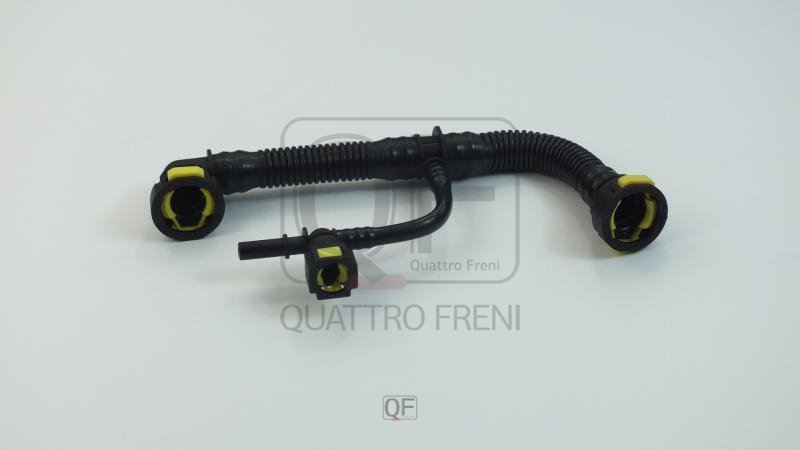
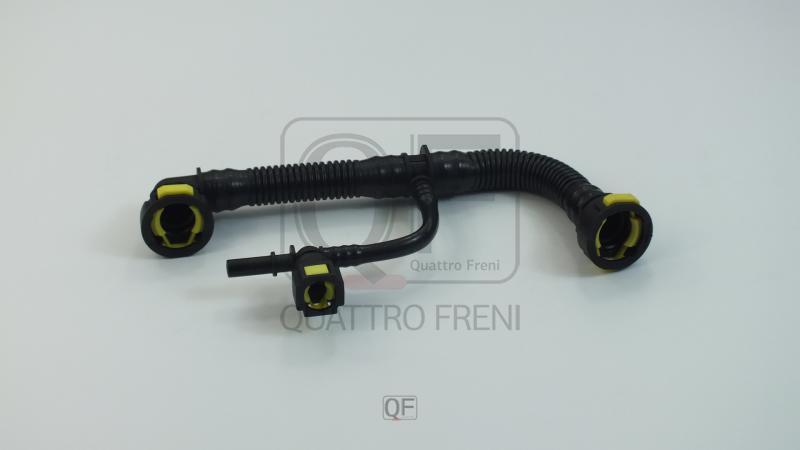
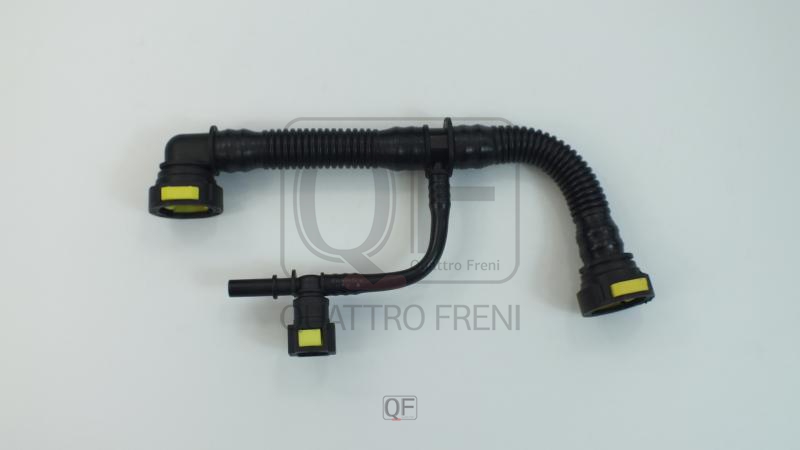
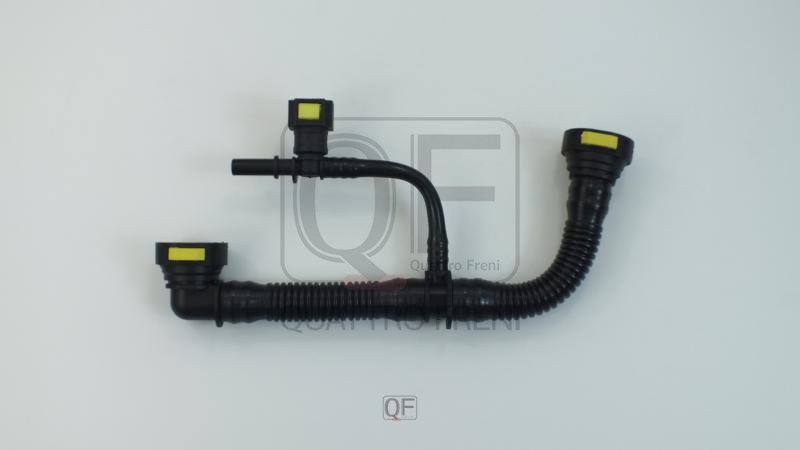
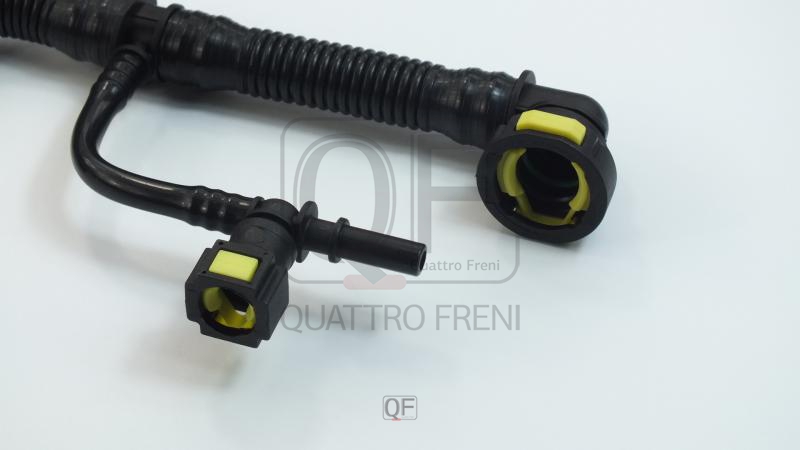
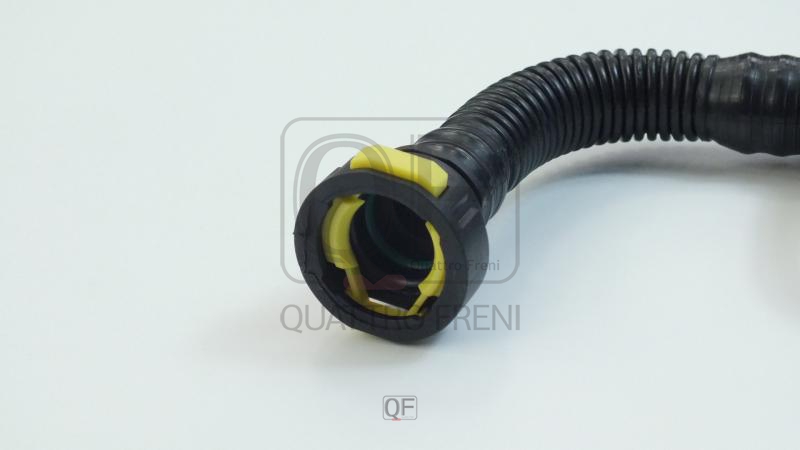
PEUGEOT/CITROEN 1192WZ BREATHER HOSE
Product Specifications
| PEUGEOT/CITROEN | 1192WZ |
The BREATHER HOSE is a moulded rubber or reinforced silicone hose that forms part of the positive crankcase ventilation (PCV) circuit, routing blowby gases and oil mist from the engine crankcase or valve cover to the intake manifold or air filter housing for recirculation and combustion — preventing the accumulation of combustion by-products in the crankcase that would accelerate oil degradation, corrode internal engine surfaces, and build crankcase pressure that forces oil past seals and gaskets. During normal engine operation, a small quantity of combustion gases passes the piston rings into the crankcase on every compression stroke; this blowby gas contains fuel vapour, water vapour, nitrogen oxides, and partially burned hydrocarbons that must be continuously evacuated from the crankcase to maintain correct oil chemistry and prevent pressure buildup. The PCV hose routes this gas stream from the crankcase outlet connection — typically on the valve cover or the block — through the PCV valve that regulates flow rate according to manifold vacuum, then delivers the controlled gas flow to the intake manifold vacuum connection or air filter housing where it mixes with incoming fresh air and is consumed in the combustion process. On turbocharged engines the crankcase ventilation circuit is divided into a high-load path that routes blowby to the pre-turbocharger air filter housing and a low-load path through the PCV valve to the intake manifold; separate breather hoses serve each path and must be maintained independently. The hose material must resist the combined chemical attack of oil mist, fuel vapour, condensed water, and elevated temperatures of 100–130°C at the valve cover connection while remaining flexible enough to follow the engine's movement on its mounts without cracking.
This unit — PEUGEOT/CITROEN 1192WZ — is manufactured to OEM-equivalent specifications: hose inner and outer diameter at each connection end, overall hose length and curvature profile for the engine bay routing, end fitting geometry and retention clip positions, material compound for oil mist and fuel vapour resistance at the rated operating temperature, and wall thickness for the required vacuum and pressure cycle fatigue life are matched to the original part. Supplied as a direct replacement for standard fitment. Available wholesale from 3.27 USD, MOQ 100 pcs, production lead time 73 days.
Crankcase breather hoses fail through internal sludge blockage from oil vapour condensation that accumulates as a viscous deposit inside the hose, progressively restricting flow until crankcase pressure builds and forces oil past seals; through external rubber cracking and hardening from heat and ozone that causes the hose to collapse internally under the vacuum present in the circuit on the manifold side; and through connection end cracking from thermal cycling fatigue that creates a small air leak into the intake manifold downstream of the MAF sensor — an unmetered air leak that the ECU cannot compensate for through normal fuelling correction, producing a lean mixture fault code.
- Flush all connected components — PCV valve, oil separator, and intake manifold port — with brake cleaner before installing the new hose — oil sludge deposits that have accumulated in these components during the period of hose restriction will immediately begin restricting the new hose if not removed; flush each connected port with brake cleaner, blow through with compressed air, and confirm free airflow before connecting the new hose.
- Inspect the valve cover and manifold connection stubs for cracking and corrosion before fitting the new hose — breather hose connection stubs on plastic valve covers and intake manifolds are subject to the same heat cycling that degraded the original hose; a cracked stub on the valve cover or manifold cannot seal the new hose end and produces an immediate oil or air leak at that connection; replace the valve cover or manifold if the stub is cracked.
- Route the new hose to follow the OEM path without tight bends or contact with hot surfaces — photograph the original hose routing before removal; the breather hose must maintain a minimum bend radius to prevent internal collapse under vacuum and must be routed away from the exhaust manifold and turbocharger where radiant heat accelerates rubber degradation; a hose routed with a tighter bend than the OEM design will collapse at that bend under idle vacuum within a short operating period.
- Ensure all retention clips are correctly positioned and fully engaged — breather hoses are retained by spring clips, worm-drive hose clamps, or push-lock fittings at each end; a clip that is positioned over the hose body rather than in the moulded retention groove will allow the hose to pull off the stub under the combination of engine movement and vacuum cycling; confirm each clip is seated in its designed groove before completing the installation.
- Check for unmetered air leaks after installation by running the engine at idle and spraying a small amount of brake cleaner or propane around each hose connection — any change in idle speed when the spray contacts a leak point confirms an air leak at that connection; an idle that smooths rather than roughens when brake cleaner contacts the connection confirms a lean-inducing air leak rather than a rich response from combustible gas contact.
- Install the new BREATHER HOSE (PEUGEOT/CITROEN 1192WZ), reconnect all retention clips, start the engine, confirm smooth idle with no lean mixture codes after a full warm-up cycle, check the oil filler cap for strong suction or pressure at idle — normal crankcase ventilation produces gentle suction at the filler cap; strong suction indicates a remaining restriction; strong blowout pressure indicates the circuit outlet is still blocked — and clear any stored fault codes before returning the vehicle to service.
| Part | Reason for Combined Replacement |
|---|---|
| PCV Valve OEM ref. varies — integral or separate | The PCV valve is the flow control element in the crankcase ventilation circuit and is subject to the same oil sludge contamination as the breather hose. A PCV valve stuck open allows excessive crankcase gas flow that carries more oil mist than the new hose's oil separator can handle; a valve stuck closed blocks all crankcase ventilation regardless of hose condition, reproducing the pressure buildup immediately. Replace the PCV valve simultaneously with the breather hose at every PCV system service. |
| Oil Separator / Catch Can OEM ref. varies by engine | The oil separator that removes oil mist from the crankcase gas before it reaches the intake accumulates sludge deposits at the same rate as the breather hose. A separator with blocked internal baffles will re-contaminate the new hose immediately from the first running hour and pass oil-laden gas directly to the intake. Clean or replace the separator simultaneously with the hose to ensure the new hose operates in a clean, unobstructed circuit. |
| Engine Oil and Filter Grade and specification per OEM requirement | Crankcase ventilation sludge is a direct product of degraded oil that has exceeded its service interval and lost its detergent capacity — the same oil that blocked the breather hose is circulating throughout the engine. Fitting a new breather hose with the same degraded oil immediately begins generating new sludge deposits in the new hose. Always perform a complete oil and filter change simultaneously with the breather hose replacement to eliminate the sludge source. |