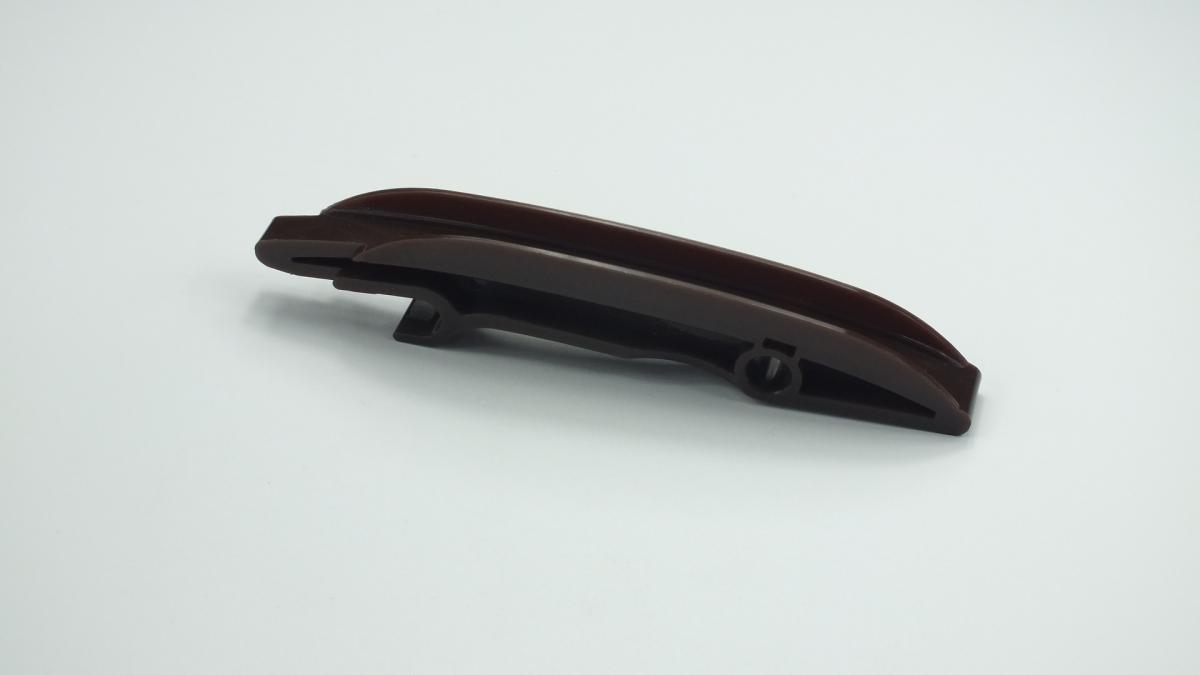
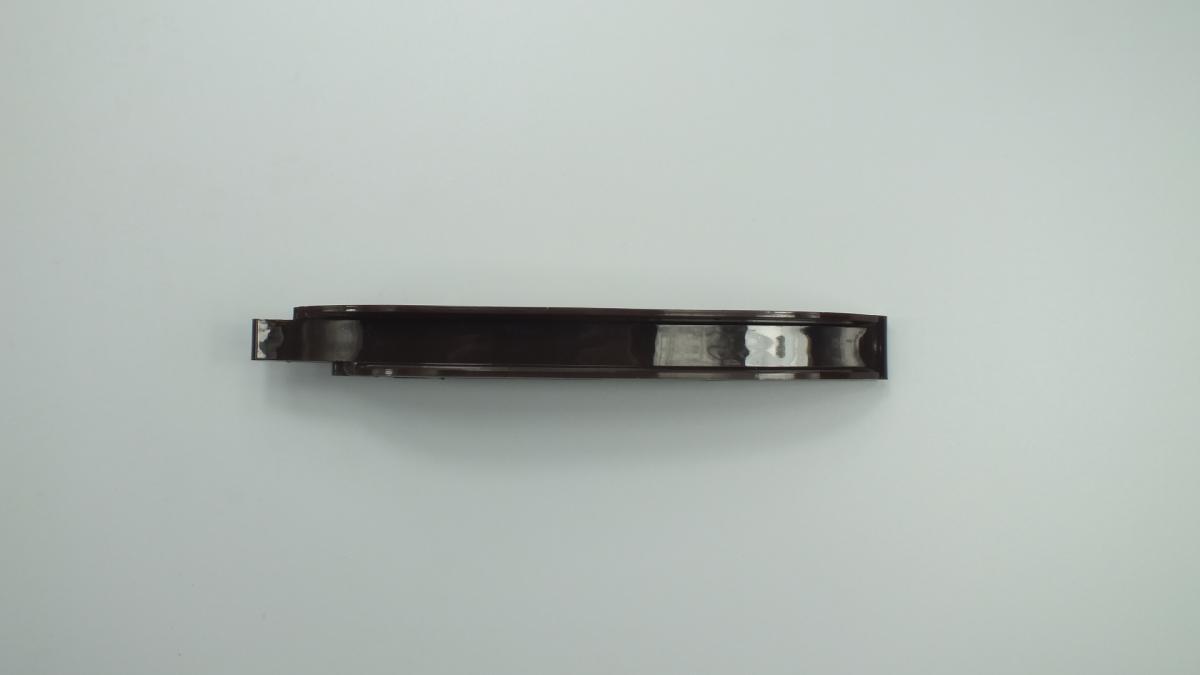
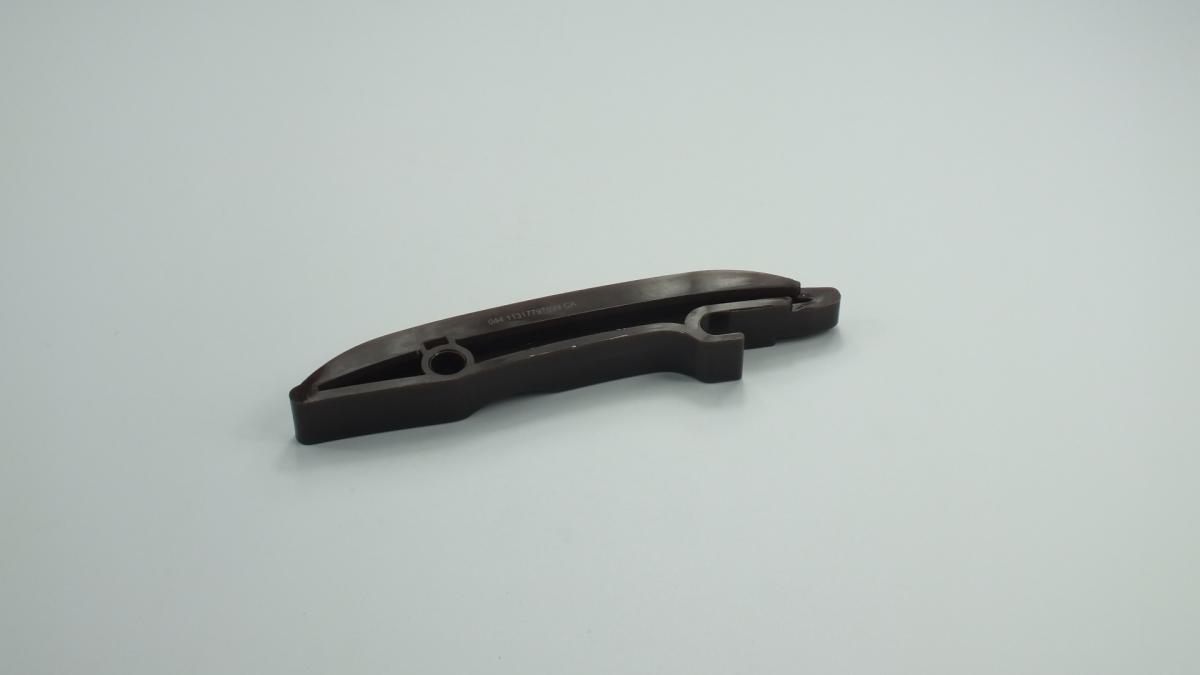
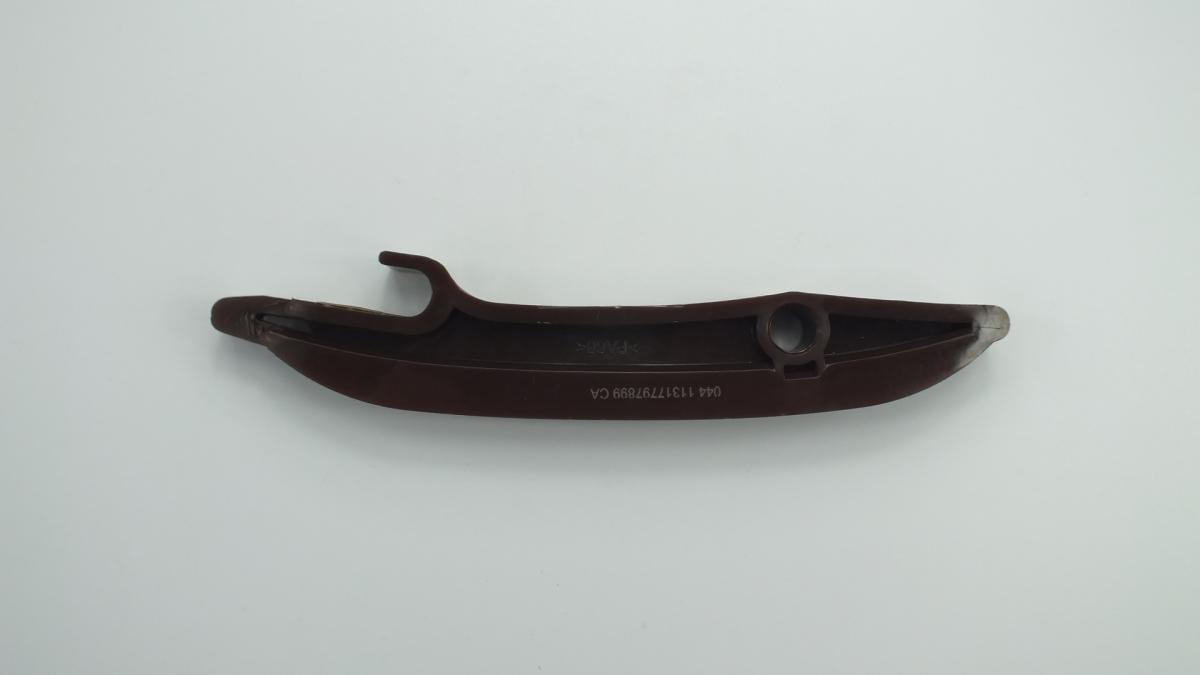
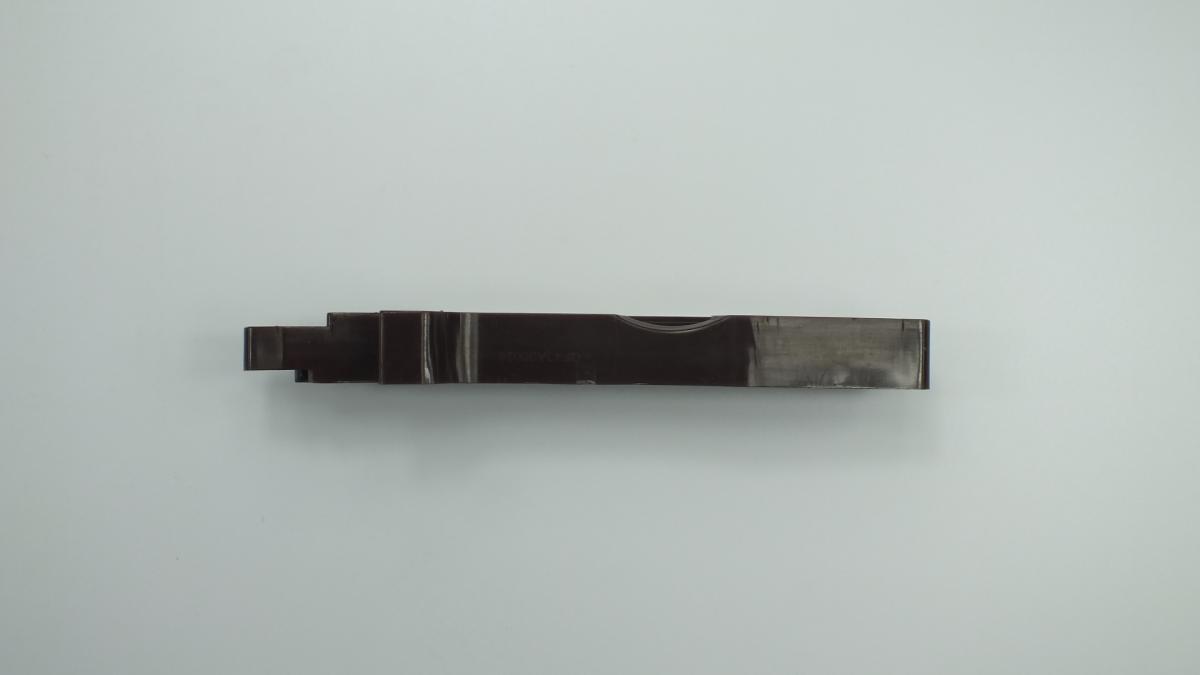
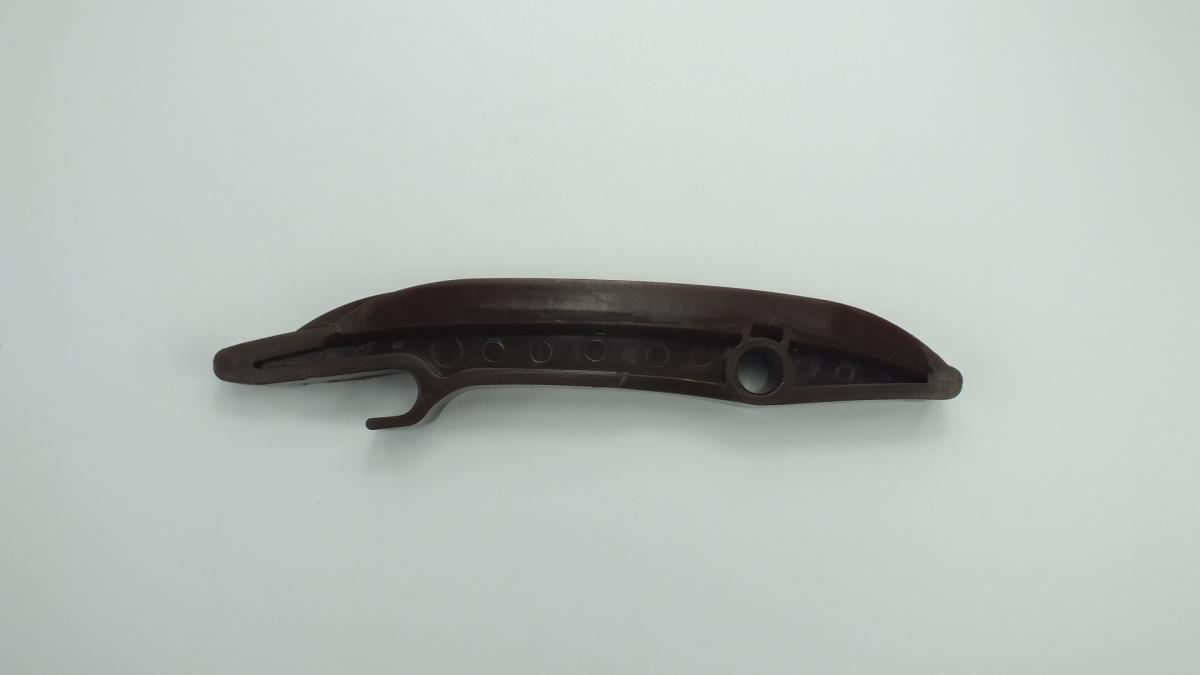
BMW/MINI 11317797899 DAMPER CHAIN
Product Specifications
| BMW/MINI | 11317797899 |
The DAMPER CHAIN is a fixed guide rail — also called a chain damper, guide blade, or chain slipper — mounted in the engine's timing chain cavity that controls the lateral movement of the timing chain on its slack side or between sprocket mesh points, preventing the chain from oscillating, vibrating, and slapping against the timing cover or adjacent components during operation. Unlike the tensioner arm — which is spring- or oil-pressure-loaded to actively apply tension to the chain's slack side — the damper is a fixed rail bolted to the engine block or head at one or both ends, positioned with its curved nylon or PTFE contact face a specific designed clearance from the chain's running line; as the chain vibrates laterally from the impulse loading of each gear tooth engagement, it contacts the damper face, which absorbs the kinetic energy of the lateral displacement and damps the vibration before the chain can build amplitude sufficient to slap against the cover or jump a sprocket tooth. Some engine designs use multiple guide rails simultaneously — a primary tensioner arm on the slack side, a fixed damper on the tension side to prevent the tight-side chain from bowing outward under high torque loading, and additional intermediate guides on long chain runs between closely spaced sprockets in multi-cam engines. The guide rail body is typically a formed or injection-moulded nylon or glass-reinforced polymer with a precision-curved contact surface bonded to or moulded around a steel backbone that provides structural stiffness and the mounting points for attachment to the engine block.
This unit — BMW/MINI 11317797899 — is manufactured to OEM-equivalent specifications: rail length and curvature profile for the designed chain contact geometry, contact face material hardness and wear resistance, mounting bracket position and bolt hole diameter, overall assembly stiffness, and oil groove pattern on the contact face for chain lubrication distribution are matched to the original part. Supplied as a direct replacement for standard fitment. Available wholesale from 2.65 USD, MOQ 50 pcs, production lead time 20-45 days.
Timing chain guide rails fail through contact face wear — the nylon surface is progressively abraded by the chain rollers as they slide across it under lateral contact loads until the nylon wears through to the steel backbone, at which point the steel backbone contacts the chain directly and either shreds the chain rollers or is itself notched deeply enough to trap the chain and prevent correct tensioning. Guide rail wear rate is strongly dependent on oil change interval — degraded oil that has lost its anti-wear additive package accelerates nylon wear significantly; the guide rail's nylon contact face is the first component in the timing chain system to show the effects of extended oil change intervals and provides an early warning of oil quality maintenance discipline before the chain and sprockets are affected.
- Lock the engine at TDC on cylinder 1 compression stroke and install all timing locking tools before removing any chain component — even though the guide rail is a passive component that does not drive the chain, removing and replacing it requires chain manipulation that can shift the camshaft timing if locking tools are not in place; any camshaft rotation while the tensioner is released can shift the cam timing by multiple teeth before the error is detected.
- Drain the engine oil and inspect the settled drain oil and oil filter element for nylon particles before opening the timing cover — the quantity and colour of nylon particles in the drain oil indicates the severity of guide rail wear; white or beige fibrous particles in significant quantity confirm the nylon contact face has worn through in at least one location; this information guides the inspection priority when the cover is opened and helps confirm that all worn guide components have been identified.
- Inspect every guide rail and tensioner arm contact face in the engine simultaneously when the timing cover is open — measure the remaining nylon thickness at the midpoint and at the ends of each rail; compare against the new part's thickness; any rail showing more than 50% wear of its original nylon thickness should be replaced regardless of whether it was the primary failed component; a partially worn guide rail in an engine whose primary rail has already failed will wear through in a short operating period after the repair.
- Remove all nylon debris from the timing chain cavity, the oil sump, and the oil pickup screen before fitting the new guide rail — nylon particles that remain in the cavity after the new rail is installed will be circulated by the oil pump and can block the oil pickup screen or the oil feed passages to the timing chain tensioner; flush the cavity with clean engine oil, remove the sump if nylon contamination is severe, and confirm the oil pickup screen is clear before closing the timing cover.
- Torque the guide rail mounting bolts to OEM specification in a diagonal sequence — guide rail mounting bolts typically thread into aluminium block bosses at 8–15 Nm; overtightening cracks the mounting boss or strips the thread, preventing the rail from being retained securely; undertightening allows the rail to shift position under chain contact loading, changing the designed clearance between the rail face and the chain running line.
- Install the new DAMPER CHAIN (BMW/MINI 11317797899), refit the timing chain, tensioner, and all disturbed components with correct timing, refill with fresh engine oil of the correct specification, start the engine and listen immediately for chain noise — a correctly installed guide rail eliminates chain slap rattle from the first start; any remaining rattle after installation indicates a second guide rail or the tensioner requires attention before the timing cover is refitted.
| Part | Reason for Combined Replacement |
|---|---|
| Timing Chain Kit Chain, tensioner, tensioner arm, all guides | Every component in the timing chain system — chain, tensioner, tensioner arm, and all guide rails — must be replaced simultaneously as a complete kit. A worn guide rail that has been allowing chain vibration has also subjected the chain to lateral fatigue loading beyond its design; the tensioner arm nylon face has worn at the same rate as the fixed guide rail nylon; and the tensioner's hydraulic seal and spring may have fatigued. Replacing individual components while leaving others worn produces a mixed-age system where the new component's performance is immediately limited by the oldest worn element. |
| VVT Phaser / Camshaft Sprocket OEM ref. varies by engine | Severe guide rail wear that has allowed the chain to oscillate laterally imposes abnormal side loading on the VVT phaser sprocket teeth and on the phaser's internal locking pin mechanism. With the timing cover open for guide rail replacement, inspect the phaser sprocket tooth flanks for wear and the phaser's oil control solenoid for correct operation; a phaser with notched sprocket teeth or a seized locking pin requires replacement simultaneously with the guide rail to restore complete timing drive integrity. |
| Engine Oil and Filter Grade and specification per OEM requirement | Guide rail nylon wear deposits nylon particles throughout the oil circuit during the wear period. These particles, combined with the metallic debris from chain and sprocket surface wear, contaminate the full oil volume. Filling the engine with old contaminated oil after guide rail replacement immediately begins depositing abrasive particles on the new rail's nylon surface. Always perform a complete oil and filter change immediately after any timing chain system service and consider a follow-up oil change after the first 1,000 km to remove residual debris. |