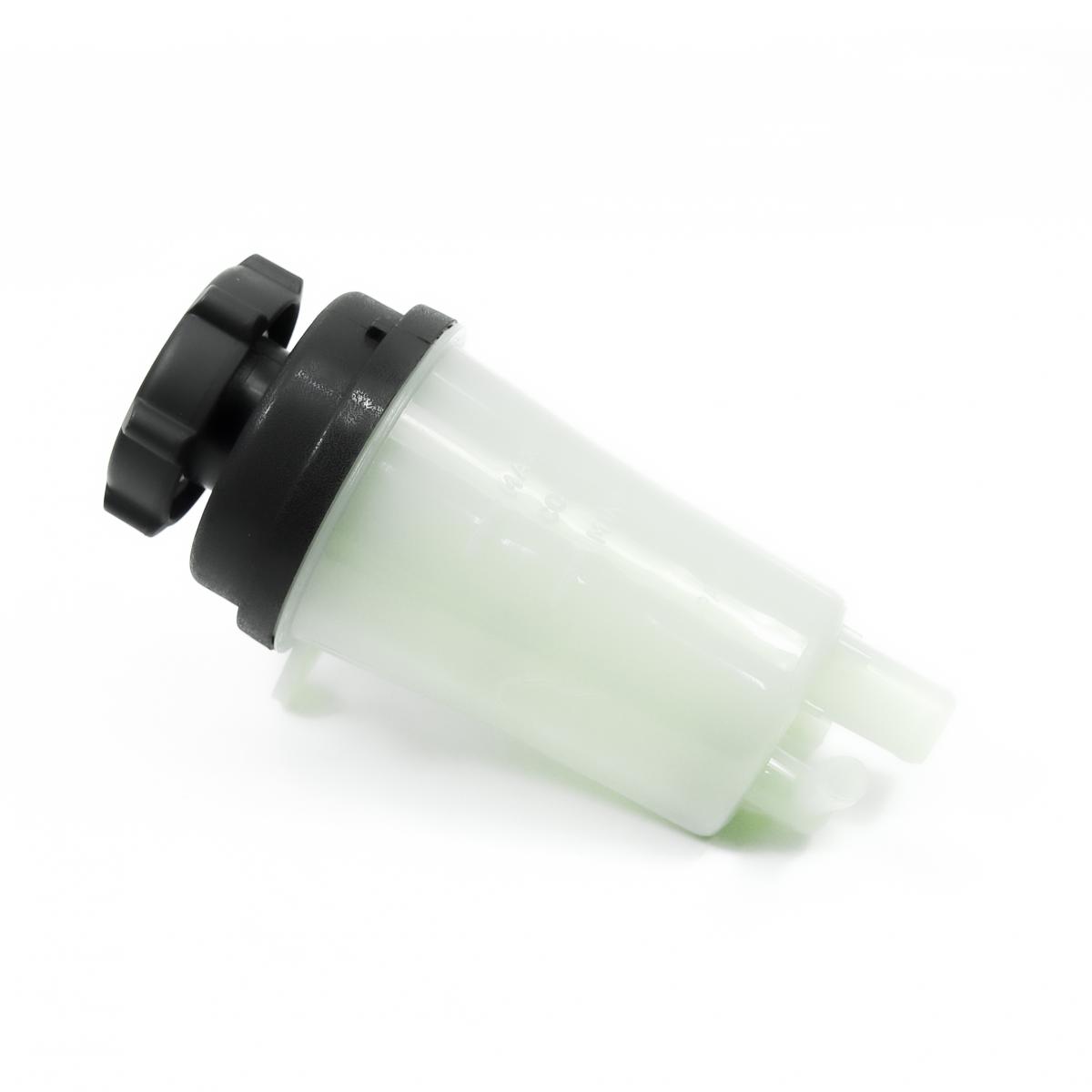
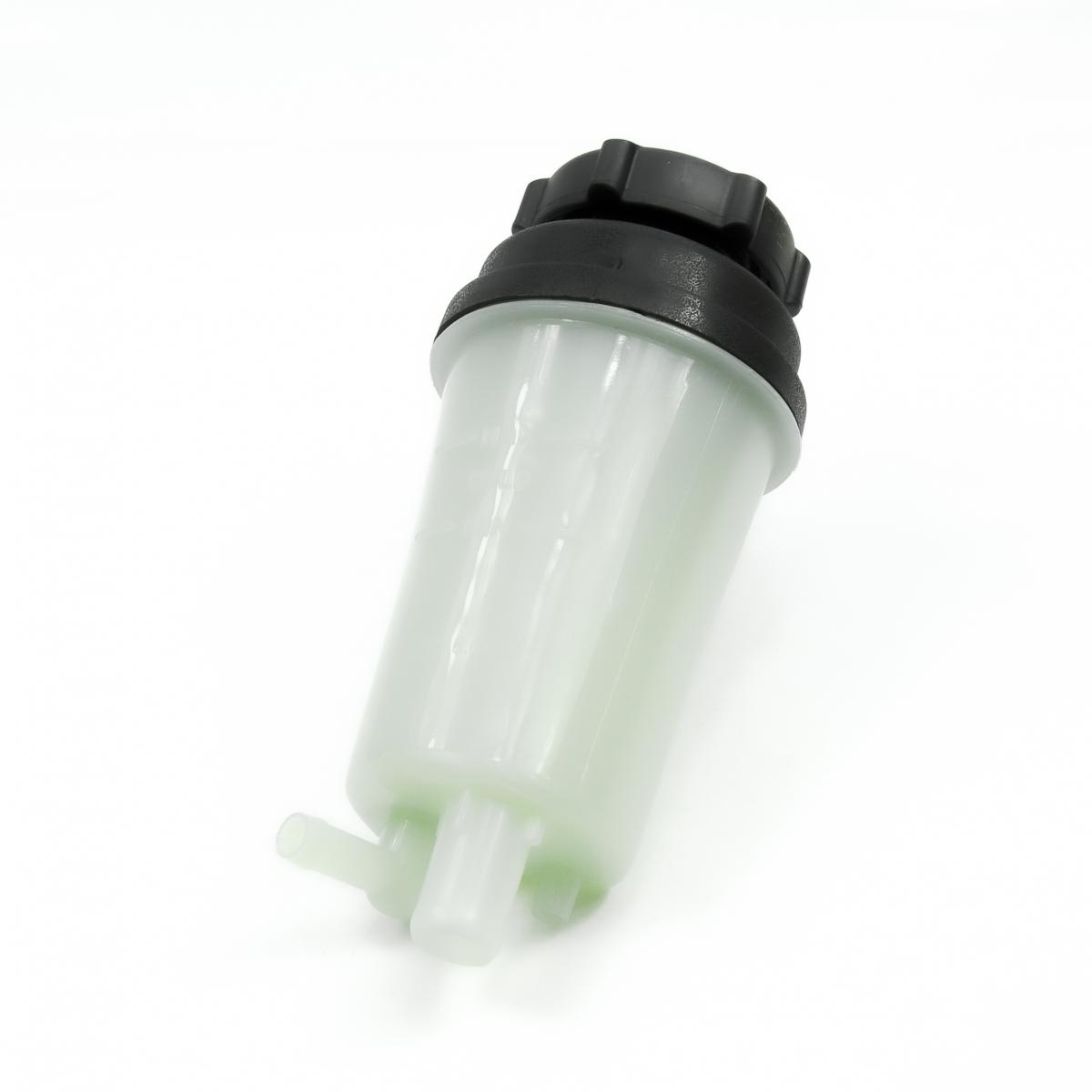
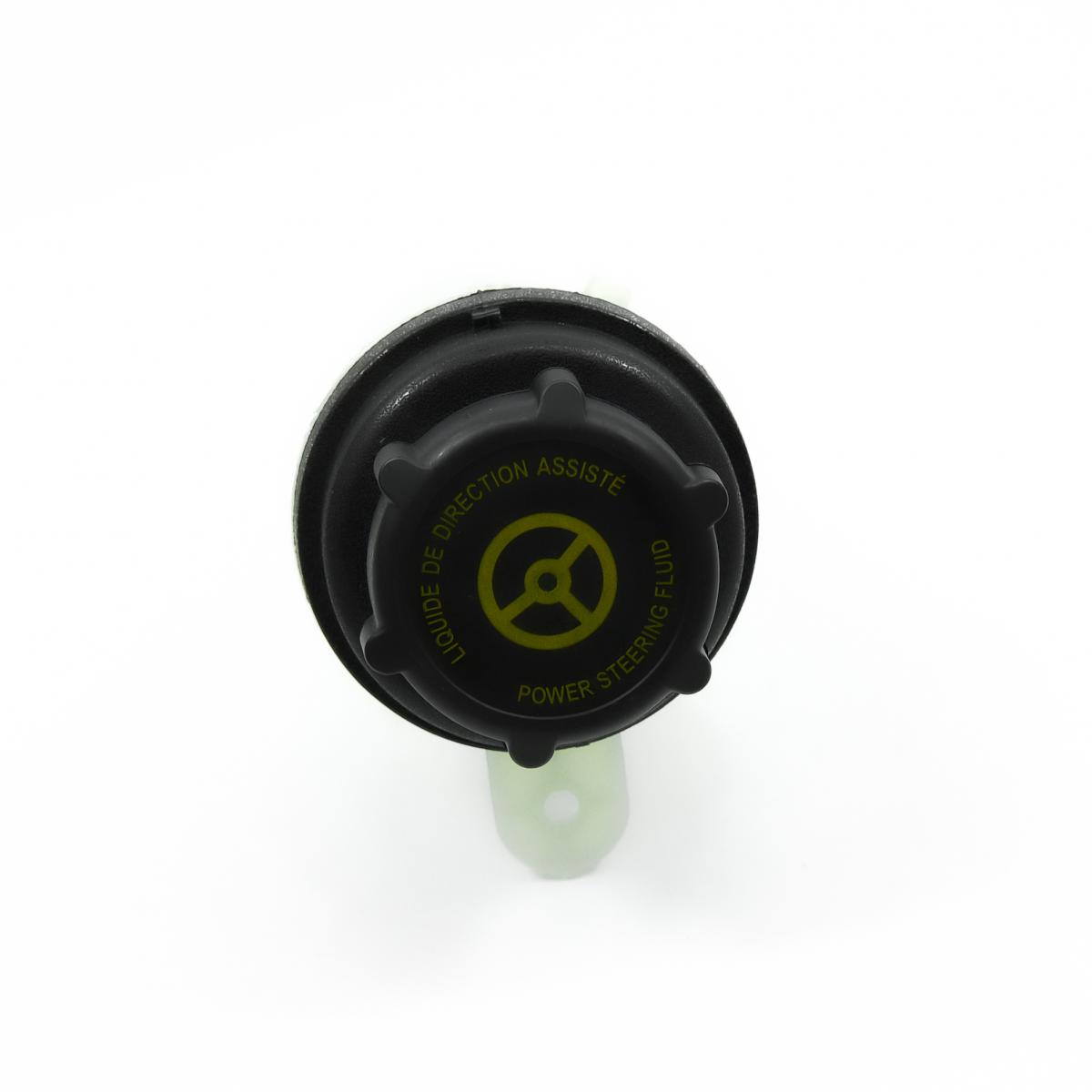
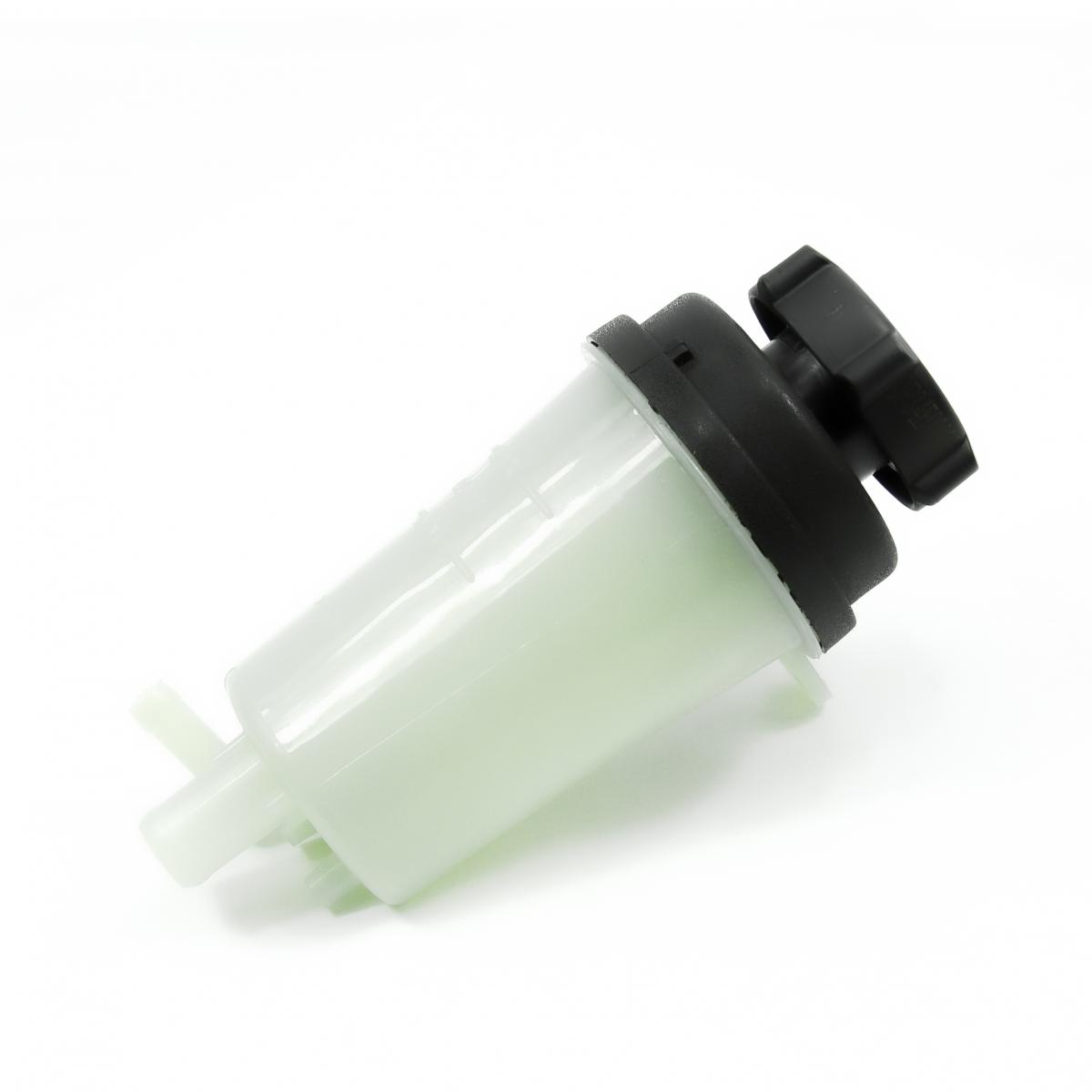
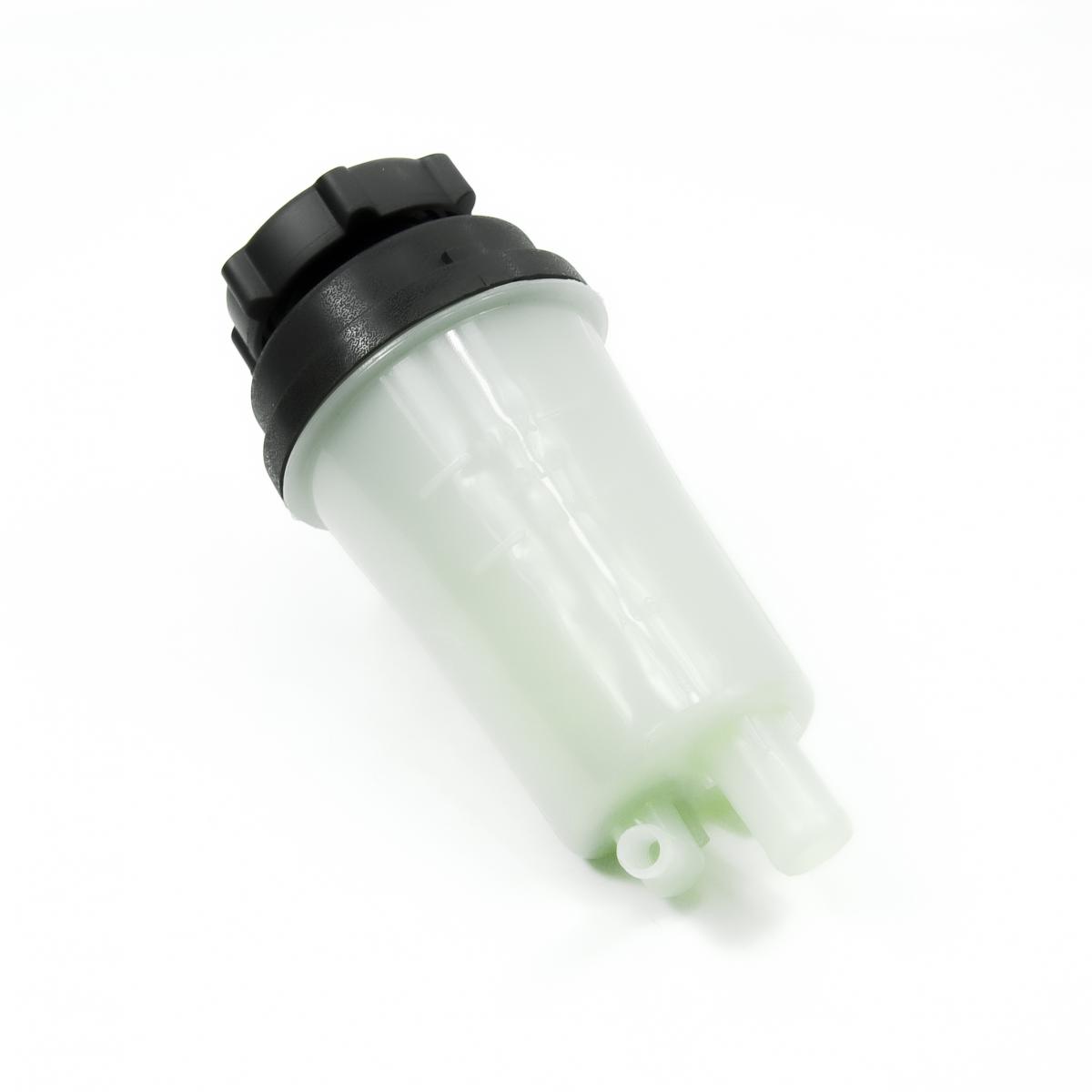
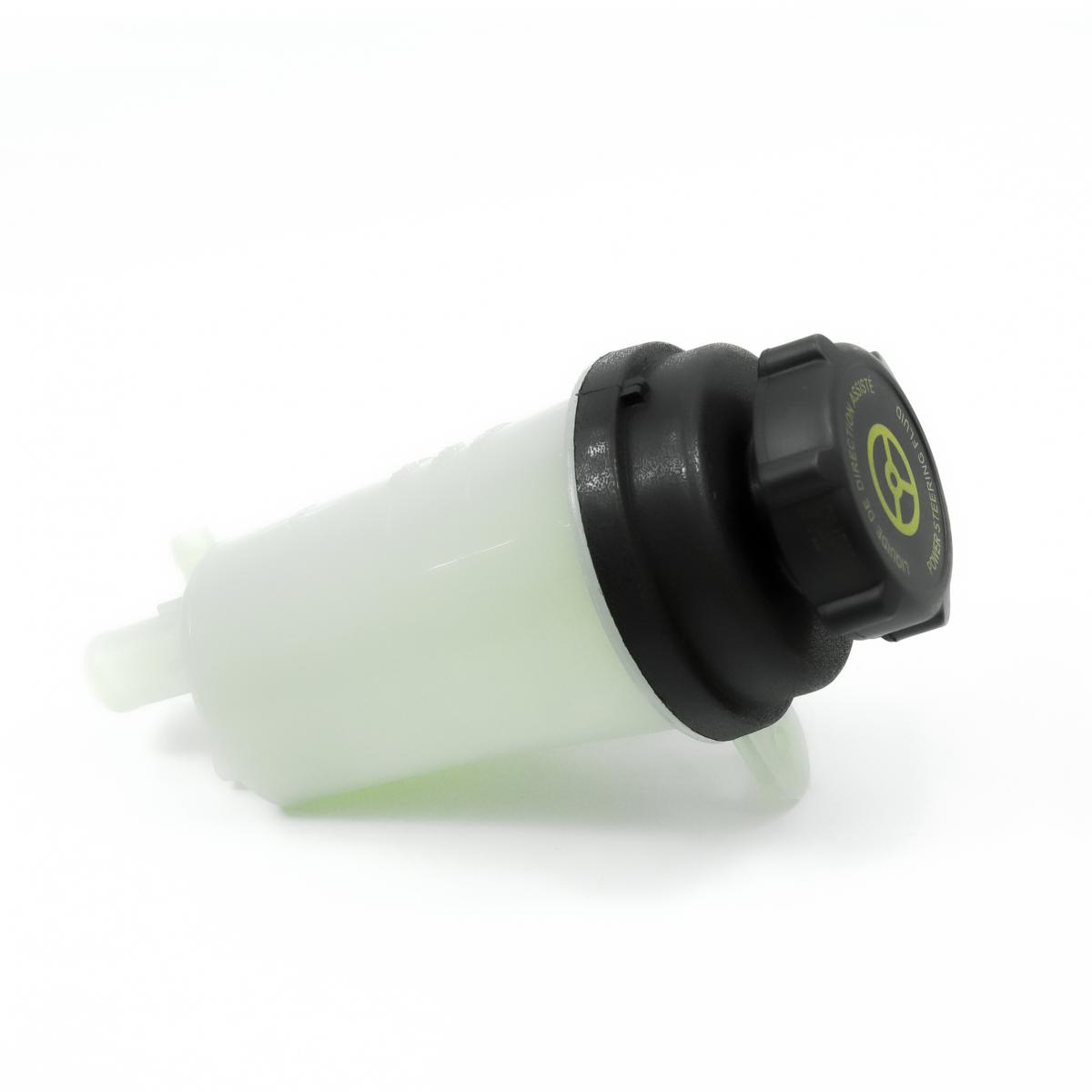
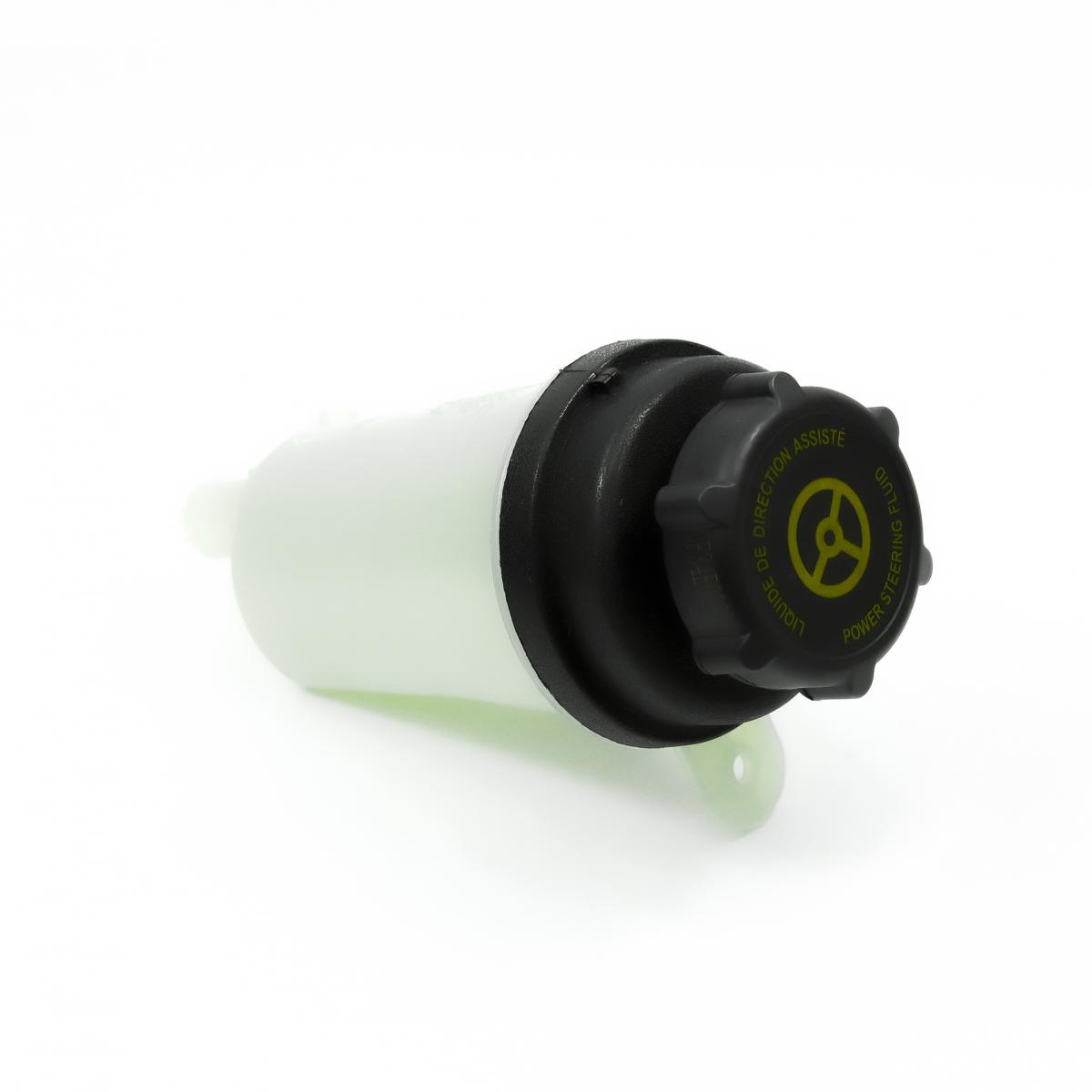
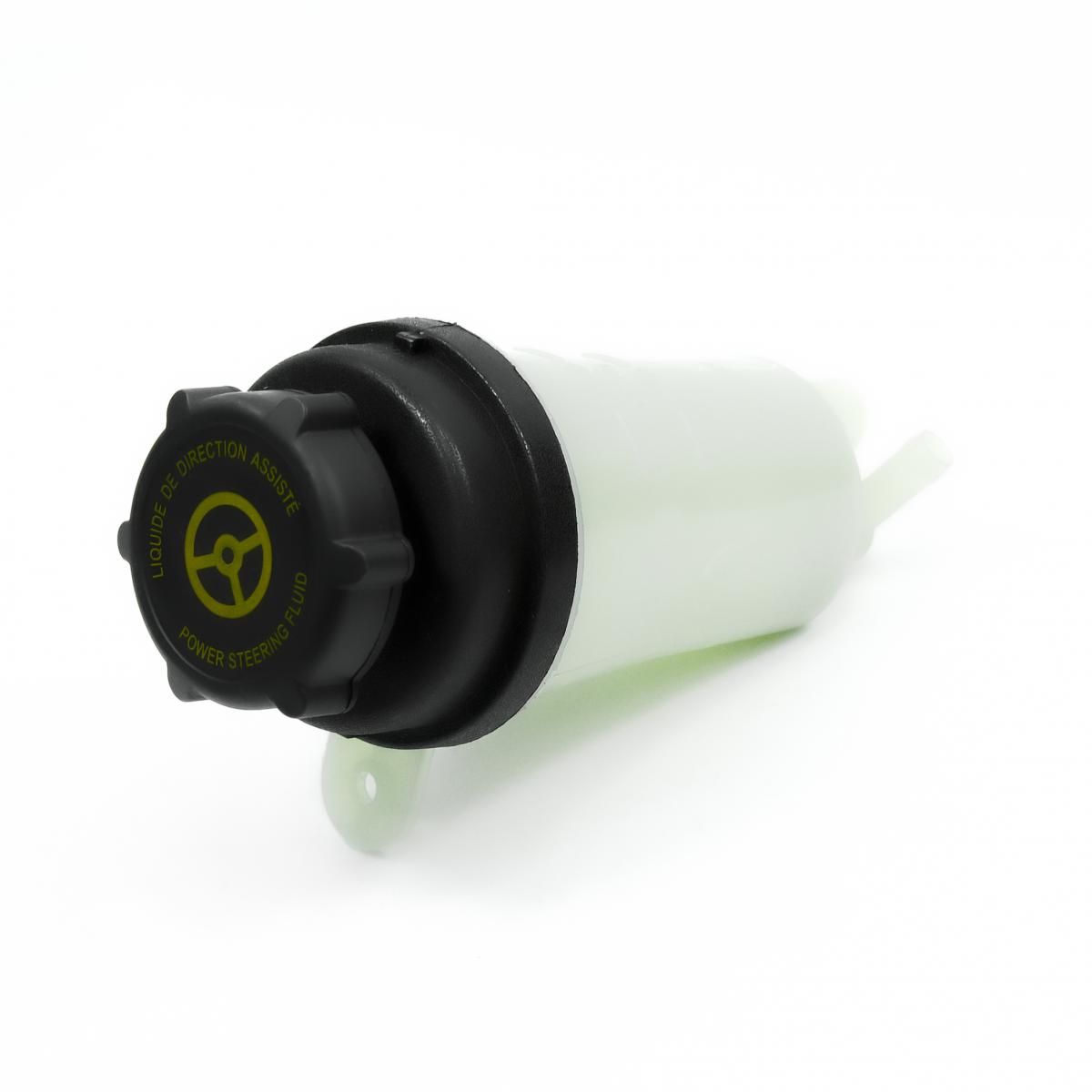
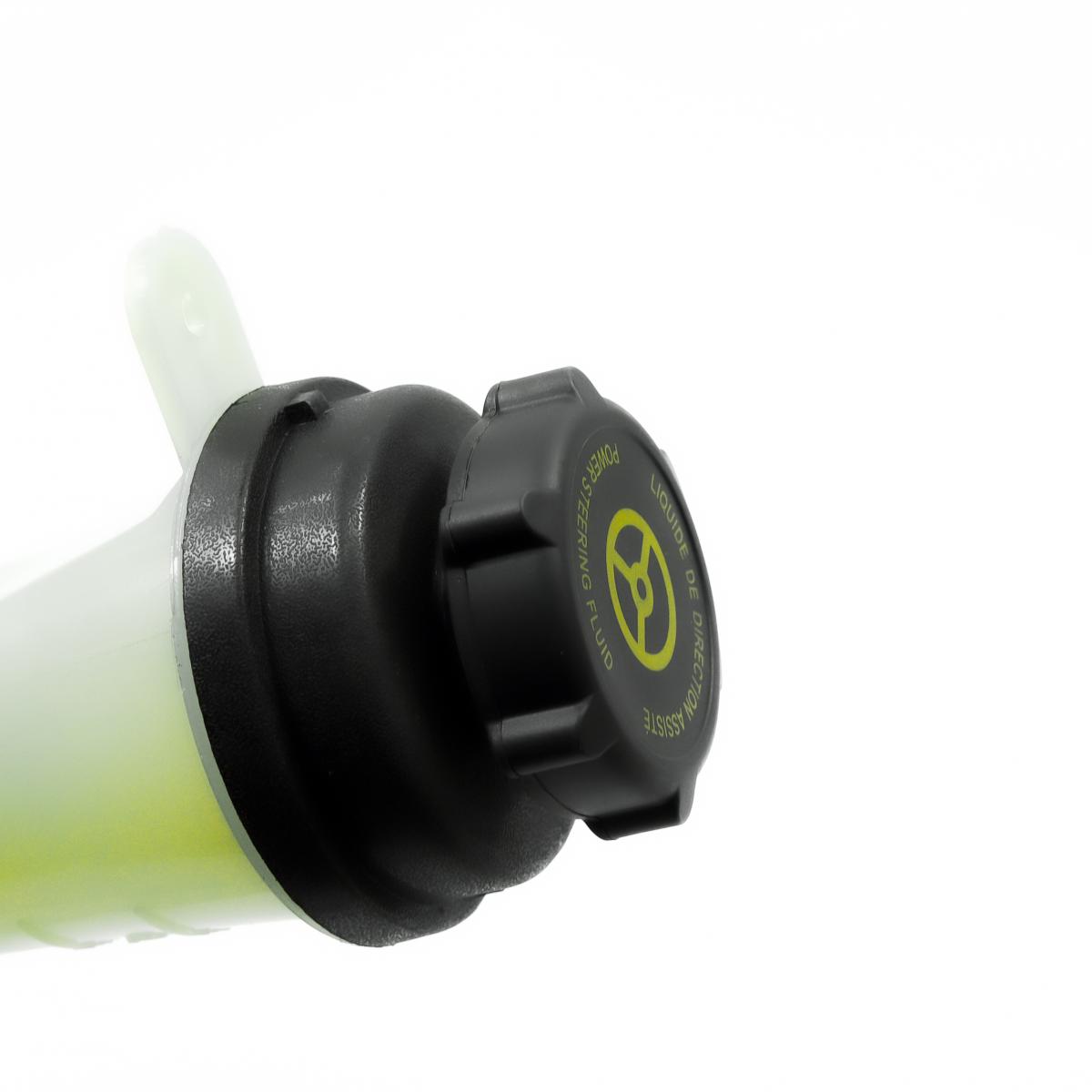
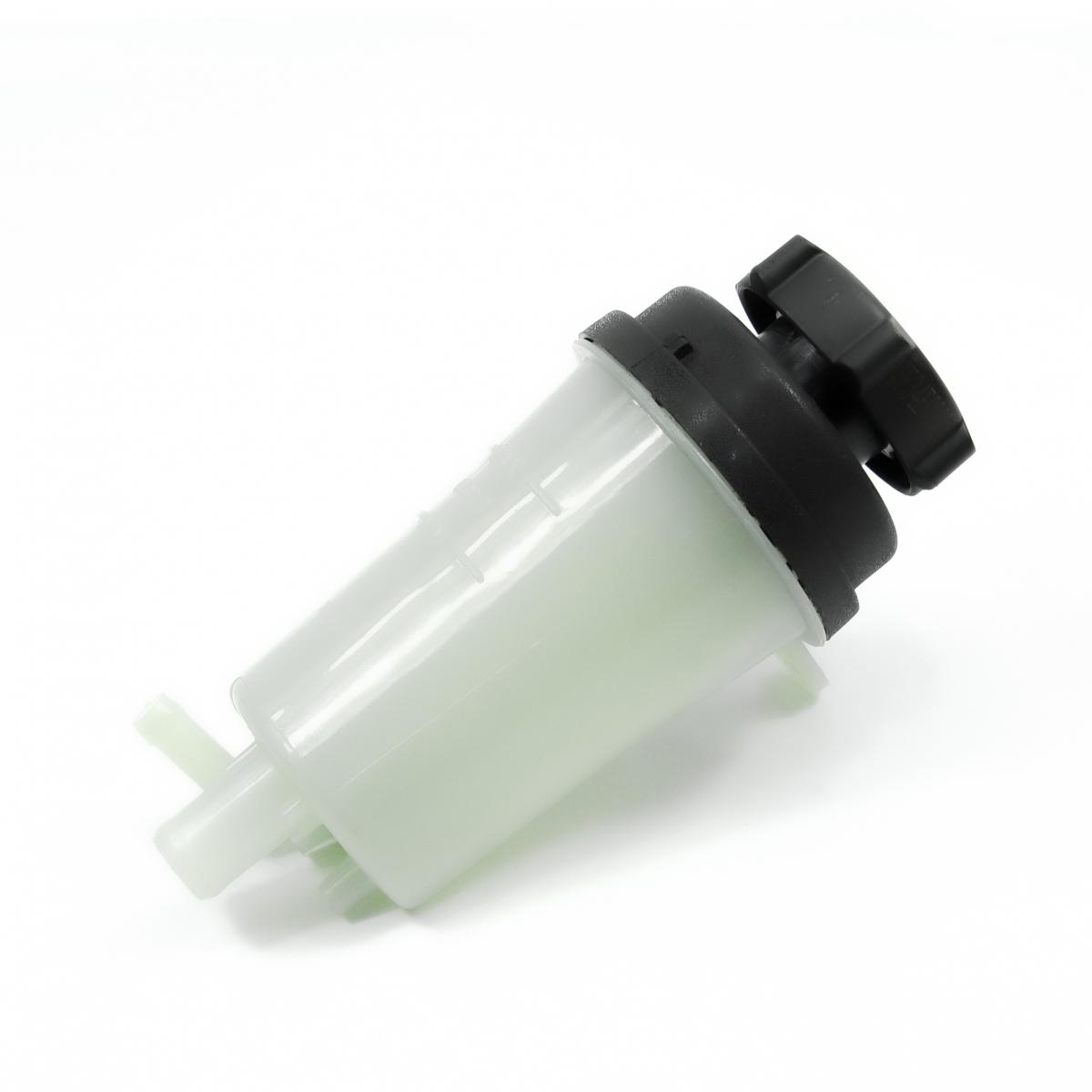
FORD 1742506 RESERVOIR ASSY OIL
Product Specifications
| FORD | 1742506 |
| FORD | 1892564 |
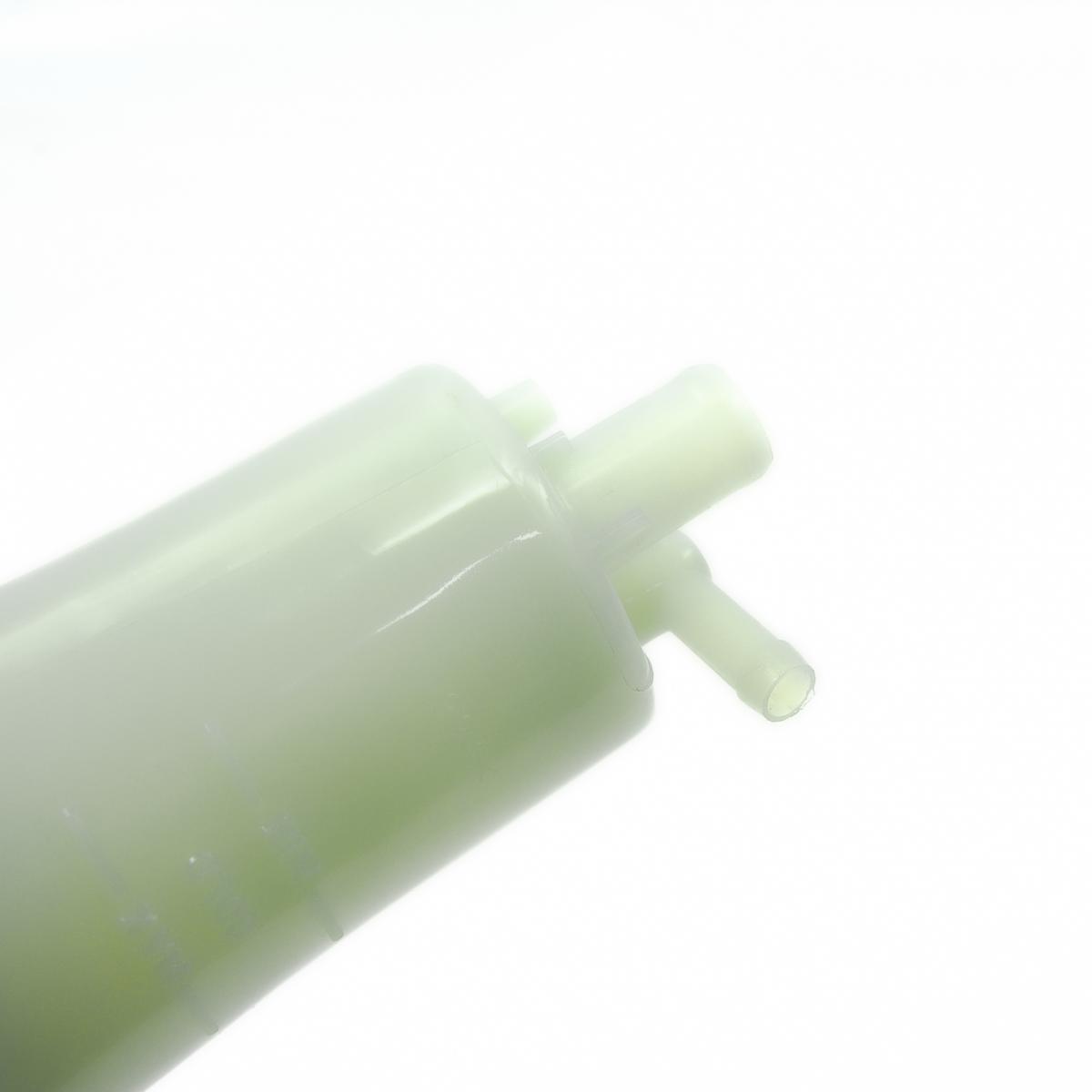
The RESERVOIR ASSY OIL is the power steering fluid reservoir — a translucent or opaque plastic vessel mounted in the engine bay that stores the hydraulic fluid reserve for the power steering circuit, provides a deaeration volume where entrained air bubbles can separate from the returning fluid before it re-enters the pump inlet, and houses the integrated filter screen and the low-pressure return line connection. The reservoir operates as the low-pressure atmospheric end of the hydraulic power steering circuit: fluid returns from the steering rack through the low-pressure return hose into the reservoir's upper section, where the reduction in fluid velocity and the reservoir's baffle geometry cause entrained air to separate and vent through the cap's breather; the deaerated fluid then drains under gravity to the pump inlet pick-up at the reservoir's lowest point, from where the vane pump draws it and pressurises it for delivery to the rack's rotary valve. The reservoir cap incorporates a dipstick or MIN/MAX level markings moulded into the reservoir body for fluid level checking without removing the cap, and a vent valve in the cap that allows air exchange as the fluid volume changes with temperature while preventing dust and moisture ingress. An integrated mesh screen or foam filter element at the pump outlet port of the reservoir captures particulate contamination from the returning fluid before it reaches the pump inlet — this screen's condition is critical to pump service life as particles that bypass it are drawn directly into the pump's precision-clearance vane and rotor assembly.
This unit — FORD 1742506 — is manufactured to OEM-equivalent specifications: reservoir body volume for the correct system fluid capacity, inlet and outlet port positions and connection tube diameters, mounting bracket geometry for the engine bay attachment position, cap and dipstick type with MIN/MAX markings calibrated for the system's operating temperature range, internal baffle geometry for air separation efficiency, integrated filter screen micron rating and flow area, and cap vent valve flow rate are matched to the original part. Supplied as a complete reservoir assembly with cap and filter. Available wholesale from 3.9 USD, MOQ 200 pcs, production lead time 38 days.
Power steering fluid reservoirs fail through cracks in the reservoir body from underbonnet heat cycling and impact damage that produce external fluid leaks; through internal sludge accumulation from severely degraded power steering fluid that blocks the integrated filter screen, restricting pump inlet flow and causing pump cavitation; and through cap seal deterioration that allows atmospheric contamination to enter the fluid, introducing abrasive particles to the pump and rack circuits. A cracked reservoir that is losing fluid progressively is a fire risk in addition to a loss-of-steering-assistance risk — power steering fluid dripping onto the exhaust manifold ignites readily at the exhaust's operating temperature.
- Drain the reservoir completely before disconnecting the hoses — use a clean turkey baster or hand pump to remove as much fluid as possible from the reservoir before loosening any hose clamp; this minimises the fluid spill when the return hose is disconnected; cap the pump inlet hose immediately after disconnection with a clean rag to prevent dirt ingress to the pump inlet during the reservoir replacement procedure.
- Flush both the pump inlet hose and the return hose with fresh power steering fluid before connecting them to the new reservoir — degraded fluid and sludge deposits in the hoses will immediately contaminate the new reservoir's filter screen and the fresh fluid; pour a small quantity of fresh power steering fluid of the correct specification through each hose from the reservoir end and collect it at the other end in a clean white container; inspect the flushed fluid for particulate contamination and repeat the flush until the emerging fluid is clean.
- Replace both hose connection clamps simultaneously with the reservoir — spring clamps that have been compressed on the hose stubs for an extended period take a permanent set and may not return to their designed clamping diameter when re-expanded onto the new reservoir's stubs; a clamp that does not fully seat on the stub allows an air leak at the pump inlet connection that causes cavitation, or a fluid leak at the return hose connection; replace with new OEM-type spring clamps or screw clamps of the correct diameter.
- Fill the new reservoir with fresh power steering fluid of the exact OEM specification to the MIN level mark before connecting the pump inlet hose — starting the engine with a dry pump inlet hose draws air rather than fluid through the pump on initial startup, causing a dry-running condition for the first few seconds that damages the pump's precision vane clearances; pre-filling ensures fluid is immediately available at the pump inlet on first startup.
- Bleed the power steering system after installation by turning the steering lock-to-lock five times with the engine running — this purges air from the pump, high-pressure line, rack, and return line into the reservoir where it can deaerate and vent through the cap; top up the fluid level after each lock-to-lock cycle as the level drops when air is expelled from the circuit; the system is fully bled when the fluid level stabilises, no further air bubbles are visible in the reservoir, and the pump no longer produces any cavitation noise.
- Install the new RESERVOIR ASSY OIL (FORD 1742506), complete the bleed procedure, confirm the fluid level is at the MAX mark at operating temperature, inspect all hose connections for leaks with the engine running at idle and again at full lock, confirm smooth quiet steering assistance at all steering angles, and recheck the fluid level after a 10-minute test drive before returning the vehicle to service.
| Part | Reason for Combined Replacement |
|---|---|
| Power Steering Fluid ATF or dedicated PS fluid — OEM specification | Reservoir replacement provides the mandatory opportunity to drain and renew the power steering fluid — reusing degraded fluid in a new reservoir immediately begins depositing varnish and sludge on the new reservoir's clean internal surfaces and filter screen, reproducing the blockage condition within a short period. Always drain the system as completely as possible through the reservoir and refill with fresh fluid of the exact OEM specification; never mix fluid types even when topping up a partially filled system as incompatible additive packages produce deposits that accelerate rack seal and pump wear. |
| Power Steering Pump Vane pump assembly — OEM ref. varies | A reservoir that has been allowing a partially blocked filter screen to restrict pump inlet flow has been causing the pump to cavitate at every cold start and parking manoeuvre. A pump that has been operating under sustained cavitation has accelerated vane tip and rotor bore wear from the collapse of cavitation bubbles against these surfaces. If the pump produces a whining noise after reservoir replacement and system bleed, test its output pressure — a pump delivering below the OEM specification pressure requires replacement alongside the new reservoir; continuing with a cavitation-damaged pump will produce the same noise complaint within a short period of the reservoir service. |
| Power Steering Return Hose Low-pressure return line — application-specific | The return hose connecting the steering rack to the reservoir accumulates internal varnish deposits from degraded power steering fluid over the same service period as the reservoir. A return hose with restricted bore reduces fluid return flow to the reservoir, maintaining elevated pressure at the rack's return port and reducing rack end seal life. With the reservoir removed for replacement, inspect the return hose by squeezing its cross-section — a hose that does not return to its full round diameter when released has an internal structure failure; replace the return hose simultaneously with the reservoir to ensure the complete low-pressure circuit is restored to correct flow capacity. |