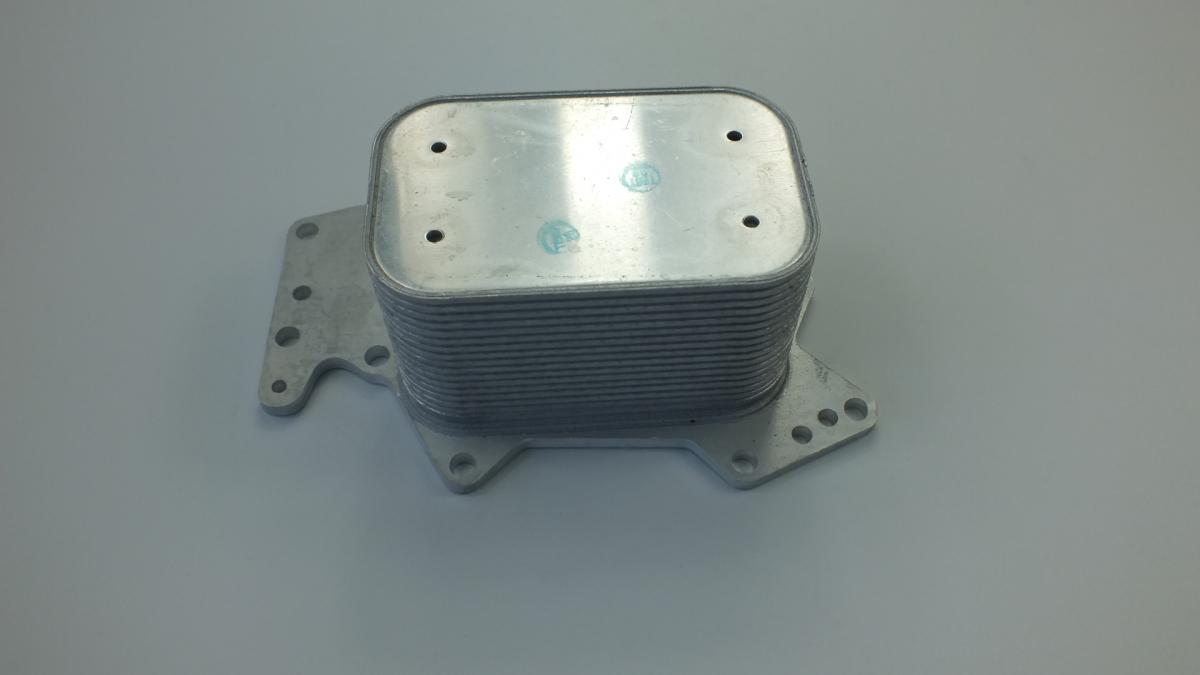
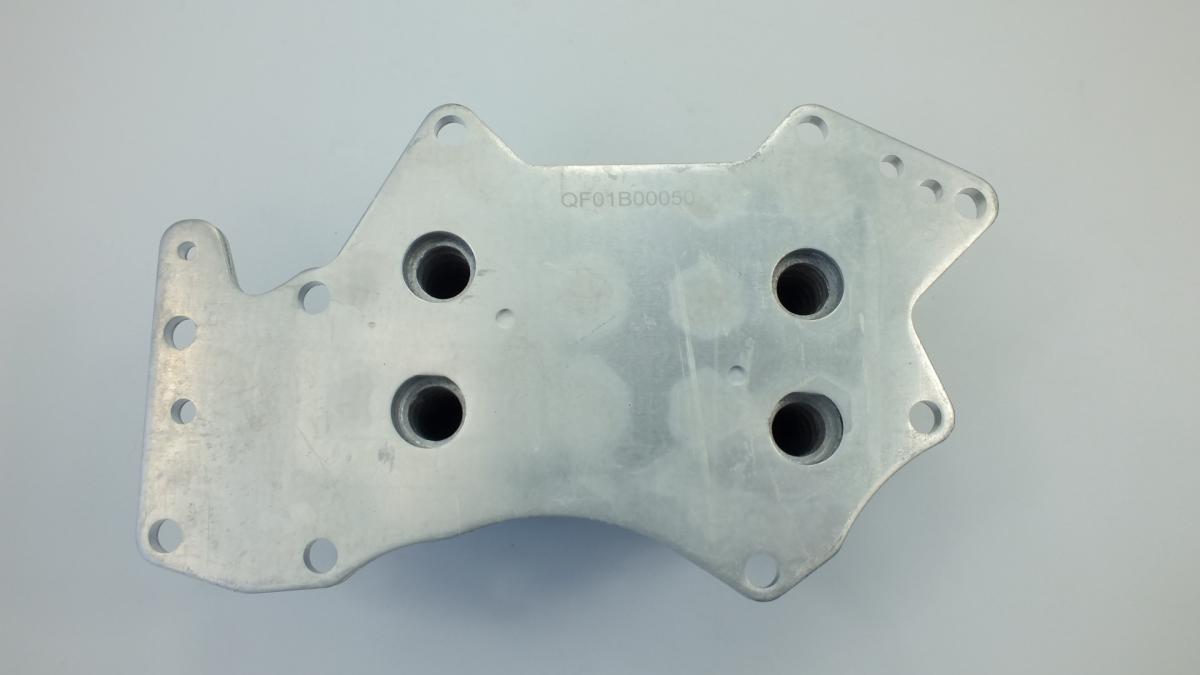
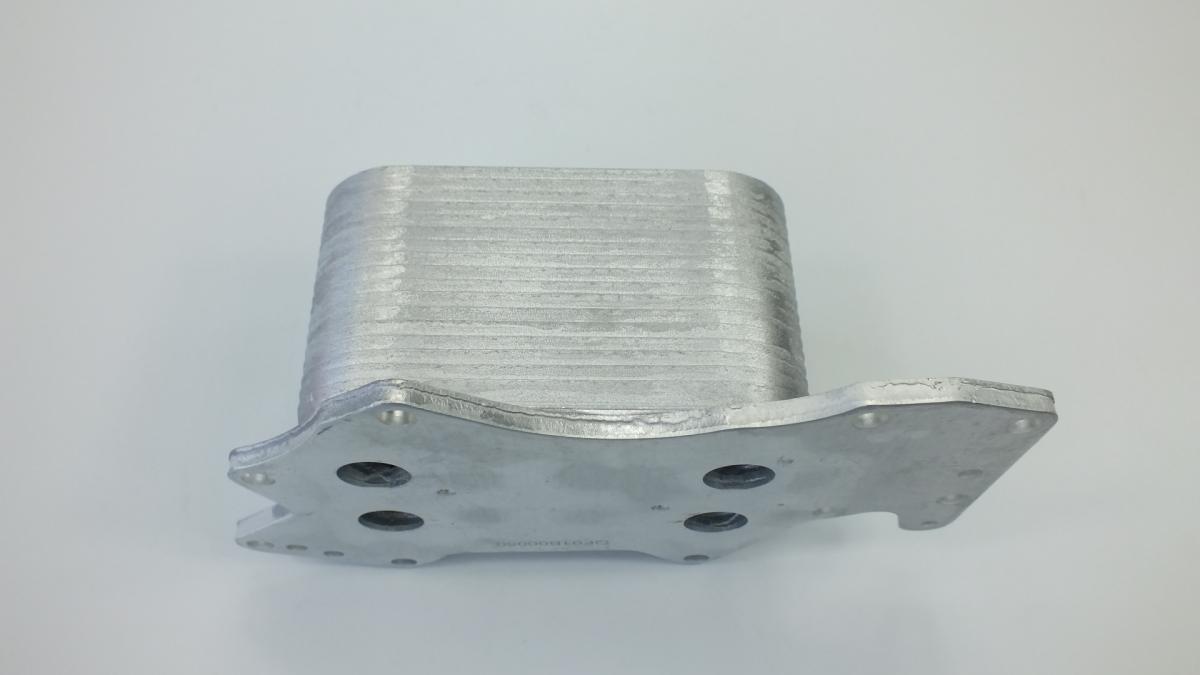
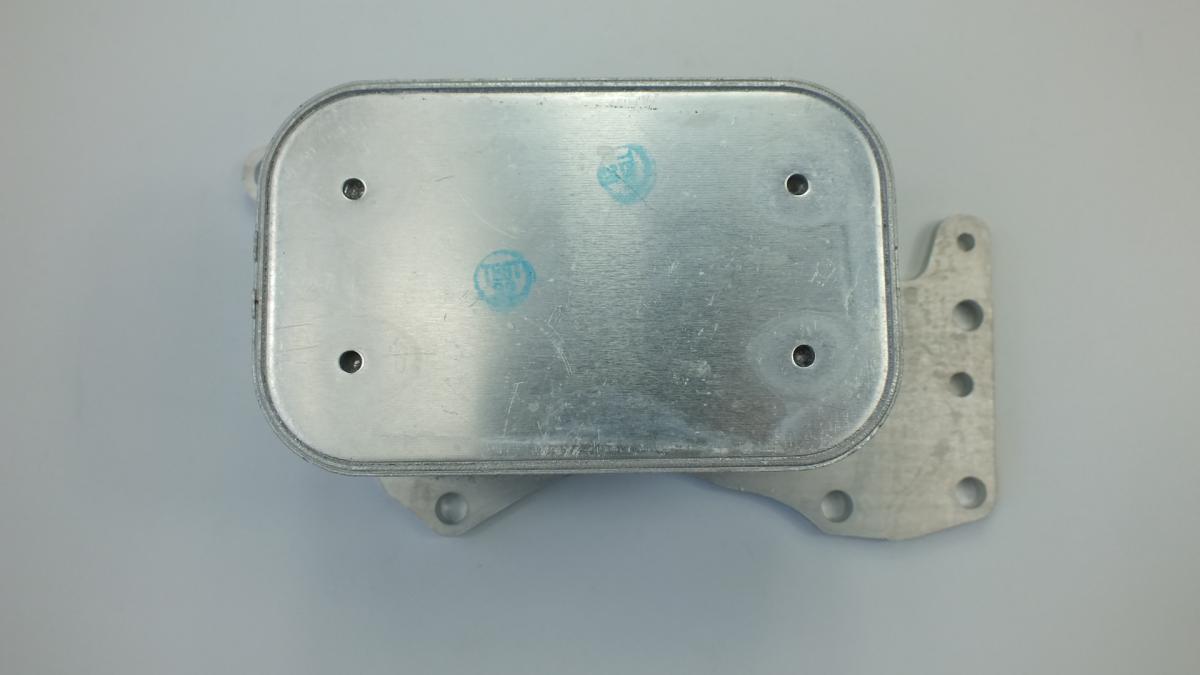
VAG/PORSCHE 059117021K COOLER ASSY-OIL
Product Specifications
| VAG/PORSCHE | 059117021K |
The COOLER ASSY-OIL is a heat exchanger that transfers thermal energy from hot engine oil or automatic transmission fluid into a cooler medium — either the ambient airstream passing through a dedicated external core mounted in the front bumper airstream, or the engine coolant circuit in an oil-to-water design integrated with or adjacent to the oil filter housing — to maintain oil temperature within the range required for correct viscosity, lubrication film integrity, and oxidation resistance. Engine oil coolers on performance, turbocharged, and heavy-duty engines use an air-to-oil design with an aluminium tube-and-fin or stacked-plate core mounted in front of the main radiator, routing pressurised oil from the main gallery through the core and returning cooled oil to the engine. Oil-to-water coolers — the most common type on modern passenger car engines — use a compact stacked-plate aluminium core bolted to the oil filter housing that routes oil through alternating passages separated by coolant-carrying plates; in cold start conditions the cooler acts as an oil warmer, using hot coolant to accelerate oil temperature rise and reduce cold-start wear; at sustained high load the same unit acts as a cooler, capping oil temperature by rejecting heat to the coolant circuit. Transmission oil coolers on automatic gearbox vehicles are typically integrated into the radiator end tank or mounted as a separate cooler in the front bumper airstream.
This unit — VAG/PORSCHE 059117021K — is manufactured to OEM-equivalent specifications: core dimensions and plate count, oil inlet and outlet port thread sizes and positions, coolant port geometry on oil-to-water designs, mounting bolt pattern for filter housing attachment, maximum operating pressure rating, and overall assembly dimensions for bumper or filter housing fitment are matched to the original part. Supplied as a direct replacement for standard fitment. Available wholesale from 10.41 USD, MOQ 20 pcs, production lead time 43 days.
Oil coolers fail through internal plate delamination or seal failure that allows oil and coolant to mix in the oil-to-water type — producing the characteristic milky oil or oil-contaminated coolant that indicates cross-contamination — through external corrosion of the aluminium core from road salt, and through blockage of the oil galleries with sludge from extended oil change intervals that restricts oil flow through the cooler and causes oil temperatures to rise unchecked. A failed oil-to-water cooler that has allowed coolant into the engine oil requires a complete oil system flush in addition to cooler replacement, as coolant contamination destroys the oil's lubrication properties and causes bearing damage within a short period of continued operation.
- On oil-to-water cooler failures with confirmed cross-contamination, perform a complete engine oil circuit flush before fitting the new cooler — coolant-contaminated oil leaves a glycol film on every internal surface including the crankshaft main bearings, camshaft journals, and oil pump gears; fitting a new cooler without flushing recirculates this contaminated film through the new cooler's passages, corroding the aluminium plates from the inside; drain the oil, fill with a dedicated engine flush compound, run for 10 minutes at idle, drain completely, and refill with fresh oil before starting the engine with the new cooler installed.
- Drain the coolant to below the cooler level before removing an oil-to-water cooler — the cooler is part of the pressurised coolant circuit; removing the cooler with the system full will spill several litres of coolant; collect drained coolant in a sealed container and inspect for oil contamination — brown or oily coolant confirms the cooler has been leaking internally and the entire coolant circuit requires flushing before refilling.
- Replace all O-ring seals and mounting gaskets at every cooler port connection and at the filter housing mounting face — the O-rings at oil and coolant ports are compressed single-use seals that will not reseal reliably if reused; use only the seals supplied with the replacement cooler or OEM-specification replacements; for oil-side seals use nitrile or HNBR compound; for coolant-side seals use EPDM compound — the two materials are not interchangeable.
- Torque all cooler mounting bolts to OEM specification in a diagonal sequence — uneven tightening distorts the cooler's mounting flange and prevents the gasket from sealing uniformly, creating leak paths under oil pressure cycling; on oil-to-water coolers bolted to the filter housing, the mounting bolt torque is typically 20–35 Nm — always verify in the engine-specific service data and use a torque wrench rather than tightening by feel.
- On air-to-oil coolers in the bumper airstream, straighten all bent fins before installation — use a fin comb of the correct fin pitch to straighten any fins damaged during shipping; a cooler with 15% or more of its fin area blocked by damage will provide measurably reduced cooling capacity; bent fins also create turbulence that erodes adjacent fins over time.
- Install the new COOLER ASSY-OIL (VAG/PORSCHE 059117021K), refill with fresh engine oil and the correct coolant specification, bleed the cooling system, start the engine and monitor oil pressure and oil temperature on scan tool live data for the first 10 minutes of operation, check all cooler connections for leaks under pressure, confirm oil and coolant remain uncontaminated after one full heat cycle, and perform an oil and filter change after 500–1,000 km if cross-contamination was confirmed to purge any residual contamination from the system.
| Part | Reason for Combined Replacement |
|---|---|
| Oil Filter and Cooler Seal Kit O-rings and gaskets, application-specific | Every O-ring and gasket at the cooler oil and coolant ports must be replaced with the cooler — reusing compressed seals on a newly installed cooler under oil pressure cycling produces an immediate or early leak. Always use the seal kit supplied with the replacement cooler or OEM-specification seals of the correct material compound for each circuit; oil-side and coolant-side seals are different compounds and are not interchangeable. |
| Engine Oil and Oil Filter Grade and specification per OEM requirement | Oil cooler replacement requires draining the engine oil at minimum, and on cross-contamination cases requires a full flush procedure. Refilling with fresh oil and a new filter after cooler replacement removes any residual contamination and ensures the new cooler operates in a clean oil circuit. On contamination cases, a follow-up oil and filter change after 500–1,000 km is recommended to purge any remaining traces from deep within the circuit. |
| Coolant (Engine Antifreeze) OAT or HOAT per OEM specification | Oil cooler replacement requires coolant drainage and provides the correct opportunity to renew the coolant if it is overdue. On contamination cases the coolant is always fully drained and the circuit flushed — refilling with fresh coolant of the correct OEM specification restores the circuit's corrosion inhibitor protection and prevents the coolant-side passages in the new cooler from being exposed to the acids present in degraded or oil-contaminated old coolant. |