HONDA 36531RB0003 SENSOR OXYGEN
Product Specifications
| HONDA | 36531RB0003 |
| HONDA | 36531RE0003 |
| HONDA | 36531R40A01 |
| HONDA | 36531RBJ003 |
| HONDA | 36531RE1Z01 |
| HONDA | 36531RTW003 |
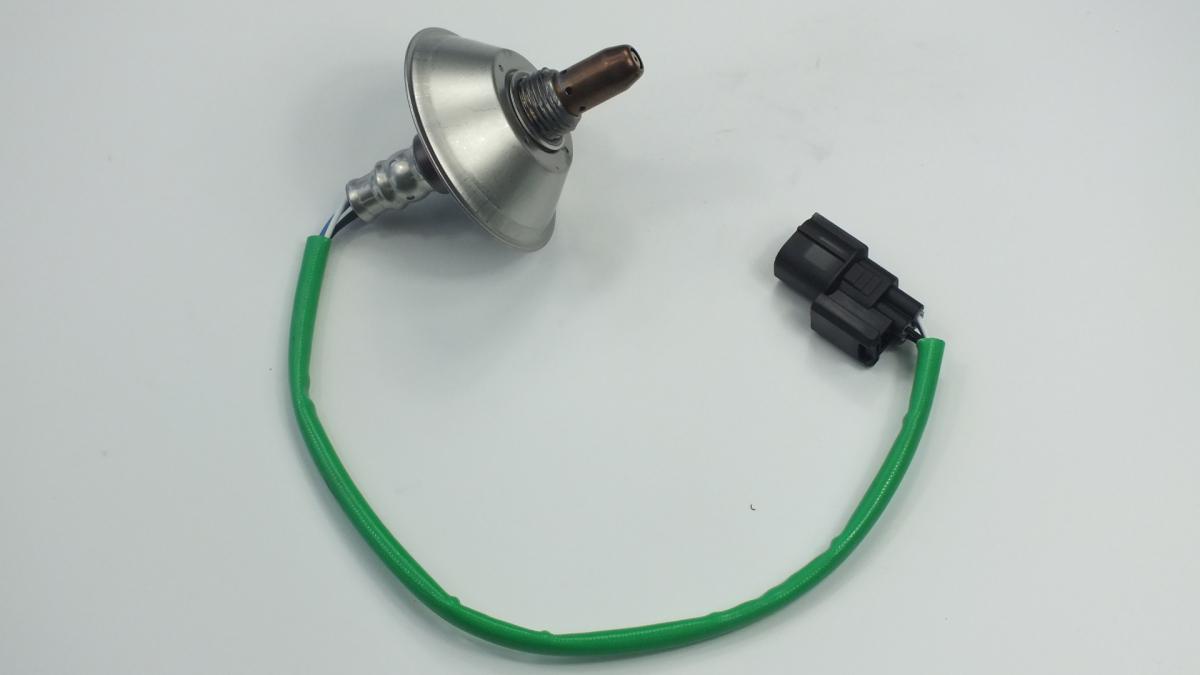
The Honda Air/Fuel Ratio (AFR) Sensor — OEM reference 36531RB0003 — is a wideband upstream (pre-catalyst, Sensor 1) oxygen sensor used across a range of compact Honda and Acura petrol models from the mid-2000s through the mid-2010s. It replaces the earlier narrow-band switch-type sensors used on older Honda engines, delivering a continuous, linear signal across a wide lambda range (approximately λ 0.7–1.3 / AFR 10–19:1) rather than a simple rich/lean toggle.
Internally the sensor combines a Nernst cell (measurement element) with a pump cell that actively moves oxygen ions in or out of a sealed reference cavity to maintain stoichiometric conditions. The pump current required to sustain this balance is the linear AFR signal transmitted to Honda’s PGM-FI engine management system. An integrated ceramic heater (the two heater wires in the 4-pin connector) brings the tip to operating temperature (approximately 750–850°C) within 20–30 seconds of a cold start, enabling immediate closed-loop fuel control and reducing cold-start emissions.
The PGM-FI ECU uses the upstream AFR sensor signal as the primary closed-loop fuel correction input, calculating short-term and long-term fuel trims. It also feeds the onboard OBD-II catalyst efficiency monitor (the downstream sensor compares against this reference). Accurate upstream AFR data is therefore essential for fuel economy, emissions, and the longevity of the catalytic converter.
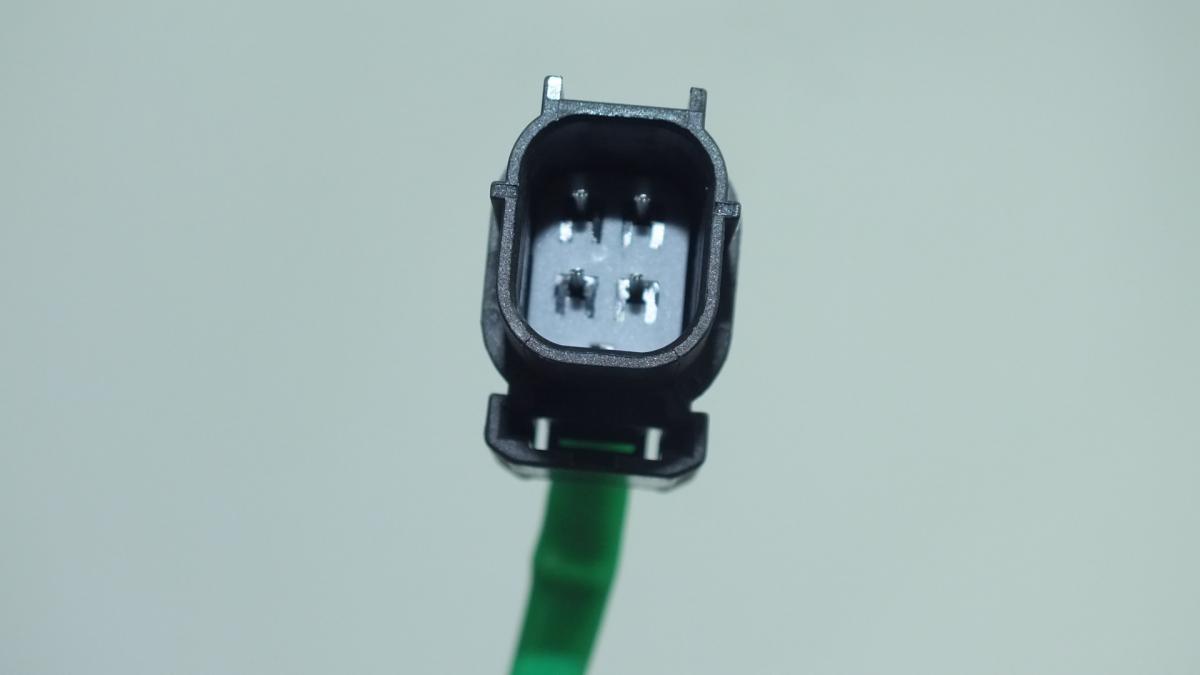
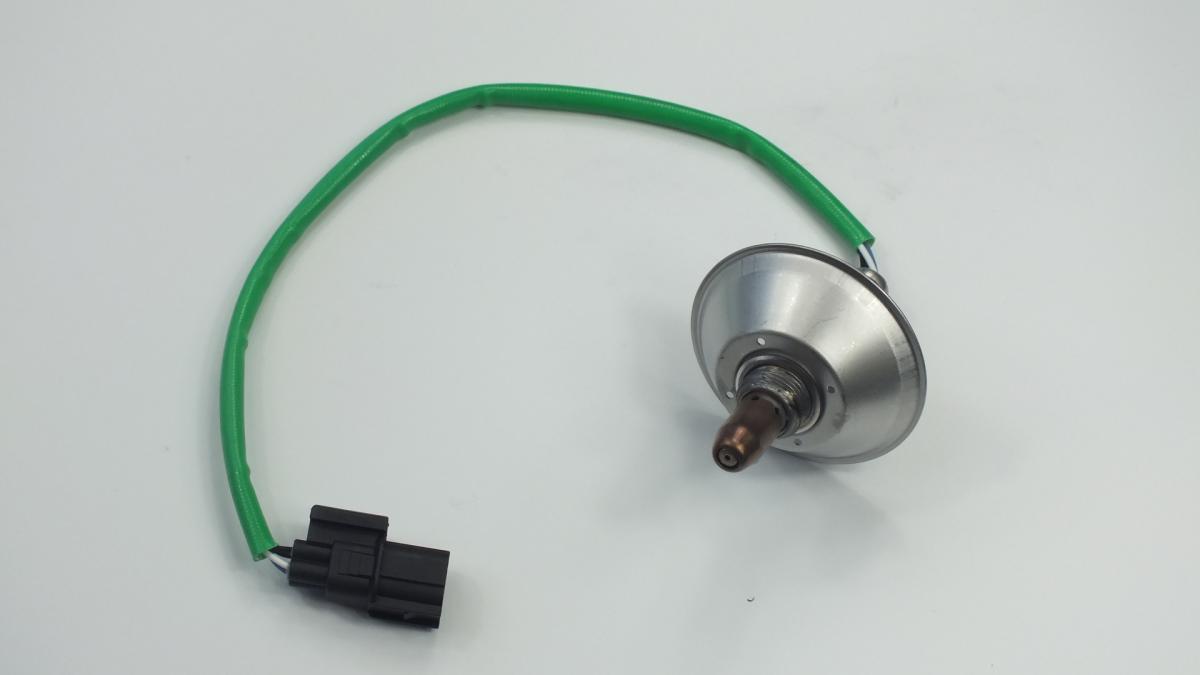
Connector: 4-wire plug-in (2 heater wires, 1 signal current wire, 1 signal ground). Thread: M18 x 1.5. Wire harness length: approximately 485 mm. Net weight: 0.1 kg.
A failing upstream AFR sensor on Honda Fit, Civic, Accord, CR-Z, Insight, CR-V, or Acura ILX/TSX typically presents with the following:
All entries are based on verified OEM cross-reference data. This is the upstream (pre-catalyst, Sensor 1) Air/Fuel Ratio sensor. Always verify the part number against your existing sensor before ordering — sensor position and connector type must match exactly. The downstream sensor uses a different part number and is not interchangeable with this unit.
| Brand | Model | Engine | Years | Key OEM Ref. |
|---|---|---|---|---|
| Honda | Fit / Jazz (GD3 / GE) | 1.5L L4 (L15A / L15B) | 2007–2010 | 36531RB0003 |
| Honda | Fit / Jazz (GE6 / GE8) | 1.5L L4 (L15A) | 2011–2014 | 36531RE0003 |
| Honda | Civic (FB) | 1.5L L4 (LDA3) / 2.4L L4 (K24Z7) | 2012–2015 | 36531RE0003 |
| Honda | Accord (CP / CU) | 2.4L L4 (K24Z3) | 2008–2012 | 36531R40A01 |
| Honda | CR-V (RE) | 2.4L L4 (K24Z1 / K24Z4) | 2010–2011 | 36531R40A01 |
| Honda | CR-Z (ZF1 / ZF2) | 1.5L L4 Hybrid (LEA1) | 2011 | 36531RTW003 |
| Honda | CR-Z (ZF1 / ZF2) | 1.5L L4 Hybrid (LEA1) | 2012–2016 | 36531RE0003 |
| Honda | Insight (ZE2) | 1.3L L4 Hybrid (LDA2) | 2010 | 36531RBJ003 |
| Honda | Insight (ZE2) | 1.3L L4 Hybrid (LDA2) | 2010–2014 | 36531RE0003 |
| Acura | TSX (CU2) | 2.4L L4 (K24Z3) | 2009–2014 | 36531R40A01 |
| Acura | ILX (DE2) | 2.0L L4 (R20A3) / 2.4L L4 (K24Z7) | 2013–2014 | 36531RE0003 |
- Confirm the sensor position before ordering. This is the upstream AFR sensor (pre-catalyst, Sensor 1). On the Honda Fit L15A engine, the upstream sensor is threaded directly into the exhaust manifold; on the Accord/CR-V K24 engines it is mounted in the front exhaust pipe before the catalytic converter. The downstream sensor (post-catalyst, Sensor 2) uses a different part number — never substitute positions.
- Access on Honda Fit (GD/GE): the upstream sensor is in a tight location between the exhaust manifold, firewall, and engine block. On 2009+ Fit models, the connector is routed between the cylinder head and the firewall. Disconnect the connector first — it has a locking tab that must be pressed before the plug separates. Apply penetrating spray (PB Blaster or equivalent) to the sensor base 15–30 minutes before removal if the car has over 60,000 km on the original sensor.
- Work on a warm or cold engine, not a hot one. A warm engine (driven 10–15 minutes, then allowed to cool 20 minutes) is ideal: expanded exhaust threads break free more easily, but the exhaust components are safe to handle. If the engine is fully cold, soak the sensor threads with penetrating spray. Avoid working on a fully hot exhaust — thermal expansion on aluminium manifolds can seize the sensor in place.
- Use a 22 mm (7/8 in) oxygen sensor socket with a wire-pass slot. A standard 22 mm socket will pinch and damage the harness. On Fit models, access from above the engine bay is typically easier than from below due to underbody shielding. Use a flex-head ratchet or a universal joint extension for clearance in the tight space around the exhaust manifold.
- Inspect the bung threads before installation. Clean with a thread chaser (M18 x 1.5) or a small wire brush if corrosion is present. Damaged bung threads will cause exhaust leaks and affect sensor accuracy after installation.
- Check the new sensor for pre-coated threads (factory anti-seize). If threads are pre-coated (silver-grey paste on the thread flank), do not add additional anti-seize — double coating can cause over-torque conditions. If threads are bare, apply a thin coat of nickel-based anti-seize compound to the thread flanks only — avoid the first 1–2 threads at the sensor tip and keep anti-seize away from the ceramic element.
- Thread in by hand for the first 3–4 turns to confirm no cross-threading. Torque to 44 Nm (33 ft-lb) — Honda’s specified torque for M18 x 1.5 exhaust sensor bungs. Do not exceed this value; the ceramic element can crack under over-torque, causing an immediate failure of the new sensor.
- Reconnect the 4-pin connector until the locking tab clicks. On Honda Fit models, route the wiring harness in exactly the same path as the original and re-secure all factory clips and brackets. The harness must be clear of the exhaust manifold heat shield and any moving components.
- Clear stored DTCs with an OBD-II scanner. Start the engine and allow it to reach full operating temperature (approximately 5–10 minutes at idle). Verify live AFR sensor data shows dynamic variation tracking throttle inputs. Perform a short road test and recheck for stored codes before returning the vehicle to service.
| Part | Reason for Combined Replacement |
|---|---|
| Downstream O2 Sensor (Sensor 2, post-catalyst) e.g. Honda 36532RB0003 / Denso 234-4671 |
Both sensors age in the same exhaust environment. When the upstream AFR sensor fails from element contamination or heater degradation, the downstream sensor is usually at a similar point in its service life. Replacing both during one workshop visit avoids a repeat job within months and ensures P0420 catalyst monitoring is accurate after the upstream sensor is renewed. |
| Catalytic Converter e.g. Eastern 30424 / Walker 16499 for L15A Fit |
A failed upstream AFR sensor that causes prolonged rich running can overheat and chemically poison the catalyst substrate. If P0420 (catalyst efficiency) is stored alongside AFR sensor codes, inspect the catalyst before assuming the sensor is the only fault. Replacing only the sensor while the catalyst is damaged will result in P0420 returning within a short time. |
| MAF / MAP Sensor e.g. Honda 37980RB0003 MAP sensor for L15A Fit |
P0171/P0172 fuel trim codes that appear alongside AFR sensor faults can also originate from a contaminated MAP or MAF sensor. Both sensors contribute to the fuel trim calculation; inspecting them simultaneously prevents misdiagnosis and a return visit after replacing only one component. |
| Spark Plugs e.g. NGK IZFR6K-11 / Denso SK20HR11 for L15A |
Chronic rich operation caused by a degraded AFR sensor fouls spark plugs and deposits carbon on electrode tips. On high-mileage Honda Fit and Civic engines, a spark plug replacement alongside the AFR sensor service restores complete combustion performance and avoids rough-idle complaints after the new sensor has restored closed-loop operation. |
| Engine Air Filter e.g. Honda 17220RB0505 / K&N 33-2435 for Fit GE |
A blocked air filter enriches the mixture, accelerating contamination of the upstream AFR sensor’s ceramic element. Renewing the air filter at the same service interval removes a direct cause of premature degradation on the replacement sensor. |