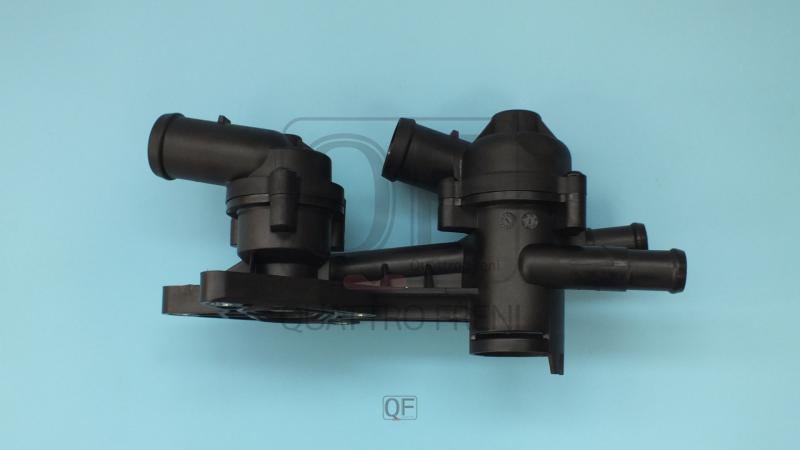
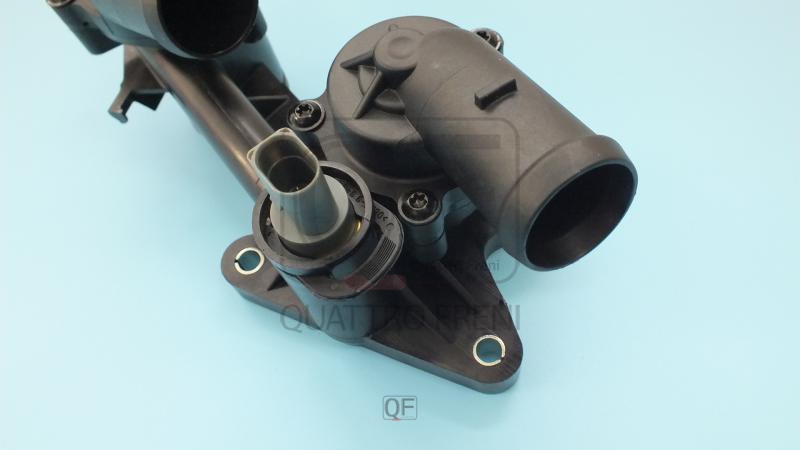
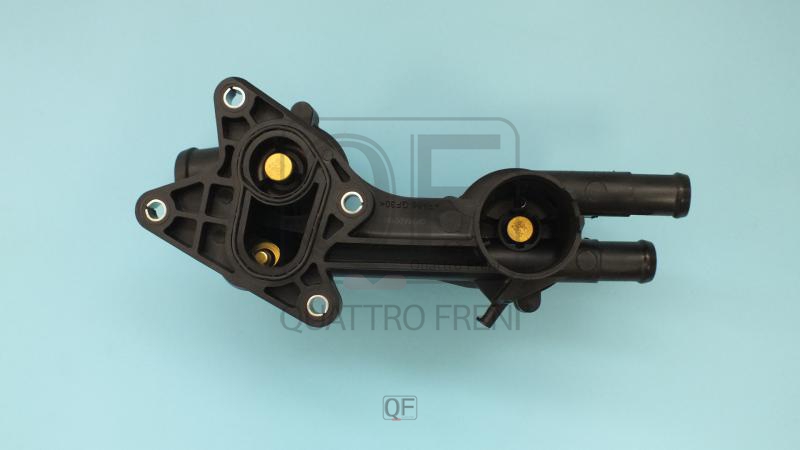
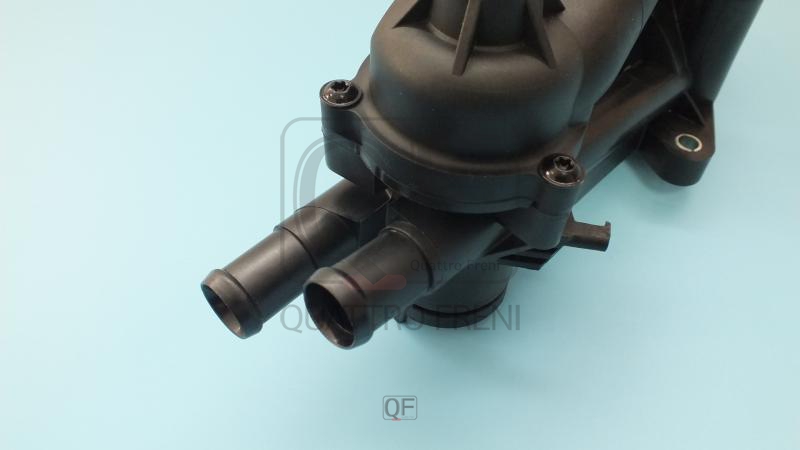
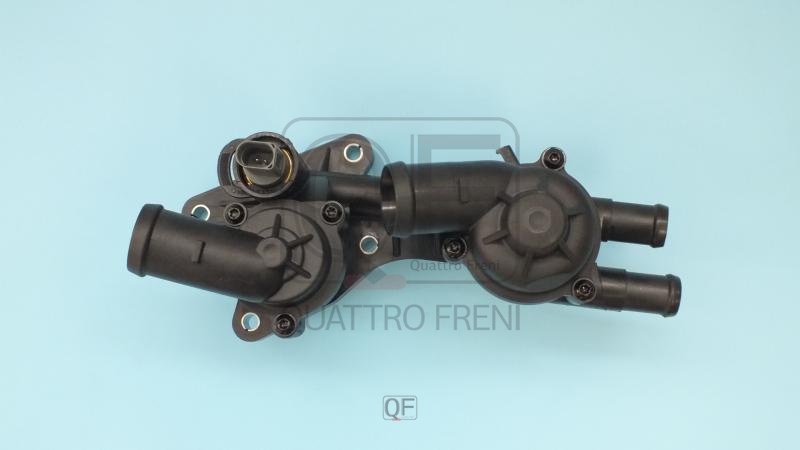
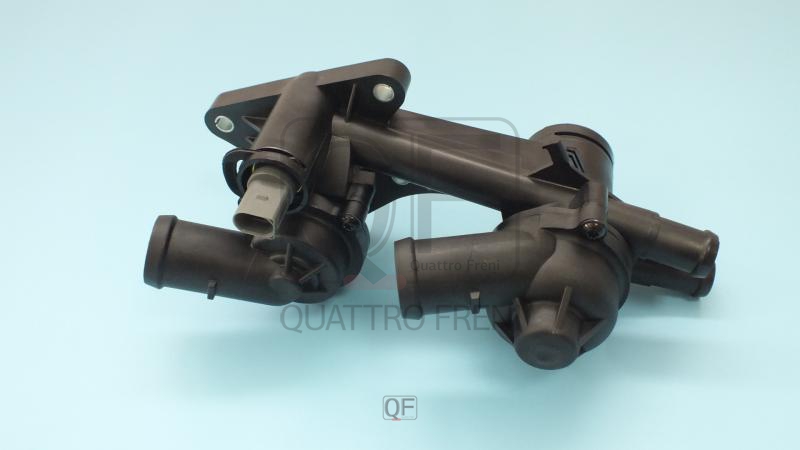
VAG 03C121111AE THERMOSTAT INLET
Product Specifications

Product quality
OEM Equivalent Grade
starstarstar
300 sold
Wholesale price USD $8.69
Wholesale price CNY ¥58.8
bolt MOQ (Minimal order)
50 pcs
local_shipping Production time
20-50 days
package_2 Shipping Weight: 0.6 kg
VAG 03C121111AE
VAG 03C121026M
VAG 03C121111AM
LYNXAUTO CT2423
MILES AN22022
Overview & Operating Principle

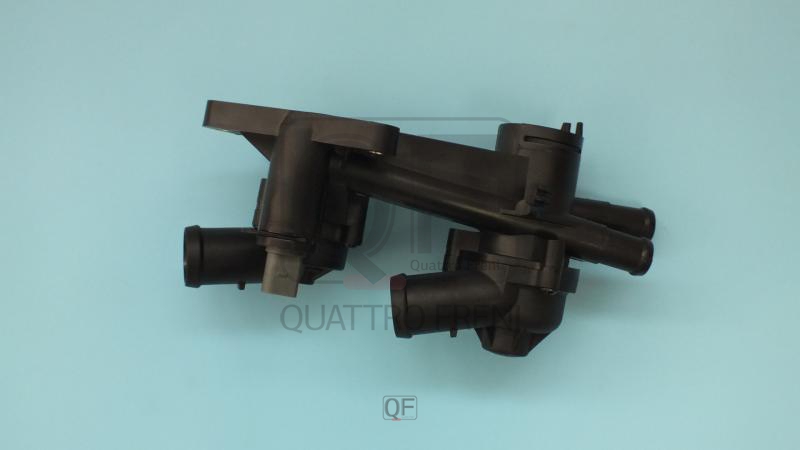
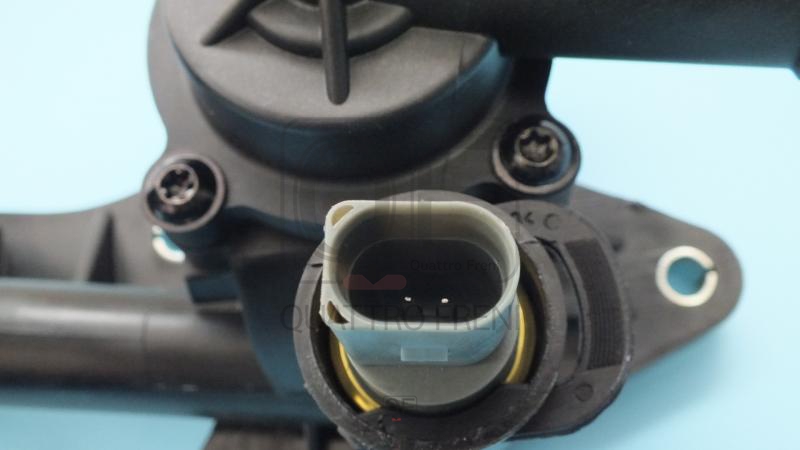
The part listed as 03C121111AE / 03C121111AM THERMOSTAT INLET is a coolant thermostat housing assembly — a combined unit integrating the thermostat element, the coolant inlet / regulator housing body, and provisions for the coolant temperature sensor. It is designed for Volkswagen Group vehicles equipped with the EA111 engine family: small-displacement 1.4 L and 1.6 L naturally aspirated and turbocharged petrol units (engine codes including CFNA, CFNB, CLSA, CLPA, CLRA, CJAA, and related variants). The assembly cross-references two OEM numbers: 03C121111AE (original release) and its direct successor 03C121111AM (current revision), which are physically and functionally interchangeable.

The thermostat element inside the housing contains a wax pellet that responds to coolant temperature. When the engine is cold, the wax is contracted and the thermostat valve remains closed: coolant is diverted away from the main radiator and circulates only through the engine block and heater core, allowing the engine to reach operating temperature as rapidly as possible. At approximately 83°C the wax begins to expand, progressively opening the thermostat valve. By approximately 95–97°C the valve is fully open, allowing the full coolant volume to circulate through the radiator for maximum heat rejection.

Precise control of coolant temperature is critical for fuel efficiency, emissions performance, and engine longevity on VAG EA111-equipped vehicles. A thermostat that is stuck open prevents the engine from reaching operating temperature, degrading fuel economy and increasing wear. A thermostat stuck closed causes rapid overheating and risks cylinder head gasket failure. The housing-integrated design used on the EA111 platform means the thermostat element and housing are replaced as a single unit, simplifying servicing and eliminating the risk of mismatched components.

Net weight of the assembly: 0.6 kg.

Symptoms & Diagnostics

Common failure modes and indicators of a faulty thermostat housing assembly on VAG EA111-engined vehicles:

Engine slow to reach operating temperature or runs permanently cold: Temperature gauge stays at or below the lower quarter of the normal range even after extended driving. Indicates thermostat element stuck open — coolant flows continuously through the radiator regardless of temperature. Fuel consumption increases noticeably.
Engine overheating: Temperature gauge climbs rapidly into the red zone, especially in stop-and-go traffic or low-speed driving. Indicates thermostat stuck closed — coolant is blocked from the radiator. Requires immediate attention to prevent cylinder head gasket failure.
Coolant leak from the thermostat housing area: Visible coolant puddle under the front of the engine, white residue deposit on the housing body, or a persistent low-coolant warning. The plastic housing body and integral O-rings are common failure points on aged assemblies exposed to heat cycling.
Cabin heater producing insufficient heat: Insufficient heat at the heater vents when the engine should be at operating temperature. Can accompany a stuck-open thermostat that prevents the coolant from reaching heater-core temperature.
Engine management warning light with coolant-related DTC: The ECU monitors coolant temperature via the sensor mounted in or near the thermostat housing. A faulty thermostat that prevents the engine from reaching target temperature will trigger fault codes related to coolant temperature plausibility.

Relevant OBD-II / VAG DTC Codes:

P0128
Coolant Temperature Below Thermostat Regulating Temperature — ECU detects engine not reaching closed-loop operating temperature within the expected time. Most common code for a stuck-open thermostat.
P0116
Engine Coolant Temperature Sensor Circuit Range / Performance — ECU detects implausible or inconsistent coolant temperature signal. Can result from a faulty housing sensor port or coolant temperature sensor.
P0117 / P0118
Engine Coolant Temperature Sensor Circuit Low / High Input — electrical fault in the coolant temperature sensor or its wiring. Sensor is mounted in or adjacent to the thermostat housing assembly.
P0597 / P0599
Thermostat Heater Control Circuit Open / High — relevant for map-controlled (electrically heated) thermostat variants used on some EA111 applications. Indicates a fault in the thermostat heater element circuit.
P0217
Engine Coolant Over Temperature Condition — ECU detects coolant temperature above safe operating threshold. Typically generated when thermostat is stuck closed, causing rapid overheating.

Note: P0128 is the most reliable indicator of a failed thermostat on VAG EA111 applications. Before replacing the assembly, confirm the coolant temperature sensor is functioning correctly and that the cooling system is free of air pockets. Use VCDS, OBD Eleven, or a compatible VAG scanner for accurate diagnosis.

Logistics & Customs
HS Code (6-digit)
To be confirmed by customs broker
EAEU / TN VED Code (10-digit)
To be confirmed by customs broker
Net Weight
0.6 kg
Country of Origin
China
Minimum Order
50 pcs
Production Time
20–50 days
Hazardous Goods
No

Customs description for commercial invoice / declaration: Automotive engine coolant thermostat housing assembly. Final customs classification is determined by the importing country’s customs authority.

Vehicle Compatibility
Brand Model Years Engine / Code Key OEM Ref.
VOLKSWAGEN Polo (6R / 6C) 2010 – 2020 1.4L MPI (CLPA) / 1.6L MPI (CLSA, CFNA, CFNB) 03C121111AE / 03C121111AM
VOLKSWAGEN Jetta Mk6 / AV (162, 163) 2011 – 2018 1.6L MPI (CLRA) 03C121111AE / 03C121111AM
VOLKSWAGEN Golf Mk5 / Mk6 2007 – 2009 1.4L / 1.6L MPI (EA111) 03C121111AE / 03C121111AM
VOLKSWAGEN Tiguan (5N) 2010 – 2018 1.4L TSI (EA111 variant) 03C121111AE / 03C121111AM
AUDI A1 (8X) / A1 Sportback (8XA) 2010 – 2015 1.4L TFSI (CFNA, CFNB) 03C121111AM
AUDI A3 (8P1 / 8PA / 8P7) 2007 – 2013 1.4L TFSI (EA111) 03C121111AM
SKODA Fabia (5J) 2009 – 2014 1.6L MPI (CLSA) 03C121111AE / 03C121111AM
SKODA Rapid (NH) 2013 – 2022 1.6L MPI (CFNA) 03C121111AE / 03C121111AM
SEAT Ibiza (6J / 6P) 2013 – 2015 1.6L MPI (BTS, CNKA) 03C121111AE / 03C121111AM
Engine code confirmation required: This thermostat housing assembly is specific to the EA111 engine family (1.4–1.6L MPI / early TSI/TFSI petrol). VAG uses different thermostat housing assemblies for TSI/TFSI turbo variants (EA211 family), diesel TDI engines, and larger petrol engines. Always verify by matching your engine code — found on a sticker on the engine block or in your vehicle’s service documentation — before ordering.

Based on OEM cross-reference numbers listed on this page. 03C121111AM is the current revision, superseding 03C121111AE; both are physically interchangeable. Always verify fitment using your VIN or engine code. Seat and Skoda fitment confirmed by Hoffer / Spareto OEM cross-reference data.

Installation Tips
1Allow the engine to cool completely: Never open any part of the cooling system on a warm engine. Coolant can reach temperatures well above 90°C and the system operates under pressure; opening it while hot risks severe scalding. Allow at least 2 hours after last running before starting work. Place a drain tray under the radiator or lower coolant drain plug.
2Drain the coolant: Open the radiator drain plug (typically at the bottom of the radiator, 10 mm or a flat-blade tap) and drain coolant into a clean container for reuse if it is in good condition (VW G12+/G12++ or G13 — pink/purple colour). Alternatively, partially drain only enough coolant to drop the level below the thermostat housing. Do not allow coolant to contact the ground — it is toxic to animals.
3Remove coolant hoses from the housing: Use hose-clamp pliers to slide back the spring clamps, then twist and pull the hoses off the housing connectors. Have absorbent rags ready — residual coolant will spill. Note the orientation and routing of each hose before removal to ensure correct refitting.
4Disconnect the coolant temperature sensor: Press the locking tab and unplug the 2-pin electrical connector from the coolant temperature sensor mounted in the thermostat housing. Inspect the connector and pins for corrosion. If replacing the sensor at the same time, unscrew it (typically 19 mm) and fit the new one with a fresh sealing washer before installing the new housing.
5Remove the old housing: Undo the housing retaining bolts (typically two or three 10 mm bolts on EA111 applications). Carefully pull the housing away from the engine block mating face. Remove and discard the old O-ring or gasket — reusing a compressed O-ring is a leading cause of coolant leaks after thermostat replacement. Clean the mating face on the engine block with a clean rag; remove any old sealant or gasket material with a plastic scraper only — do not use metal tools that could score the sealing surface.
6Install the new assembly: Fit the new O-ring supplied with the housing onto the mating groove. Lubricate it lightly with fresh coolant — never use RTV or gasket sealant on rubber O-rings in the cooling circuit; sealant will degrade the O-ring and contaminate the coolant. Position the new housing, ensuring it seats flush against the engine block face. Insert and hand-tighten the retaining bolts, then torque to 10 Nm (7.4 ft‑lb). Overtightening plastic housings cracks the mounting lugs.
7Reconnect hoses and refill the cooling system: Push the coolant hoses onto the housing connectors and slide the spring clamps back into position — the clamps must sit in the bead groove on the hose connector. Refill the expansion tank with pre-mixed VW G12+ / G12++ or G13 coolant at a 50:50 concentration with distilled water (protection to approximately −35°C). Never use tap water — minerals cause scale buildup inside the cooling system. Fill slowly to allow air to escape.
8Bleed the cooling system and verify: On EA111-equipped VAG vehicles, air bleeding is typically achieved by running the engine with the expansion tank cap off until the thermostat opens and the upper radiator hose becomes hot. Gently squeeze the upper radiator hose repeatedly to release trapped air. Top up coolant as needed and replace the cap. Check for leaks at the housing, hose connections, and drain plug after the first heat cycle. Clear any stored P0128 or coolant DTCs with a scanner and verify the temperature gauge reaches normal operating range (mid-scale) within 5–8 minutes of a cold start.
Frequently Asked Questions
What is the difference between 03C121111AE and 03C121111AM — are they interchangeable?
Yes, they are fully interchangeable. 03C121111AM is the current VAG revision of 03C121111AE — the AM suffix indicates a later production revision (minor material or specification update) to the same design. Both share identical mounting geometry, connector positions, and thermostat opening characteristics (83°C start / ~97°C fully open). The current part supplied by this listing covers both OEM numbers.
What engine family does this thermostat housing fit, and how do I confirm my vehicle qualifies?
This assembly is specific to the Volkswagen Group EA111 petrol engine family: 1.4 L and 1.6 L naturally aspirated (MPI) and early turbocharged (TSI / TFSI) variants. Confirmed engine codes include CFNA, CFNB, CLSA, CLPA, CLRA, and related EA111 derivatives. To confirm: locate your engine code on the sticker on the engine block (typically near the oil filler cap area), or check your vehicle’s service booklet. If your vehicle has a newer EA211 engine, a TDI diesel, or a larger petrol unit (e.g., 1.8 TSI, 2.0 TSI), this part will not fit — a different housing is required.
What coolant specification should be used when refilling after replacement on VW, Audi, Skoda, and Seat vehicles?
Volkswagen Group specifies G12+, G12++ (both pink / red), or G13 (purple / lilac) Organic Acid Technology (OAT) coolant for all EA111-equipped vehicles. These specifications are compatible with each other and can be mixed within the same colour group. Use a 50:50 pre-mix with distilled (deionised) water for freeze protection to approximately −35°C. Do not use green (silicate-based) or universal coolants — they are not compatible with VAG cooling system materials and will cause accelerated corrosion and sludge formation.
The temperature gauge still reads low (P0128 present) after replacing the thermostat housing — what should I check?
First, confirm the engine has been driven for at least 10 minutes at normal road speed — city driving at low load can cause the gauge to remain low even with a functioning thermostat. If the gauge remains below mid-scale and P0128 persists: (1) check for air trapped in the cooling system by re-bleeding; trapped air can cause the coolant temperature sensor to read incorrectly; (2) verify the coolant temperature sensor itself — a faulty sensor reading cold will generate P0128 independently of the thermostat; (3) confirm the correct opening-temperature thermostat was fitted — an incorrect lower-temperature part will also trigger P0128. Clear the code and complete a full warm-up drive cycle before re-reading.
Is white-label or custom packaging available for wholesale orders?
Yes. Private-label (white-label) packaging, custom branding, and barcode labeling are available for wholesale orders. The minimum order quantity is 50 units with a production lead time of 20–50 days. Mixed SKU consolidation with other product lines is supported. Please use the Send Inquiry form on this page to discuss branding requirements, packaging specifications, and order details.
Frequently Replaced Together
Part Reason for Joint Replacement
Coolant Temperature Sensor (ECT Sensor) The ECT sensor is mounted directly in or adjacent to the thermostat housing. Coolant leaks from the housing accelerate sensor corrosion. Since the cooling system is already drained for housing replacement, fitting a new sensor at the same time eliminates a common secondary failure point at no additional labour cost.
Coolant Hoses (Upper / Lower Radiator Hose) Hoses must be removed to access the thermostat housing. On high-mileage EA111-equipped vehicles, rubber hoses are typically at or near the end of their service life. Replacing hoses during the same service visit prevents a repeat coolant drain job caused by a burst hose shortly after thermostat replacement.
Coolant / Antifreeze (G12+ / G13) The cooling system must be partially or fully drained for housing replacement. Replacing degraded or contaminated coolant at the same time restores proper corrosion inhibitor levels and freeze protection. VAG recommends coolant renewal at 2-year or 60,000 km intervals on EA111 applications.
Water Pump The water pump is driven by the timing belt / auxiliary belt on EA111 engines and is often replaced on the same service interval as the thermostat when the cooling system is opened. A failing water pump bearing or impeller will rapidly cause overheating even after thermostat replacement, making pre-emptive replacement cost-effective.
Expansion Tank / Coolant Reservoir Cap The expansion tank cap maintains cooling system pressure. A faulty cap that cannot hold pressure causes coolant to boil at abnormally low temperatures, mimicking thermostat failure symptoms. Replacing the cap — a low-cost item — at the same time as the thermostat housing eliminates this variable and ensures correct system pressure is maintained after the repair.