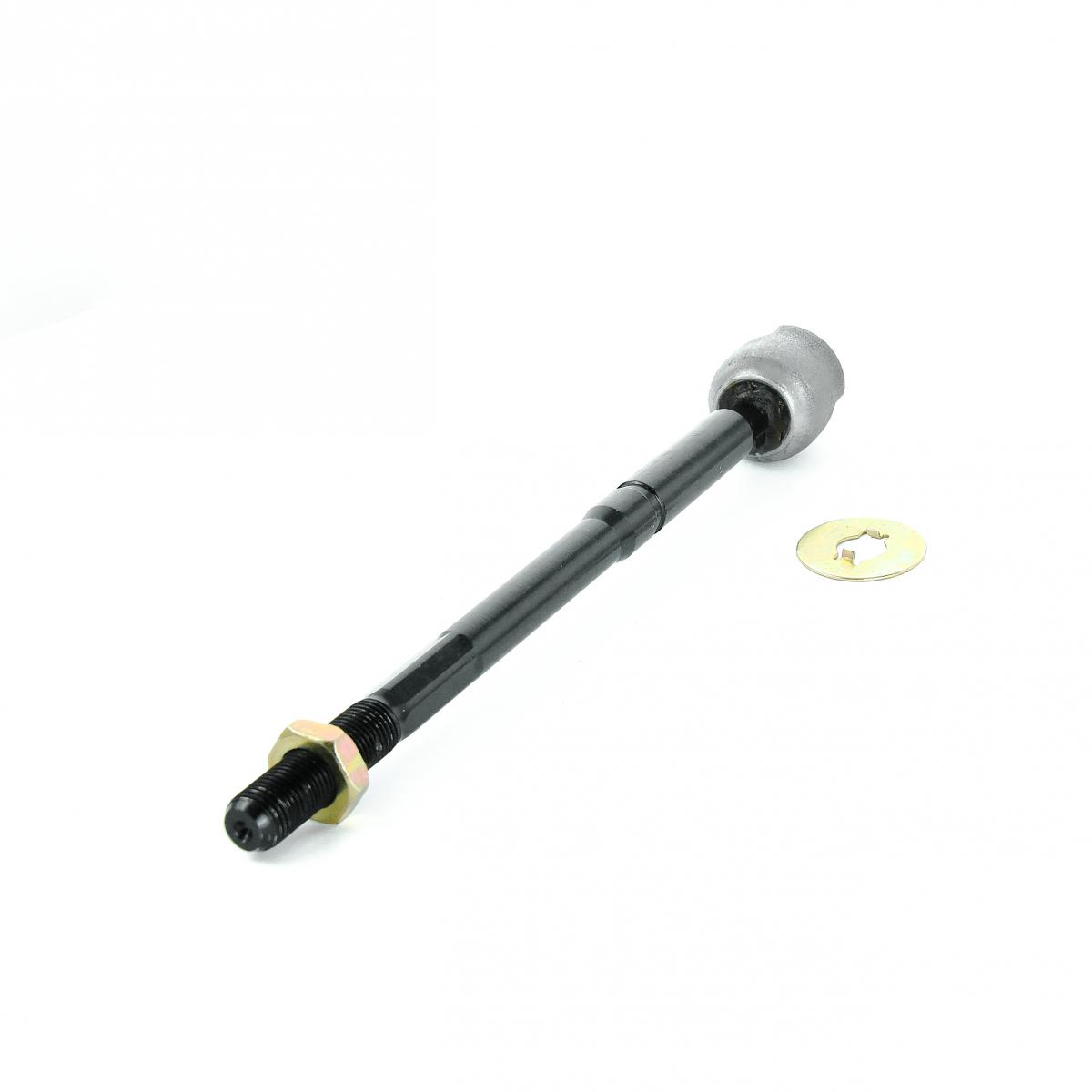
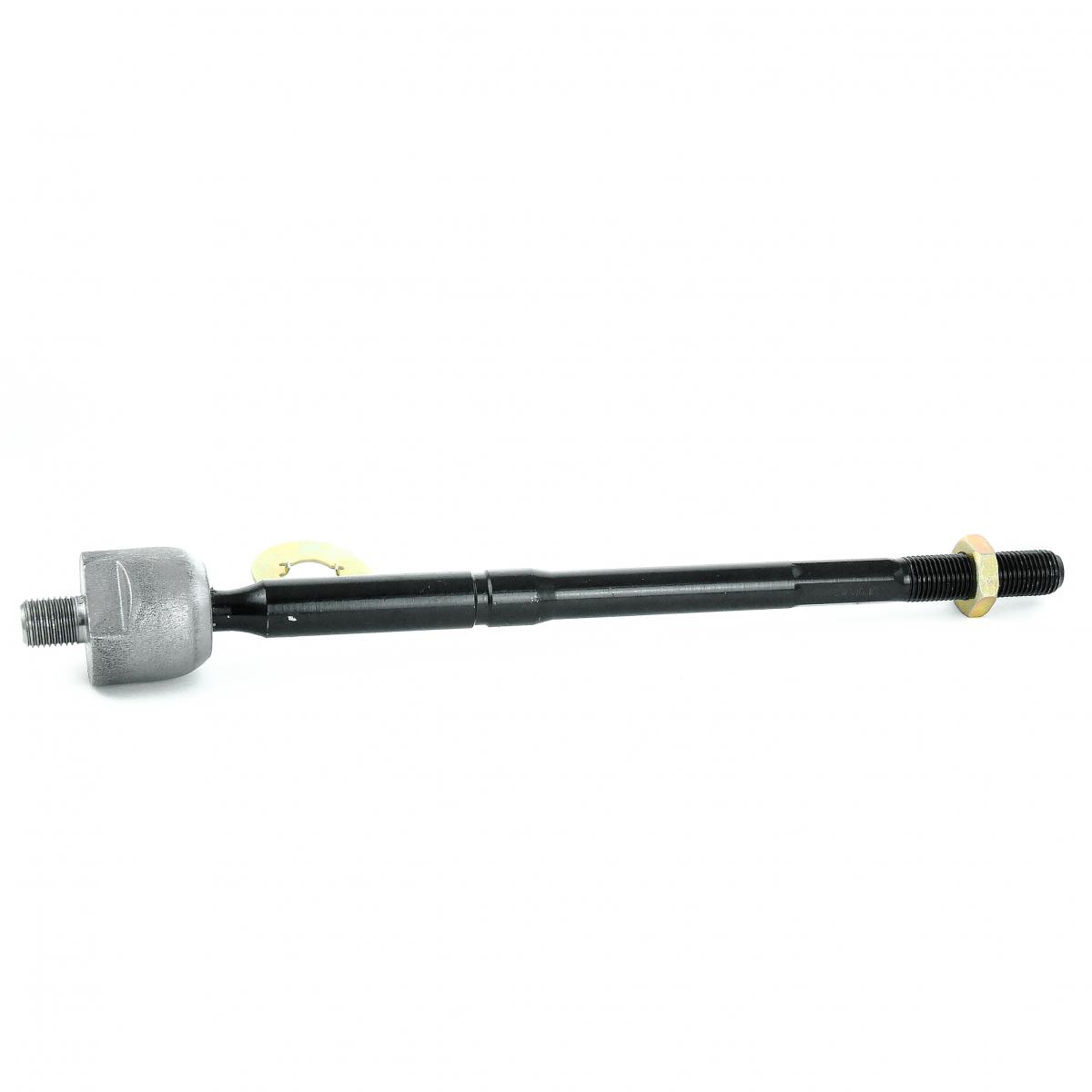
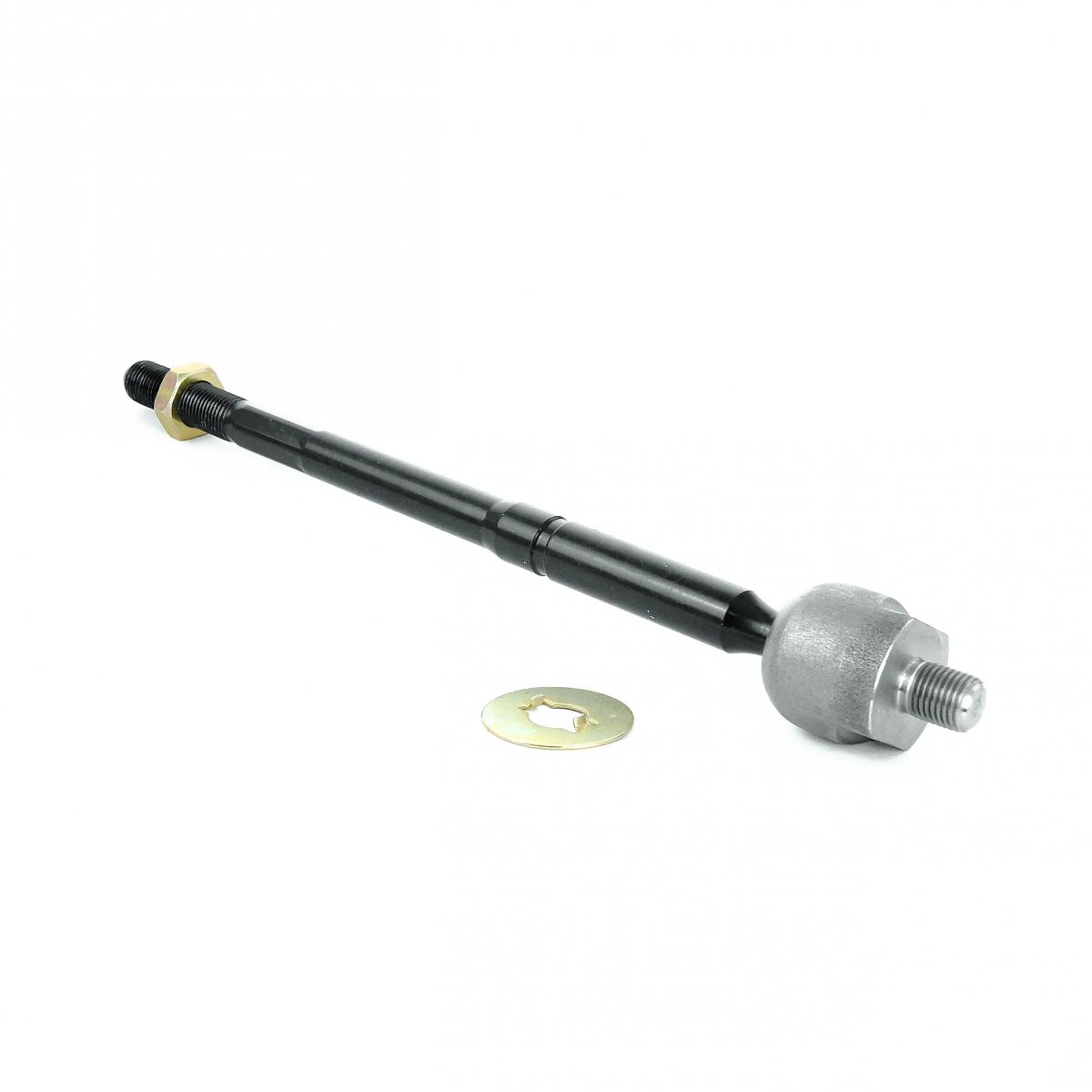
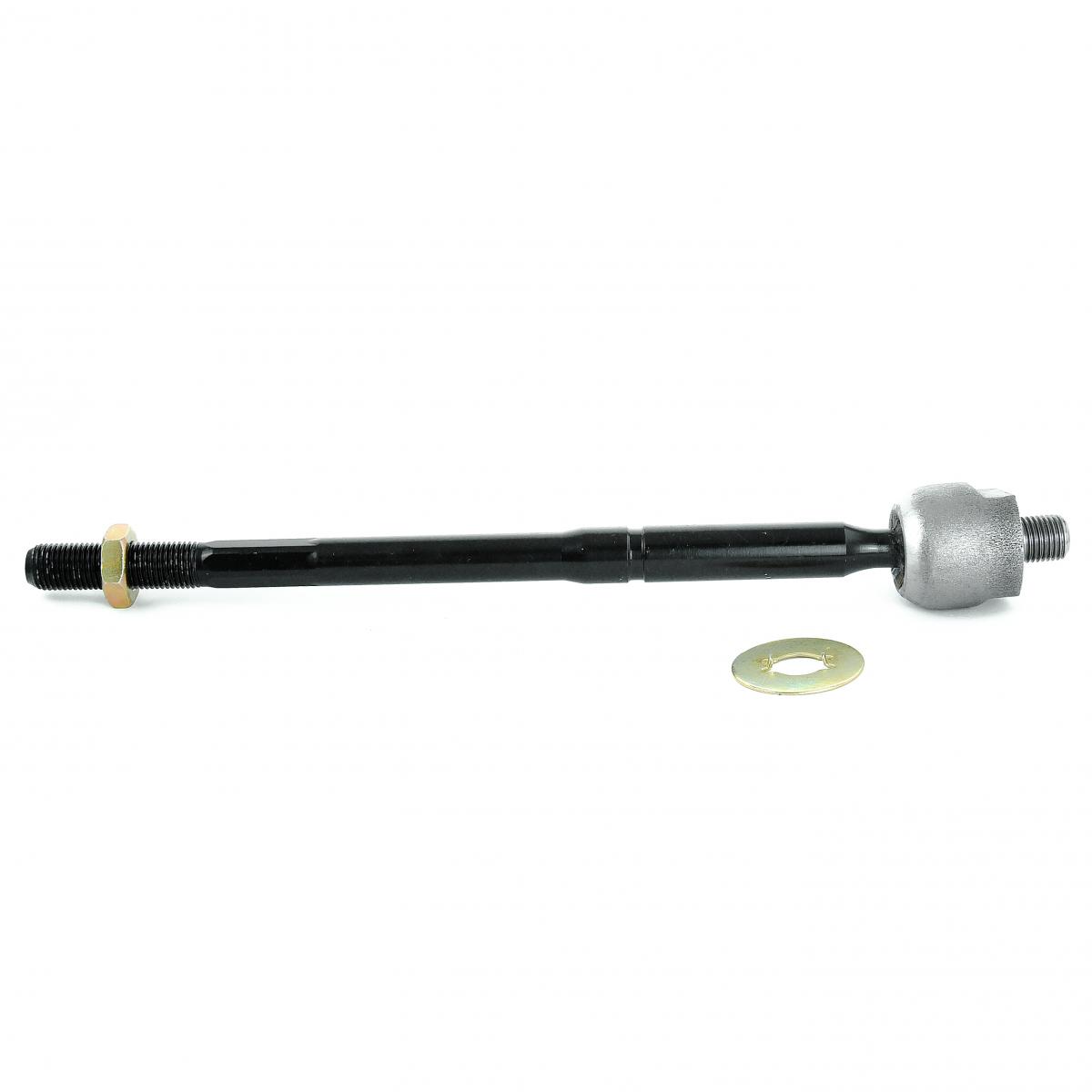
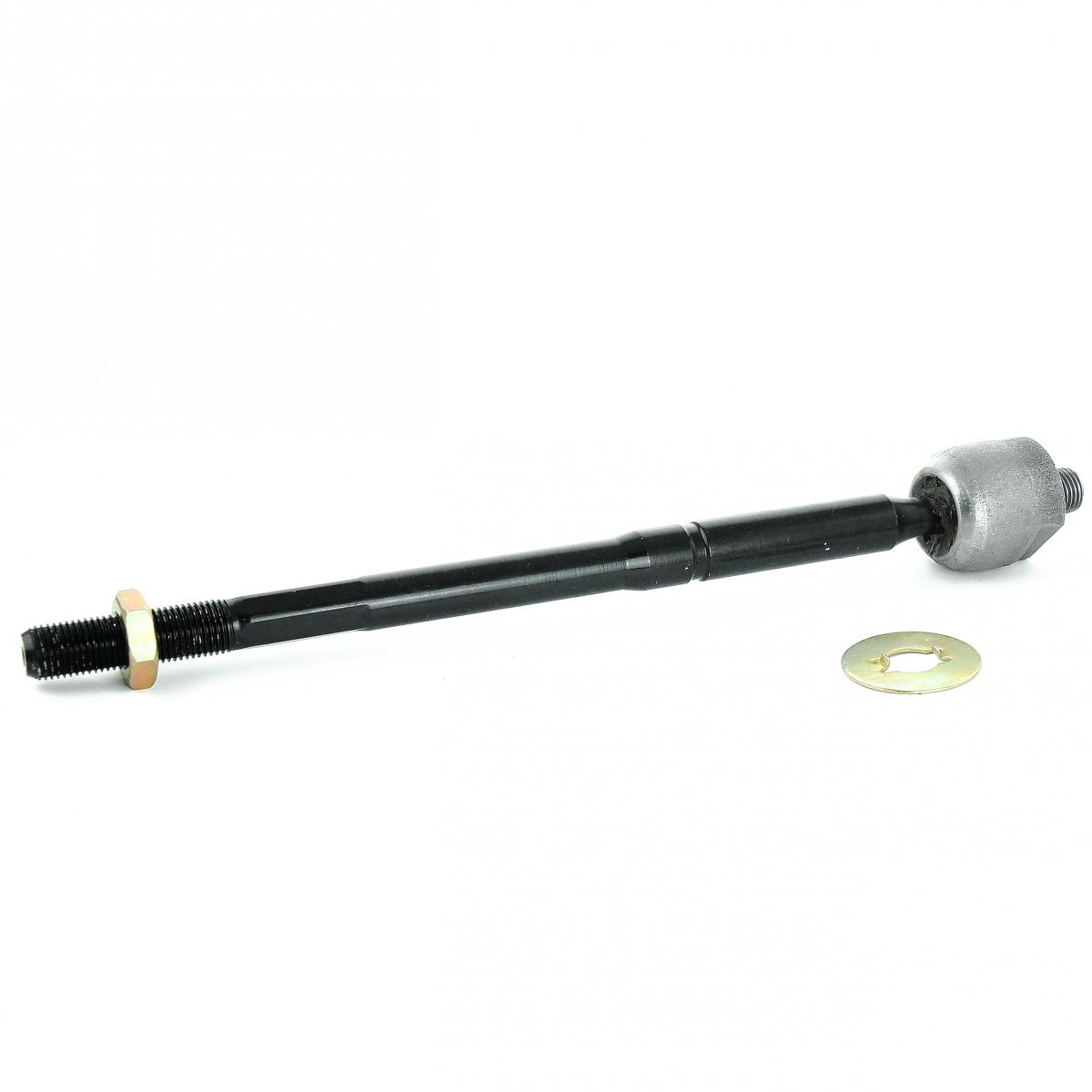
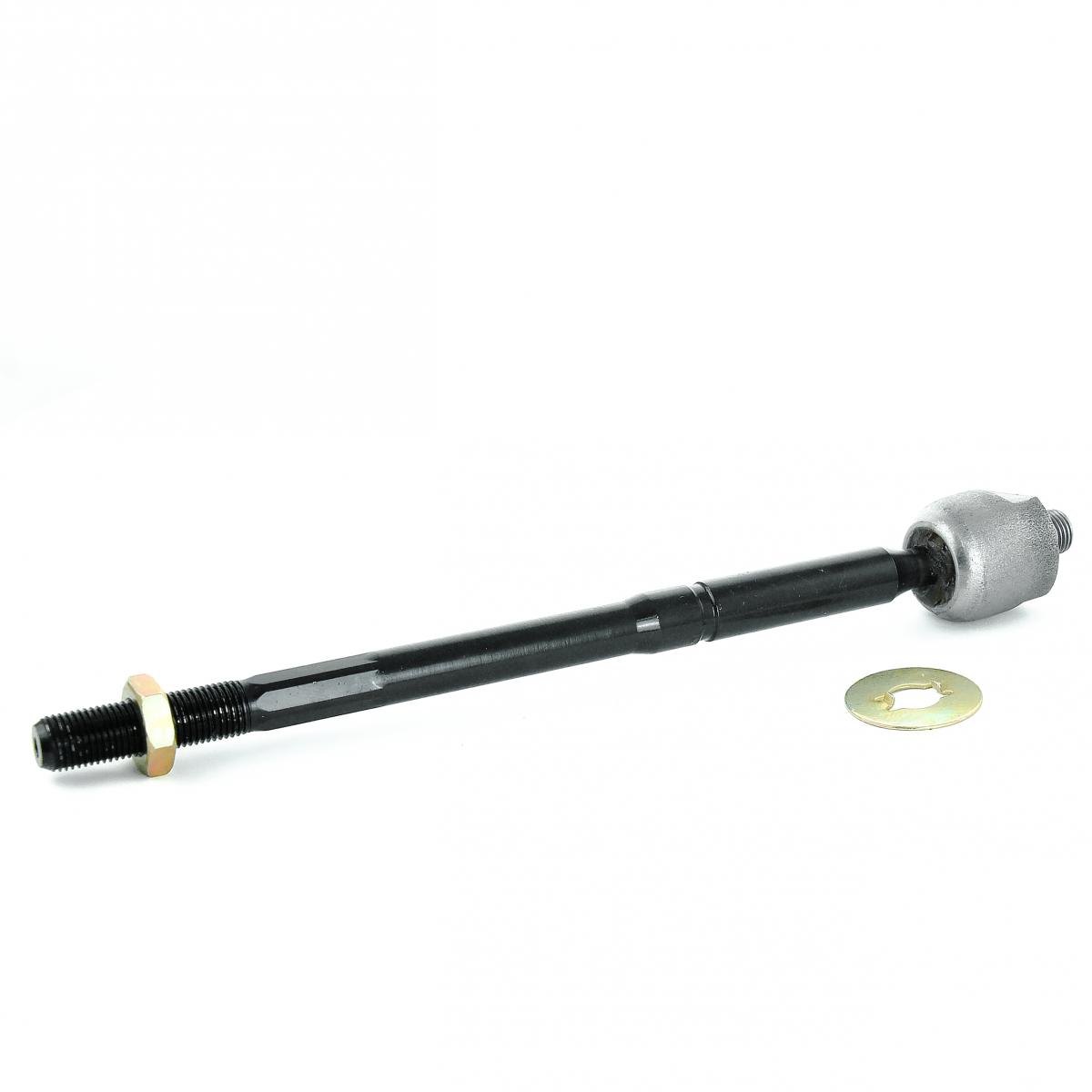
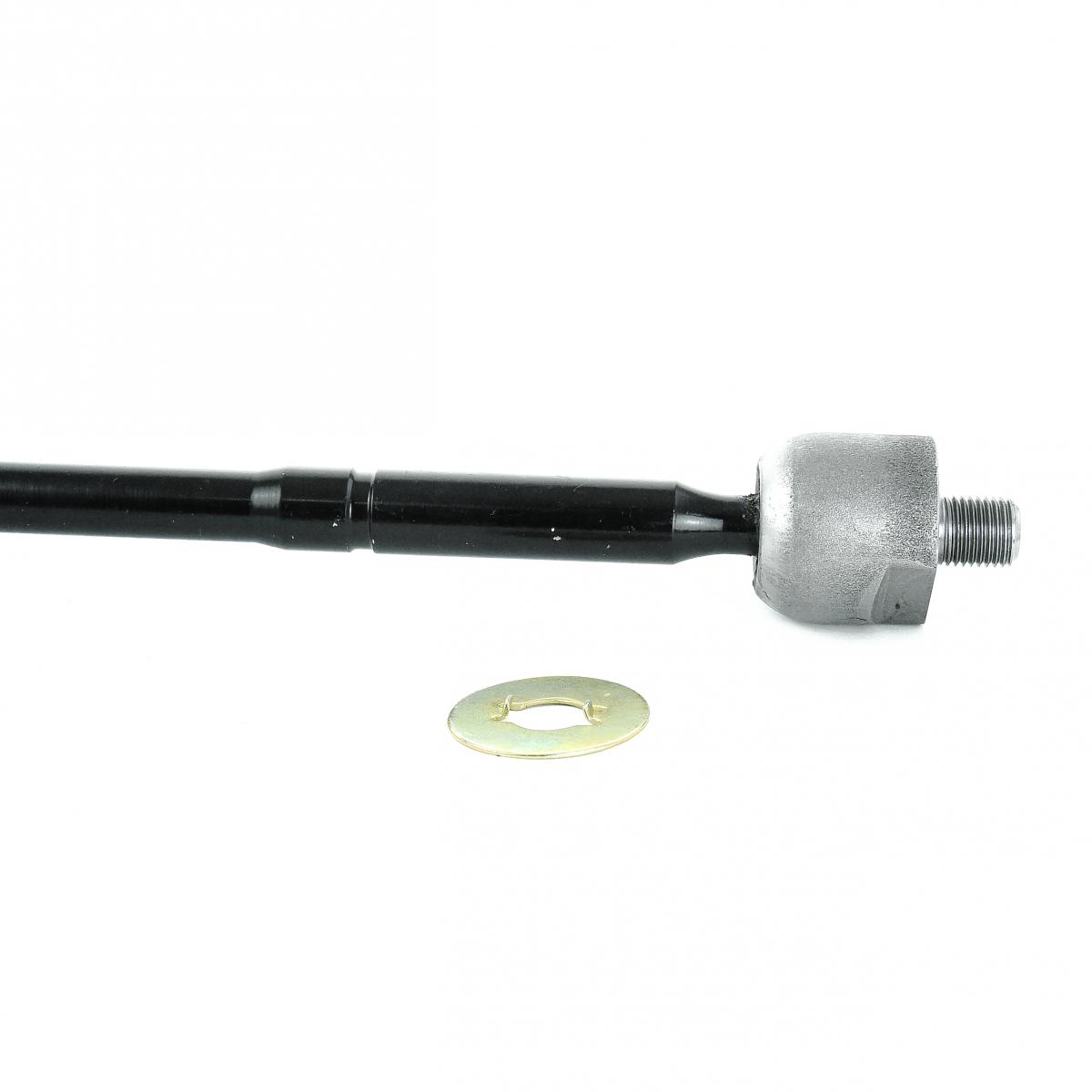
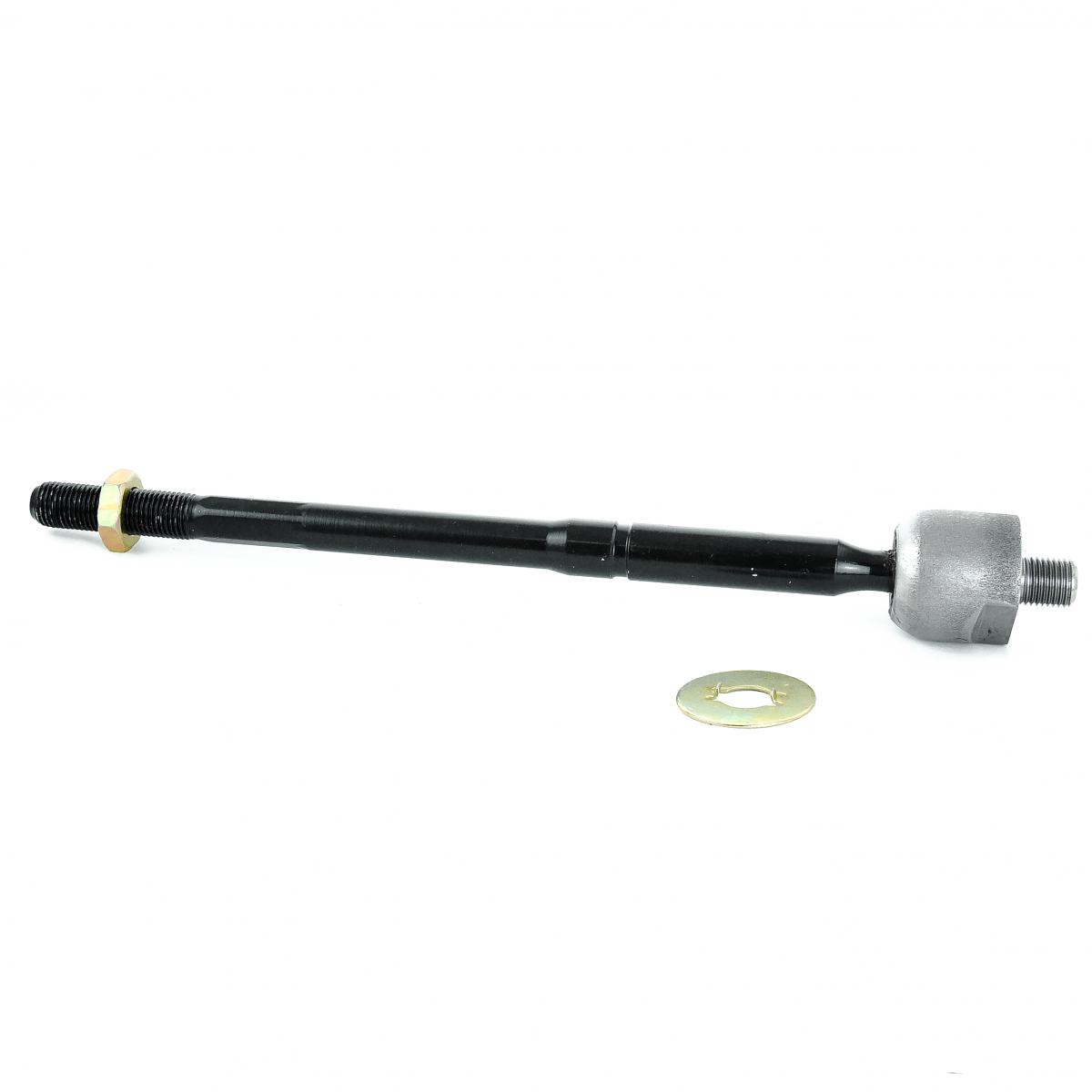
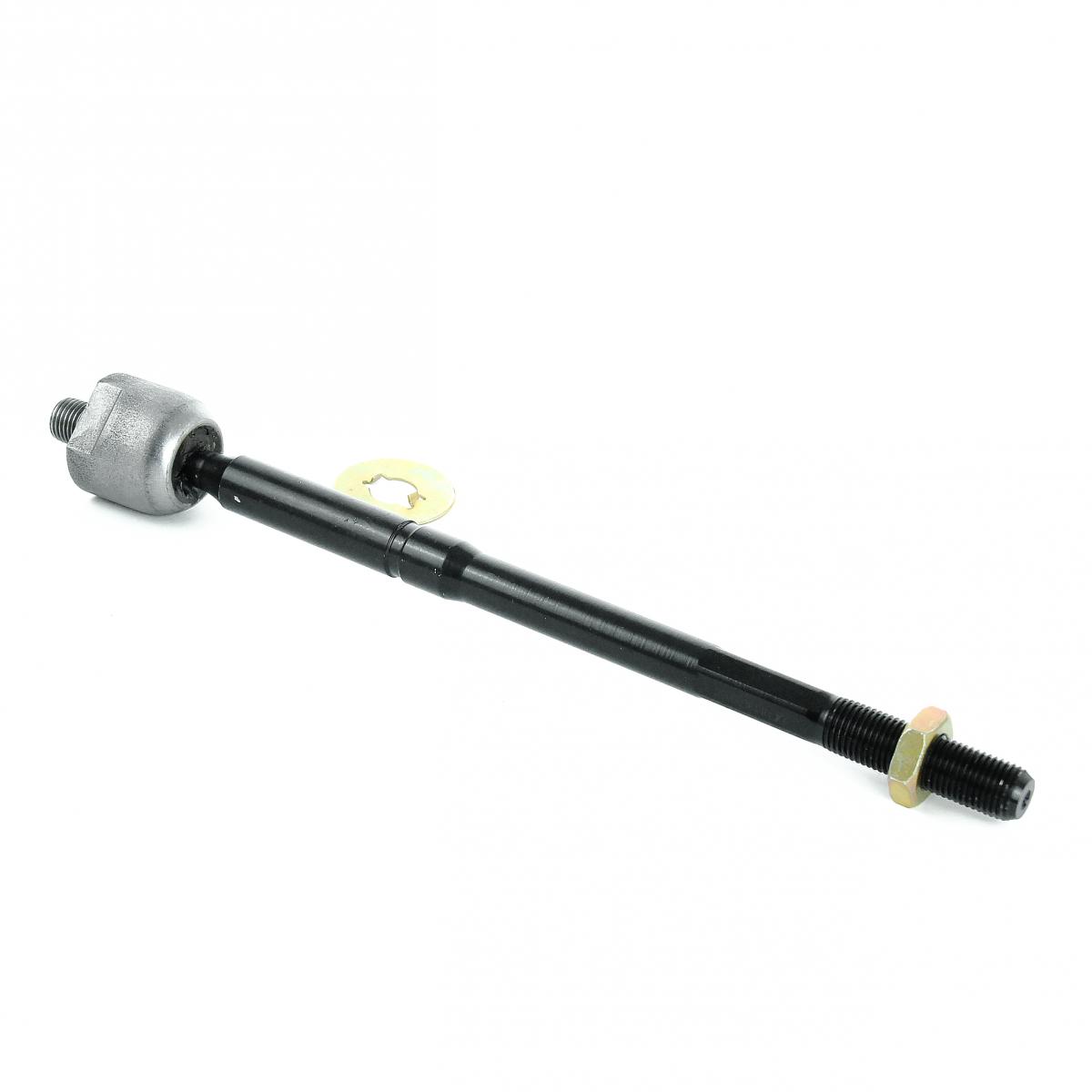
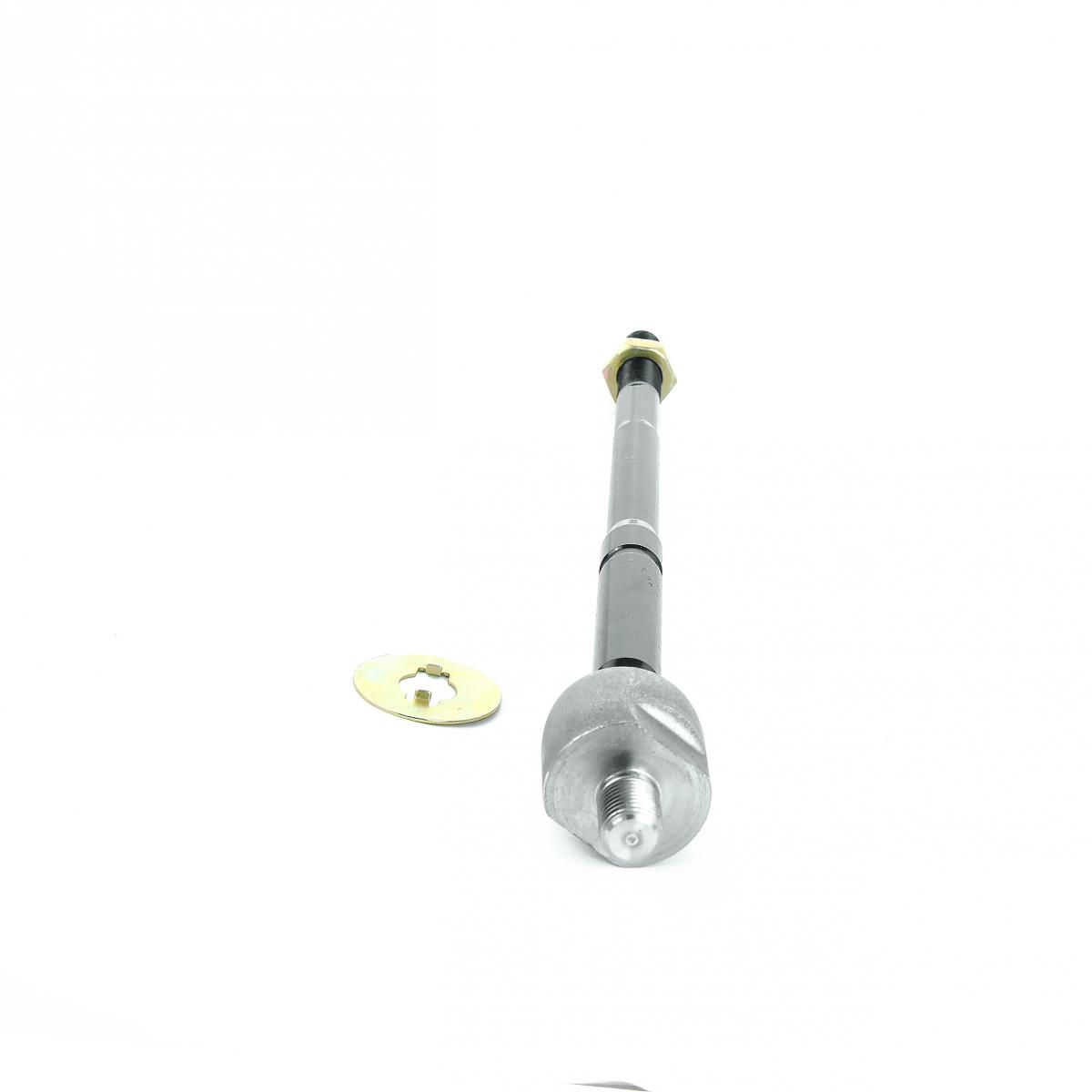
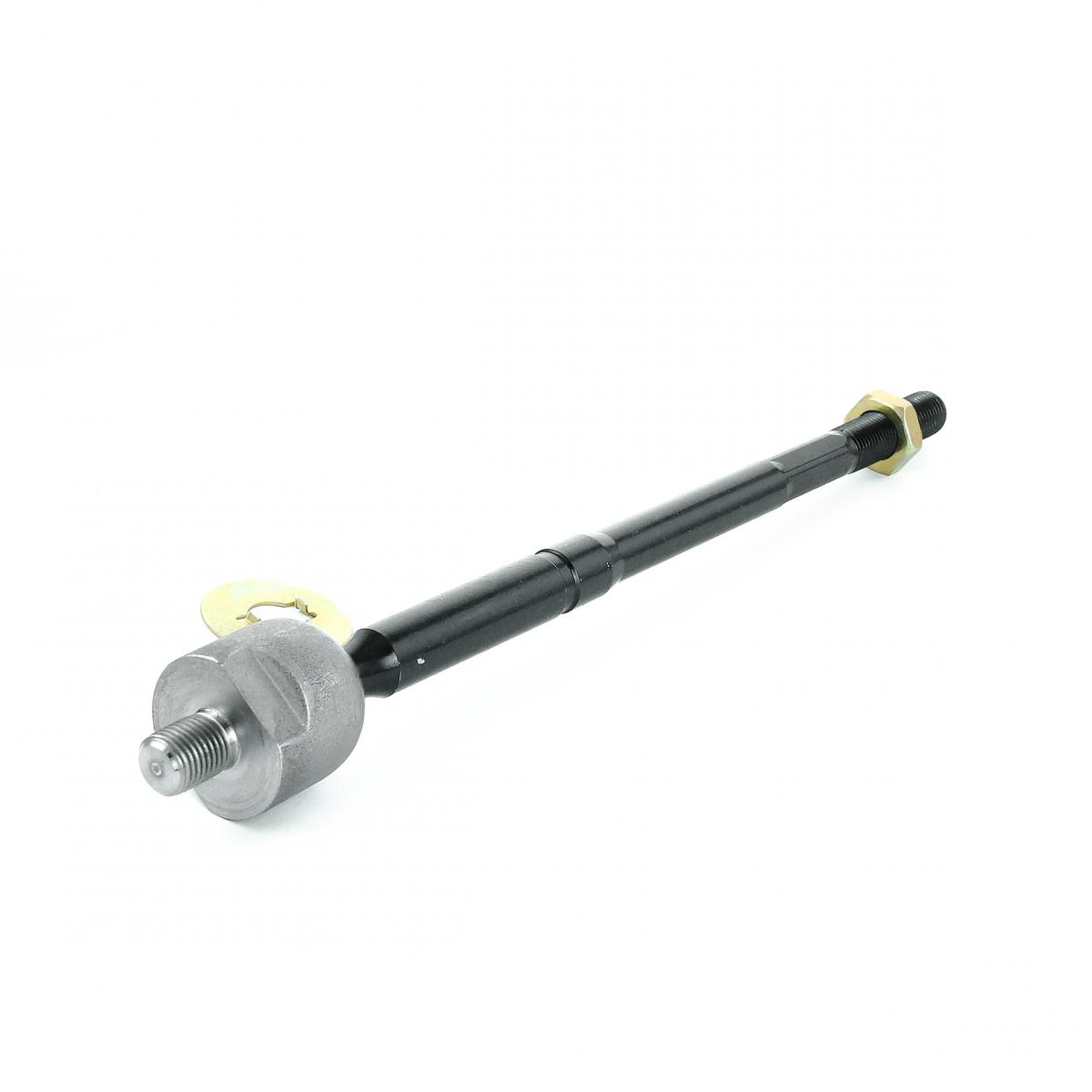
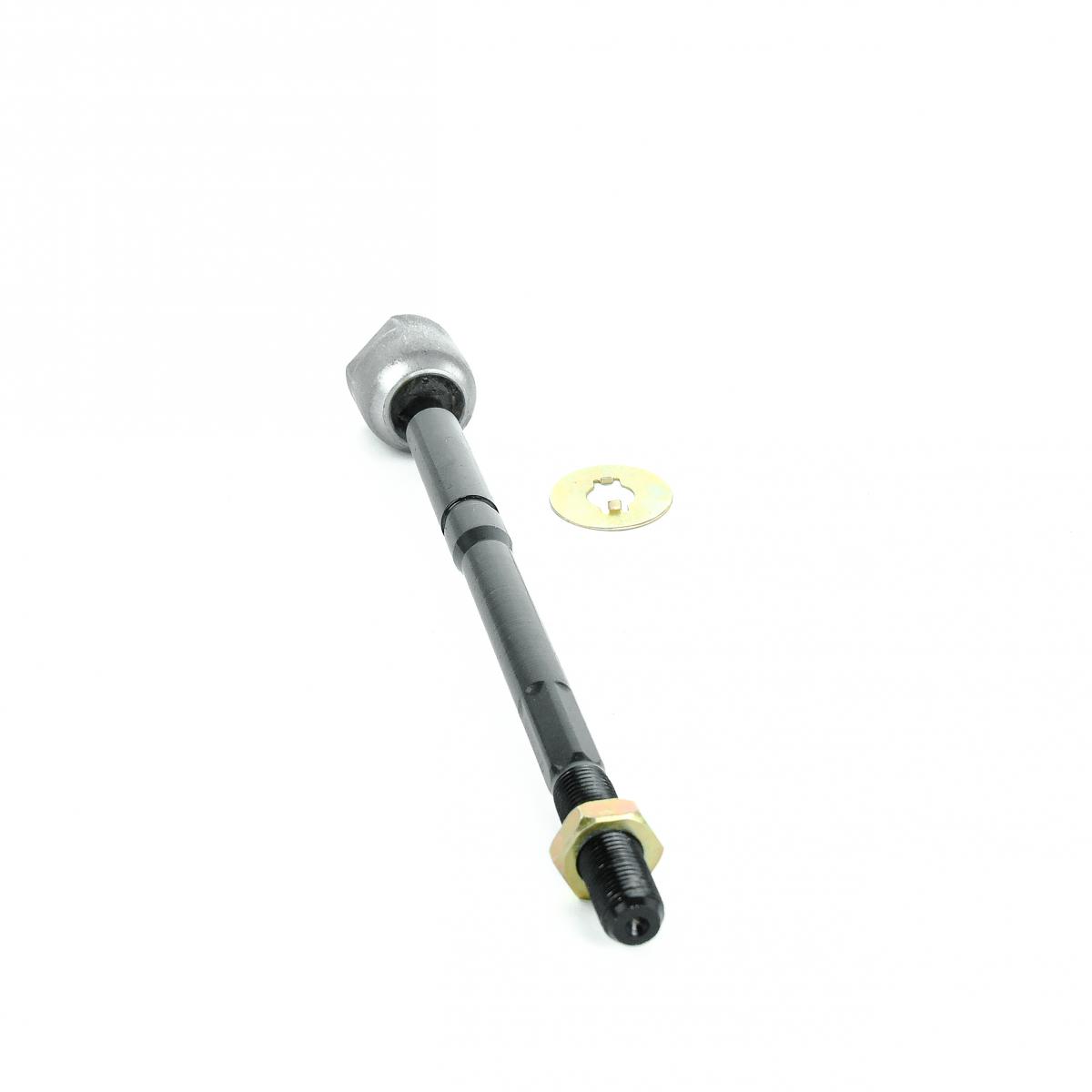
GEELY 1064001706 AXIAL JOINT
Product Specifications
| GEELY | 1064001706 |
The AXIAL JOINT is the inner tie rod — the ball joint assembly that connects the steering rack end directly to the inner end of the tie rod shaft — transmitting the rack's lateral displacement into the tie rod while accommodating the angular movement between the rack and the tie rod as the suspension travels through its range and the wheel steers. Unlike the outer tie rod end whose taper connects to the steering knuckle, the inner tie rod axial joint uses a ball socket or a spherical bearing retained in a housing that threads directly onto the rack shaft end or clamps onto the rack end with a swaged or crimped retention collar, allowing the joint to pivot in all planes as the tie rod follows both the rack's lateral movement and the steering knuckle's arc during suspension travel. The joint housing is sealed by a rubber bellows boot — the steering rack gaiter — that covers the full length of the rack shaft travel zone and retains the rack lubricant grease while preventing road contamination from reaching the inner joint socket and the exposed rack shaft. The joint's load capacity must be sufficient to transmit the full steering rack force — up to 8–12 kN on performance vehicles — into the tie rod without deflection that would introduce play into the steering feel.
This unit — GEELY 1064001706 — is manufactured to OEM-equivalent specifications: ball socket housing thread pitch and diameter for rack end engagement, ball stud articulation angle and bearing insert preload, joint housing outer diameter for gaiter clamp fit, retention collar or lock ring geometry, and overall assembly length at the nominal tie rod setting are matched to the original part. Supplied as a direct replacement for standard fitment. Available wholesale from 2.27 USD, MOQ 100 pcs, production lead time 47 days.
Inner tie rod axial joints fail through ball socket bearing insert wear producing axial and radial play that manifests as steering vagueness and a clunking noise felt through the steering wheel during directional changes, through ball stud corrosion in road salt environments where the rack gaiter has torn and exposed the joint to contamination, and through ball socket housing thread wear from the rotational forces transmitted during steering rack travel. Inner tie rod play is more difficult to detect than outer tie rod play because the joint is concealed inside the rack gaiter — always inspect for inner tie rod wear by gripping the rod through the gaiter and attempting to move it axially and radially before attributing steering vagueness to the outer tie rod or rack.
- Peel back the rack gaiter to expose the inner tie rod joint before attempting removal — release both gaiter clamps and slide the gaiter along the tie rod shaft toward the outer end to give clear access to the inner joint housing and its lock mechanism; never attempt to unscrew the inner tie rod housing with the gaiter in place as the gaiter tears and the lock ring position cannot be seen or correctly set.
- Note the exact number of exposed threads between the inner joint housing and the tie rod shaft outer end before removing the joint — photograph this measurement; threading the new joint to the same thread exposure restores the approximate tie rod length and preserves the existing toe setting closely enough for safe driving to an alignment shop; the alignment must still be reset but this prevents gross toe error that would cause immediate tyre damage.
- Use the correct inner tie rod removal tool — an open-ended socket that engages the flats or the retention collar on the inner joint housing and allows the joint to be unscrewed from the rack end without applying rotational force to the rack shaft; never use open-ended spanners on inner tie rod housings as this rounds the flats and damages the retention collar; never grip the rack shaft itself as this distorts the precision-ground rack teeth.
- Apply thread lock compound to the new inner joint housing thread at the rack end engagement threads as specified by the OEM — the inner joint must not work loose from the rack end under the sustained rotational forces of rack travel; apply the thread lock grade specified in the service data (typically medium-strength removable compound) to the joint housing thread before screwing onto the rack end; torque to the OEM specification using the correct inner tie rod tool.
- Pack the new rack gaiter with the specified quantity of rack lubricant grease before fitting the gaiter over the new inner joint — the gaiter encloses the inner joint and the exposed rack shaft and retains the grease that lubricates the inner joint socket; a gaiter fitted without grease fill leaves the inner joint running dry, causing accelerated socket wear from the first steering input.
- Install the new AXIAL JOINT (GEELY 1064001706), thread to the recorded thread count, fit the new rack gaiter with both new clamps correctly positioned, have the vehicle aligned immediately — inner tie rod replacement affects toe — torque the tie rod locknut to specification after alignment is confirmed, and verify no knock is felt through the steering wheel during a test drive over rough surfaces before returning the vehicle to service.
| Part | Reason for Combined Replacement |
|---|---|
| Steering Rack Gaiter / Boot Kit Left and right bellows with clamp set | The rack gaiter is removed to access the inner tie rod and must be replaced every time it is disturbed — refitting a stretched or creased old gaiter that has lost its original profile shape leaves gaps at the clamp positions that allow water and road salt to reach the inner joint and rack shaft. Always fit new gaiters with new clamps simultaneously with inner tie rod replacement, and pack the new gaiter with the specified quantity of rack grease before fitting. |
| Outer Tie Rod End OEM ref. varies — left or right | The inner and outer tie rod ends form the complete tie rod assembly and accumulate the same wear from identical load cycling over the same mileage. If the inner joint has failed, the outer end on the same side is at the same wear stage — and the outer end on the opposite side is at the same stage as the second inner joint. Replacing all four tie rod ball joints simultaneously during one alignment operation completes the full steering linkage service and eliminates all articulation play as a source of future steering complaints. |
| Rack and Pinion Steering Gear Complete rack assembly | An inner tie rod joint that has failed from severe socket wear sometimes causes secondary wear to the rack shaft thread at the joint engagement zone from the micro-movement of a loose joint against the rack thread under load. If the rack shaft thread shows visible deformation or the joint can be unscrewed without a tool, inspect the rack shaft thread condition and replace the rack assembly if thread damage is found — a new inner tie rod joint threaded onto a damaged rack shaft will not hold its torque specification reliably under steering load. |