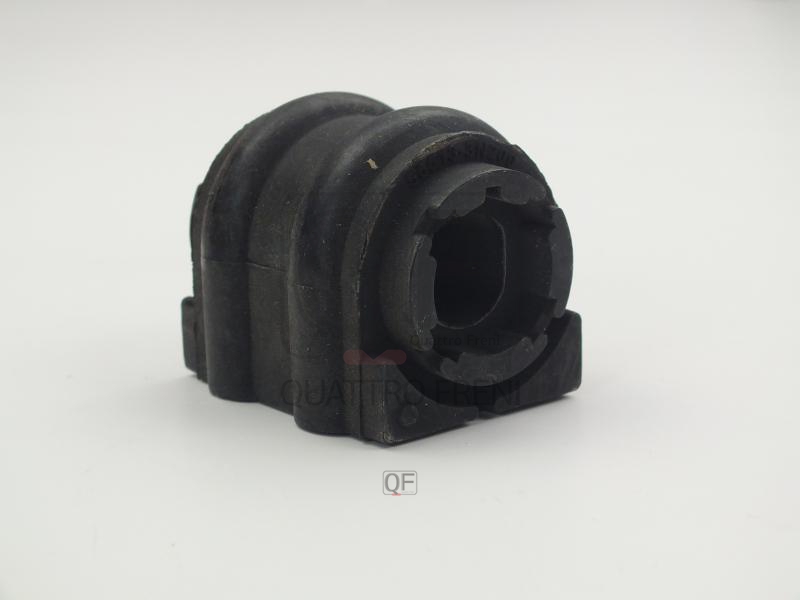
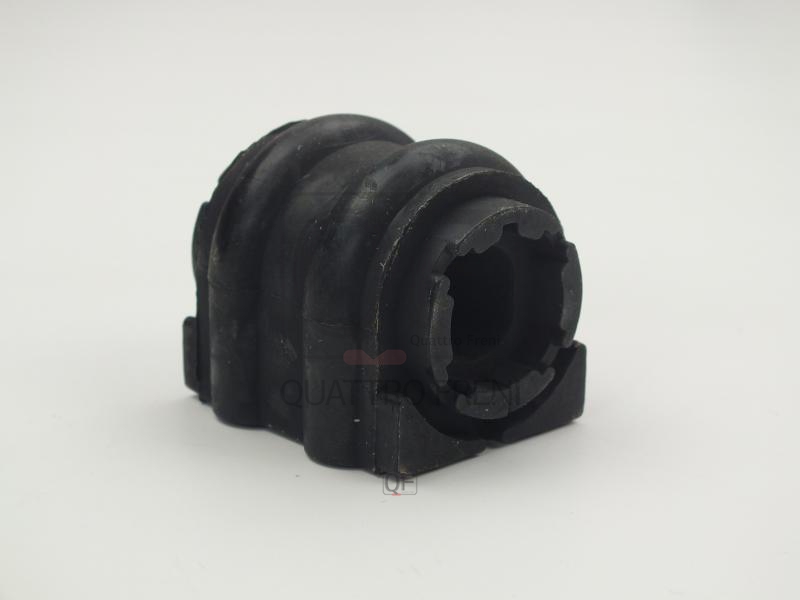
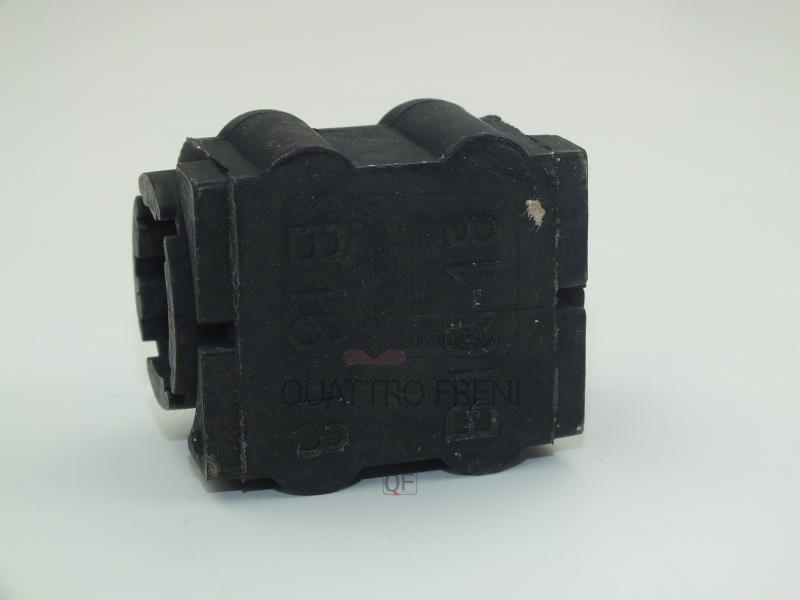
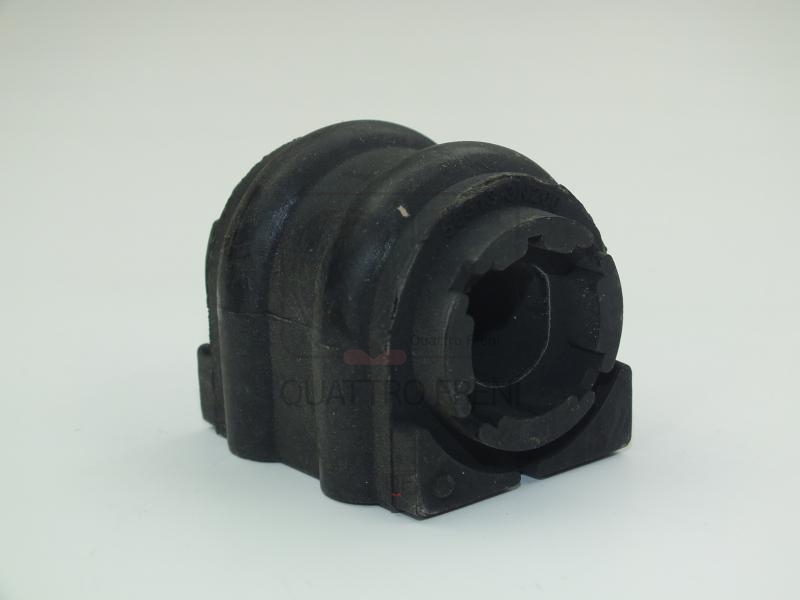
HYUNDAI/KIA 555133N200 BUSH STABILIZER
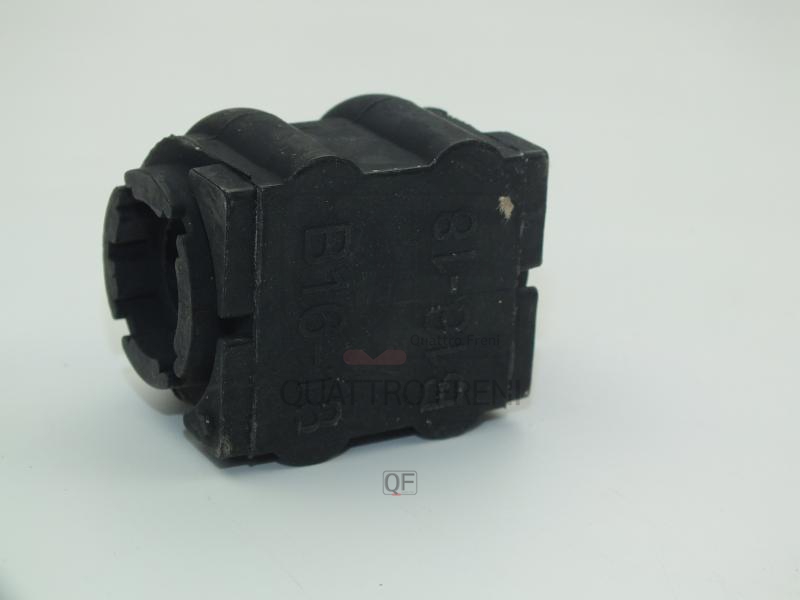
Product Specifications
| HYUNDAI/KIA | 555133N200 |
| LYNXAUTO | B9639 |
The BUSH STABILIZER is a split rubber or polyurethane cylindrical bushing that clamps around the anti-roll bar shaft at the point where the bar passes through its body-side mounting bracket, isolating the bar's rotational and axial movement from the vehicle body structure and preventing metal-to-metal contact between the steel bar and the steel bracket that would generate noise and accelerate wear. The anti-roll bar — also called the stabiliser bar or sway bar — is a torsion spring connecting the left and right suspension control arms across the vehicle axle that resists body roll by twisting when one wheel rises relative to the other in a corner; the bushing allows the bar to rotate within the bracket as it twists, while the bracket's clamping force holds the bar at its designed axial position along the chassis. The bushing's rubber compound is formulated to provide the correct combination of torsional compliance — allowing the bar to twist freely without binding — and radial stiffness — preventing the bar from deflecting laterally away from its designed position under cornering loads. On performance-oriented vehicles polyurethane replacement bushings are used in place of rubber to increase radial stiffness and reduce body roll at the cost of increased noise transmission into the cabin.
This unit — HYUNDAI/KIA 555133N200 — is manufactured to OEM-equivalent specifications: inner bore diameter matched to the stabiliser bar shaft diameter, outer diameter for bracket bore fit, bushing axial width, rubber compound Shore hardness and torsional stiffness, and bracket clamp contact geometry are matched to the original part. Supplied as a direct replacement for standard fitment. Available wholesale from 0.36 USD, MOQ 100 pcs, production lead time 38 days.
Stabiliser bar bushings fail through rubber hardening and cracking from ozone and UV exposure that reduces compliance and allows the bar to knock against the hardened bushing walls, through rubber tearing at the bushing split line from excessive torsional loading on vehicles with worn suspension that places abnormal angular demand on the bushing, and through bushing bore wear that allows the bar to deflect radially within the bushing and contact the bracket clamp. A worn bushing is one of the most common sources of underbody knocking and clunking noise on high-mileage vehicles and is frequently overlooked in favour of more expensive suspension components — always inspect bushing condition before replacing ball joints, tie rod ends, or shock absorbers in response to a suspension knock complaint.
- Support the vehicle on chassis stands and position a jack under the stabiliser bar before unbolting the bracket — the stabiliser bar is under suspension load and will drop when the bracket bolts are released on some vehicles; supporting the bar prevents it from falling and damaging the drop links or the CV boot as it descends; on vehicles where the bar must be partially lowered to slide the bushings off the bar ends, this support is essential for controlled movement.
- Measure the stabiliser bar diameter at the bushing location before ordering replacement bushings — the bar diameter is critical for bushing fit; a bushing with a bore 1 mm too large will allow the bar to knock immediately; a bushing with a bore too small will not slide onto the bar without deforming the bushing bore and will produce abnormal torsional stiffness; verify the bar diameter with a calliper at the cleaned bushing seat before confirming the order.
- Clean the stabiliser bar surface at the bushing seat thoroughly before fitting the new bushing — remove all rust, old rubber residue, and road contamination from the bar contact zone with a wire brush or abrasive cloth; apply a thin film of rubber grease or clean vegetable-based soap to the bar surface and the bushing inner bore to ease installation and prevent the bushing from tearing as it is positioned on the bar; never use petroleum-based grease which swells and degrades rubber compounds.
- Position the bushing split line correctly relative to the bracket clamp before tightening the bracket bolts — on bushings with a directional split, the split should face away from the load direction as specified in the OEM service data; on most applications the split faces downward or rearward; a bushing installed with the split in the high-load direction will open under torsional loading and allow the bar to contact the bracket.
- Torque the bracket bolts to OEM specification with the suspension at ride height — tightening the bracket with the suspension hanging pre-compresses the bushing in its unloaded position; when the vehicle is lowered to ride height the bushing is further compressed beyond its design range, producing abnormal torsional stiffness and premature cracking; always tighten with a jack under the control arm bringing the suspension to its laden position before final torque.
- Install the new BUSH STABILIZER (HYUNDAI/KIA 555133N200) on both left and right bracket positions simultaneously, torque all bracket bolts, lower the vehicle, and test drive over a speed bump and through a low-speed lane change — confirm the knock has been eliminated and that no new creaking or stiffness is apparent in the steering before returning the vehicle to service.
| Part | Reason for Combined Replacement |
|---|---|
| Stabiliser Bar Drop Link Left and right, OEM ref. varies by axle | The stabiliser bar drop links connect the ends of the anti-roll bar to the suspension strut or control arm and contain ball joints that wear at the same rate as the body bushings. A knock that persists after bushing replacement is frequently caused by worn drop link ball joints producing the same knock signature; inspect the drop link ball joints for play by grasping the link and attempting to move it in all directions with the suspension loaded, and replace any link showing ball joint play simultaneously with the bushings. |
| Stabiliser Bar Bracket Body-side clamp bracket, OEM ref. varies | The stabiliser bar bracket clamps the bushing to the body or subframe and is subject to corrosion at its bolt holes and clamp face contact surface. A bracket with severe through-corrosion or deformed clamp geometry cannot compress the new bushing uniformly, allowing the bushing to move within the bracket and producing the same knock as a worn bushing. Inspect the bracket clamp face and bolt holes for corrosion damage and replace if the metal is compromised. |
| Control Arm Bushings Front and rear control arm rubber bushings | Control arm compliance bushings are subject to identical age-related rubber degradation as the stabiliser bar bushings and frequently fail simultaneously on high-mileage vehicles. If stabiliser bar bushing replacement does not fully eliminate the suspension knock, inspect the control arm bushings for cracking and delamination — worn control arm bushings produce an overlapping knock that persists after stabiliser bushing replacement and can be misidentified as a recurring stabiliser fault. |