VAG/PORSCHE 059117070 GASKET



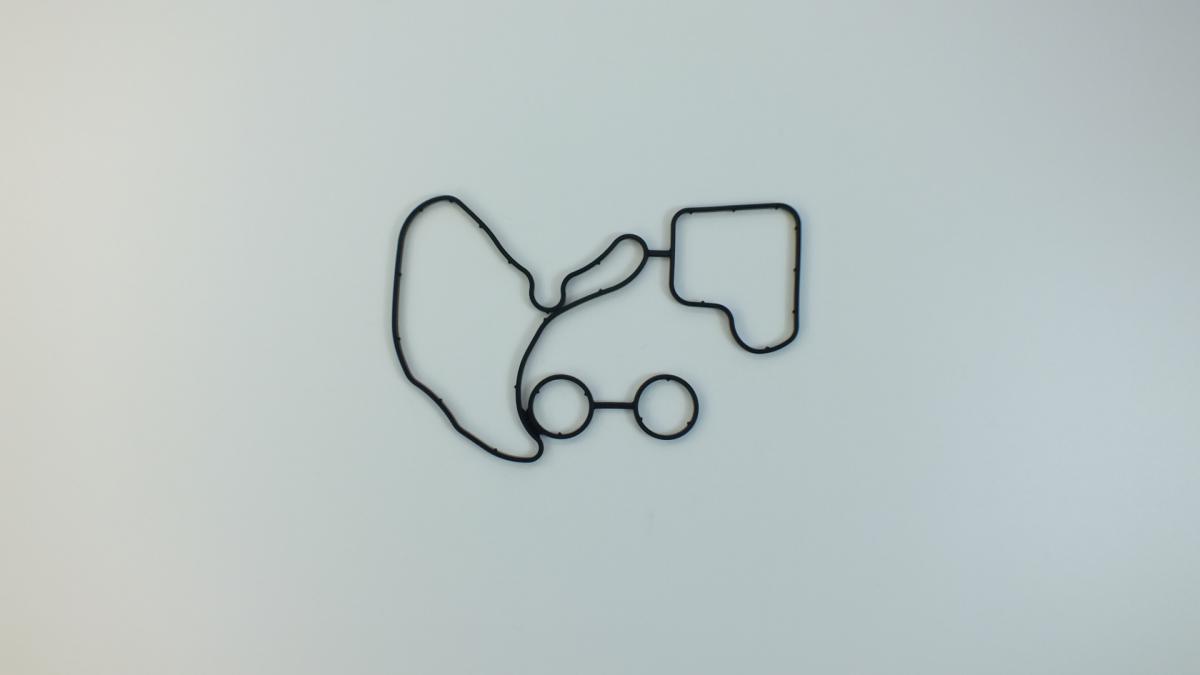

Product Specifications
| VAG/PORSCHE | 059117070 |
| VAG/PORSCHE | 59117070 |
The GASKET is a static sealing element interposed between two mating surfaces to prevent the passage of fluids, gases, or combustion pressure across the joint. Gaskets function by conforming under compressive load to fill microscopic surface irregularities in the mating faces, creating a continuous seal across the full contact area. Material selection is determined by the specific thermal, chemical, and pressure demands of each application: multi-layer steel (MLS) for cylinder head and exhaust manifold joints subject to high temperature and cyclic thermal expansion; compressed fibre (cellulose or aramid) for coolant and oil circuit joints at moderate temperature; PTFE for chemically aggressive fluid joints; and elastomer-coated steel carriers for valve cover and oil pan joints requiring compliance under vibration.
This unit — VAG/PORSCHE 059117070 — is manufactured to OEM-equivalent specifications: gasket material grade, thickness and compression ratio, port and bolt hole geometry, and any functional coatings or embossed sealing beads are matched to the original part. Supplied as a direct replacement for standard fitment. Available wholesale from 1.13 USD, MOQ 100 pcs, production lead time 53 days.
Gaskets are single-use components — never reuse a gasket that has been removed from a joint regardless of its apparent condition. Compression and thermal cycling permanently deform the sealing element; a removed gasket will not provide a reliable seal when reinstalled. Always confirm the OEM part number and application before ordering, as gaskets for adjacent joints on the same engine can appear visually identical but carry different material grades, thicknesses, or coating specifications that are critical to sealing performance.
- Identify and confirm the exact source of the leak before disassembly — use UV dye, a smoke machine, or a combustion gas test kit as appropriate for the suspected system. Disassembling the wrong joint wastes labour and introduces additional potential leak points.
- Clean both mating surfaces thoroughly after removing the old gasket. Remove all traces of old sealing material with a plastic scraper and appropriate solvent — never use a metal scraper on aluminium surfaces as gouges will cause immediate leaks with the new gasket. Inspect the mating faces for warping with a straightedge; a warped surface must be machined flat before a new gasket will seal reliably.
- Do not apply gasket sealant unless specifically required by the OEM procedure for that particular joint. Excess sealant can extrude internally and block oil passages, coolant galleries, or thermostat valves. Where sealant is specified, apply a uniform bead of the correct type and allow the specified flash-off time before assembly.
- Position the new gasket dry unless the OEM procedure specifies a particular lubricant or sealant on specific surfaces. Confirm the gasket is oriented correctly — many gaskets are asymmetric and will block ports or misalign bolt holes if installed reversed or inverted.
- Torque all fasteners in the correct sequence and to OEM specification in multiple passes. Use a calibrated torque wrench — never estimate torque by feel. Replace torque-to-yield (TTY) bolts with new units every time the joint is disturbed; TTY bolts are marked on the head and must never be reused.
- Install the new GASKET (VAG/PORSCHE 059117070), complete the assembly, and check for leaks after the first heat cycle — run the engine to full operating temperature, allow to cool completely, then inspect all disturbed joints before returning the vehicle to service. Some joints require a re-torque after the first heat cycle — refer to the OEM procedure.