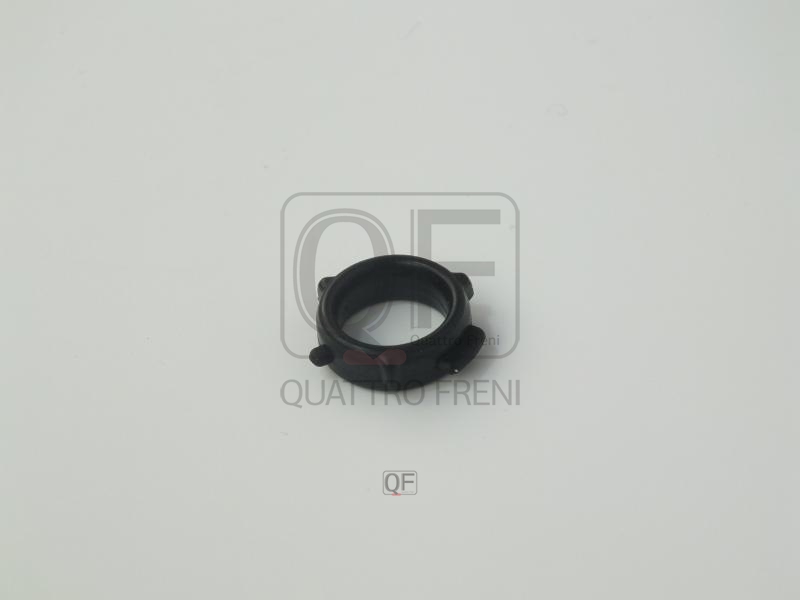
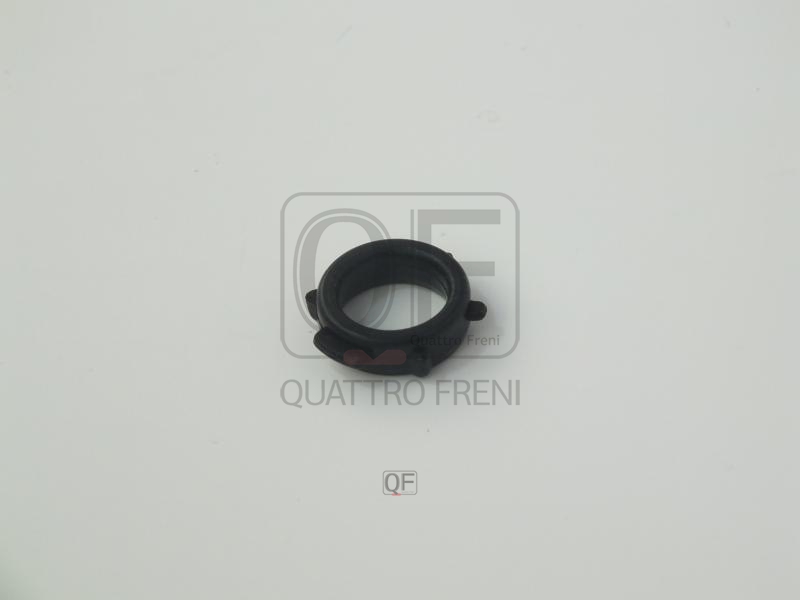
VAG/PORSCHE 059117070A GASKET
Product Specifications

Product quality
OEM Equivalent Grade
starstarstar
Wholesale price USD $0.09
Wholesale price CNY ¥0.6
bolt MOQ (Minimal order)
2000 pcs
local_shipping Production time
25-55 days
package_2 Shipping Weight:
VAG/PORSCHE 059117070A
VAG/PORSCHE 059103161T
VAG/PORSCHE 059117070B
VAG/PORSCHE 059121149B
VAG/PORSCHE 59117070
Overview & Operating Principle

The GASKET is a static sealing element interposed between two mating surfaces to prevent the passage of fluids, gases, or combustion pressure across the joint. Gaskets function by conforming under compressive load to fill microscopic surface irregularities in the mating faces, creating a continuous seal across the full contact area. Material selection is determined by the specific thermal, chemical, and pressure demands of each application: multi-layer steel (MLS) for cylinder head and exhaust manifold joints subject to high temperature and cyclic thermal expansion; compressed fibre (cellulose or aramid) for coolant and oil circuit joints at moderate temperature; PTFE for chemically aggressive fluid joints; and elastomer-coated steel carriers for valve cover and oil pan joints requiring compliance under vibration.

This unit — VAG/PORSCHE 059117070A — is manufactured to OEM-equivalent specifications: gasket material grade, thickness and compression ratio, port and bolt hole geometry, and any functional coatings or embossed sealing beads are matched to the original part. Supplied as a direct replacement for standard fitment. Available wholesale from 0.09 USD, MOQ 2000 pcs, production lead time 25-55 days.

Gaskets are single-use components — never reuse a gasket that has been removed from a joint regardless of its apparent condition. Compression and thermal cycling permanently deform the sealing element; a removed gasket will not provide a reliable seal when reinstalled. Always confirm the OEM part number and application before ordering, as gaskets for adjacent joints on the same engine can appear visually identical but carry different material grades, thicknesses, or coating specifications that are critical to sealing performance.

Symptoms & Diagnostics
Visible fluid leak at a joint — oil, coolant, fuel, or exhaust gas escaping at the gasket sealing line; use UV dye and a UV lamp to trace seepage to its exact origin point, as external contamination frequently makes the apparent source differ from the actual leak location.
Fluid loss without visible external dripping — internal gasket failure allowing fluid transfer between adjacent circuits; oil in coolant (white emulsion on the dipstick or in the coolant reservoir) or coolant in oil indicates head gasket or coolant gallery gasket failure.
White smoke from the exhaust on a warm engine — coolant entering the combustion chamber through a failed cylinder head gasket and being vaporised; distinct from cold-start condensation, which clears within a few minutes of warm-up.
Burning oil smell from the engine bay without visible dripping — oil seeping from a valve cover, oil pan, or camshaft cover gasket onto hot exhaust components below; the oil burns off before accumulating visibly on the ground.
Exhaust gas leak noise — a ticking or hissing from the exhaust manifold gasket area that is loudest on cold start and reduces as the metal expands and partially closes the leak; confirm with a smoke test or by feeling for exhaust pulses near the manifold flange.
Overheating or loss of coolant pressure without external leak — a head gasket failure allowing combustion gases to enter the cooling system pressurises the coolant circuit and forces coolant out through the expansion tank; confirm with a combustion gas leak test kit (CO2 test) on the coolant reservoir.
Logistics & Customs
International HS Code
8484.10
EAEU Customs Code (TN VED)
8484 10 000 0
Typical Net Weight
Country of Manufacture
China
Standard MOQ
2000 pcs
Production Lead Time
25-55 days
Always verify the exact 8-digit or 10-digit subheading with your customs broker for the destination country, as tariff schedules and duty rates vary by jurisdiction.
Installation Tips
  1. Identify and confirm the exact source of the leak before disassembly — use UV dye, a smoke machine, or a combustion gas test kit as appropriate for the suspected system. Disassembling the wrong joint wastes labour and introduces additional potential leak points.
  2. Clean both mating surfaces thoroughly after removing the old gasket. Remove all traces of old sealing material with a plastic scraper and appropriate solvent — never use a metal scraper on aluminium surfaces as gouges will cause immediate leaks with the new gasket. Inspect the mating faces for warping with a straightedge; a warped surface must be machined flat before a new gasket will seal reliably.
  3. Do not apply gasket sealant unless specifically required by the OEM procedure for that particular joint. Excess sealant can extrude internally and block oil passages, coolant galleries, or thermostat valves. Where sealant is specified, apply a uniform bead of the correct type and allow the specified flash-off time before assembly.
  4. Position the new gasket dry unless the OEM procedure specifies a particular lubricant or sealant on specific surfaces. Confirm the gasket is oriented correctly — many gaskets are asymmetric and will block ports or misalign bolt holes if installed reversed or inverted.
  5. Torque all fasteners in the correct sequence and to OEM specification in multiple passes. Use a calibrated torque wrench — never estimate torque by feel. Replace torque-to-yield (TTY) bolts with new units every time the joint is disturbed; TTY bolts are marked on the head and must never be reused.
  6. Install the new GASKET (VAG/PORSCHE 059117070A), complete the assembly, and check for leaks after the first heat cycle — run the engine to full operating temperature, allow to cool completely, then inspect all disturbed joints before returning the vehicle to service. Some joints require a re-torque after the first heat cycle — refer to the OEM procedure.
Tools: plastic scraper, appropriate solvent, straightedge for surface flatness check, torque wrench, torque angle gauge for TTY fasteners, UV dye kit or combustion gas test kit for leak diagnosis.
Frequently Asked Questions
Can a gasket be reused if it appears undamaged after removal?
No. Gaskets undergo permanent compression set and thermal deformation during their service life. A removed gasket will not conform correctly to the mating surfaces on reinstallation and will leak under operating pressure and temperature. The cost of a repeat disassembly far exceeds the cost of a new gasket — always fit a new unit. ok.parts supplies gaskets individually and as full engine or system gasket sets at wholesale MOQ from 0.09 USD per unit.
Is gasket sealant always required, and which type should be used?
Gasket sealant is only required where specifically stated in the OEM repair procedure for that joint. Many modern gaskets — particularly MLS head gaskets and rubber-coated valve cover gaskets — are designed to seal dry and will leak if sealant is applied incorrectly. Where sealant is required, always use the type specified by the manufacturer: anaerobic sealant for metal-to-metal joints, RTV silicone for elastomer gaskets, and copper spray only where specified for exhaust applications. Never use generic RTV on joints near oxygen sensors — silicone vapour from uncured RTV poisons the sensor element.
How does the OEM-equivalent aftermarket unit compare to the genuine OEM part?
OEM-equivalent units in this catalogue replicate the current OEM design geometry and material specification. Quality is verified against OEM cross-reference data. When ordering in bulk, confirm with our team that the specification matches the latest OEM revision for your application.
Is white-label or custom packaging available for wholesale orders?
Yes. ok.parts works directly with the manufacturing facility and can accommodate neutral white-label packaging or fully branded packaging with your company logo, part numbers, and barcode. Minimum order quantities and lead times for custom packaging may differ from standard stock. Contact the team via the inquiry form to discuss your specific requirements.
Frequently Replaced Together