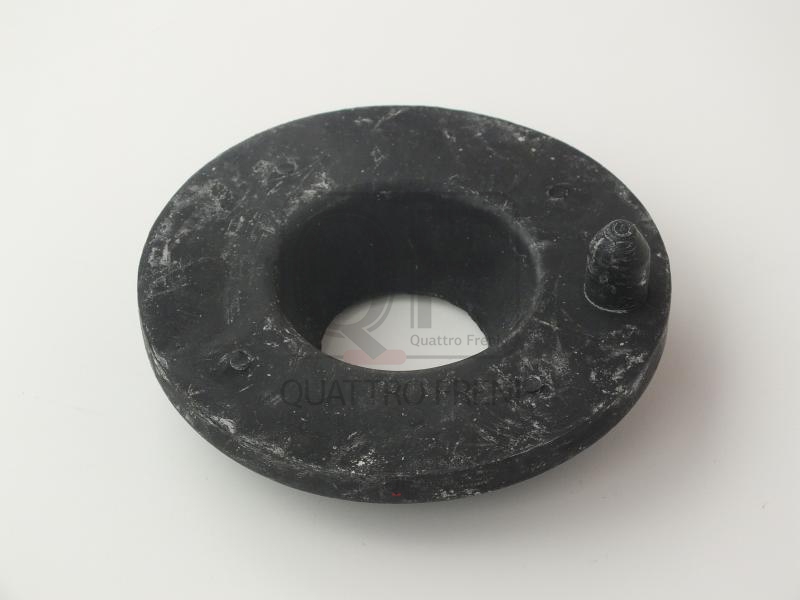
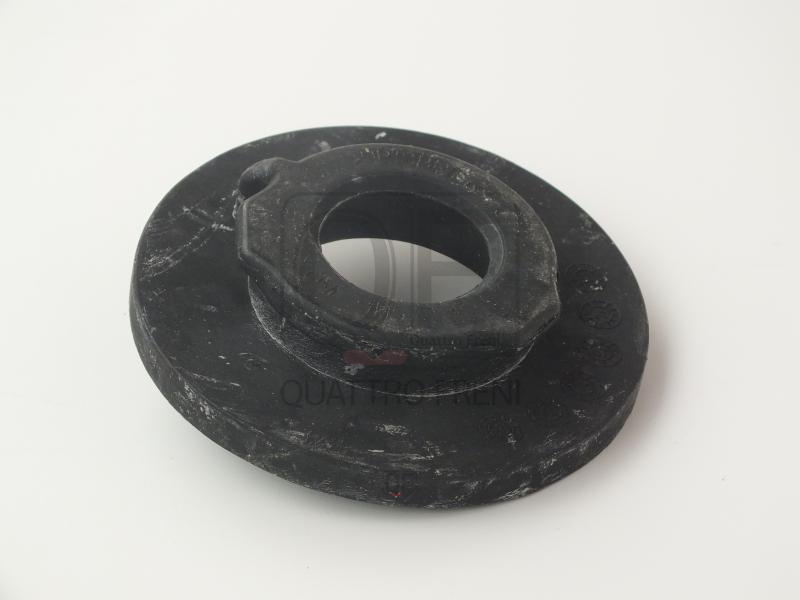
VAG 1K0512297D INSULATOR
Product Specifications
| VAG | 1K0512297D |
| VAG | 1K0512297C |
The INSULATOR is the shock absorber dust boot and bump stop assembly — a moulded rubber or thermoplastic elastomer component that fits over the exposed piston rod of a MacPherson strut or conventional shock absorber to perform two simultaneous protective and mechanical functions. The dust boot — the upper, accordion-pleated tubular section — encases the full length of the exposed piston rod and the rod seal area, excluding road grit, sand, moisture, and chemical contamination from the rod surface and the dynamic seal that retains the damper's hydraulic fluid; the seal's service life is directly linked to the cleanliness of the rod surface it slides against on every suspension stroke, and a torn dust boot that allows abrasive particles to reach the seal will cause rod seal failure and oil leakage within a short operating period regardless of the damper's hydraulic condition. The bump stop — the solid rubber or polyurethane cylindrical block at the lower end of the assembly, also called the jounce bumper — provides a progressive elastic compression stop when the suspension reaches full bump travel, preventing metal-to-metal contact between the spring seat and the body mounting, absorbing the remaining kinetic energy at the limit of suspension travel and protecting both the damper's internal components and the vehicle body structure from impact loads that exceed the spring's design range. The two elements are typically moulded as a single assembly or supplied as a matched kit and must always be replaced together.
This unit — VAG 1K0512297D — is manufactured to OEM-equivalent specifications: boot inner diameter for piston rod clearance, boot length for full suspension travel coverage, boot bellows profile and wall thickness for the designed number of compression cycles, bump stop outer diameter and height, bump stop durometer hardness for the designed progressive spring rate at full bump, and bump stop bore diameter for rod pass-through fit are matched to the original part. Supplied as a complete boot and bump stop assembly ready for installation. Available wholesale from 1.15 USD, MOQ 100 pcs, production lead time 34 days.
Dust boots fail through UV and ozone hardening of the rubber that reduces flexibility until the bellows cracks during suspension travel, through physical tearing from stone impact or contact with a suspension component, and through compression fatigue from high-cycle use that causes the boot material to split at the bellows fold radius. A torn boot discovered at a service inspection should be treated as an urgent defect — the piston rod's chrome surface degrades rapidly once exposed to road contamination, and a rod with surface pitting or corrosion cannot be sealed by the oil seal regardless of the seal's condition, making the damper unrepairable without a full rod replacement. Bump stops fail through compression set that reduces the block's height and stiffness, reducing the bump load distribution function and potentially allowing metal-to-metal contact at full bump.
- Inspect the piston rod surface thoroughly before fitting a new boot — wipe the full rod length clean with a lint-free cloth and examine under good lighting for pitting, scoring, corrosion, or chrome flaking; run a fingernail along the rod surface in the seal contact zone; any surface irregularity detectable by feel will destroy the rod seal within a short operating period; a rod with surface damage should prompt damper replacement rather than boot-only service, as the damaged rod cannot be sealed reliably by any seal.
- On MacPherson struts, use a spring compressor to relieve spring load before removing the top mount nut — the coil spring is under significant preload on the strut assembly; removing the top nut without spring compressors releases this energy suddenly, sending the spring and top mount components across the workshop; always fit two independent spring compressors symmetrically on the coil before loosening the top nut, and confirm the compressors are fully engaged before applying any torque to the nut.
- Slide the new bump stop and boot assembly over the piston rod from the top with the rod pointing upward — thread the rod through the bump stop bore first, then through the boot's upper aperture; confirm the bump stop is fully seated against the damper body's upper spring seat face and that the boot's upper lip is correctly located over the rod gland seal area; the boot must cover the full length of exposed rod from the seal to the top mount to provide complete contamination exclusion.
- Do not lubricate the piston rod with grease or oil before fitting the new boot — petroleum-based lubricants accelerate rubber degradation of the boot material and the rod seal compound; the piston rod should be clean and dry at installation; the rod seal is lubricated internally by the damper fluid and requires no external lubrication.
- Confirm the boot is not twisted or compressed unevenly in the bellows section after assembly — a twisted boot develops stress concentrations at the twist points that cause premature cracking at the first suspension stroke; check that each bellows fold is uniformly formed around the full circumference by rotating the boot gently on the rod after installation.
- Install the new INSULATOR (VAG 1K0512297D), reassemble the strut with the spring and top mount to OEM torque, lower the vehicle to ride height, bounce the suspension several times to allow the spring and boot to settle, and confirm no contact between the boot and the spring coils or spring seat at any suspension position before returning the vehicle to service.
| Part | Reason for Combined Replacement |
|---|---|
| Shock Absorber / Strut OEM ref. varies by axle position | A dust boot that has been torn and exposed the piston rod to contamination has almost certainly damaged the rod seal — a damaged rod cannot be sealed reliably by any replacement seal. If the rod surface shows any pitting, scoring, or chrome damage, replace the complete damper simultaneously with the boot. Additionally, a shock absorber accessed for boot replacement should be assessed for hydraulic performance — a damper that bounces more than 1.5 times when the vehicle corner is loaded and released has lost sufficient damping to warrant replacement at the same service. |
| Strut Top Mount Bearing OEM ref. varies by strut application | The strut top mount bearing is fully accessible when the strut assembly is disassembled for boot replacement — the spring must be compressed and the top nut removed to access the boot. The top mount bearing accumulates the same mileage and thermal cycling as the boot; a bearing that shows roughness or stiffness when rotated by hand while the spring load is released should be replaced simultaneously with the boot to avoid a repeat spring compression operation within a short interval. |
| Coil Spring OEM ref. varies by axle position | The coil spring is fully accessible and under its compressor during every dust boot replacement operation. Inspect the spring for corrosion cracks at the lower coil where road salt accumulates and for height reduction from fatigue; a spring with visible surface corrosion cracks is at risk of sudden fracture under normal road loads. Replacing a fatigued or corroded spring simultaneously with the boot completes the full strut overhaul in a single spring compression operation and eliminates a spring failure — which can strand the vehicle — within a short interval. |