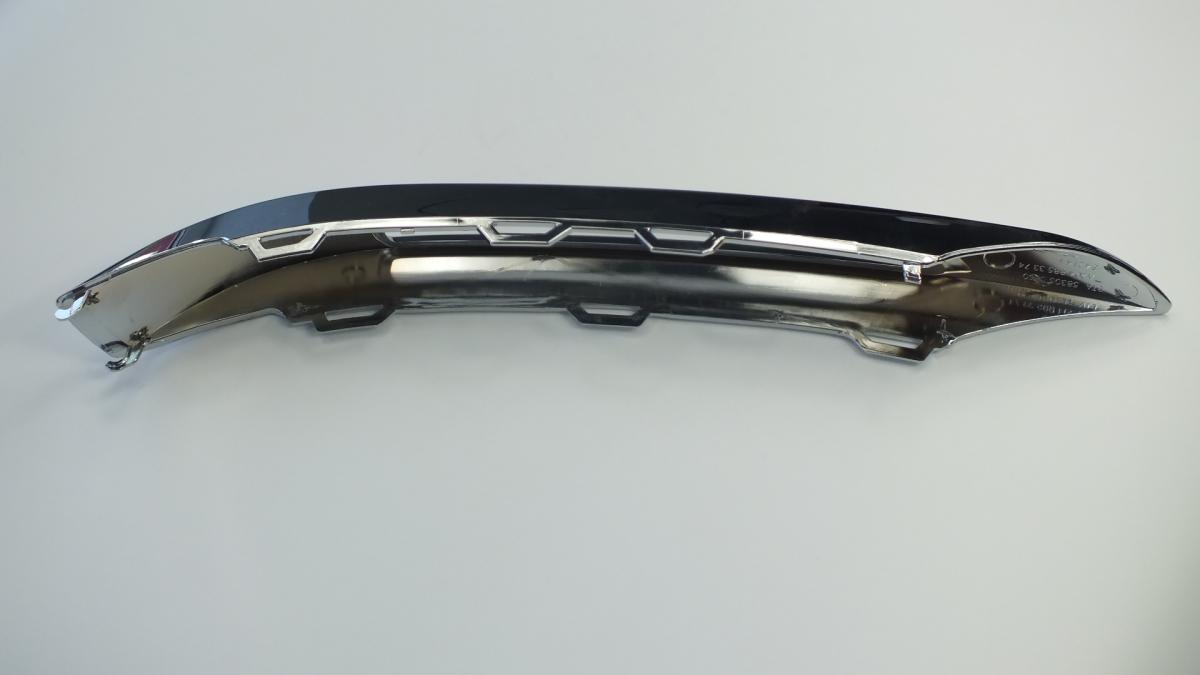
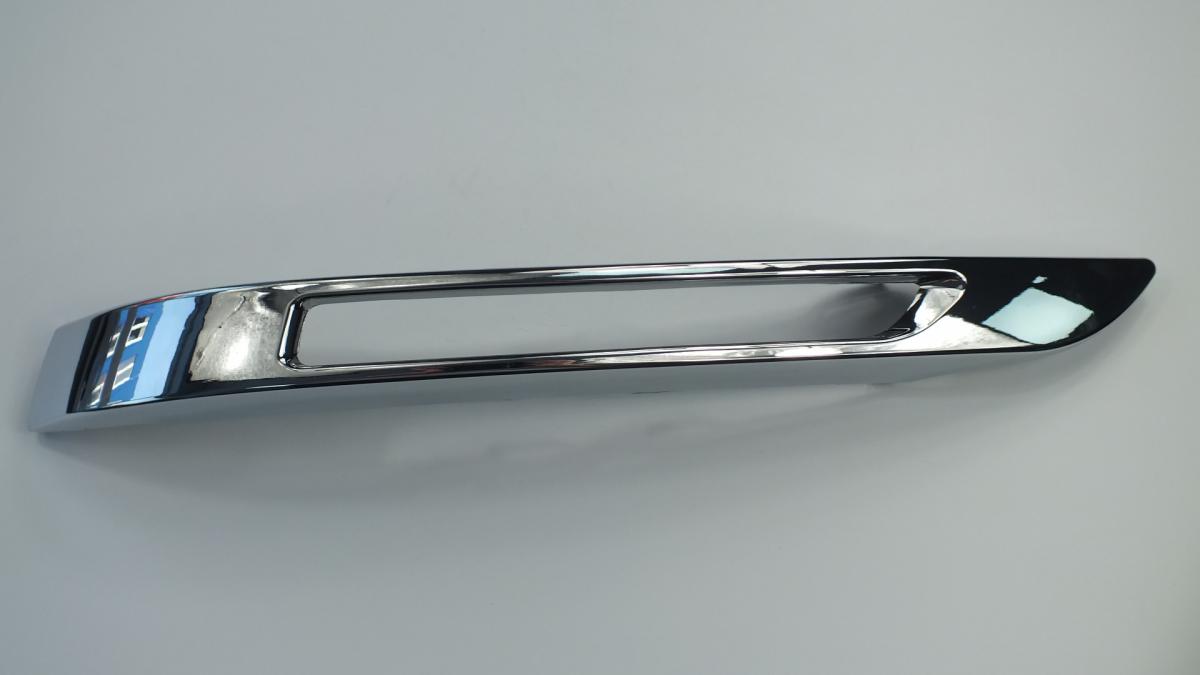
MERCEDES-BENZ A2048853374 COVER
Product Specifications
| MERCEDES-BENZ | A2048853374 |
| MERCEDES-BENZ | 2048853374 |
The COVER is a thin-gauge pressed steel or aluminium dust shield — also called a brake disc backing plate or splash guard — mounted behind the brake disc on the steering knuckle or wheel carrier that serves two simultaneous functions: it shields the inboard face of the brake disc from road water, mud, and abrasive debris thrown up from the road surface by the rotating tyre, protecting the disc's inner face from the accelerated corrosion that constant wet contamination would produce on an unprotected surface; and it directs cooling airflow over the disc's friction faces by creating a venturi effect as the disc rotates, drawing ambient air through the hat section and expelling heated air from the disc's outer perimeter. The shield's geometry is precisely matched to the disc diameter and hat profile of the specific vehicle application — the small clearance between the shield's inner edge and the disc hat allows sufficient airflow for brake cooling while excluding the majority of road contamination; on vented disc designs the shield's inner face is profiled to direct airflow into the disc's ventilation passages. The shield is a non-structural component that carries no brake system loads and is secured to the steering knuckle or wheel carrier by the same hub bearing retaining bolts or dedicated bracket bolts, positioning it concentrically behind the disc with a clearance of 3–8 mm between the shield face and the disc inboard friction surface.
This unit — MERCEDES-BENZ A2048853374 — is manufactured to OEM-equivalent specifications: outer diameter and inner hub aperture for disc and hub clearance, mounting hole pattern for knuckle attachment, material gauge and corrosion protection treatment, shield profile geometry for cooling airflow direction, and ABS sensor wire routing clip positions where applicable are matched to the original part. Supplied as a direct replacement for standard fitment. Available wholesale from 3.54 USD, MOQ 50 pcs, production lead time 23 days.
Brake disc dust shields fail through severe corrosion perforation from road salt and continuous moisture exposure — the thin steel gauge used for weight reduction is highly susceptible to through-corrosion after the protective coating fails; through physical deformation from road debris impact or from contact with the brake disc caused by collision damage, suspension geometry change, or incorrect installation after a previous brake service; and through fatigue cracking at the mounting holes from road vibration. A shield that is bent into contact with the rotating disc face is the most urgent failure mode — the scraping contact generates a continuous metallic noise and creates a drag on the disc that can be mistaken for brake binding, and the friction contact abrades both the shield and the disc inboard face.
- Remove the hub bearing assembly or the complete knuckle to access the shield mounting bolts on most designs — the dust shield is sandwiched between the steering knuckle face and the hub bearing flange on the majority of modern MacPherson and multi-link suspension designs; the shield cannot be replaced without removing the hub bearing to release the shield from between the two mating faces; confirm the replacement procedure from the vehicle service data before beginning disassembly, as some designs allow shield replacement with the hub bearing in place.
- Inspect the steering knuckle mating face for corrosion and debris before installing the new shield — the knuckle face must be clean and flat for the new shield to seat correctly and for the hub bearing to clamp it evenly; a corroded knuckle face with pitting or raised rust deposits prevents the shield from sitting flat, causing it to be clamped at an angle that positions the shield face off-centre relative to the disc, potentially creating contact at the disc face or tyre.
- Confirm the new shield is the correct side — left or right before installation — brake disc dust shields are handed for left and right sides on most vehicles; the ABS sensor cable routing clip, the caliper bracket clearance notch, and the lower shield contour that clears the steering arm are all asymmetric; installing the wrong-side shield results in the shield contacting the caliper bracket or the ABS sensor cable on first wheel rotation.
- Check the disc-to-shield clearance is uniform around the full shield perimeter after installation by rotating the disc by hand with the wheel removed; the clearance should be consistent at 3–8 mm around the circumference with no contact at any rotational position; if contact is detected, identify whether the shield is incorrectly positioned on the knuckle face, whether the disc hat is bent, or whether the shield itself has a manufacturing form deviation before completing the assembly.
- Re-route the ABS wheel speed sensor cable through the shield's routing clip after installation — the cable must be retained in the clip at the correct tension to prevent it from hanging loose near the rotating disc or hub; a cable that is too tightly routed will be placed under tension during suspension travel and fatigue; a cable routed too loosely will contact the disc or rotating hub flange; confirm the cable follows the OEM routing with the suspension at ride height.
- Install the new COVER (MERCEDES-BENZ A2048853374), refit the hub bearing to the OEM torque specification, refit the brake disc and caliper, lower the vehicle to the ground, and perform a slow drive-by listening for any scraping from the affected wheel before returning the vehicle to service.
| Part | Reason for Combined Replacement |
|---|---|
| Brake Disc OEM ref. varies by axle position | A dust shield that has been in contact with the brake disc inboard face leaves a polished contact track on that surface; while the inboard face is not a braking friction surface, the contact track indicates the disc has experienced asymmetric thermal distribution from the localised friction, potentially creating slight warping or hard spots in the disc casting. Inspect the disc thickness and runout simultaneously with shield replacement and replace the disc if any deformation is measurable. |
| Hub Bearing Assembly OEM ref. varies by axle position | On designs where dust shield replacement requires hub bearing removal, the hub bearing is fully accessible and should be inspected for play and noise with the bearing removed from the knuckle. A bearing approaching end of life should be replaced simultaneously with the shield to avoid a repeat hub disassembly within a short interval; the combined labour for shield-only replacement and a separate subsequent bearing replacement significantly exceeds the cost of addressing both in the same service operation. |
| ABS Wheel Speed Sensor OEM ref. varies by wheel position | The ABS wheel speed sensor and its cable routing are directly associated with the dust shield on most modern vehicles — the cable clips to the shield and the sensor mounts adjacent to the shield on the knuckle. A shield that has been severely corroded or that has deformed into disc contact will have subjected the sensor cable to vibration fatigue and potential chafing damage. Inspect the sensor and cable thoroughly when the shield is replaced and replace the sensor simultaneously if any cable damage or connector corrosion is found. |