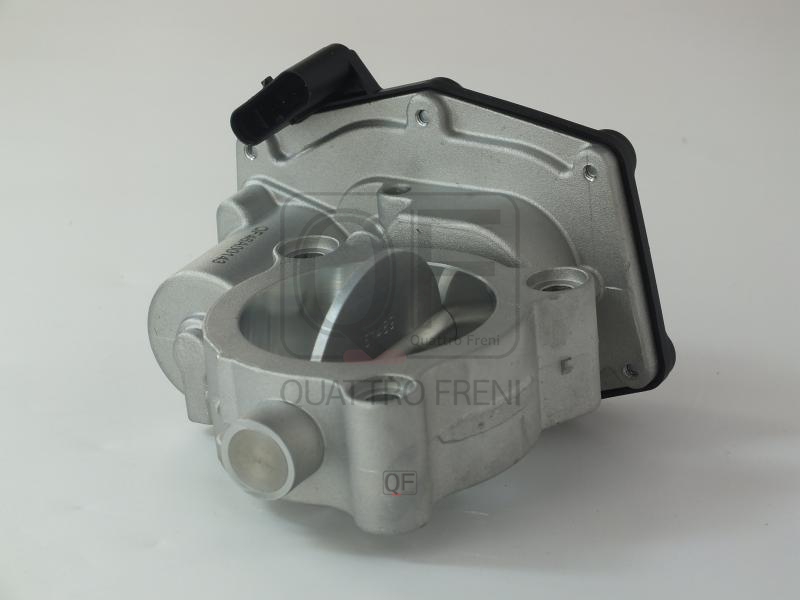
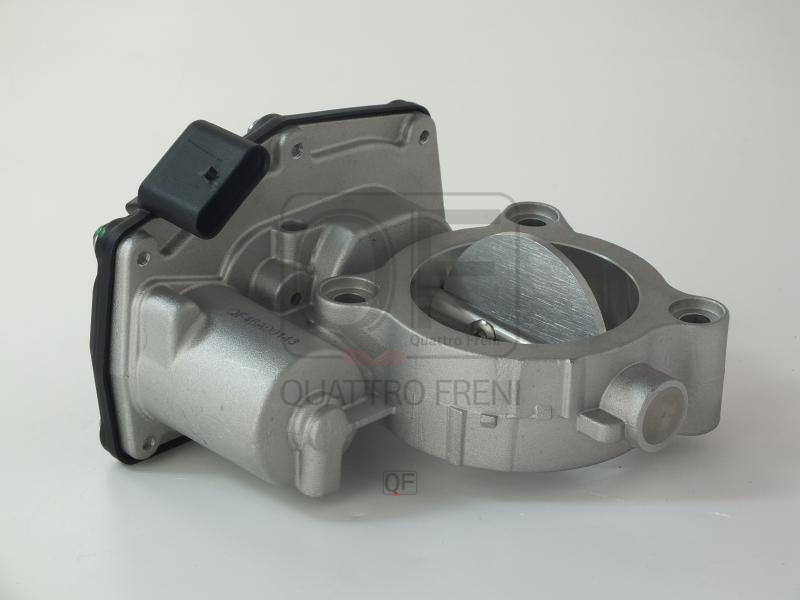
BMW/MINI 13547810752 THROTTLE BODY
Product Specifications
| BMW/MINI | 13547810752 |
The THROTTLE BODY is the electronically controlled air metering valve in the engine intake system that regulates the quantity of air entering the combustion chambers in response to driver torque demand and ECU load management strategies, replacing the mechanically cable-linked throttle plate of earlier designs with a fully drive-by-wire electronic actuation system on all current production engines. The assembly consists of a cast aluminium or polymer housing with a precision-bored air passage, a butterfly valve plate that rotates from closed to fully open on a shaft supported by two sealed bearings, a DC motor or stepper motor that drives the shaft through a reduction gear train, and a dual-track throttle position sensor — two independent potentiometer tracks wired in opposite polarity — that provides the ECU with continuous plate angle feedback for closed-loop position control and cross-checks the two signals against each other to detect sensor failures. At idle and light load the ECU commands a very small throttle opening — often just 3–8 degrees — that is precisely maintained by the servo loop; the idle air control function that required a separate bypass valve on older engines is entirely managed by the electronic throttle body on modern designs. The ECU additionally uses the throttle body for active engine braking management, torque reduction during ABS and traction control interventions, and smooth torque coordination during automatic transmission gearshifts.
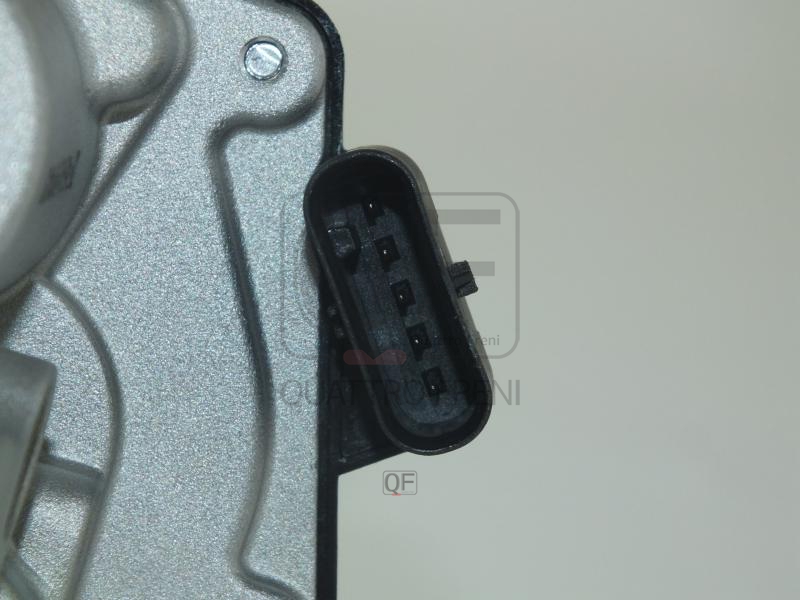
This unit — BMW/MINI 13547810752 — is manufactured to OEM-equivalent specifications: bore diameter, motor voltage and gear reduction ratio, dual-track TPS output voltage range and cross-track relationship, bearing preload, default limp-home spring position, housing port dimensions and gasket face, and connector pinout are matched to the original part. Supplied as a direct replacement for standard fitment. Available wholesale from 40.27 USD, MOQ 10 pcs, production lead time 51 days.
Throttle bodies fail through carbon deposit accumulation on the bore walls and plate edge from crankcase breather vapour, causing the plate to stick at small openings and producing erratic idle; TPS potentiometer track wear producing dead spots or offset voltage that the ECU misinterprets as incorrect plate position; gear train wear causing position hunting; and motor winding failure. Before replacing the throttle body, always attempt chemical cleaning of the bore and plate with dedicated throttle body cleaner — carbon fouling is the most common cause of erratic idle and can be resolved without component replacement on many vehicles, provided the TPS and motor are electrically serviceable.
- Disconnect the negative battery terminal before removing the throttle body — the throttle body motor and TPS are live circuits with the ignition on; disconnecting the battery prevents accidental motor activation during installation that could trap fingers in the gear train, and clears the ECU's learned throttle position values to prepare for the adaptation procedure required after fitting the new unit.
- Clean the intake manifold mating face thoroughly after removing the old throttle body — the gasket face on the manifold must be flat and clean for the new gasket to seal correctly; an uneven or contaminated face allows unmetered air to bypass the throttle plate at the gasket joint, producing the same lean idle and TPS fault symptoms as a failed throttle body and making post-installation diagnosis impossible.
- Do not spray throttle body cleaner into the new unit's bore before or during installation — dedicated throttle body cleaner contains solvents that dissolve the lubricant on the new throttle plate shaft bearings and may attack the TPS potentiometer track coating; clean only the intake manifold mating face and port with cleaner; the new throttle body bore requires no pre-cleaning.
- Fit a new gasket between the throttle body and intake manifold — never reuse the old gasket; a compressed or distorted old gasket creates an air leak that the ECU cannot distinguish from a TPS signal fault, causing the same limp-home mode and idle fault codes that prompted the throttle body replacement; always use the gasket supplied with the replacement unit or an OEM-equivalent part.
- Torque all mounting bolts evenly in a diagonal sequence to OEM specification — throttle body mounting bolts thread into aluminium manifold material; overtightening strips the threads and distorts the throttle body flange; undertightening allows the gasket to relax under thermal cycling and produces a leak after the first heat cycle; use a torque wrench and the OEM value — typically 8–12 Nm.
- Install the new THROTTLE BODY (BMW/MINI 13547810752), reconnect the battery, perform the throttle body adaptation procedure via scan tool or the ignition-key sequence specified in the vehicle service data to allow the ECU to learn the new unit's closed-position reference and full-travel end-stop values, clear all stored fault codes, start the engine and confirm stable idle at the correct RPM, and verify throttle response is smooth and linear throughout the full pedal travel range before returning the vehicle to service.
| Part | Reason for Combined Replacement |
|---|---|
| Throttle Body Gasket Application-specific fibre or rubber gasket | The throttle body gasket is a single-use sealing element that must be replaced every time the throttle body is removed. A reused compressed gasket creates an air leak between the throttle body and intake manifold that the MAF sensor cannot measure, producing lean fuelling and erratic idle that mimics a faulty throttle body or MAF sensor. Always fit a new gasket — the cost is negligible and the consequences of reuse are a diagnostic dead end. |
| Mass Air Flow Sensor OEM ref. varies by engine | A contaminated MAF sensor that is under-reading airflow produces the same erratic idle and lean fuel trim symptoms as a fouled throttle body. If the throttle body cleaning or replacement does not fully resolve idle quality, inspect the MAF sensor output on live scan tool data before concluding the repair — a MAF sensor reading consistently below the known-good reference value at idle requires replacement to restore correct fuelling alongside the new throttle body. |
| Intake Air Duct Rubber or silicone duct between MAF and throttle body | A cracked or split intake duct between the MAF sensor and the throttle body allows unmetered air into the engine that causes lean fuelling and idle instability indistinguishable from a throttle body fault. Inspect the full duct length and all clamp joints during throttle body access — a duct with surface cracks or loose clamps should be replaced simultaneously with the throttle body to eliminate air leaks as a remaining variable after the repair. |