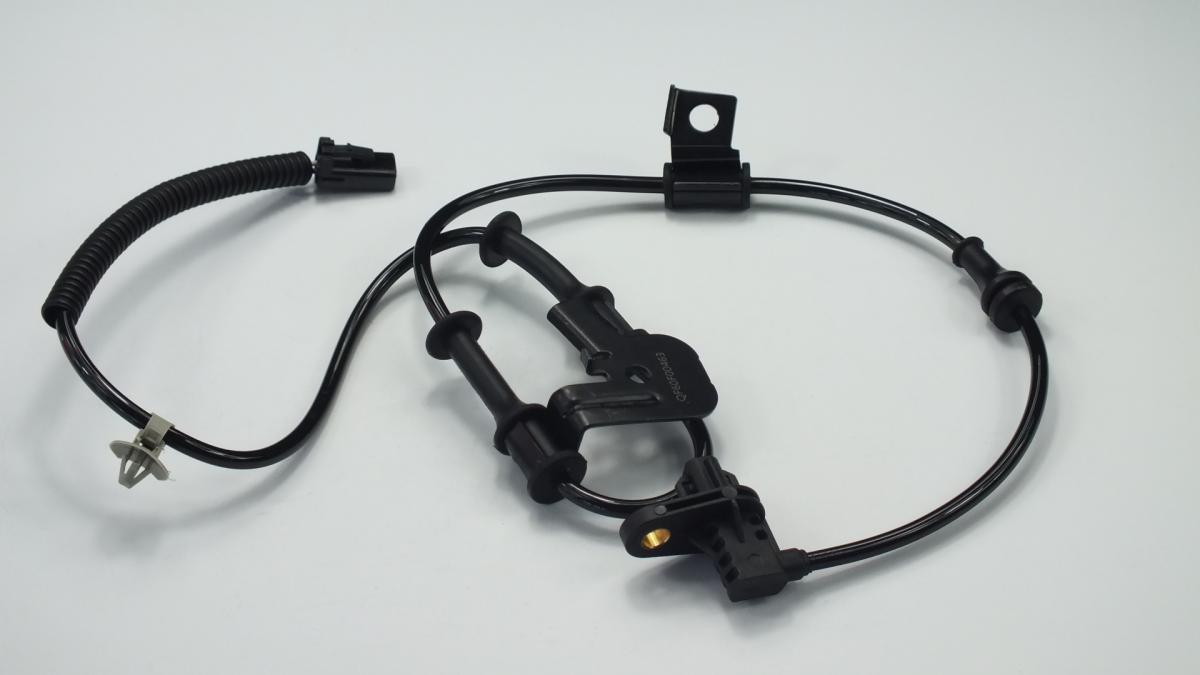
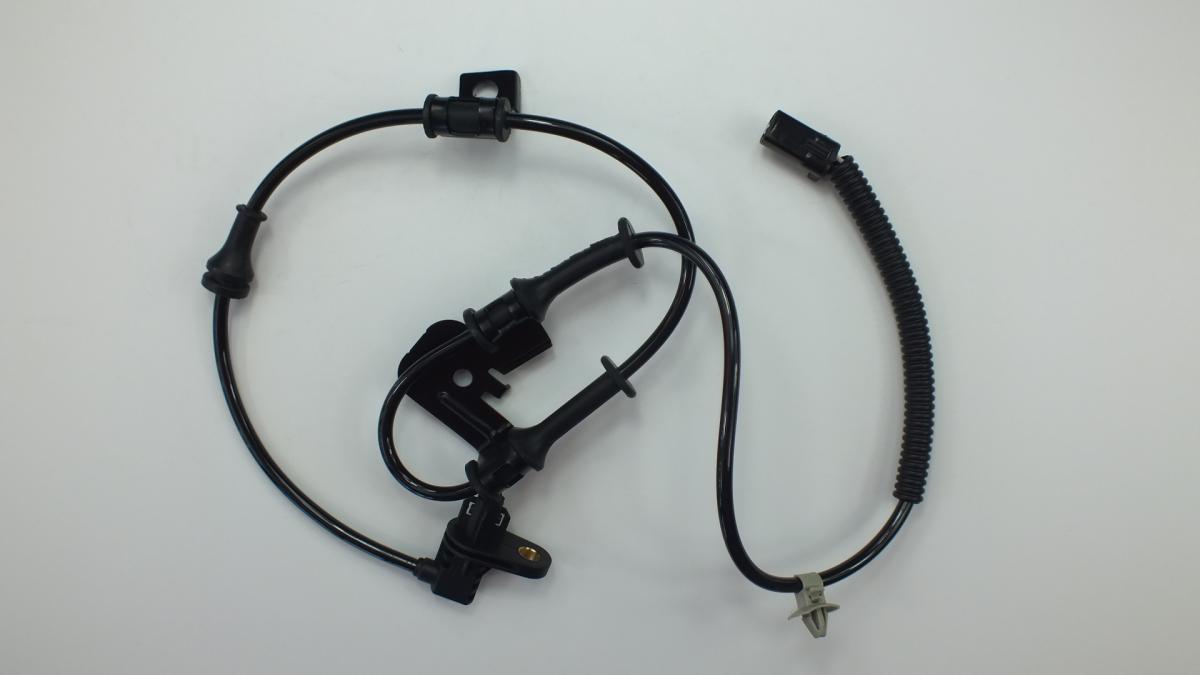
HYUNDAI/KIA 956701R000 SENSOR WHEEL SPEED
Product Specifications
| HYUNDAI/KIA | 956701R000 |
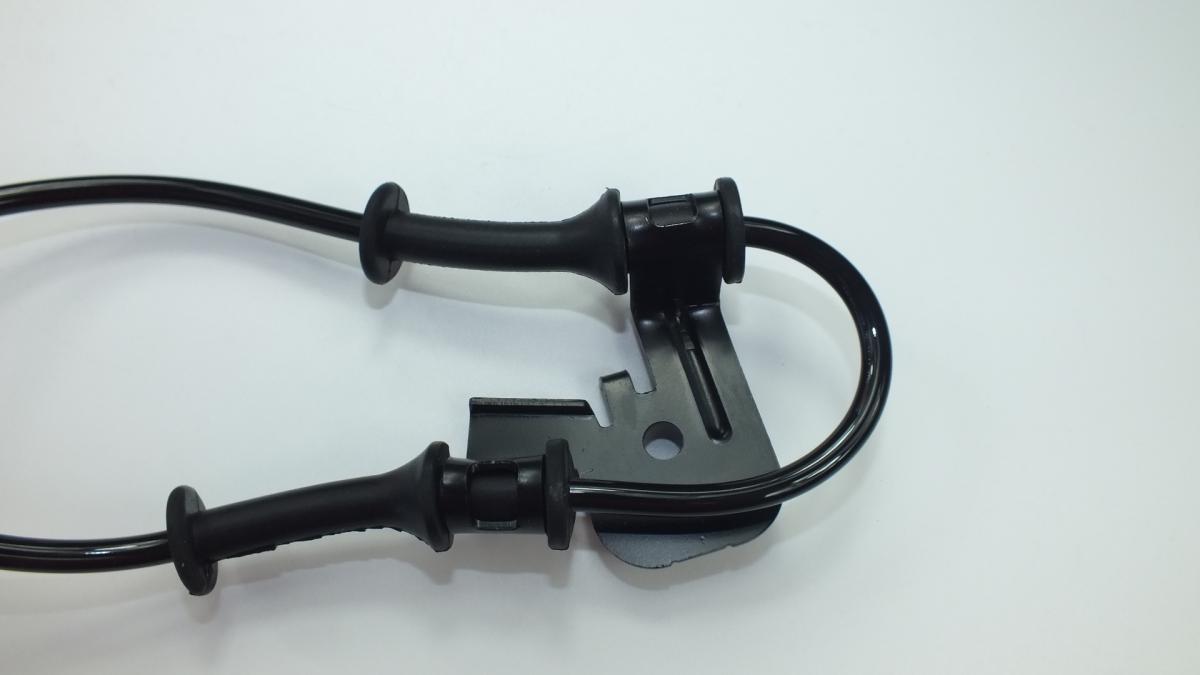
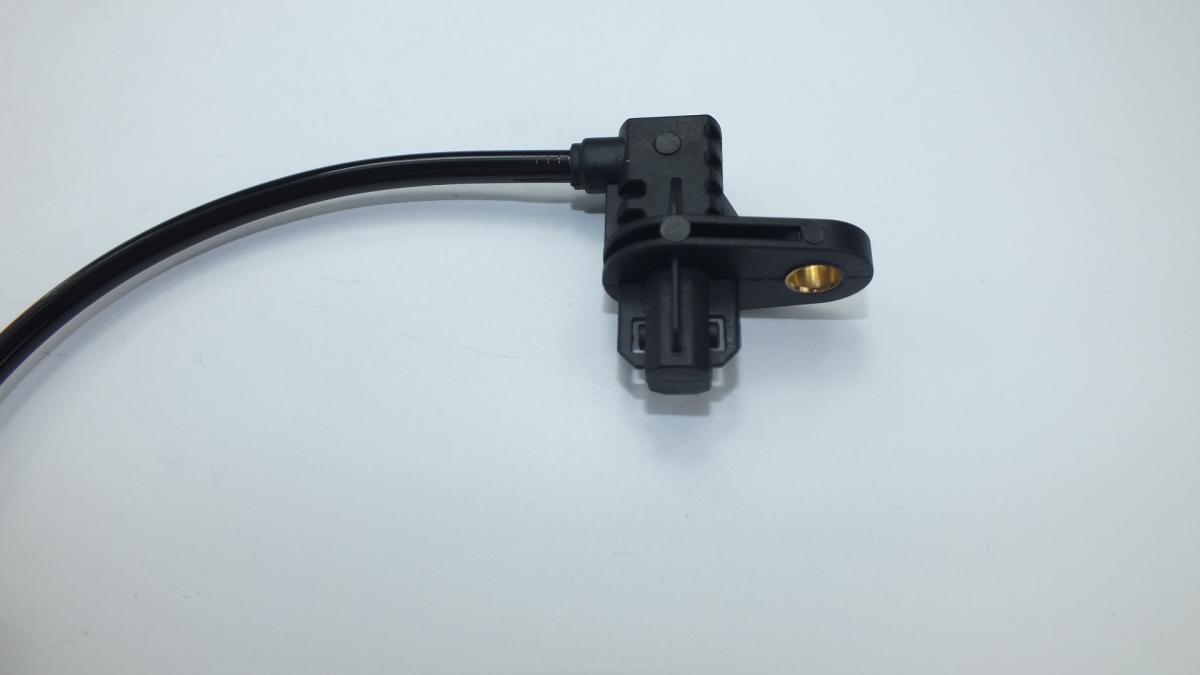
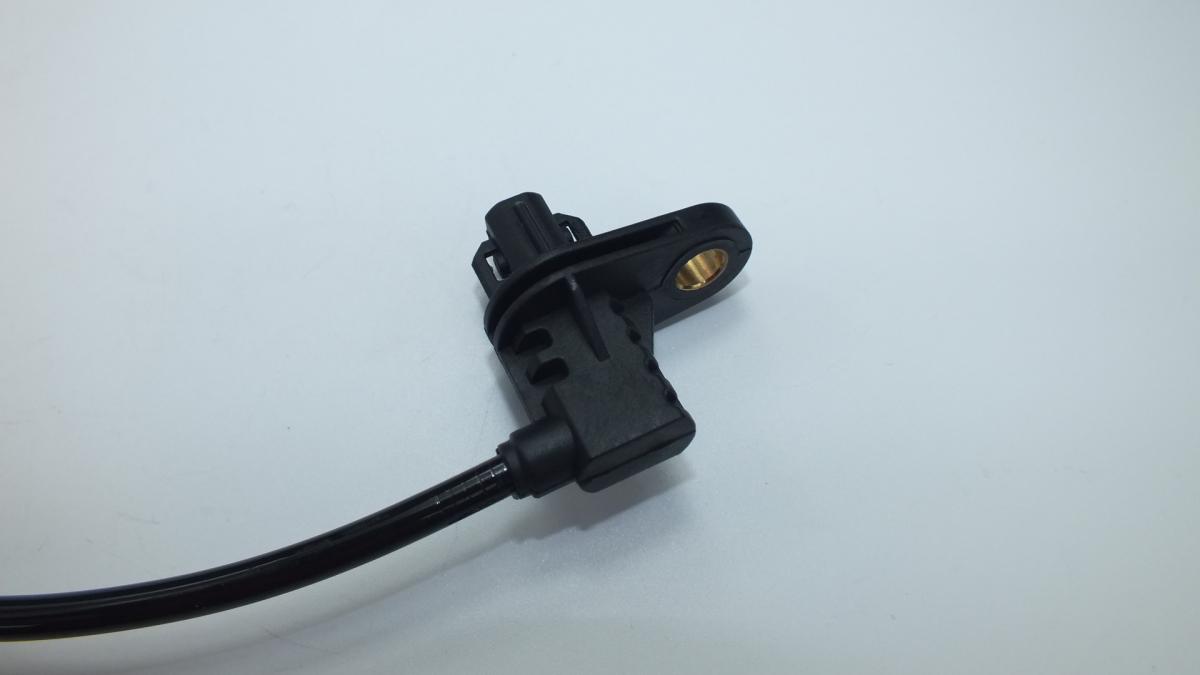
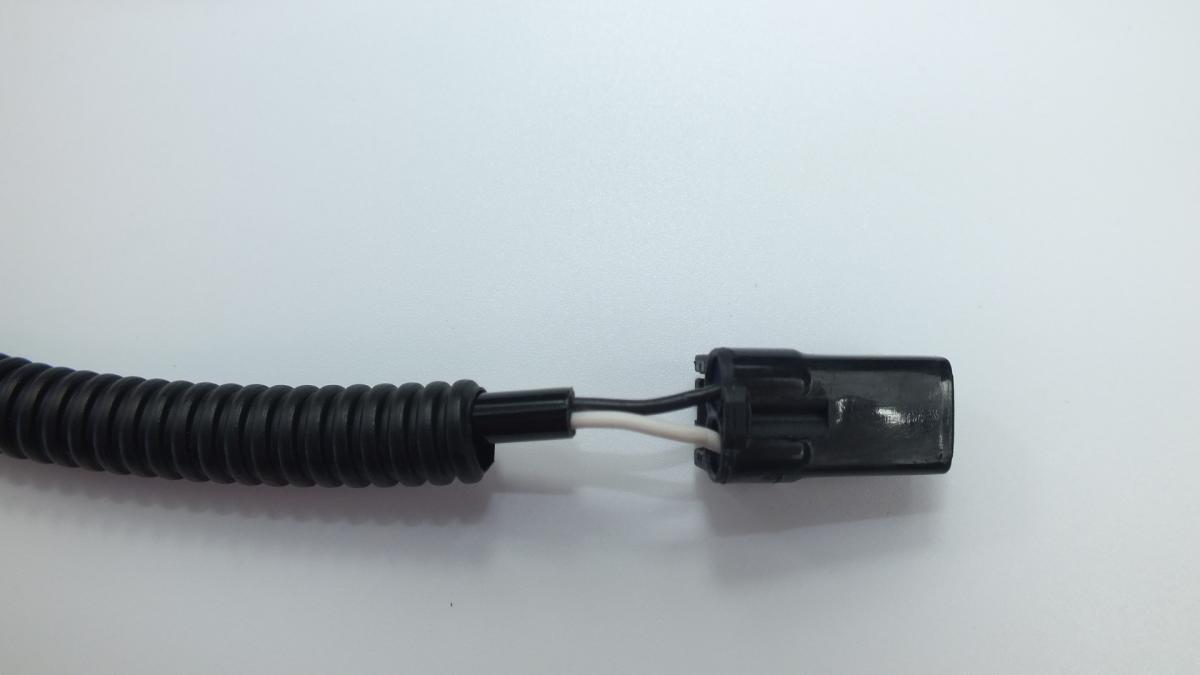
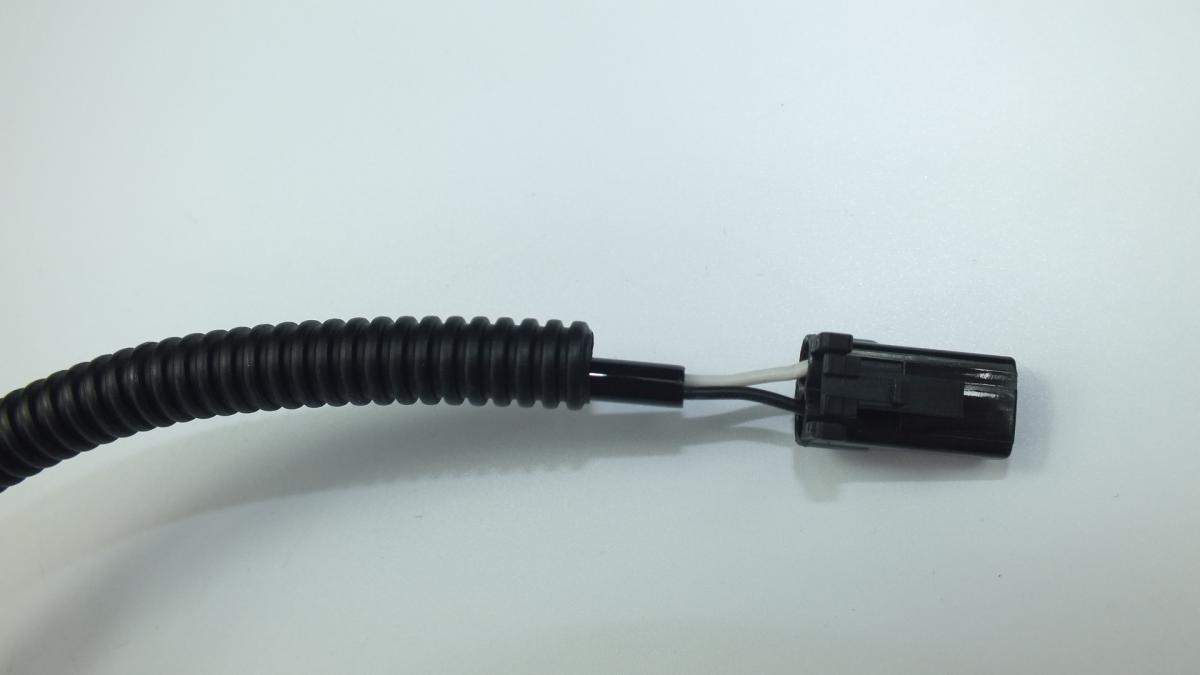
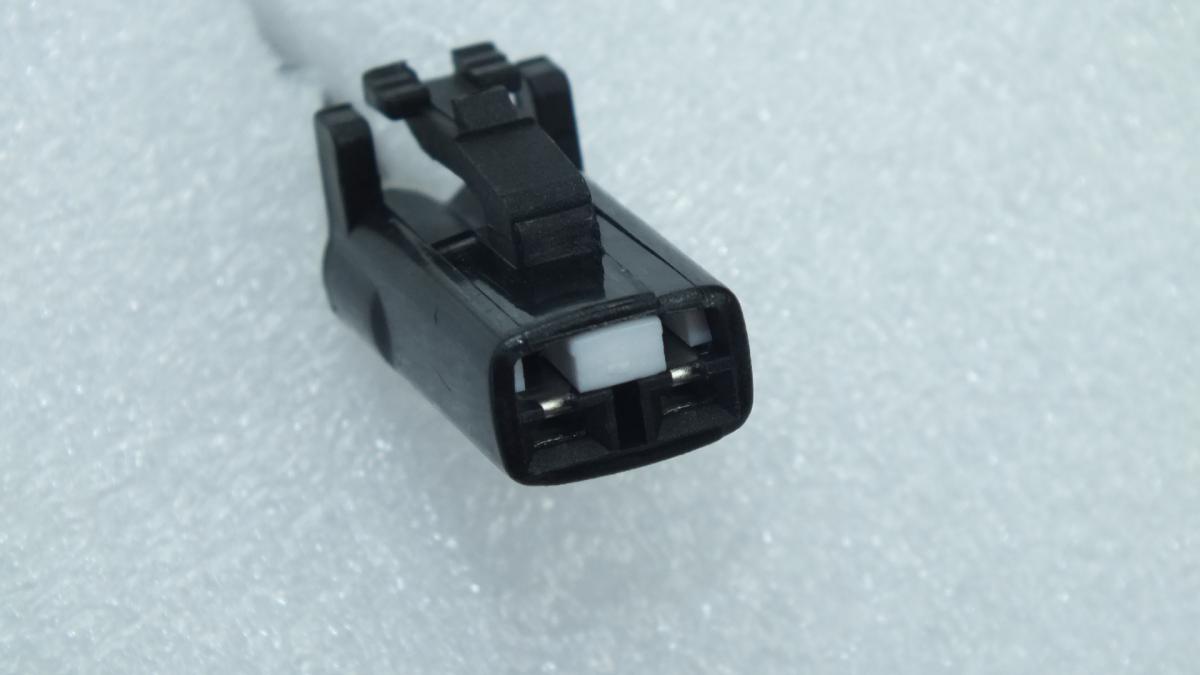
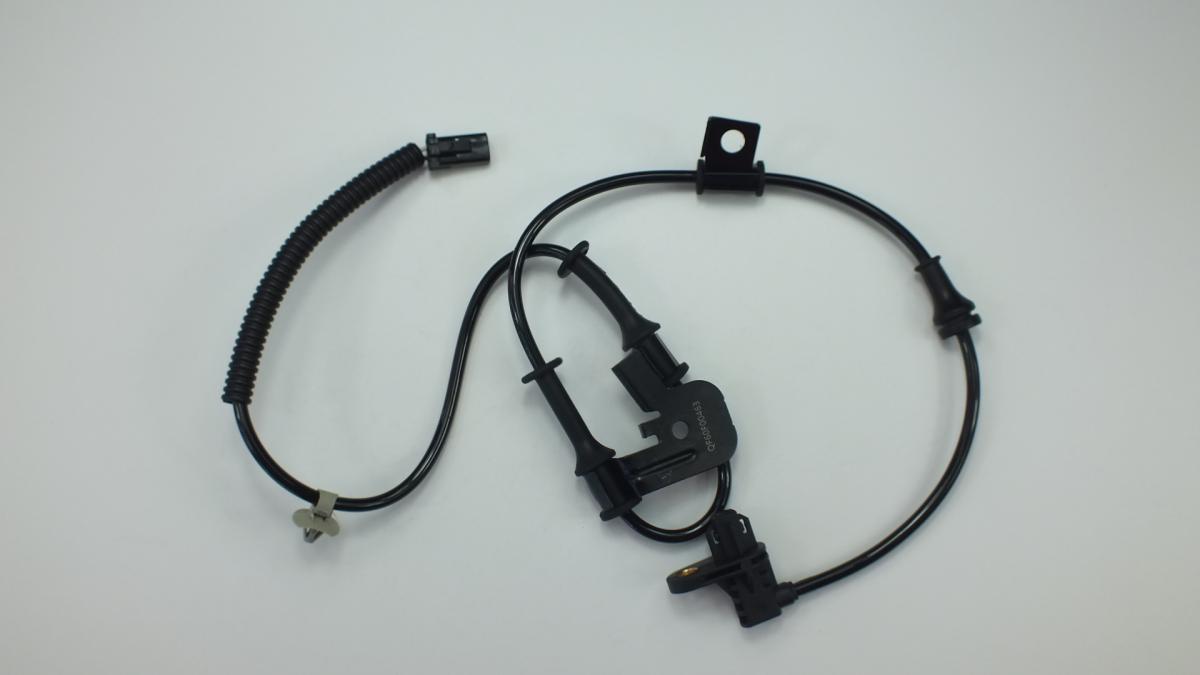
The Hyundai/Kia 956701R000 (also written as 95670-1R000) is the Front Left (Driver Side) ABS Wheel Speed Sensor fitted to the Hyundai Accent RB (4th generation), 2012-2017 with 1.4L G4FA, 1.6L G4FC, and 1.6L G4FG (GDI) engine variants. The component is an active Hall-effect digital sensor with integrated wiring harness and 2-pin blade-type male connector, mounted on the front left steering knuckle / spindle. The sensor reads the magnetic encoder ring integrated into the inner wheel bearing seal and produces a digital square-wave signal proportional to wheel rotational speed for the ABS control module, traction control system (TCS), and electronic stability control (ESC).
The active Hall-effect ABS sensor architecture works in conjunction with the magnetic encoder ring integrated into the wheel bearing inner seal. As the wheel rotates, the encoder ring's magnetic poles pass the Hall element inside the sensor; the Hall element switches state with each pole transition, producing a digital square-wave signal at frequency proportional to wheel rotational speed. Compared to older passive magnetic (reluctor-based) sensors, the active Hall design has three operational advantages: (1) signal accuracy at low speed — produces clean signal from near-zero speed, enabling ABS function during low-speed wheel-lock events on slippery surfaces; (2) air gap tolerance — less sensitive to mounting position variation; (3) digital noise immunity — immune to electromagnetic interference from other vehicle electrical systems.
The signal is processed by the ABS / ESC control module, which compares wheel speed values across all four corners to detect: (a) wheel lock-up during braking (ABS function); (b) wheel slip during acceleration (TCS function); (c) yaw rate discrepancy during cornering compared to steering angle and lateral acceleration sensor inputs (ESC function); (d) vehicle speed for speedometer display and automatic transmission shift scheduling on some Accent variants. The 2-pin connector carries supply voltage (typically 12V or regulated 8V from the ABS module) and signal return (digital square wave output).
Three primary failure mechanisms: (1) connector corrosion — the connector at the inner fender mounting point is exposed to wheel-arch moisture, road salt, and debris; corrosion produces intermittent signal loss; (2) cable chafing or breakage — the wiring harness routes along the steering knuckle and suspension where it can contact the CV joint, brake caliper, or suspension components if mis-routed; (3) Hall element failure — permanent damage from excessive heat, voltage spike, or physical impact. Encoder ring damage on the wheel bearing inner seal (from age, contamination, or bearing failure) produces identical symptoms to sensor failure; always inspect bearing condition during sensor replacement.
| International HS Code | 8543.70 |
| EAEU Customs Code (TN VED) | 8543 70 900 9 |
| Country of Manufacture | China |
| Quality standard | IATF 16949 |
| Hazardous goods | No |
| Shipping weight per piece | 0.1 kg (100 grams) |
| Packaging | Individual sealed blister pack with part label and protective foam for harness; bulk wholesale packaging available |
Electrical machines and apparatus with individual functions, including automotive Hall-effect sensors, are classified under HS 8543.70 (electrical machines having individual functions). Confirm exact 10-digit subheading with your customs broker. Commercial invoice description: active Hall-effect ABS wheel speed sensor with integrated wiring harness and 2-pin connector, for automotive anti-lock braking, traction control, and electronic stability control system, front left position passenger vehicle application.
| Vehicle | Years & engine variants |
|---|---|
| Hyundai Accent RB (4th gen) sedan | 2012-2017, 1.6L L4 G4FC engine (MPI), front left position |
| Hyundai Accent RB (4th gen) hatchback | 2012-2017, 1.6L L4 G4FG engine (GDI variant), front left position |
| Hyundai Accent RB (4th gen) base variants | 2011-2017, 1.4L L4 G4FA engine, front left position |
Does NOT fit: Hyundai Accent LC (2nd gen, 1999-2006) — older platform with different sensor reference; Hyundai Accent MC (3rd gen, 2006-2011) — transition generation, different sensor system; Hyundai Accent HC (5th gen, 2018+) — new platform with updated sensor reference, NOT compatible; Kia Rio — shares the RB platform with Accent but may use a different sensor reference depending on market; always verify by OEM number, not by platform similarity. Front RIGHT (passenger) position — use 956711R000 mirror-image counterpart; cable routing and connector orientation differ. Rear positions — use 956801R100 (rear left) or 956811R100 (rear right). Always verify by reading existing sensor part number stamping or checking Hyundai parts catalog by VIN before ordering. Some Hyundai Accent variants with stability control delete (low-trim variants in certain markets) may have a different harness configuration; standard ABS-equipped variants use this reference universally.
Difficulty: Easy. Estimated time: 30–45 minutes. Direct plug-and-play replacement — no splicing, no calibration, no ECU coding required. Standard tools sufficient.
- 1Vehicle safely raised and supported on rated jack stand at front left lift point. Front left wheel removed for access. Engage parking brake; chock rear wheels.
- 2Disconnect sensor connector at harness clip point on the inner fender or subframe. Release locking tab carefully — brittle plastic connectors on high-mileage vehicles break easily. If corroded: apply electrical contact cleaner before separation; forcing brittle connector breaks it.
- 3Release harness clips along the knuckle and suspension. Note exact original routing — new sensor must follow the same path to avoid contact with CV joint, brake caliper, or steering components during full lock-to-lock and full suspension travel.
- 4Remove the sensor retaining bolt on the steering knuckle (10mm socket). If sensor is seized in the bore: do NOT pry with screwdriver (damages bore). Apply penetrating oil; tap sensor body gently with plastic mallet or use sensor extraction tool.
- 5Pull old sensor straight out of bore — do not rotate / twist. Clean bore with wire brush to remove rust and debris; bore must be clean and dry for new sensor to seat fully.
- 6Inspect the magnetic encoder ring on the wheel bearing inner seal — rotate hub by hand, look for cracks, delamination, or contamination with metallic debris from worn brake components. Damaged encoder ring will produce ABS faults with new sensor; replace wheel bearing if encoder damage confirmed.
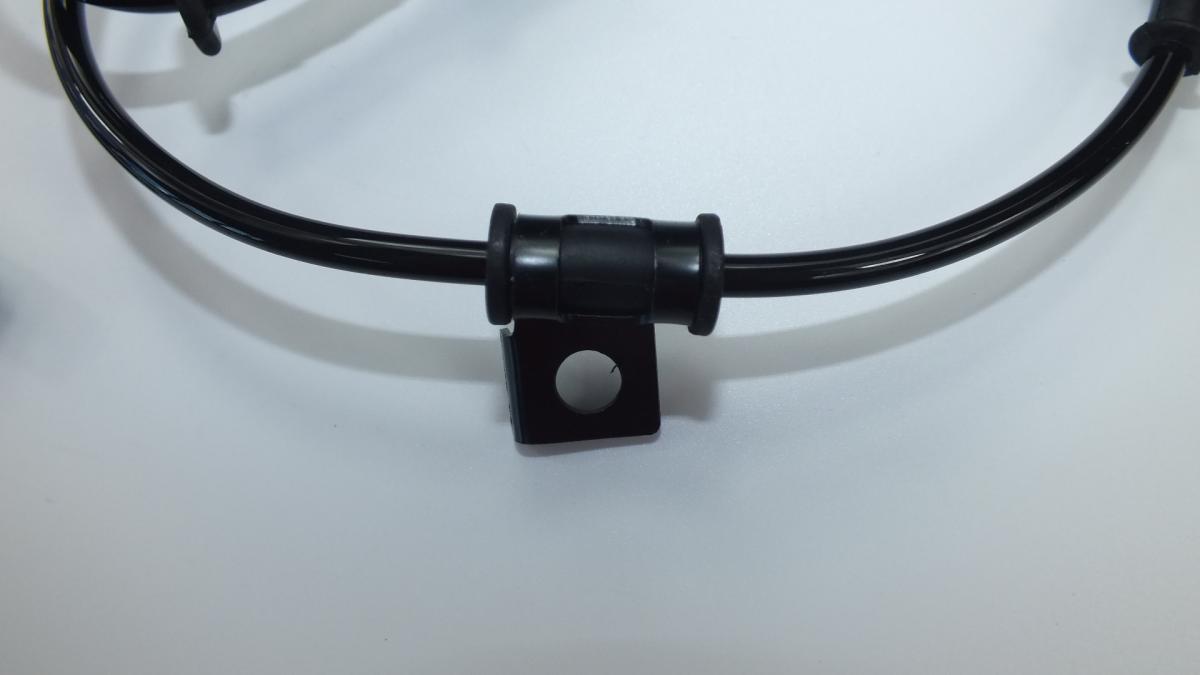
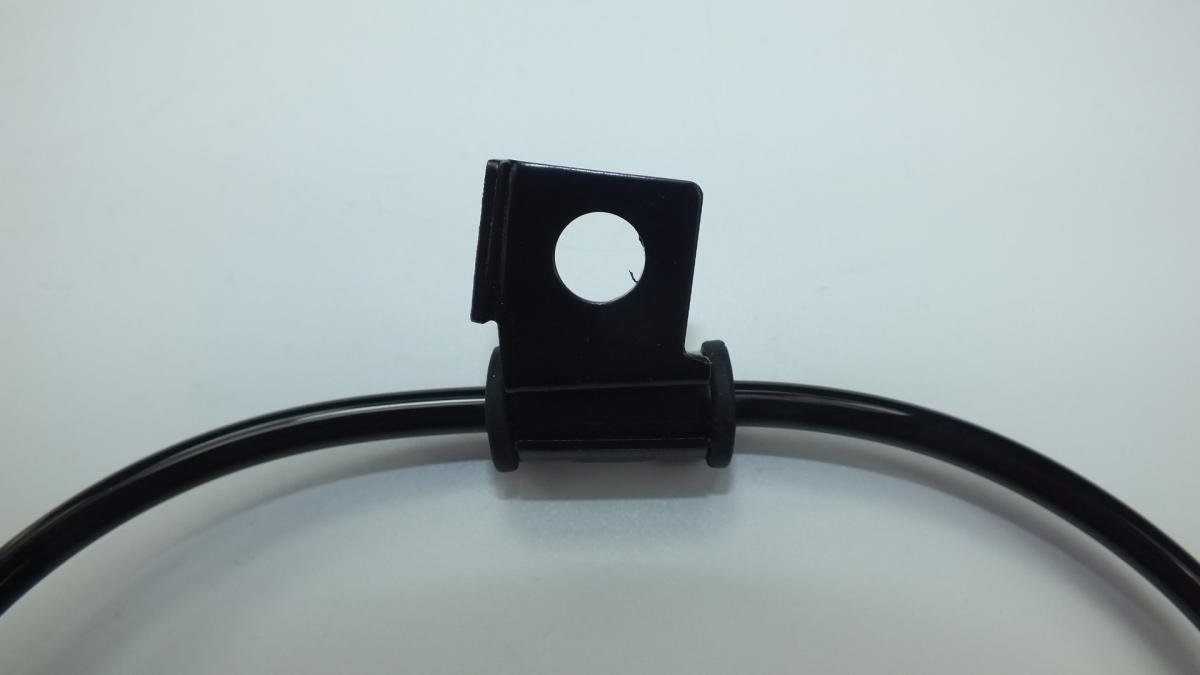
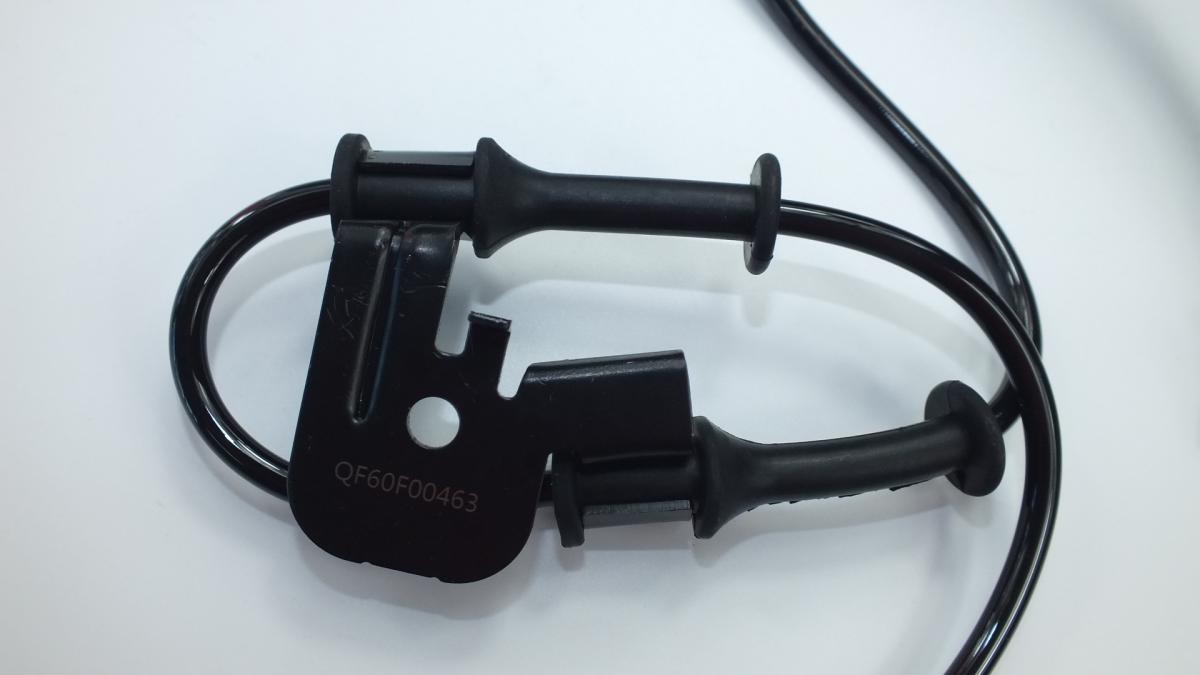
- 7Compare new 956701R000 to old — verify body shape, connector type (2-pin blade male), cable length, and harness clip positions match. Confirm part number on label.
- 8Slide new sensor straight into the bore until it seats fully against the knuckle shoulder. Should slide in smoothly. If it does not seat fully, clean bore again — do not force the sensor.
- 9Install retaining bolt and torque to 8-12 Nm (6-9 ft-lb). Do not over-torque — sensor body is plastic, knuckle thread is aluminum; over-torquing cracks sensor body or strips knuckle thread.
- 10Route and clip wiring harness following original routing exactly. Secure with all original clips. Verify cable clearance from CV boot, brake caliper, and steering components through full lock-to-lock and full suspension travel.
- 11Apply thin coat of dielectric grease to connector pins before reconnecting — prevents future corrosion (the leading cause of premature ABS sensor failure in road-salt environments). Reconnect connector with positive click engagement.
- 12Reinstall wheel, lower vehicle, and clear DTCs with OBD-II scanner with ABS module access. Start engine; drive above 30 km/h for 2-3 minutes — ABS module automatically validates all four sensor signals. Verify no warning lights return; check live data to confirm front left sensor produces clean, consistent signal matching the front right.
| Part | Reference | Reason for Combined Replacement |
|---|---|---|
| Front RIGHT ABS Sensor | Hyundai/Kia 956711R000 (front right counterpart) | Same age and mileage as the left sensor; likely approaching failure. Selling as a pair for complete front ABS restoration is a common workshop upsell, particularly on high-mileage vehicles. Aftermarket cross-reference: SMP ALS2339. |
| Front Left Wheel Bearing | Hyundai/Kia 517201R000 (front left wheel bearing with integrated encoder ring) | The magnetic encoder ring is integrated into the wheel bearing inner seal. A worn bearing with damaged encoder ring will produce continued ABS faults even with a new sensor installed. Inspect bearing play and encoder ring condition during sensor replacement; if worn, replace simultaneously. |
| Rear LEFT ABS Sensor | Hyundai/Kia 956801R100 (rear left counterpart) | On high-mileage vehicles with front sensor failure, rear sensors are also aging. Complete 4-sensor replacement ensures all ABS data is reliable for several years of subsequent service. Aftermarket cross-reference: SMP ALS2653. |
| Rear RIGHT ABS Sensor | Hyundai/Kia 956811R100 (rear right counterpart) | Same rationale as rear left — complete set replacement for full system reliability. Aftermarket cross-reference: SMP ALS2654. |
| Dielectric Grease and Electrical Contact Cleaner | Standard automotive electrical service consumables | Connector corrosion is the leading cause of premature ABS sensor failure in road-salt environments. Apply dielectric grease to pins before reconnection during sensor service to dramatically extend new sensor service life. |