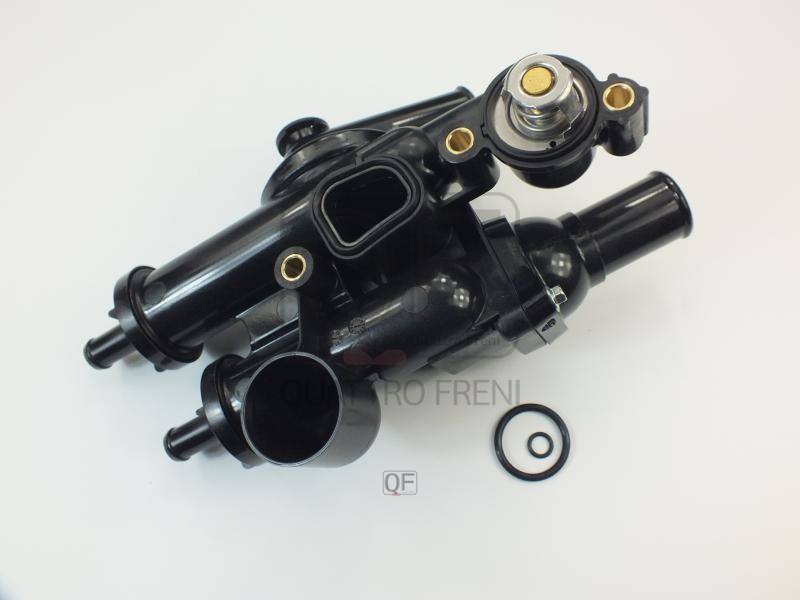
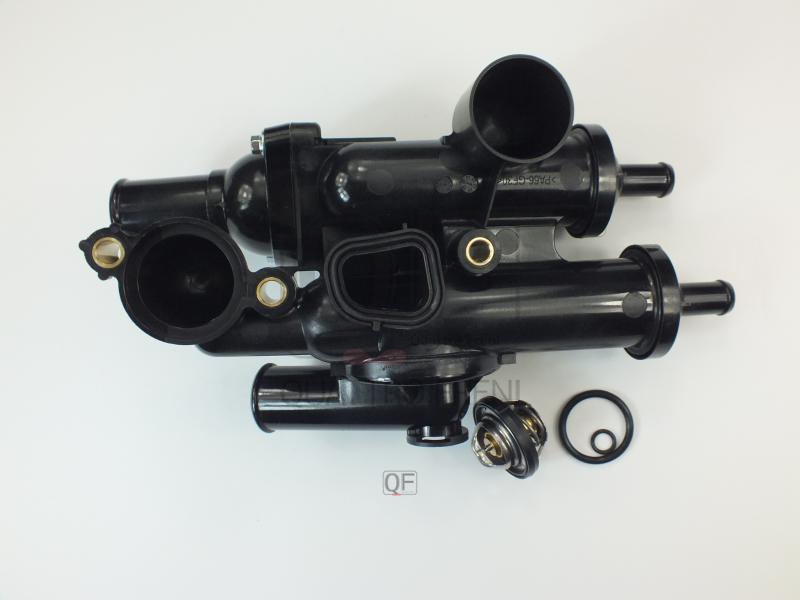
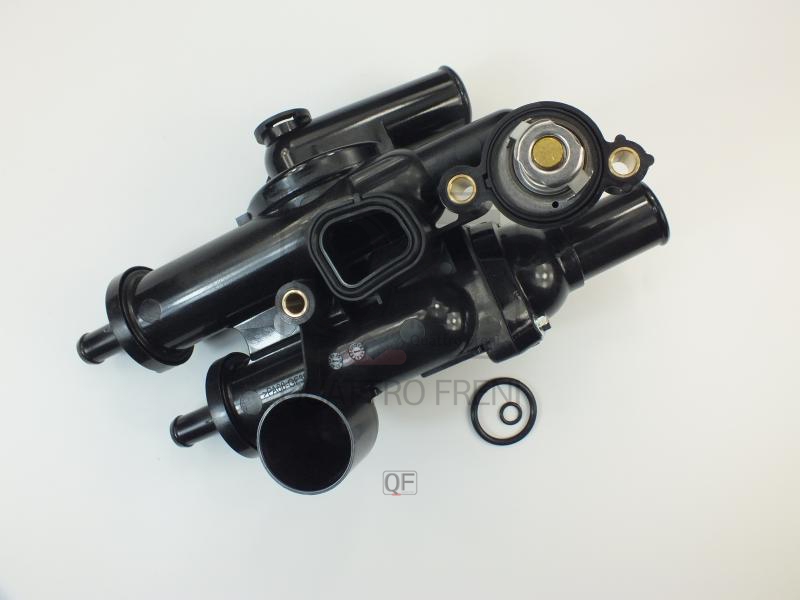
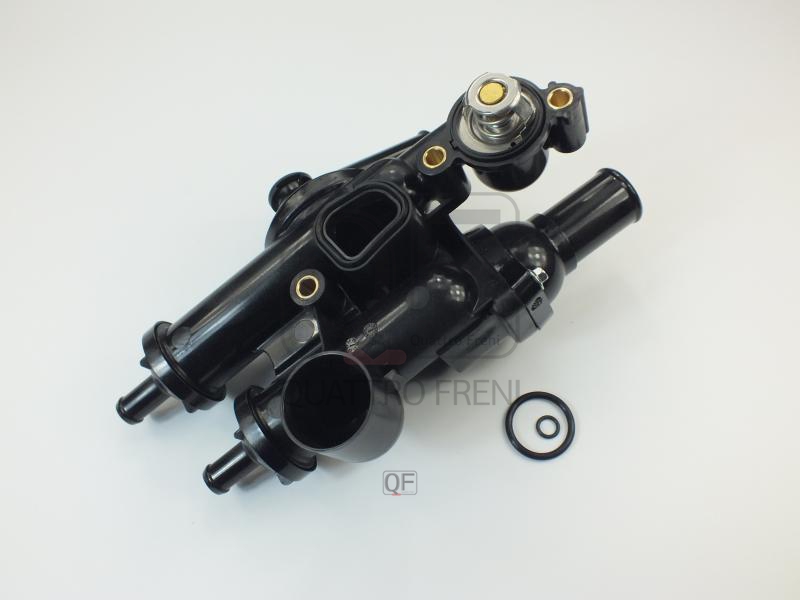
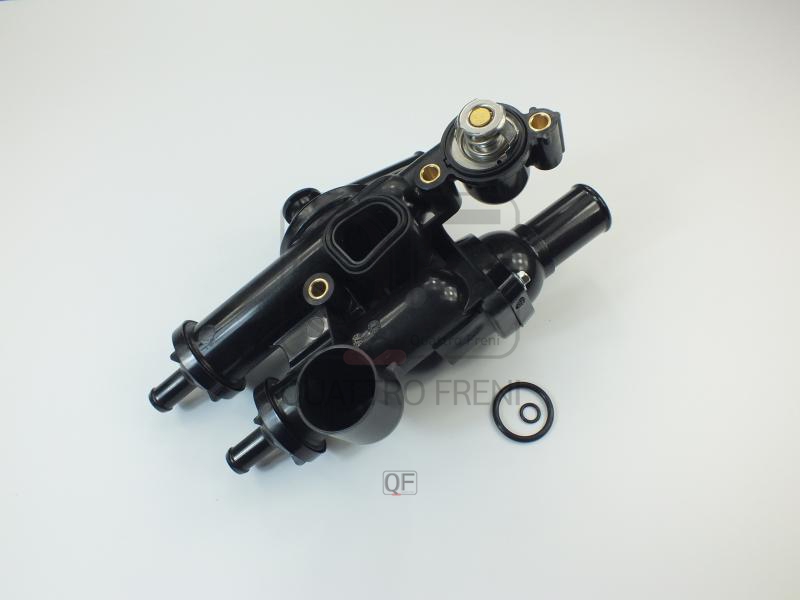
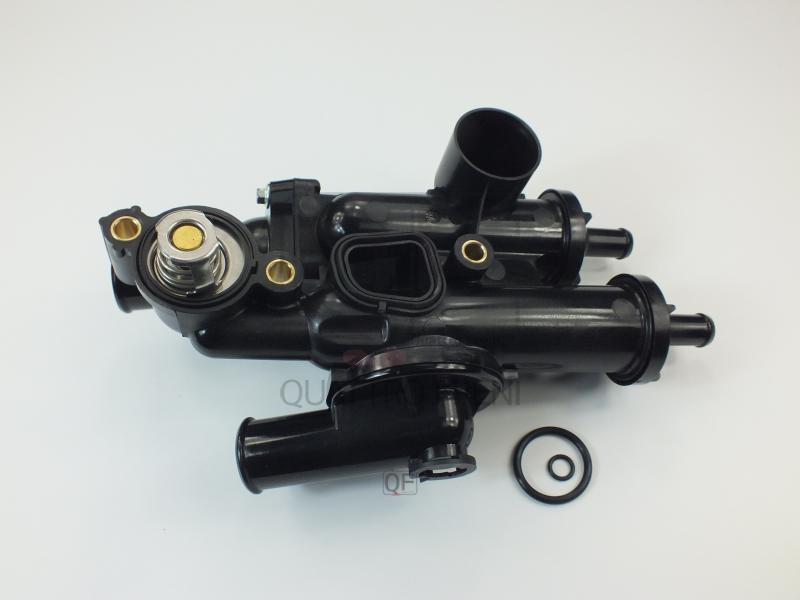
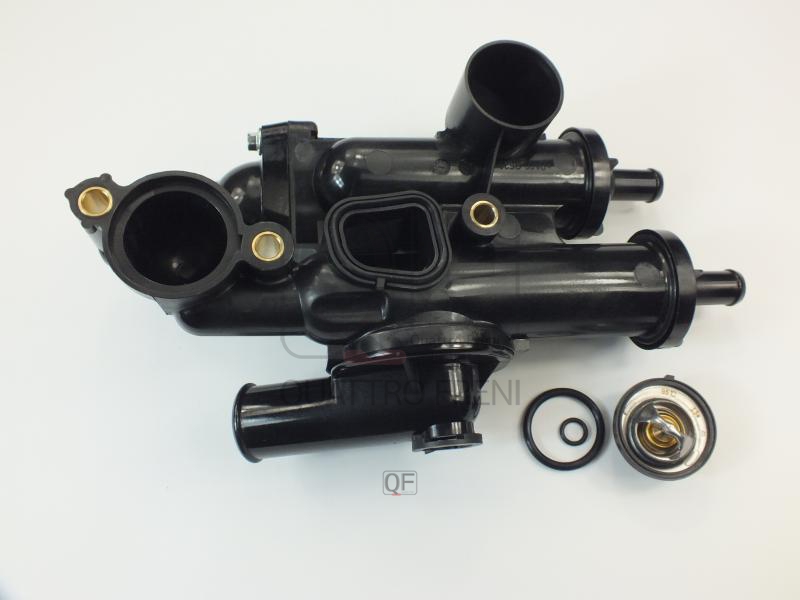
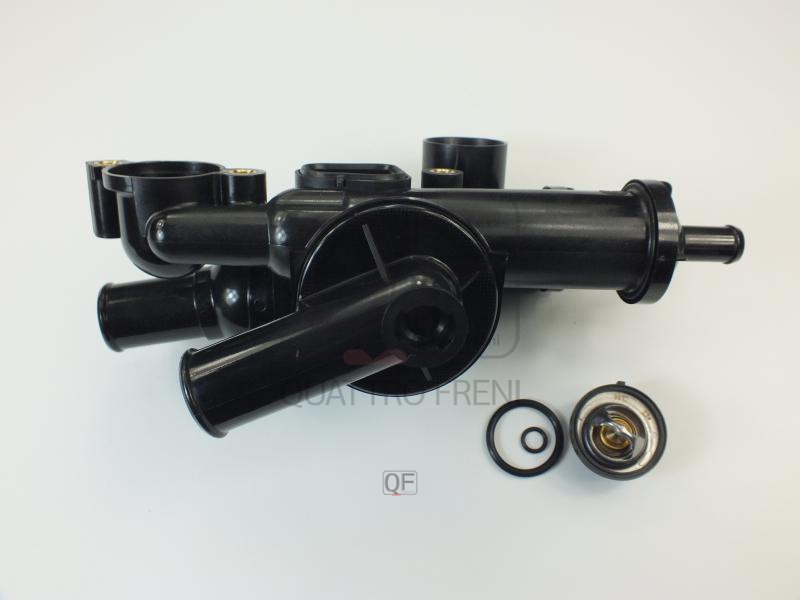
CHRYSLER 68003582AB THERMOSTAT INLET
Product Specifications
| CHRYSLER | 68003582AB |
| CHRYSLER | 4884569AB |
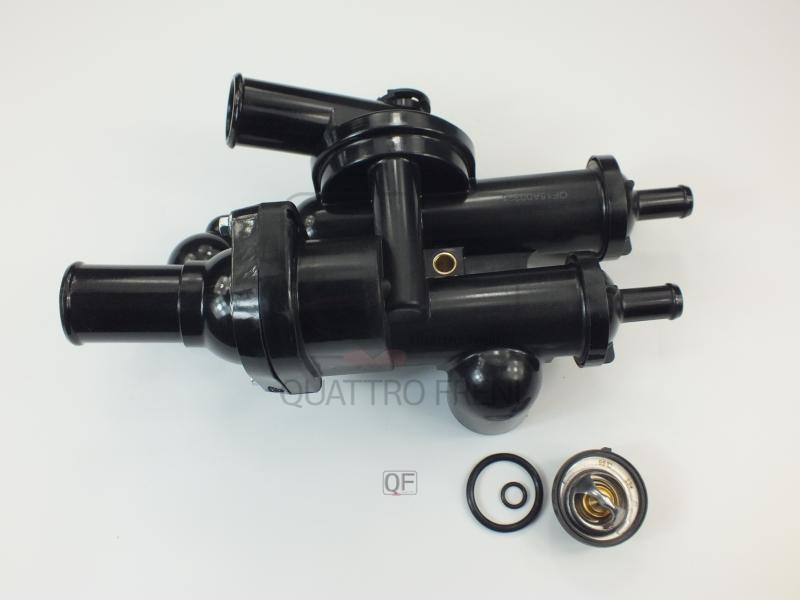
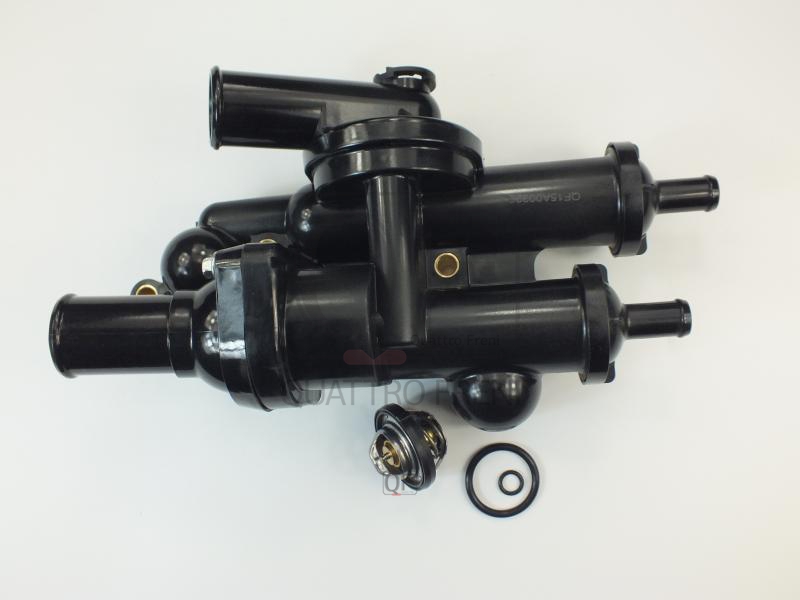
The THERMOSTAT INLET is the cast aluminium or engineering polymer housing bolted to the cylinder head or engine block that encloses the thermostat valve, provides the structural mounting point for the upper radiator hose connection and the bypass circuit port, and serves as the primary coolant distribution junction at the hot side of the engine cooling circuit. The housing integrates the thermostat seating bore — a precision-machined recess that locates the thermostat flange and seals the thermostat gasket face — the radiator outlet port that carries hot coolant to the radiator upper tank when the thermostat opens, the bypass port that routes coolant through the short bypass loop during warm-up when the main thermostat valve is closed, and on modern engines, mounting bosses for the coolant temperature sensor, map-controlled thermostat heater element connector, and bleed screw for cooling circuit air purging. On engines where the thermostat assembly is integrated into the housing as a non-separable cartridge unit, the complete housing-plus-thermostat assembly is replaced as a single unit rather than the thermostat being renewed independently.
This unit — CHRYSLER 68003582AB — is manufactured to OEM-equivalent specifications: thermostat bore diameter and seat geometry, radiator and bypass port sizes and orientations, coolant temperature sensor thread size and position, mounting bolt pattern and sealing face flatness tolerance, and material grade for the operating temperature and coolant chemistry environment are matched to the original part. Supplied as a direct replacement for standard fitment. Available wholesale from 11.29 USD, MOQ 100 pcs, production lead time 30 days.
Thermostat housings fail through external corrosion perforation of aluminium alloy housings from road salt and degraded acidic coolant attacking the casting — a process accelerated by the turbulent coolant flow at the housing's junction role which prevents a protective oxide layer from forming; through cracking of polymer housings from thermal fatigue at the sharp internal geometry of port junctions; and through coolant seepage at the housing-to-head gasket joint from housing warping caused by overtightened bolts or by a previous overheating event that stressed the casting. A cracked or corroded housing cannot be repaired reliably with sealant under the coolant system's operating pressure and temperature cycling and must be replaced.
- Allow the engine to cool fully and drain coolant to below the housing level before removing the housing — the thermostat housing is at the highest-temperature point in the cooling circuit and retains heat for an extended period; opening it with residual system pressure releases superheated coolant; confirm the system is cold and the expansion tank cap releases without pressure before loosening any fastener.
- Clean the cylinder head mating face thoroughly after removing the old housing — use a plastic scraper on aluminium heads and a brass scraper on cast iron to remove all traces of the old gasket or sealant from the sealing face without scratching the surface; finish with brake cleaner on a lint-free cloth to remove all oil film; any residual material creates an uneven sealing surface that guarantees a leak on the new housing gasket.
- Transfer the thermostat, coolant temperature sensor, and bleed screw to the new housing before installation — on applications where these components are separate from the housing, confirm each transfers correctly into the new housing's ports without cross-threading; apply fresh PTFE tape to the sensor thread if the OEM specification calls for thread sealing at that port.
- Fit a new housing gasket supplied with or specified for the replacement housing — never reuse the old gasket; on housings that seal with RTV rather than a formed gasket, apply a continuous 3 mm bead of the correct RTV specification in a single pass, assemble within 10 minutes before the bead skins, and allow to cure to the specified time before filling the cooling system.
- Torque all housing mounting bolts evenly in a diagonal sequence to the OEM specification — thermostat housing bolts typically thread into aluminium cylinder head material at 8–15 Nm; overtightening strips the head threads and warps the housing flange; undertightening allows the gasket to relax under thermal cycling; always use a torque wrench and the OEM value rather than tightening by feel.
- Install the new THERMOSTAT INLET (CHRYSLER 68003582AB), refill with the correct coolant specification and concentration, bleed all air from the circuit with the heater on maximum temperature, start the engine, monitor coolant temperature on scan tool live data to confirm it rises to the thermostat opening temperature and stabilises at the normal operating position, pressure-test to 1.2 bar, and check for leaks at the housing face and all disturbed connections before returning the vehicle to service.
| Part | Reason for Combined Replacement |
|---|---|
| Thermostat OEM opening temperature per engine specification | The thermostat seats directly in the housing bore and is removed with the housing at every housing replacement. A thermostat of the same age as the failed housing may have lost its precise opening temperature calibration from extended heat cycling. Fitting a new thermostat in the new housing at the same time completes a full coolant junction service and eliminates thermostat behaviour as a remaining diagnostic variable if temperature management concerns arise after the housing repair. |
| Coolant Temperature Sensor OEM ref. varies by engine | The coolant temperature sensor screws into a boss in the thermostat housing and is disturbed every time the housing is removed. A sensor that has been subject to the same coolant contamination and thermal cycling as the failed housing may have drifted from its calibration curve. Replacing the sensor simultaneously with the housing ensures the complete coolant temperature measurement chain is renewed and eliminates sensor drift as a cause of any subsequent temperature-related fault codes. |
| Coolant (Engine Antifreeze) OAT or HOAT per OEM specification | Thermostat housing replacement requires partial or full cooling circuit drainage. Coolant with depleted corrosion inhibitors and reduced pH is the primary cause of aluminium housing corrosion perforation — the same mechanism that caused the original housing failure. Refilling with fresh coolant of the correct OEM type and concentration at every housing replacement protects the new casting and all other aluminium cooling circuit components from renewed corrosion attack. |