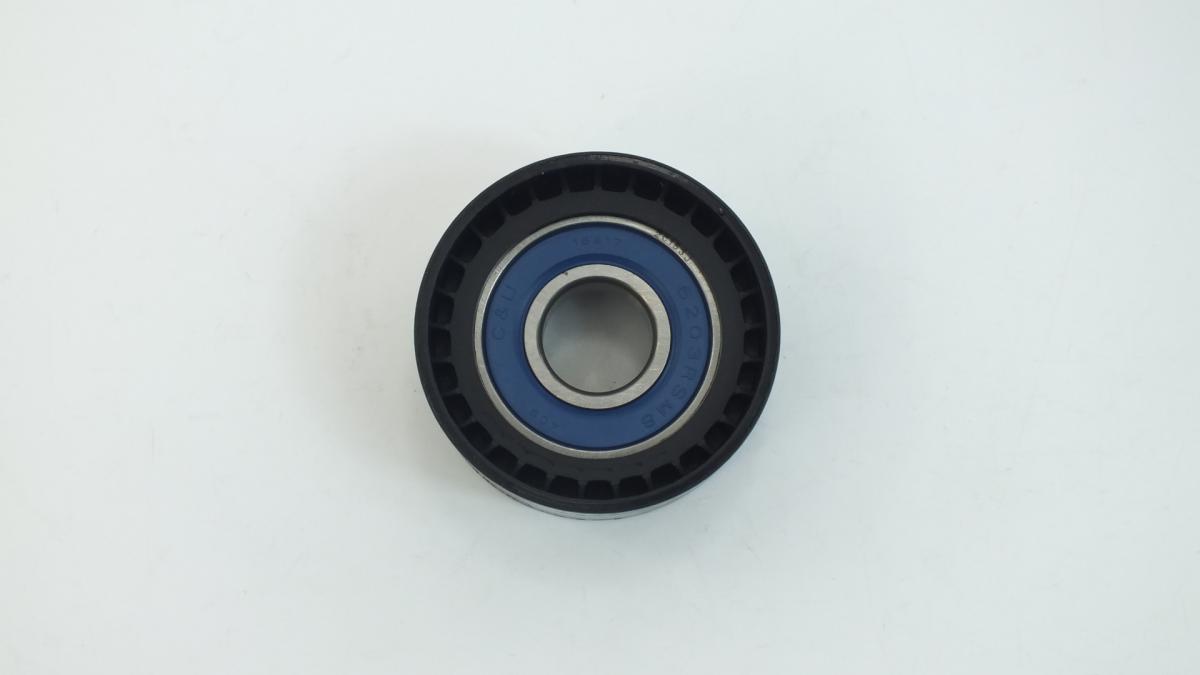
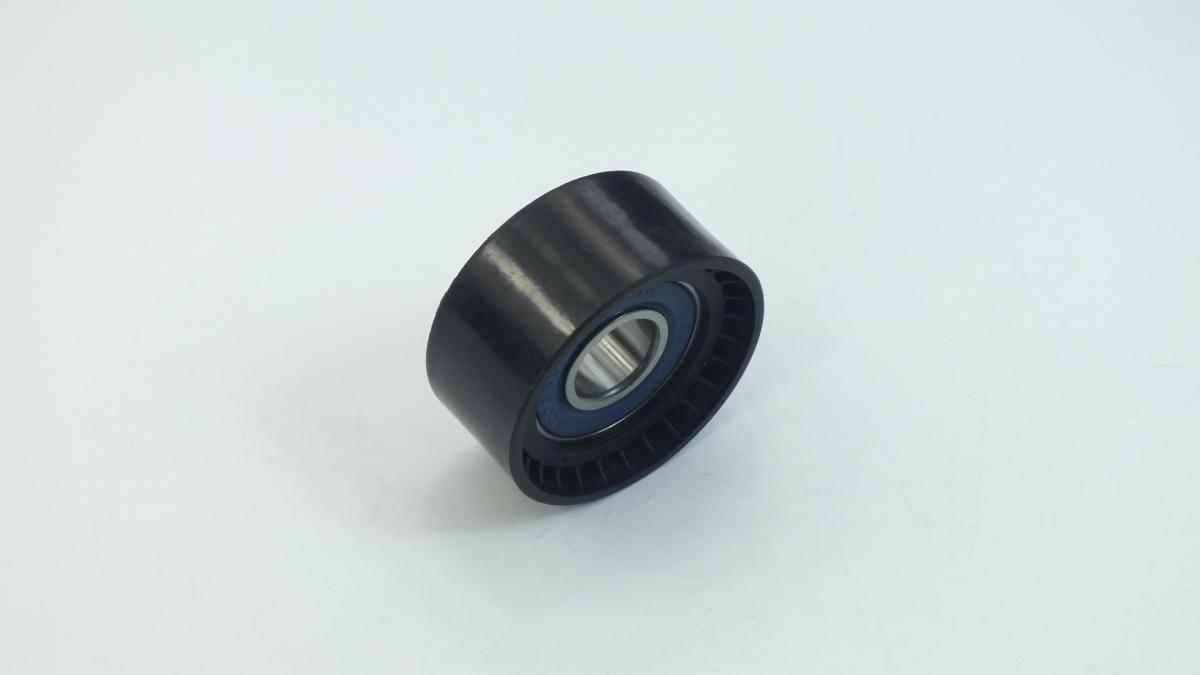
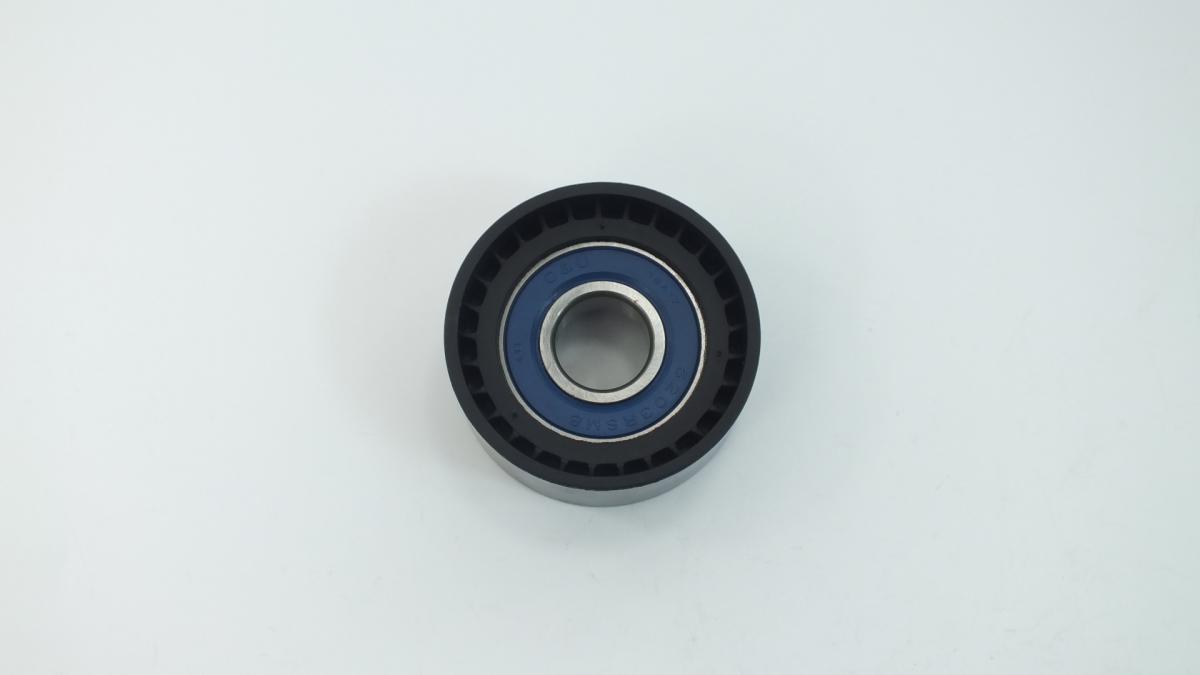
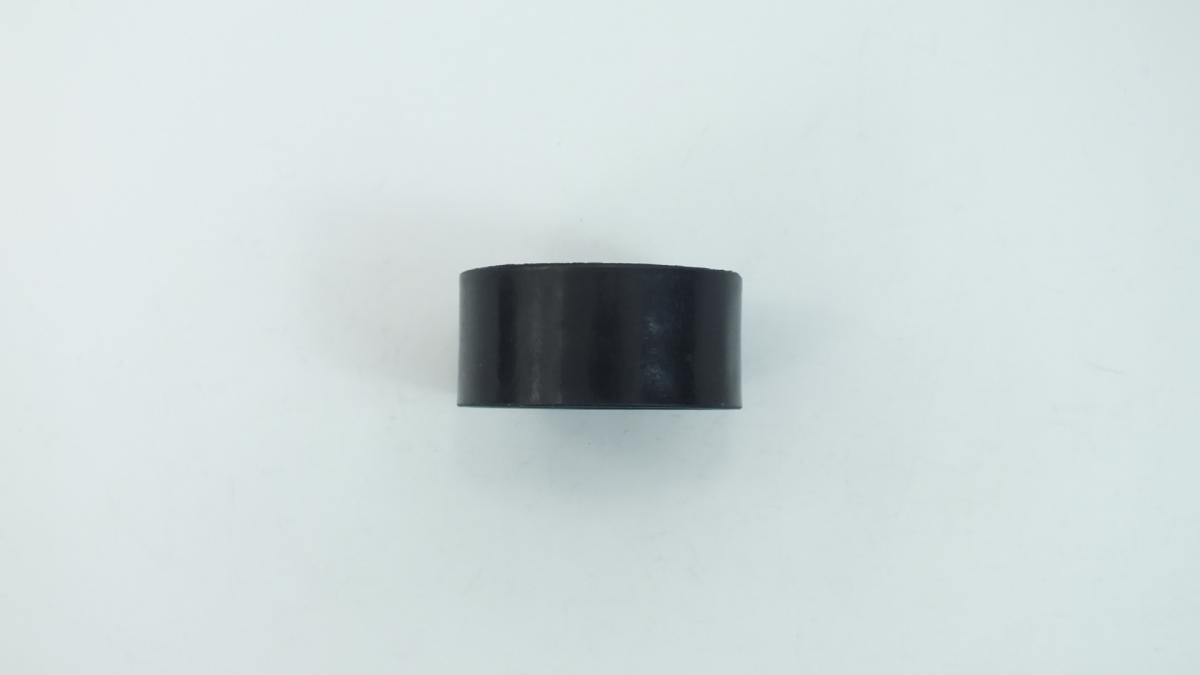
BMW/MINI 11288570439 PULLEY SUB-ASSY
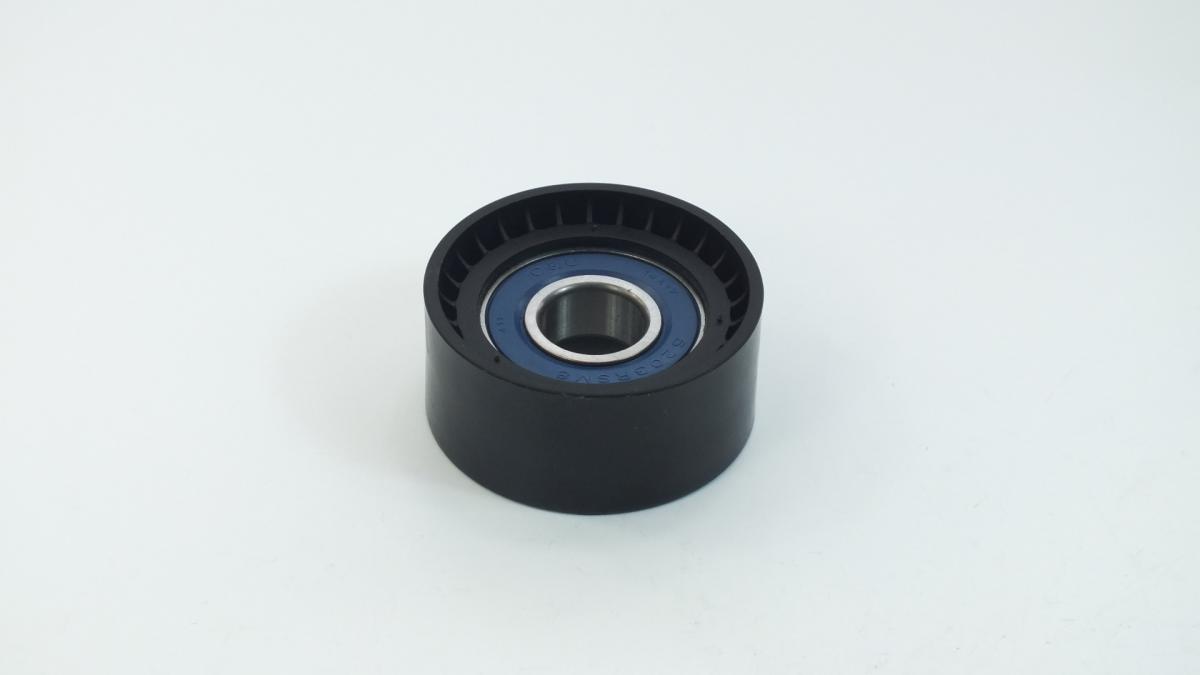
Product Specifications
| BMW/MINI | 11288570439 |
| BMW/MINI | 11288472172 |
| BMW/MINI | 11288579118 |
| BMW/MINI | 11288580358 |
| BMW/MINI | 11288580360 |
| MILES | AG00379 |
The PULLEY SUB-ASSY is a grooved or smooth-face idler or tensioner pulley mounted on a fixed or spring-loaded bracket in the accessory drive belt circuit that maintains correct belt tension across all operating conditions and guides the belt around the accessory drive layout, ensuring the belt remains in full contact with all driven pulley grooves without slip or mistrack. The assembly integrates a deep-groove sealed ball bearing pressed into a steel or aluminium pulley body — the outer race of the bearing contacts the belt directly or is encased in the grooved pulley rim, and the inner race is pressed onto a fixed bolt spindle or onto the pivot shaft of an automatic tensioner arm. On automatic tensioner applications the pulley sub-assembly mounts on a spring-loaded pivoting arm whose torsion spring provides a calibrated force against the belt back face, automatically compensating for belt stretch and thermal expansion throughout the belt's service life without manual adjustment. On fixed idler applications the pulley redirects the belt path around an engine bay obstruction or increases the belt wrap angle on a specific accessory pulley to prevent slip at high load. Both types are subject to identical bearing failure modes and are replaced as complete pulley-plus-bearing assemblies in service.
This unit — BMW/MINI 11288570439 — is manufactured to OEM-equivalent specifications: pulley outer diameter and groove profile (number of ribs, rib pitch, and groove angle), bearing dynamic load rating and internal clearance, bearing bore diameter for spindle or tensioner arm fit, pulley material and surface treatment, and overall assembly width for correct belt alignment are matched to the original part. Supplied as a direct replacement for standard fitment. Available wholesale from 1.77 USD, MOQ 200 pcs, production lead time 20-50 days.
Accessory belt tensioner and idler pulleys fail through sealed bearing grease depletion after high-mileage continuous rotation at engine speed, bearing inner race fretting on the spindle from vibration, and outer race wear from abrasive belt dust contamination after the bearing seal is compromised. Bearing failure is audible before it becomes catastrophic — a failing bearing produces a speed-proportional whining or rumbling that can be isolated from other belt-driven accessory noises by using a mechanic's stethoscope or a long screwdriver handle as a sounding rod. A seized bearing throws the belt immediately, disabling all belt-driven accessories and potentially causing overheating if the water pump is in the same belt circuit.
- Remove the accessory belt completely before replacing any pulley — never attempt to replace a tensioner or idler pulley with the belt in position; removing the belt gives full access to inspect all other pulleys simultaneously; spin each pulley by hand with the belt off and listen for roughness, feel for radial play, and check for axial wobble — this inspection takes less than two minutes and identifies any additional pulleys that should be replaced at the same service.
- Mark the tensioner arm position relative to the tensioner body before removing the pulley bolt — photograph the arm position index marks; on spring-loaded tensioners the arm position with a new belt is specified in the OEM service data and can be verified after the new belt is installed to confirm the spring is providing correct tension; an arm position outside the specified range with a new belt indicates spring fatigue.
- Torque the pulley centre bolt to OEM specification using a torque wrench — undertightening allows the pulley to work loose on the spindle under belt load, producing noise and progressive wear of the spindle and bearing inner race; overtightening crushes the bearing inner race against the spindle shoulder, preloading the bearing axially and dramatically reducing its fatigue life; the OEM torque value for a belt idler pulley bolt is typically 40–60 Nm.
- Verify the new pulley is co-planar with adjacent pulleys before installing the belt — place a straight edge across the face of the new pulley and the nearest accessory pulley; any misalignment greater than 1 mm will cause the belt to mistrack and produce edge wear from the first revolution; a shimmed mounting surface from a previous repair, a distorted mounting bracket, or an incorrect replacement pulley width are the common causes of misalignment.
- Inspect the belt contact surface of every pulley in the circuit before installing the new belt — a pulley with embedded abrasive debris, chipped groove ribs, or a corroded running surface will destroy a new belt within a short operating period; clean accessible pulley grooves with a stiff brush and compressed air; replace any pulley showing groove damage that cannot be cleaned.
- Install the new PULLEY SUB-ASSY (BMW/MINI 11288570439), route the new accessory belt per the belt routing diagram on the engine bay label or OEM service data, release the tensioner to apply tension to the belt, start the engine and run for 2 minutes, then re-inspect belt alignment on all pulleys and confirm no squealing, rumbling, or belt edge contact with pulley flanges before returning the vehicle to service.
| Part | Reason for Combined Replacement |
|---|---|
| Accessory Drive Belt (Serpentine Belt) OEM ref. varies by engine configuration | A failing pulley bearing that has been running rough or wobbling will have abraded and glazed the belt ribs on its contact arc, causing localised hardening and cracking that weakens the belt at that point. Always fit a new belt when replacing any tensioner or idler pulley — running an old belt on a new pulley immediately transfers the belt's embedded abrasive contamination into the new bearing seal, significantly reducing its service life. |
| Automatic Belt Tensioner Assembly OEM ref. varies by engine | The automatic tensioner spring and pivot bearing accumulate the same fatigue as the idler pulley bearings over identical mileage. A tensioner whose spring has fatigued below its rated preload force will under-tension the new belt, causing belt slip on the alternator and power steering pump under high electrical or steering load. Replace the complete tensioner assembly — arm, spring, and pulley — simultaneously with all idler pulleys as part of a complete accessory drive service. |
| Alternator / Power Steering Pump Pulley OEM ref. varies | Accessory pulley surfaces develop corrosion, groove debris, and wear over high mileage that accelerates belt rib wear. Inspect each driven accessory pulley by spinning it by hand with the belt removed — a rough or noisy accessory bearing imposes cyclic belt tension spikes that fatigue idler pulley bearings and shorten belt life. If an accessory pulley shows bearing roughness or groove damage, address it simultaneously with the idler and tensioner service to complete a full accessory drive overhaul. |