FIAT/ALFA/LANCIA 1384129080 BRACKET
Product Specifications
| FIAT/ALFA/LANCIA | 1384129080 |
| FIAT/ALFA/LANCIA | 1363360080 |
| FIAT/ALFA/LANCIA | 1374097080 |
| FIAT/ALFA/LANCIA | 1371288080 |
| FIAT/ALFA/LANCIA | 1363361080 |
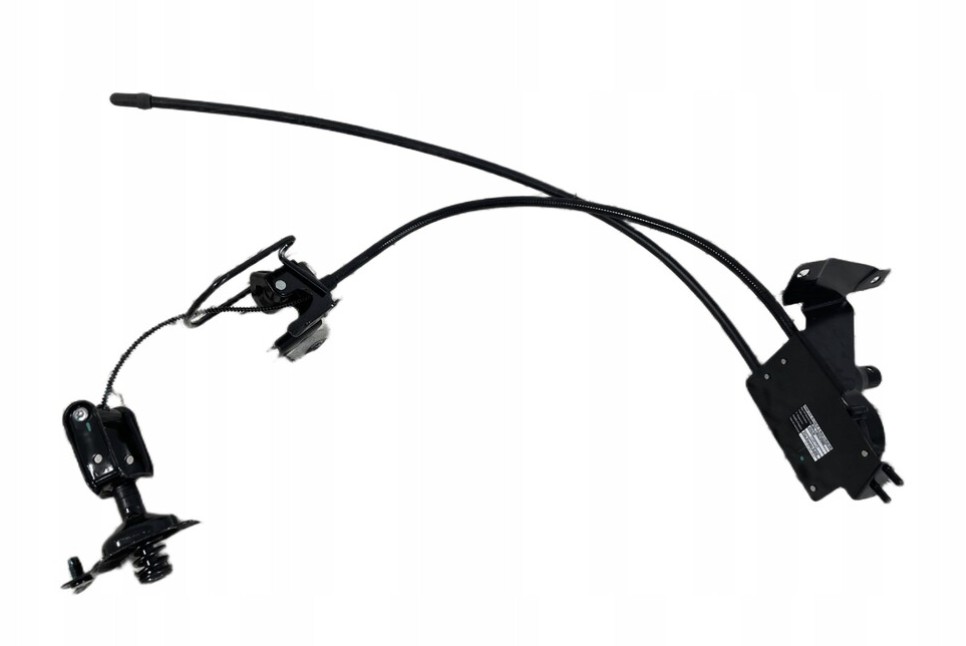
The Spare Wheel Carrier Winch Mechanism (Fiat OEM 1384129080) is the complete under-vehicle cable-and-winch assembly that stores and deploys the spare wheel on the Fiat Ducato (Type 250/290), Peugeot Boxer, and Citroën Jumper/Relay van and motorhome chassis from 2006 onwards. The assembly mounts to pre-drilled threaded bosses on the underside of the rear chassis crossmember and suspends the spare wheel under the vehicle floor between the rear axle and the bumper. The winch mechanism uses a steel cable wound on a ratchet drum; the drum is operated by inserting the five-sided pentagonal winding bar through an access point in the rear bumper area and turning to lower or raise the wheel. The assembly is shared across the three-marque Ducato/Boxer/Jumper commercial van platform and is used on both van and motorhome bodies built on that chassis.
The carrier assembly consists of three main elements: a steel hanger bracket that bolts to the chassis crossmember, a cable drum and ratchet winch body mounted to the hanger, and a wheel cradle plate attached to the end of the cable that supports the spare wheel. When the vehicle leaves the factory fitted with a spare wheel, the wheel sits in the cradle plate and is raised flush against the chassis floor. To deploy the spare wheel, the driver or technician locates the winding access point — a pentagonal socket on the side of the winch body, accessible from the rear underside of the vehicle — and inserts the 15 mm five-sided winding bar from the vehicle’s tool kit. Turning the bar unwinds the cable, lowering the cradle plate and the spare wheel until it contacts the ground, at which point the wheel can be slid out from under the vehicle.
The current production version of the carrier uses a five-sided (pentagonal) winding key as a theft-deterrent measure. Earlier carriers on the Ducato Type X250 (pre-2014 production) used a six-sided (hexagonal) socket. Vehicles that received an updated carrier under warranty or recall action may have been retrofitted with the five-sided type. The tool kit supplied with the vehicle from 2014 onwards contains both a five-sided and a six-sided extension bar to handle both configurations. The winding mechanism is a simple ratchet — the cable can only be unwound under load control in one direction and is tensioned in the raised position by the weight of the wheel acting against the ratchet pawl.
A known service issue on high-mileage Ducato, Boxer, and Jumper chassis is corrosion of the carrier cable and seizure of the winch mechanism. Road salt and moisture enter the carrier housing, rusting the cable strands and the ratchet drum. A corroded cable typically frays or breaks when the spare wheel is needed in a roadside emergency situation. Preventive maintenance — annual inspection and lubrication of the cable with general-purpose grease — significantly extends the service life of the assembly.
| International HS Code | 8708.99 |
| EAEU Customs Code (TN VED) | 8708 99 970 9 |
| Country of Manufacture | China |
| Wheel compatibility | 15" and 16" steel wheels |
| Winding key type | 5-sided pentagonal, 15 mm (current production) |
| Packaging | Individual boxed unit |
Spare wheel carrier mechanisms are classified under HS 8708.99 as other parts and accessories for motor vehicles. This part covers the Fiat Ducato (Type 250/290), Peugeot Boxer (250/290), and Citroen Jumper (250/290) — the three badge variants of the same commercial vehicle platform. Verify the exact 10-digit subheading with your customs broker.
| Model | Type / Years | Notes |
|---|---|---|
| Fiat Ducato | Type 250 — 2006–2014 | All wheelbases and roof heights. Steel 15" and 16" wheels. Motorhome versions: check for auxiliary tank occupying carrier position. |
| Fiat Ducato | Type 250 Facelift / Type 290 — 2014+ | All wheelbases and roof heights. Five-sided winding key standard from 2014. |
| Peugeot Boxer | Type 250 / 290 — 2006+ | Identical platform. PSA cross-reference: 7603W7 / 7603W8. |
| Citroen Jumper / Relay | Type 250 / 290 — 2006+ | Identical platform. Same cross-reference family. |
Not all Ducato/Boxer/Jumper vehicles are delivered from the factory with a spare wheel carrier fitted. Many motorhome conversions, particularly those from German and French coachbuilders, delete the spare wheel carrier during the motorhome build. The pre-drilled mounting holes and captive nuts are typically present in the chassis floor — confirm their presence and condition before ordering the carrier for retrofit installation.
Difficulty: Easy to moderate. The carrier mounts to the underside of the chassis rear crossmember using the pre-drilled mounting holes that are pressed into the chassis floor during manufacturing. No drilling is required on standard Fiat chassis vehicles. Working from below with the vehicle raised, estimated time is 30–60 minutes. A second person to help support the carrier during positioning is recommended due to the weight of the assembly.
-
1Raise the vehicle and inspect the chassis mounting area. Locate the pre-drilled holes in the rear chassis crossmember. Clean the mounting hole threads with a thread tap if corroded — corroded captive nuts are the most common complication in carrier installation. Confirm the mounting area is free of auxiliary tanks, wiring looms, or exhaust components that would obstruct the carrier body.
-
2Position the carrier assembly under the chassis crossmember and align the mounting holes. The carrier hanger bracket bolts to the crossmember with the winch body hanging below. Have an assistant support the carrier weight while you start the mounting bolts by hand. Do not cross-thread the bolts into the captive nuts.
-
3Torque all mounting bolts to the OEM specification for the M10 chassis fasteners — typically 40–50 Nm. Apply thread-locking compound to the bolt threads if the captive nuts show any sign of looseness. Confirm the carrier bracket does not contact any chassis components, exhaust, or brake lines when the assembly is fully tightened.
-
4Apply water-resistant grease to the cable before loading the wheel. Extend the cable fully by unwinding the drum, apply grease along the full length, then wind the cable back onto the drum. Wipe the grease into the cable strands as it is wound. This initial lubrication treatment is essential for corrosion prevention.
-
5Position the spare wheel on the cradle plate and verify it is correctly centred and seated. Insert the five-sided winding bar and wind the drum to raise the wheel. Wind until the cradle plate contacts the chassis underside firmly and the ratchet locks. Verify the wheel is secure by attempting to pull it downward — there should be no free movement.
-
6Lower and raise the wheel once more to confirm smooth operation before returning the vehicle to service. Record the carrier installation in the service documentation. Place the vehicle tool kit winding bar in its designated location inside the cab — without the winding bar, the spare wheel cannot be deployed in an emergency.
| Part | Reference | Reason for Combined Replacement |
|---|---|---|
| Spare Wheel Cradle Plate / Wheel Support Bracket | Ducato/Boxer/Jumper spare wheel cradle — confirm by wheel size (15" / 16") and rim type (steel / alloy) | The cradle plate that directly supports the spare wheel is a separate component from the carrier winch mechanism on some carrier variants. The cradle plate contacts the rim of the spare wheel and is exposed to the same road salt, moisture, and mechanical load as the winch body. On carriers where corrosion has advanced to the point of cable failure, the cradle plate is typically equally corroded and should be replaced simultaneously. When ordering for alloy-wheel vehicles, the alloy-wheel adapter plate must be confirmed and ordered alongside the carrier. |
| Five-Sided Winding Bar / Extension Tool | 15 mm pentagonal winding bar — spare wheel carrier operating tool | The spare wheel carrier is inoperable without the correct winding bar. Many Ducato/Boxer/Jumper vehicles — particularly second-hand vans, motorhomes that have changed ownership, and vehicles where the original tool kit has been lost — are missing the winding bar. Replacing the carrier without confirming the winding bar is present results in a carrier that cannot be used in a roadside emergency. Always confirm the presence and condition of the five-sided tool when supplying a replacement carrier, and include a replacement bar in the order if the original is missing. |
| Spare Wheel | Fiat Ducato / Peugeot Boxer spare wheel — confirm size (215/65 R16 or 225/75 R16C or equivalent by vehicle spec) | The most common reason for carrier replacement is a roadside incident where the spare wheel was urgently needed and could not be deployed due to a seized carrier. In this scenario, the vehicle operator may be without a serviceable spare wheel as well as a functional carrier. Confirming the spare wheel condition alongside the carrier replacement is good service practice — spare wheels stored under vehicles for extended periods develop flat spots, age-cracking in the sidewall, and pressure loss. Replace the spare wheel if it is more than five years old, shows sidewall cracking, or has lost significant pressure from storage. |