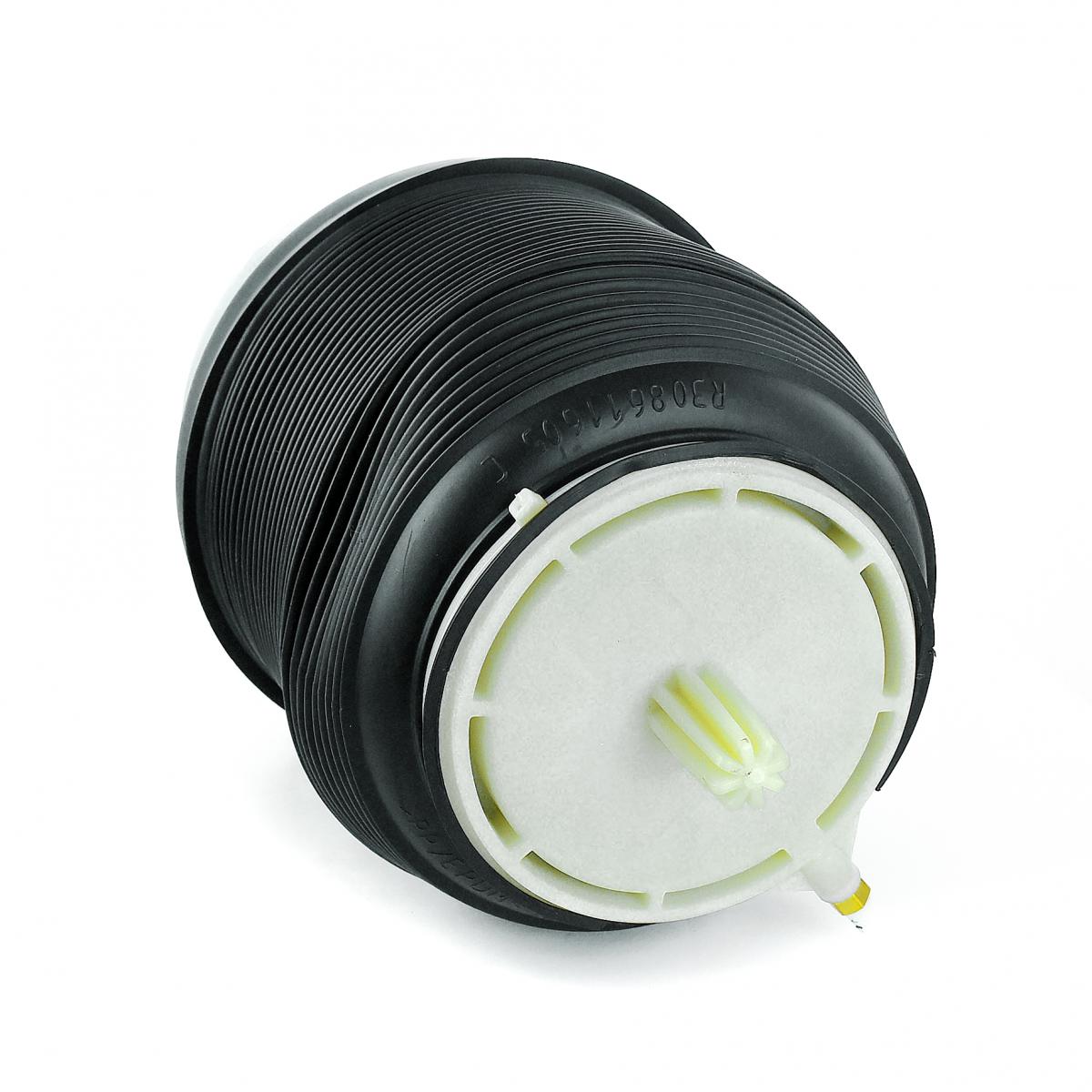
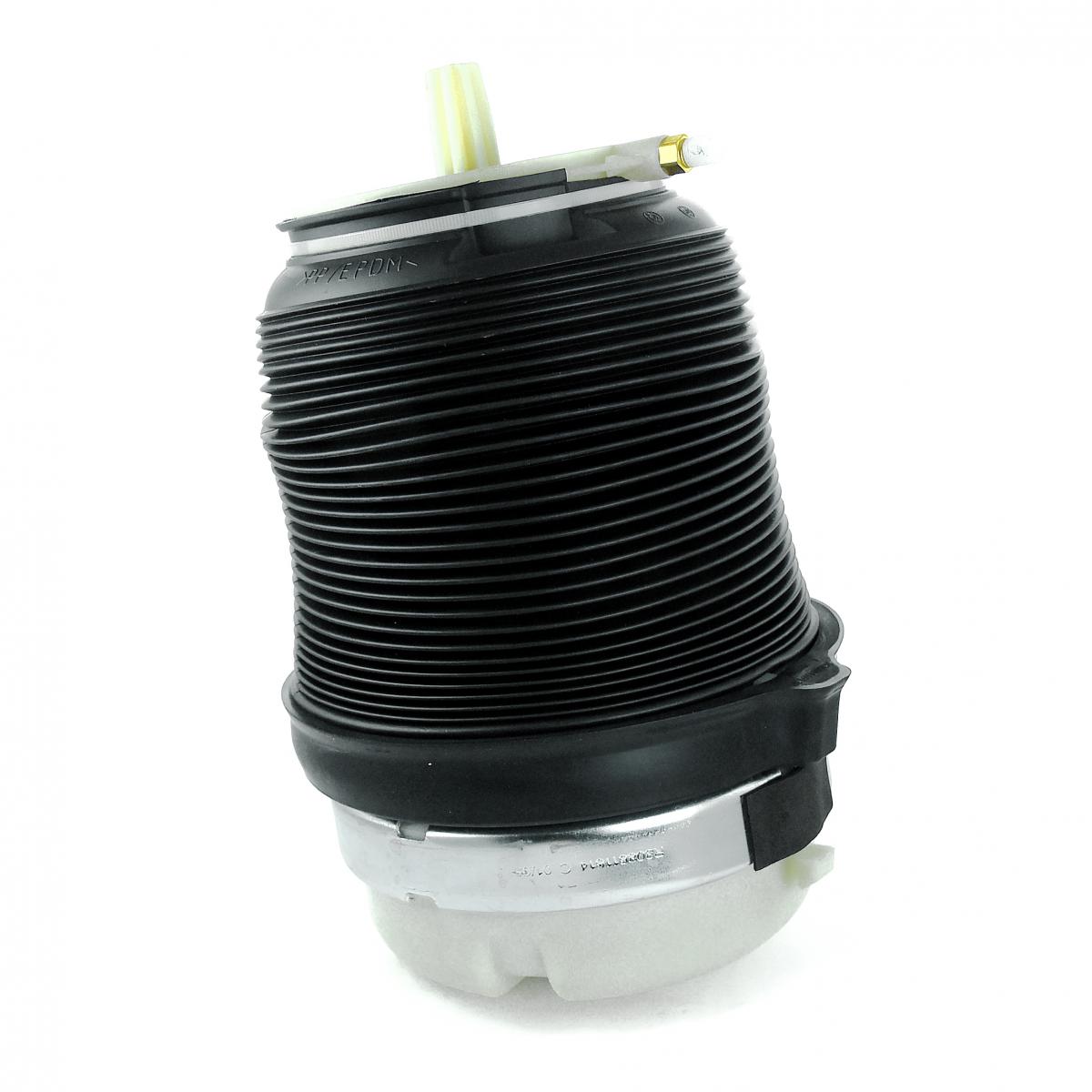
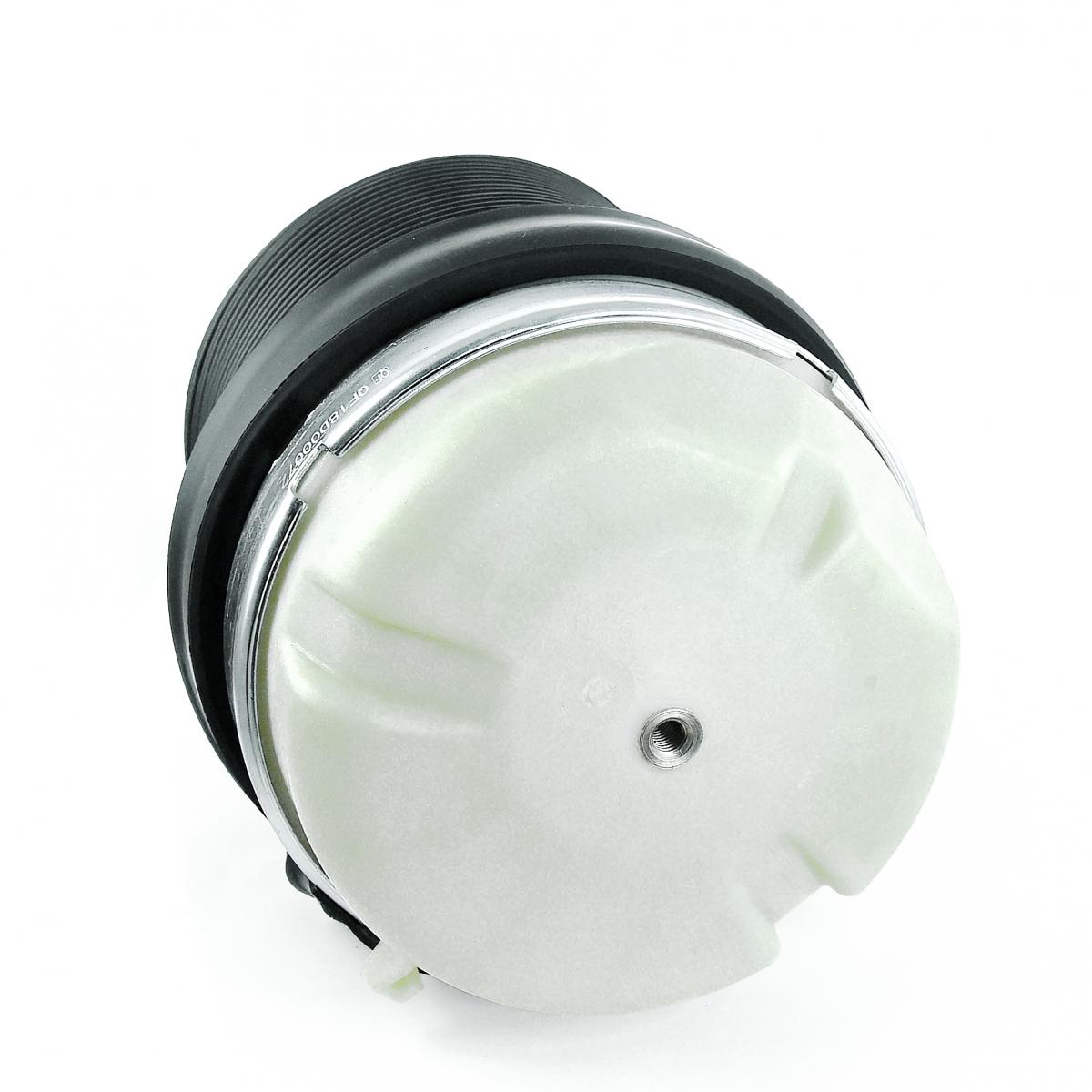
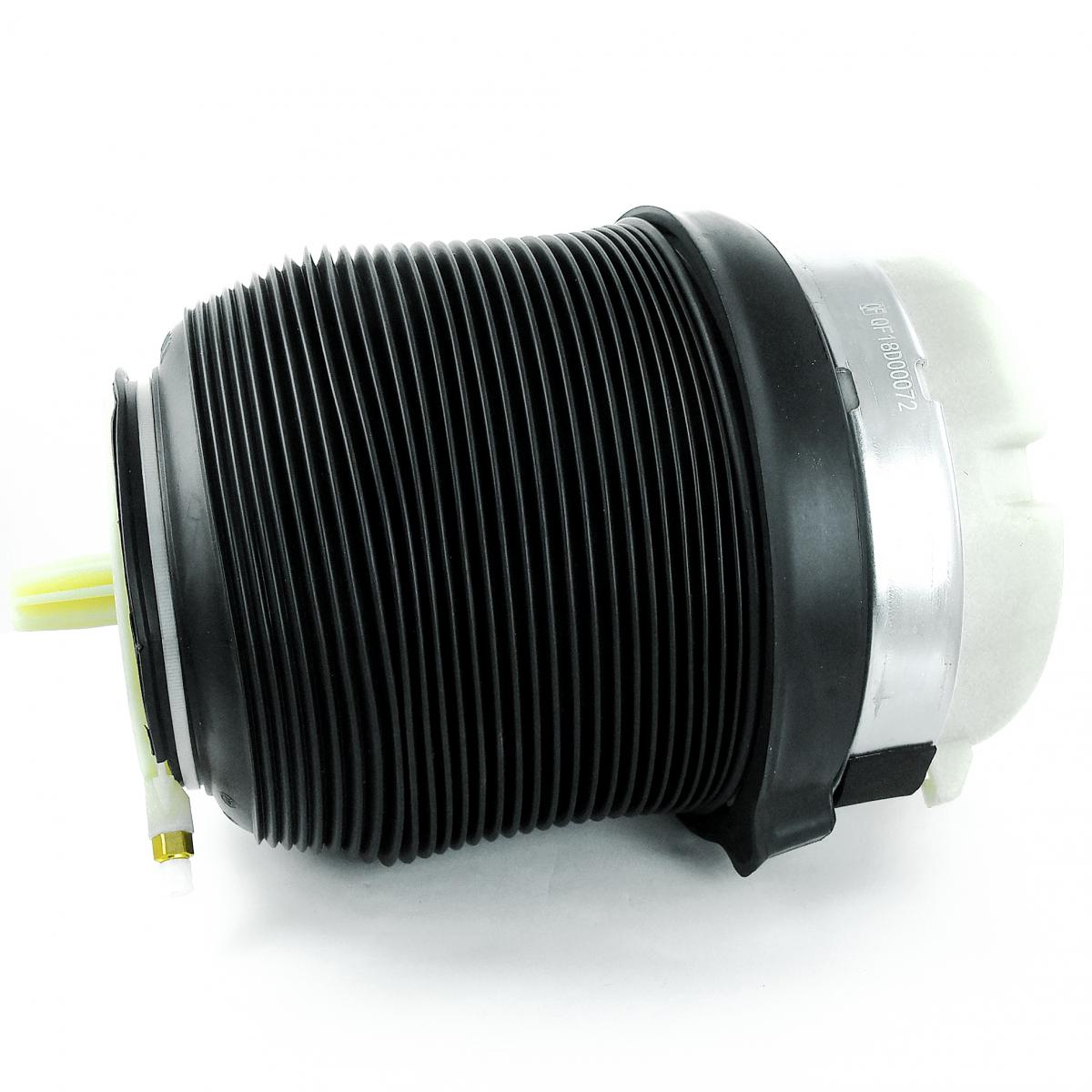
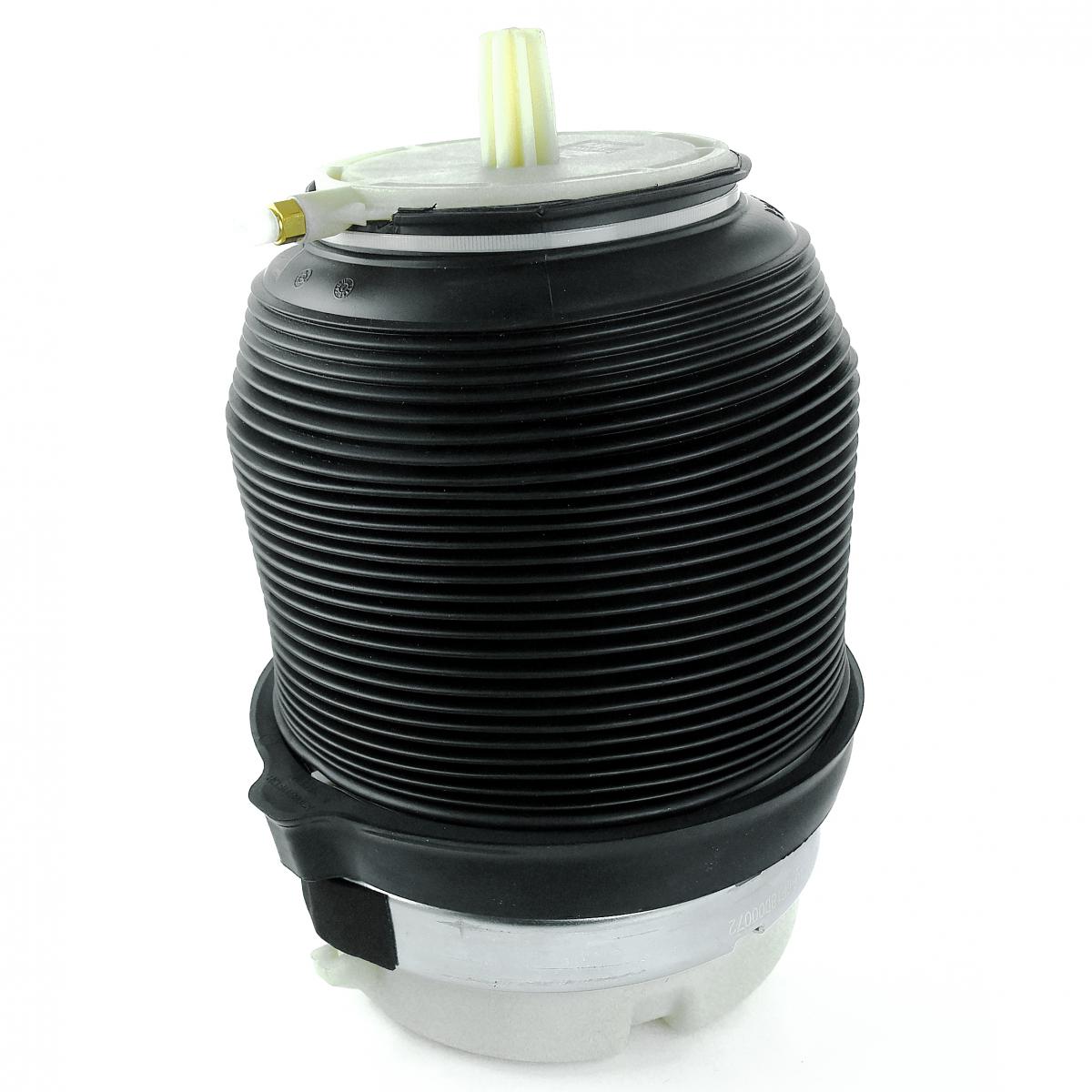
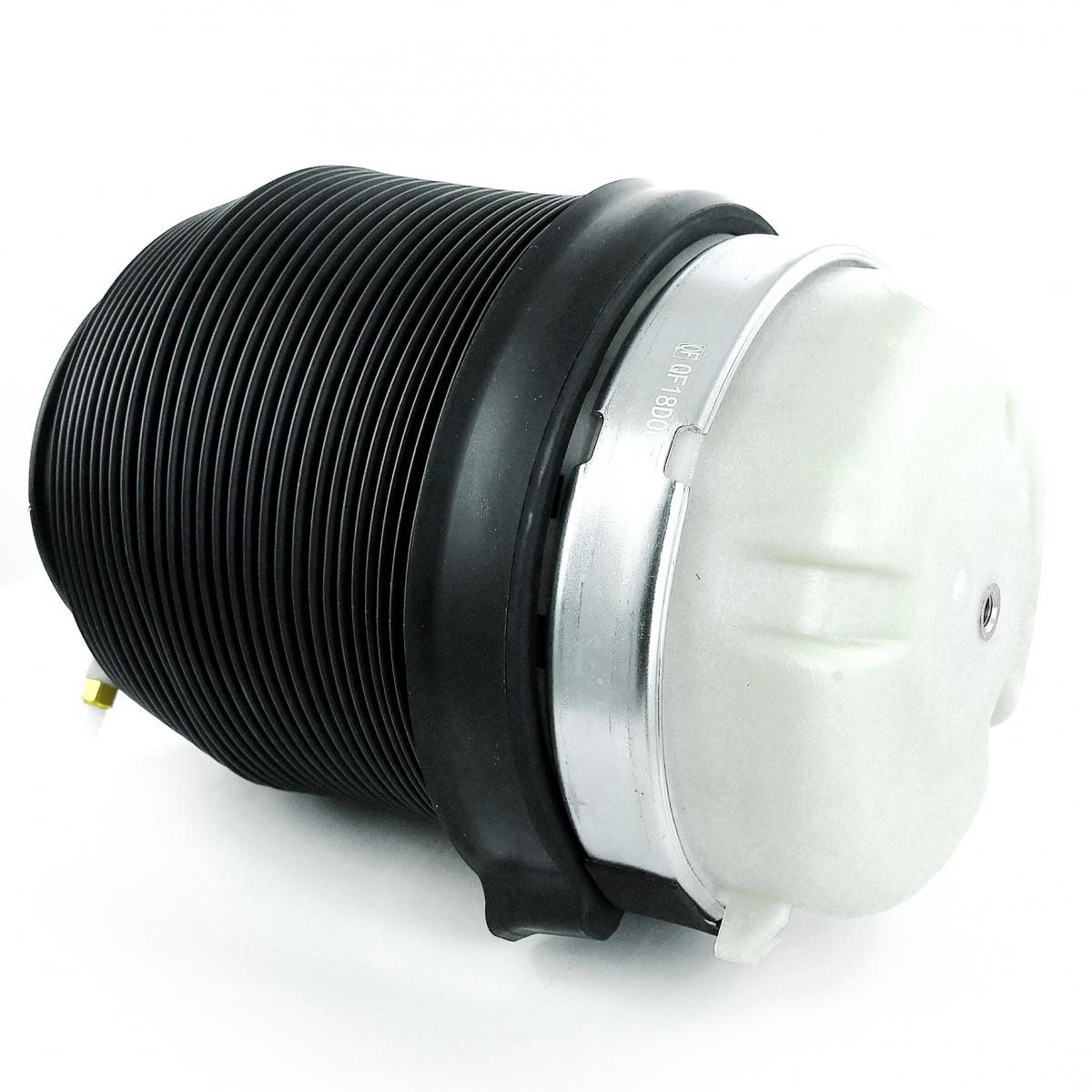
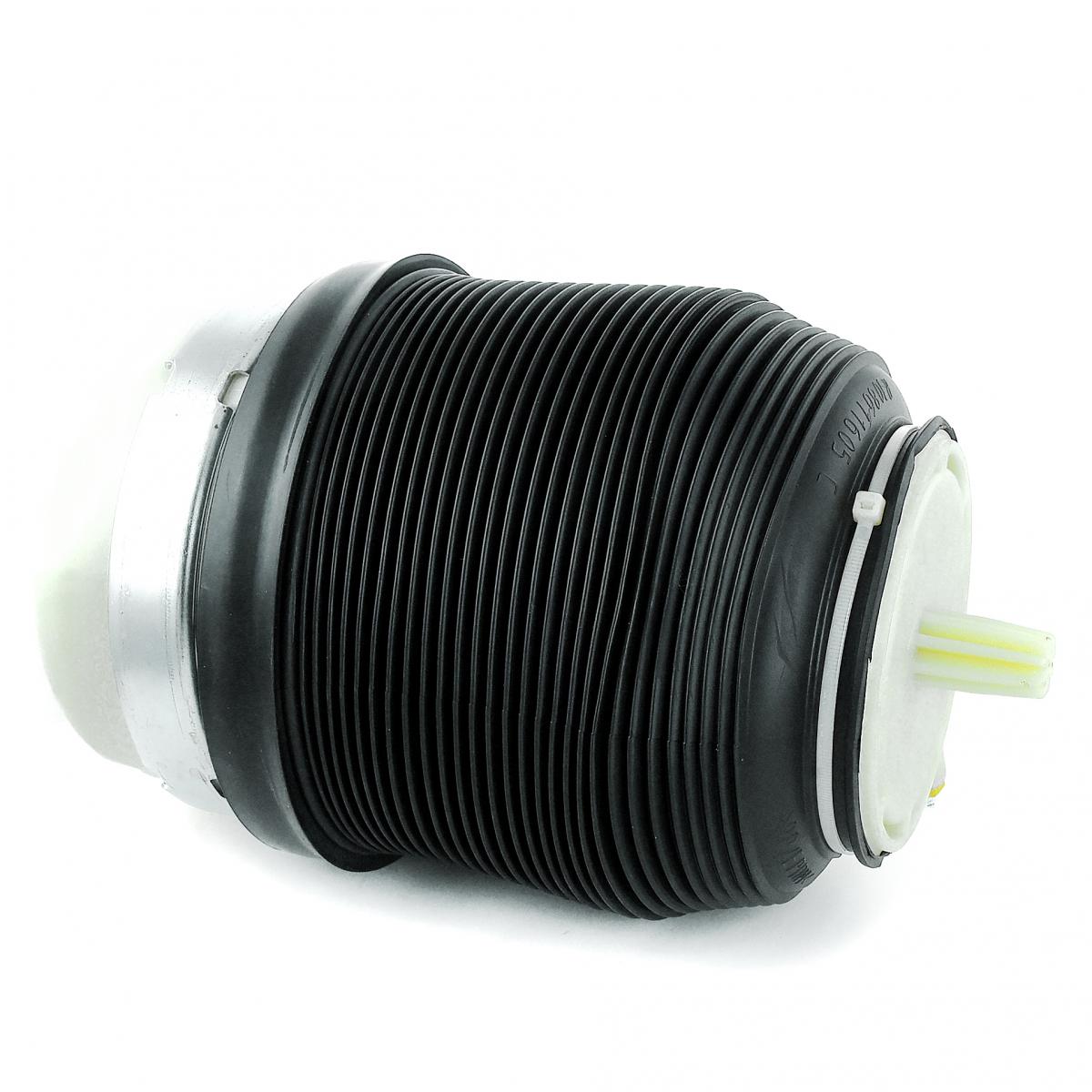
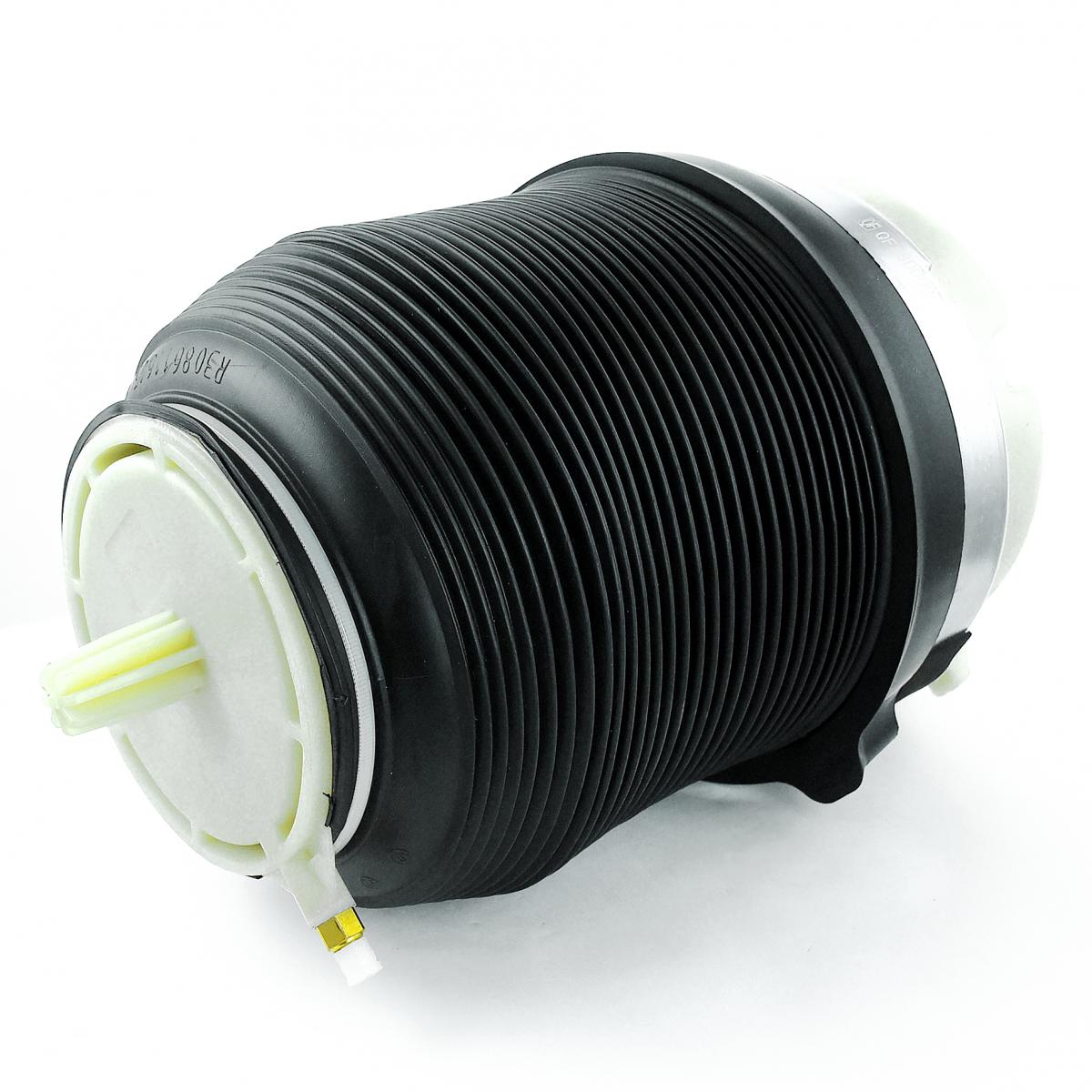
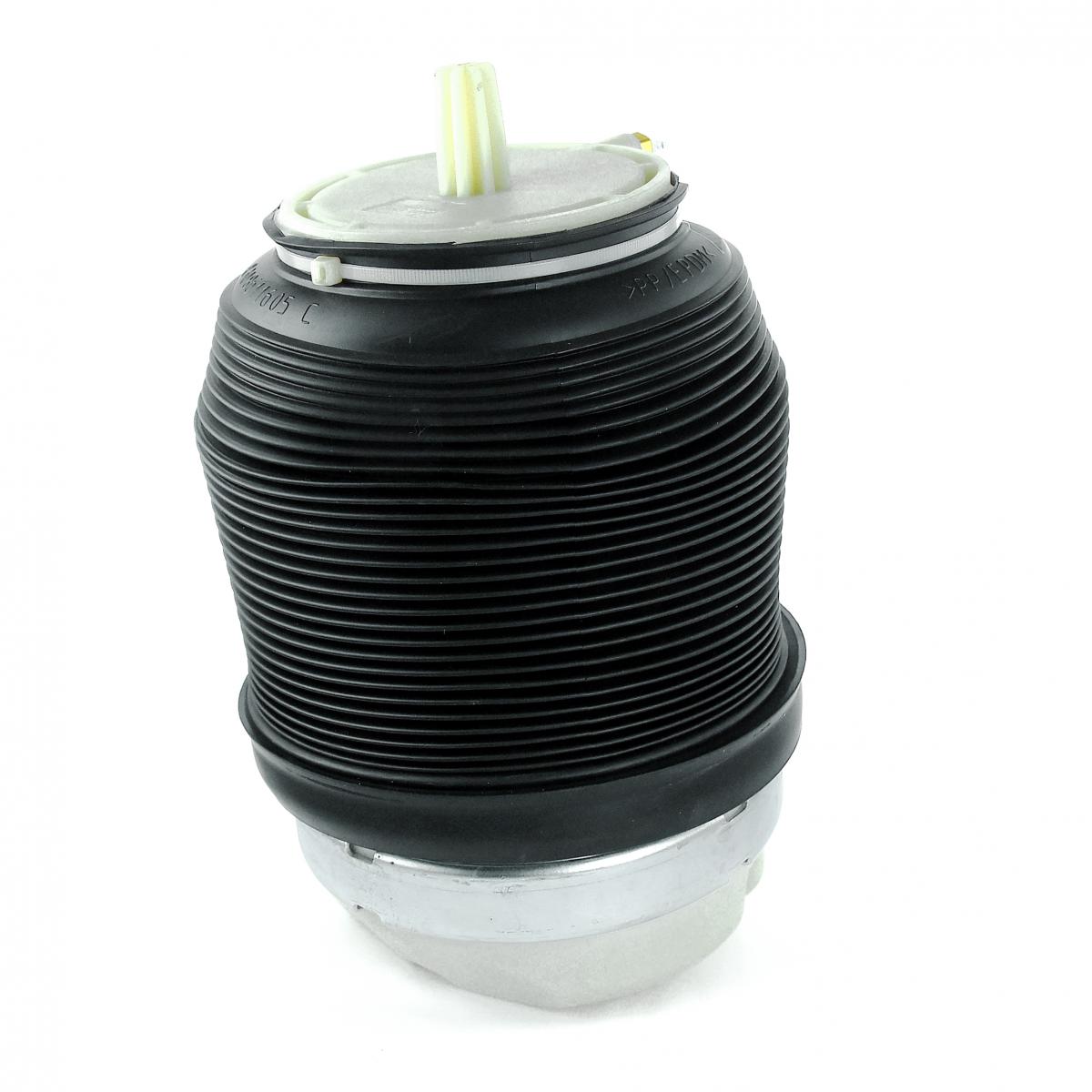
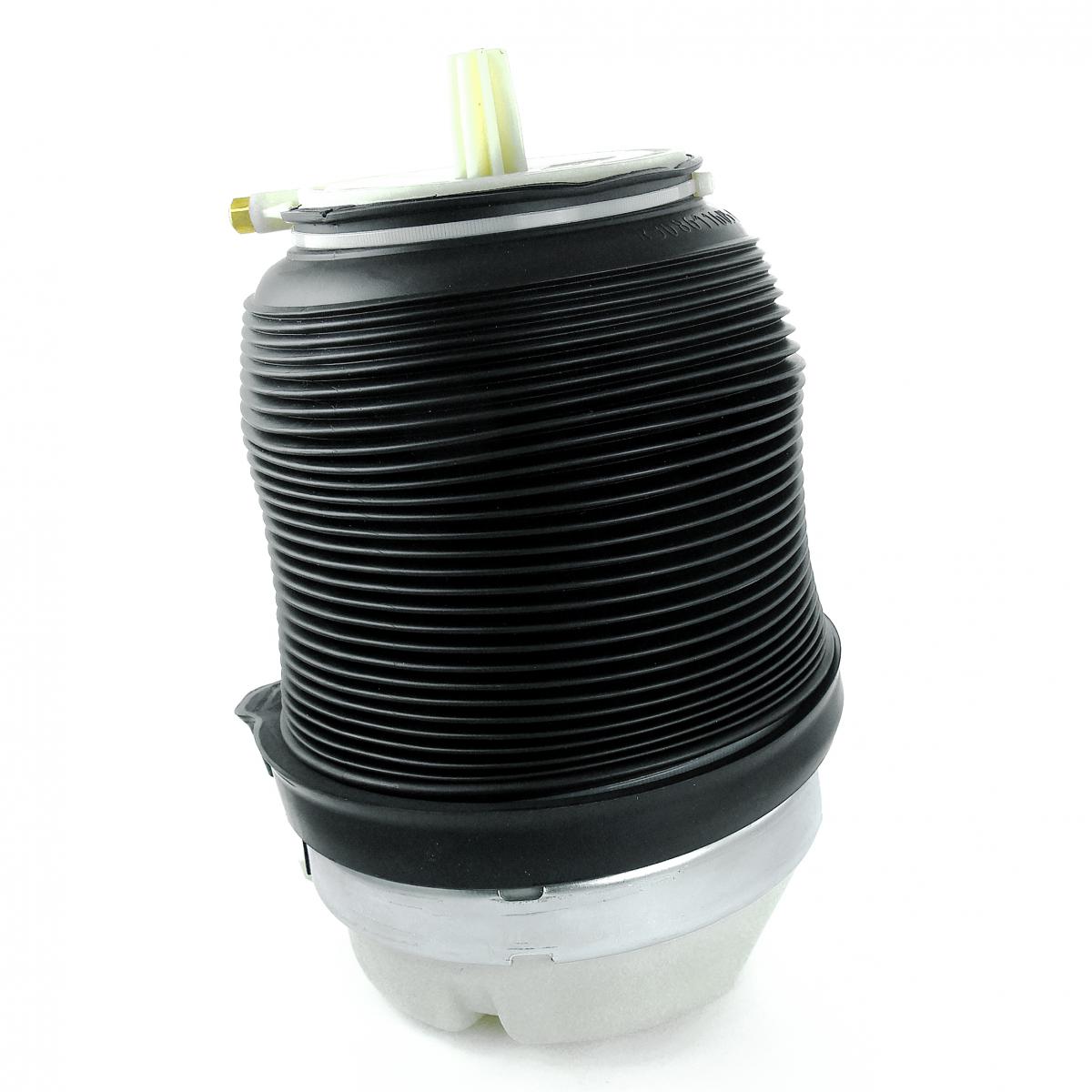
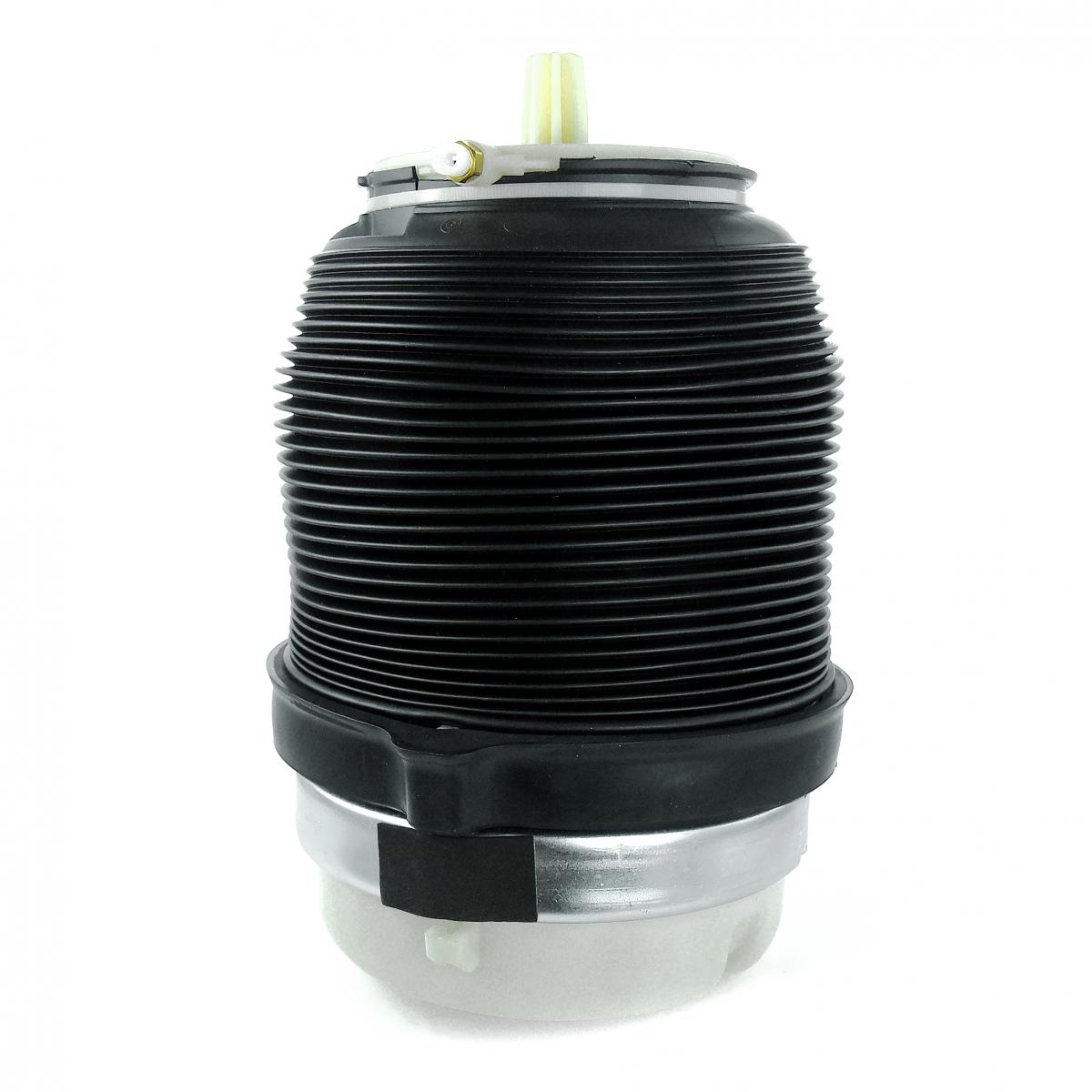
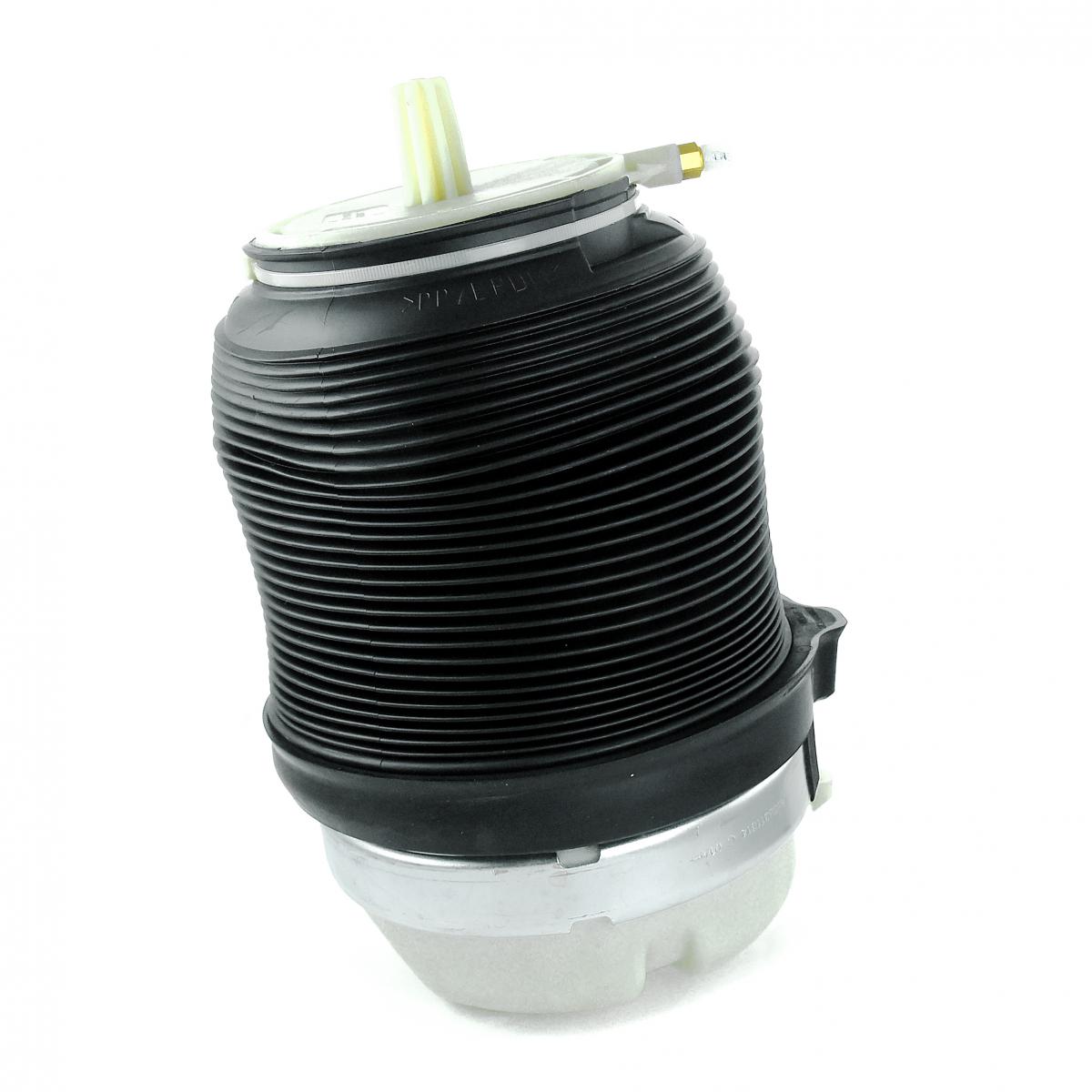
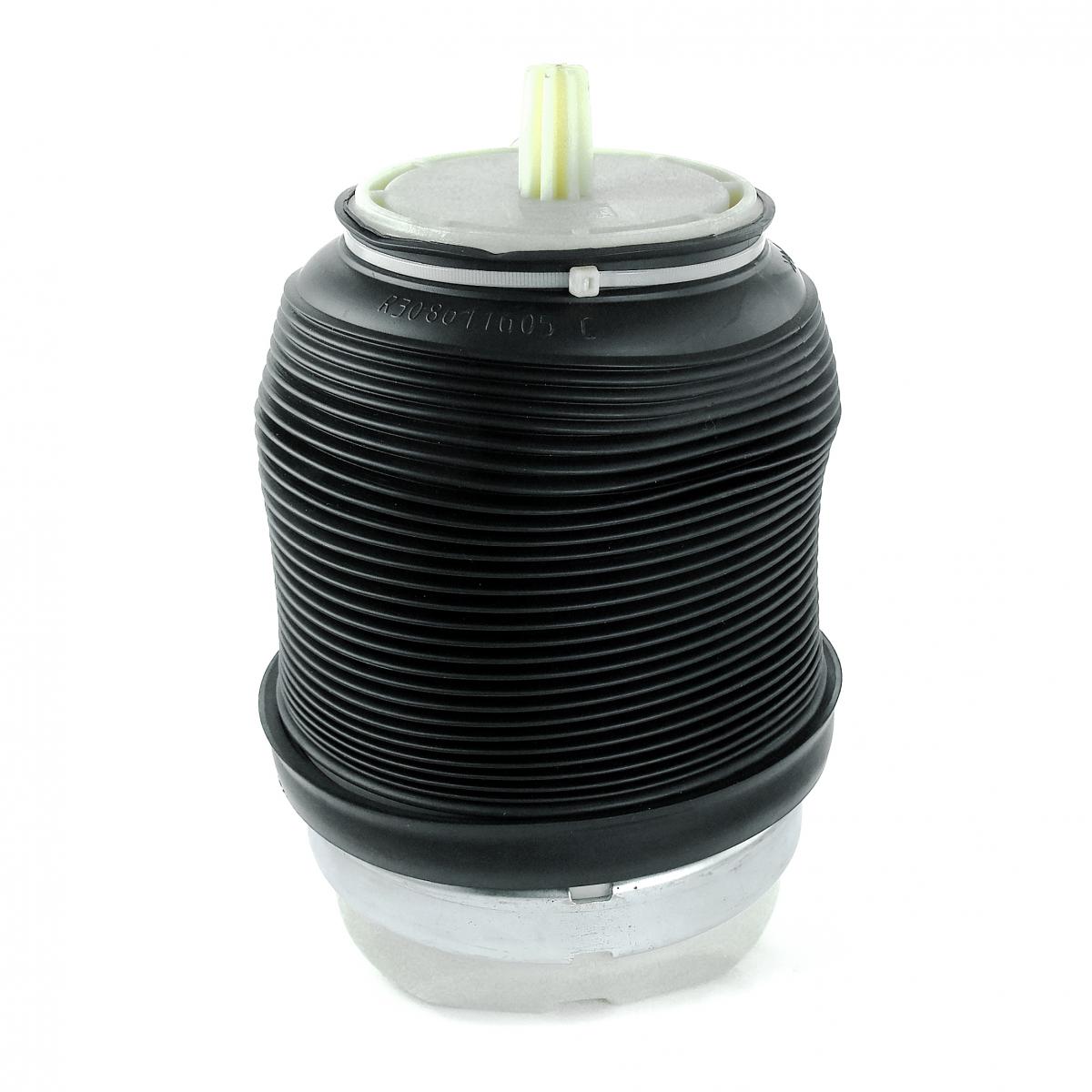
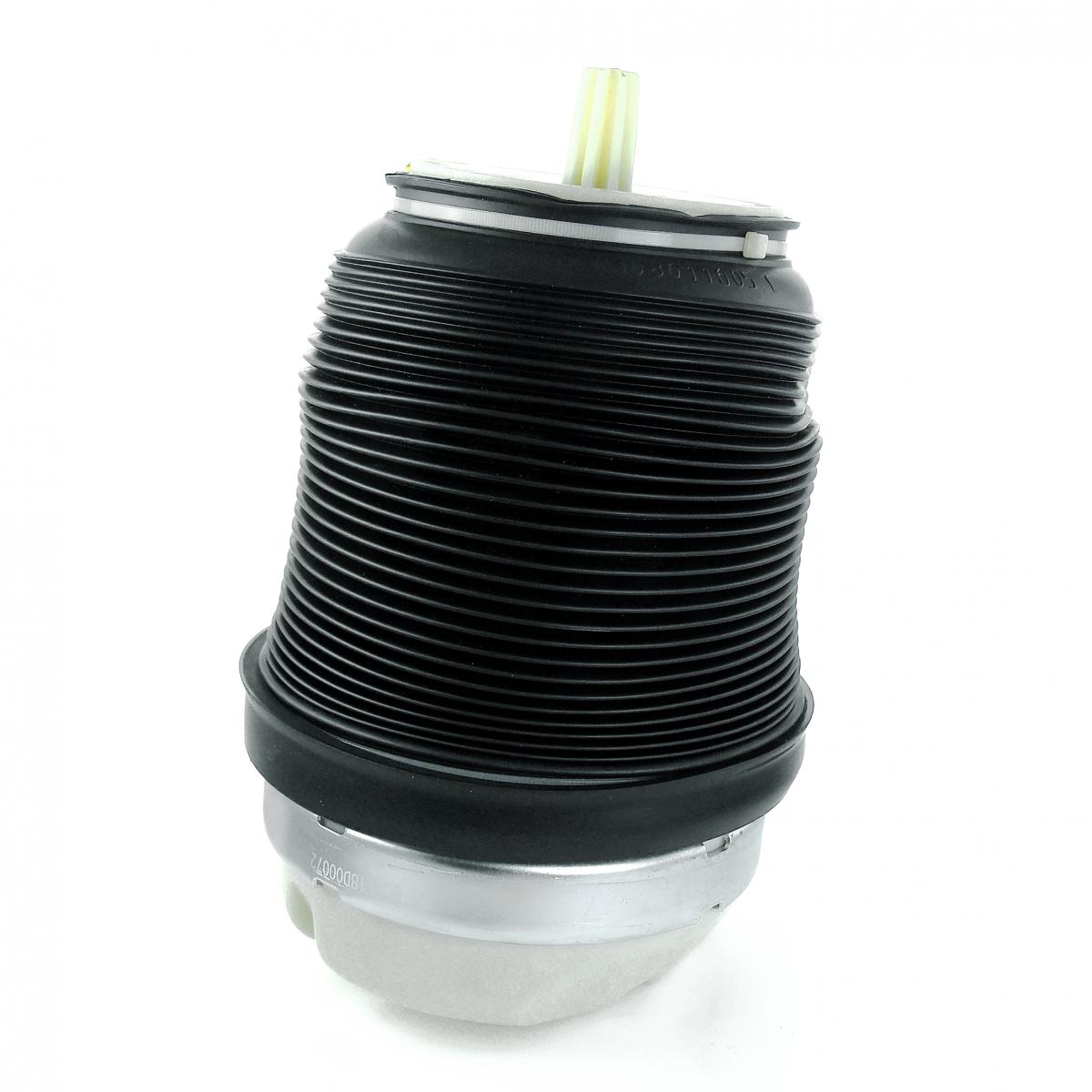
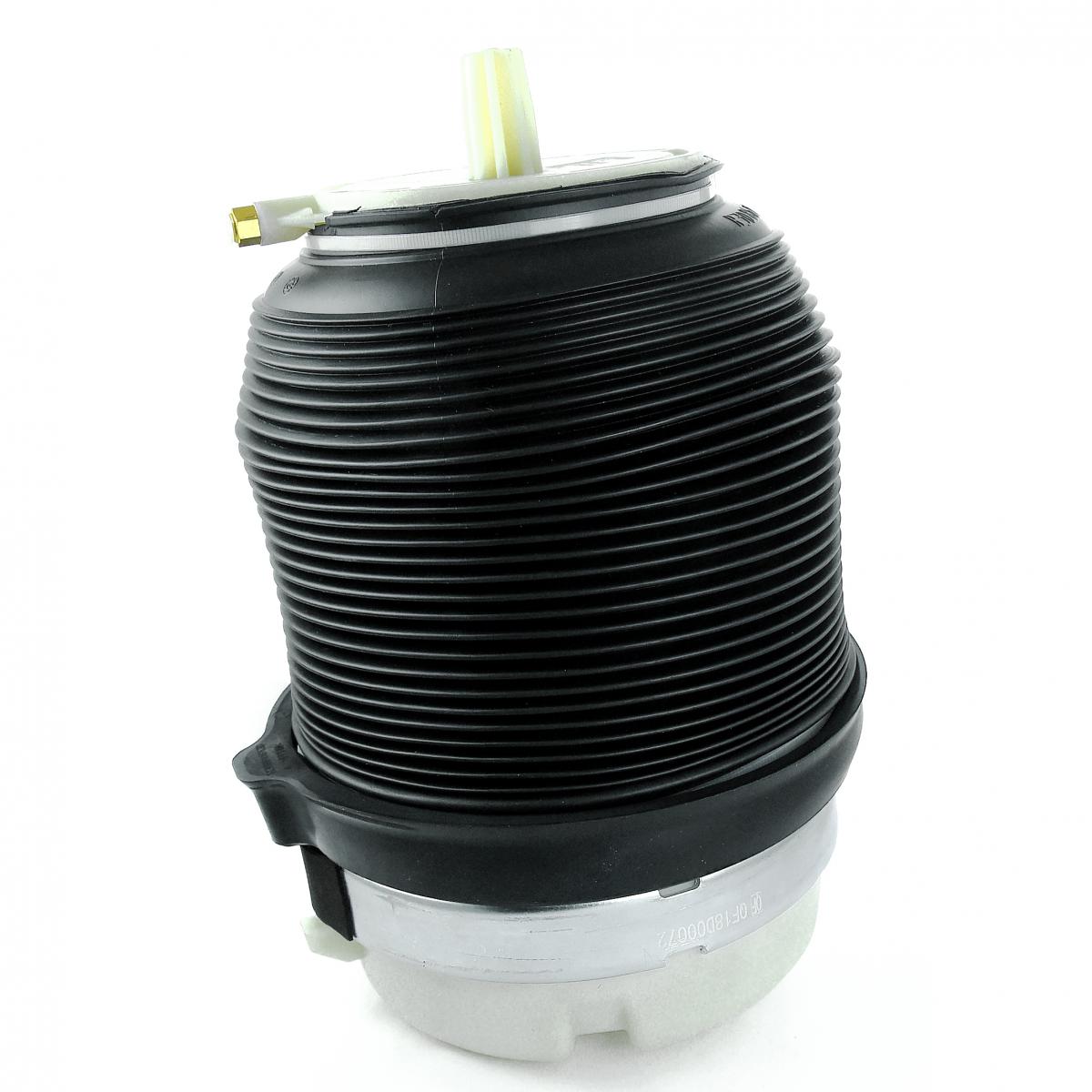
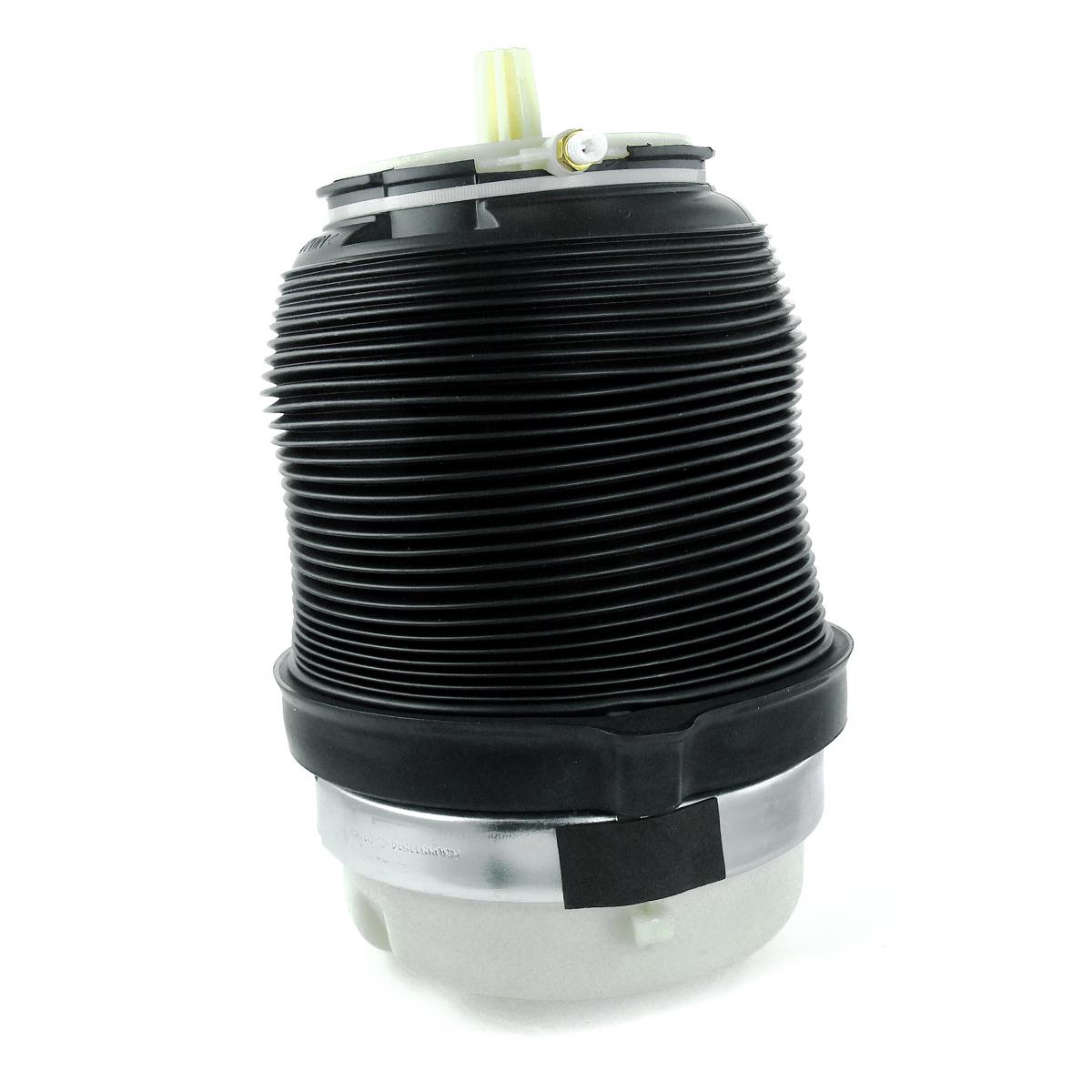
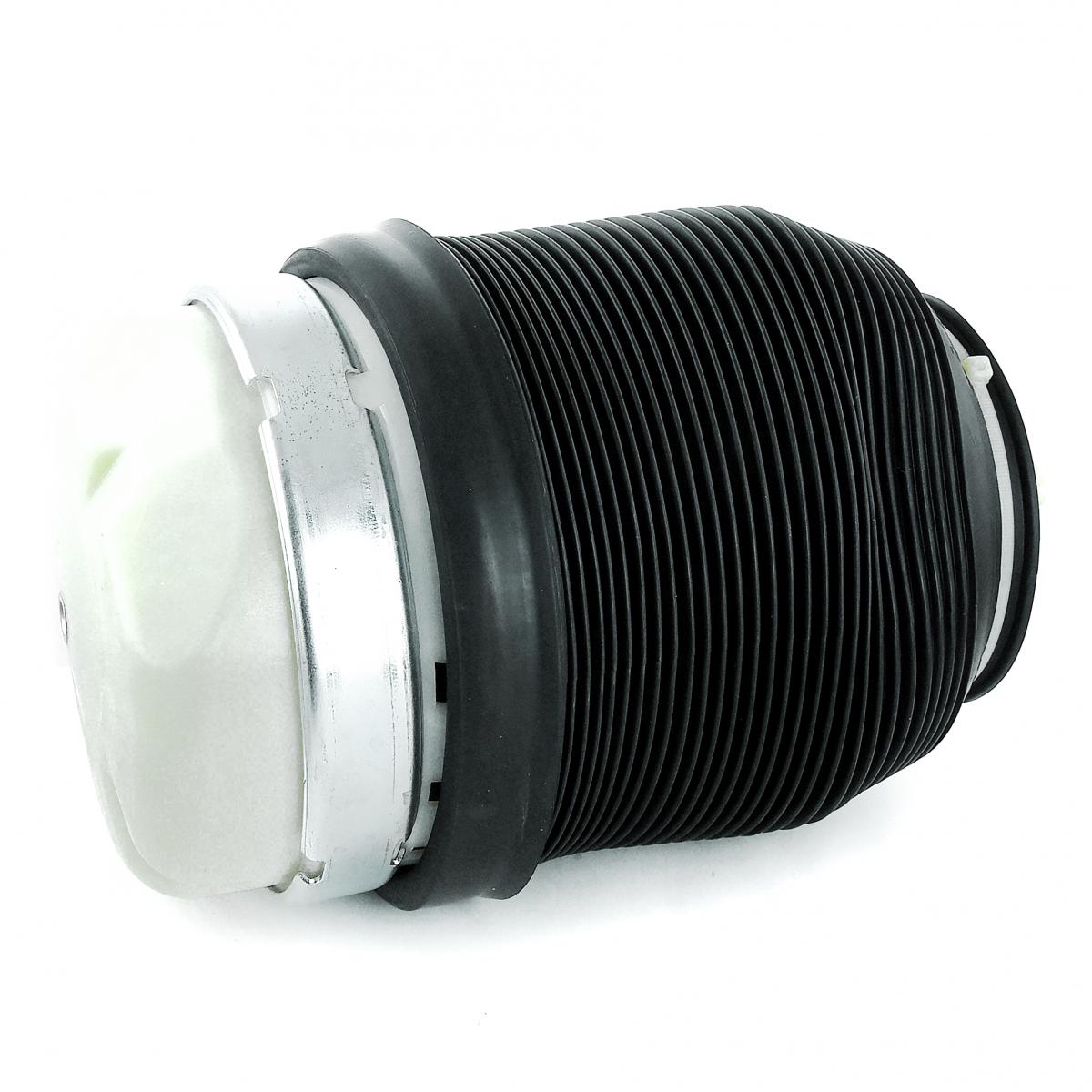
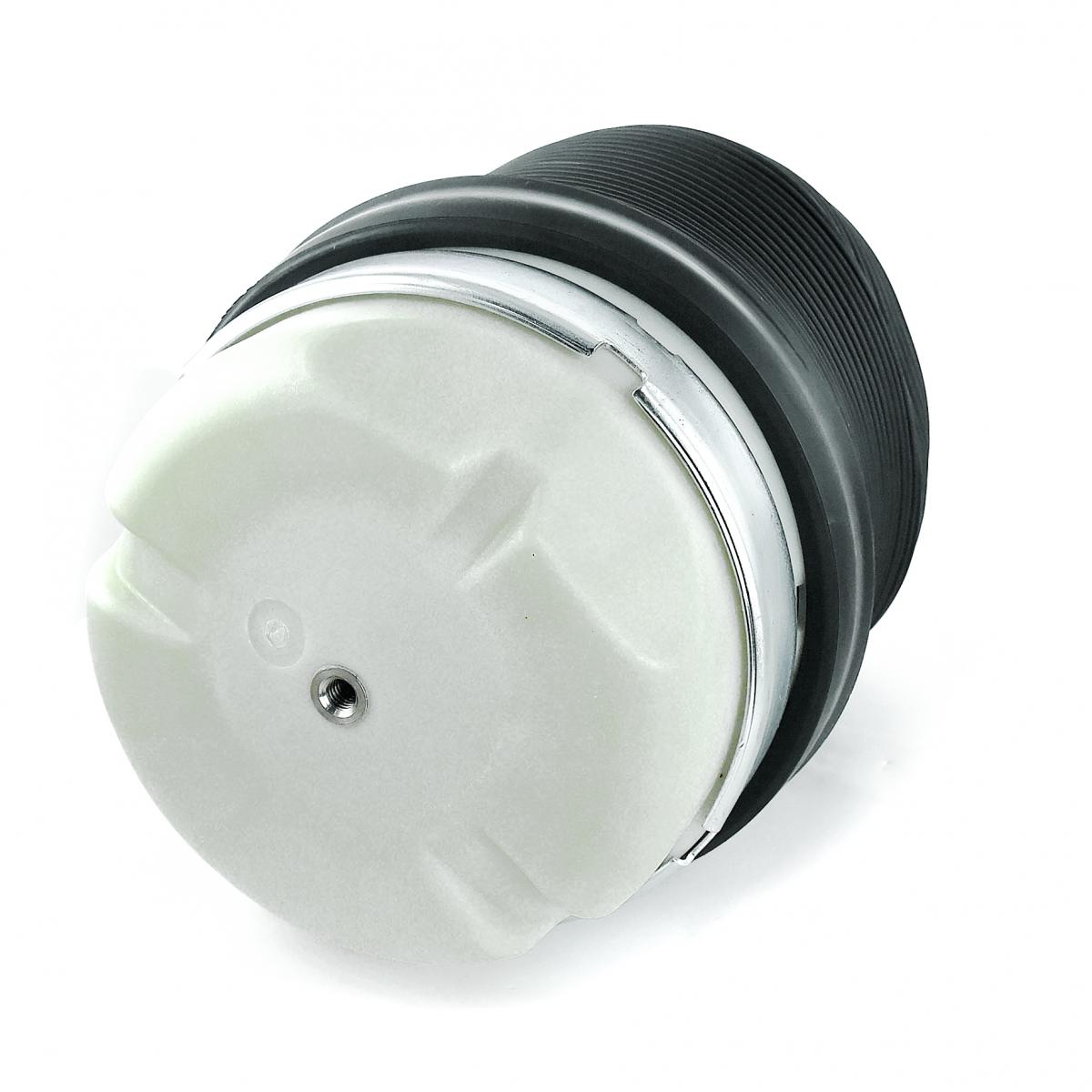
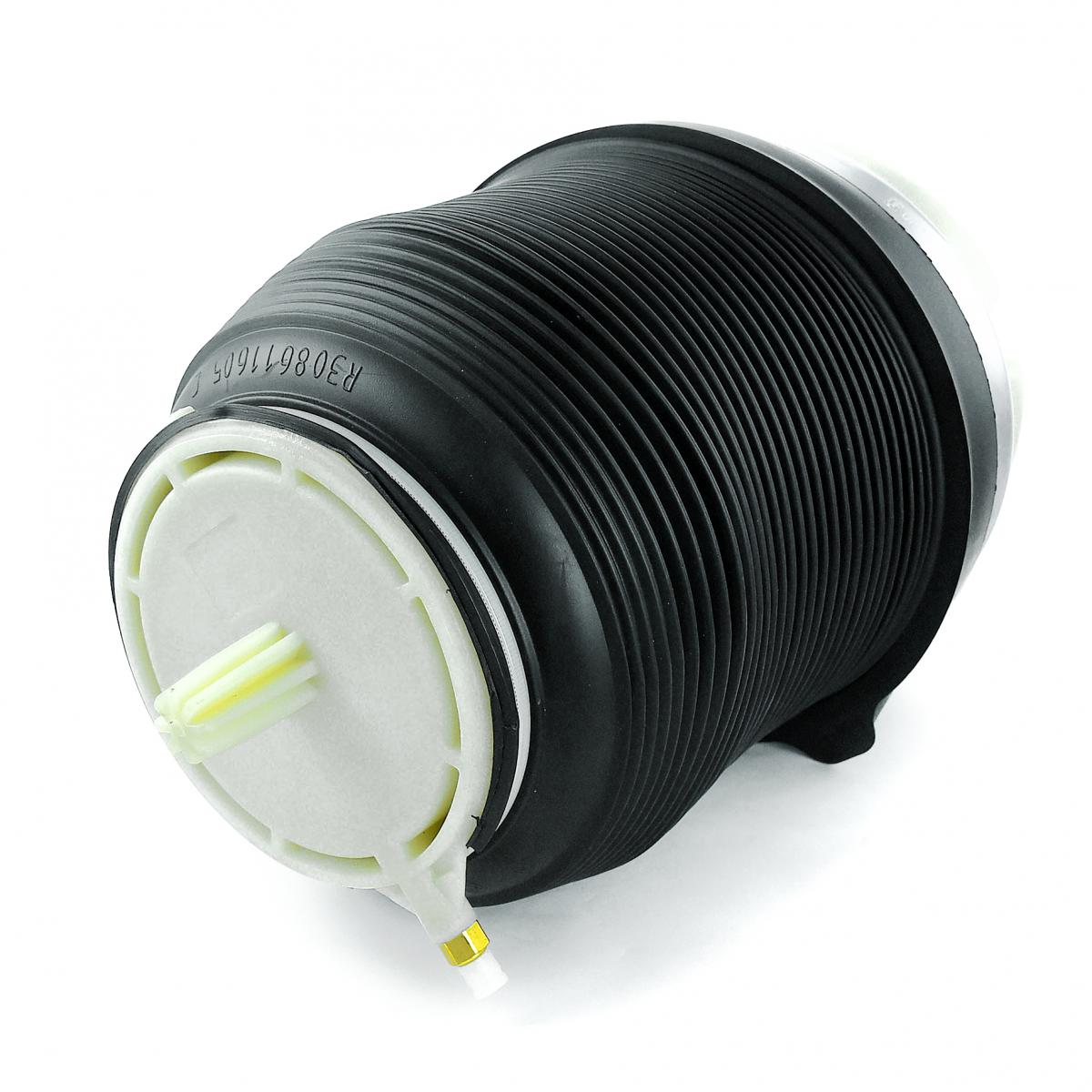
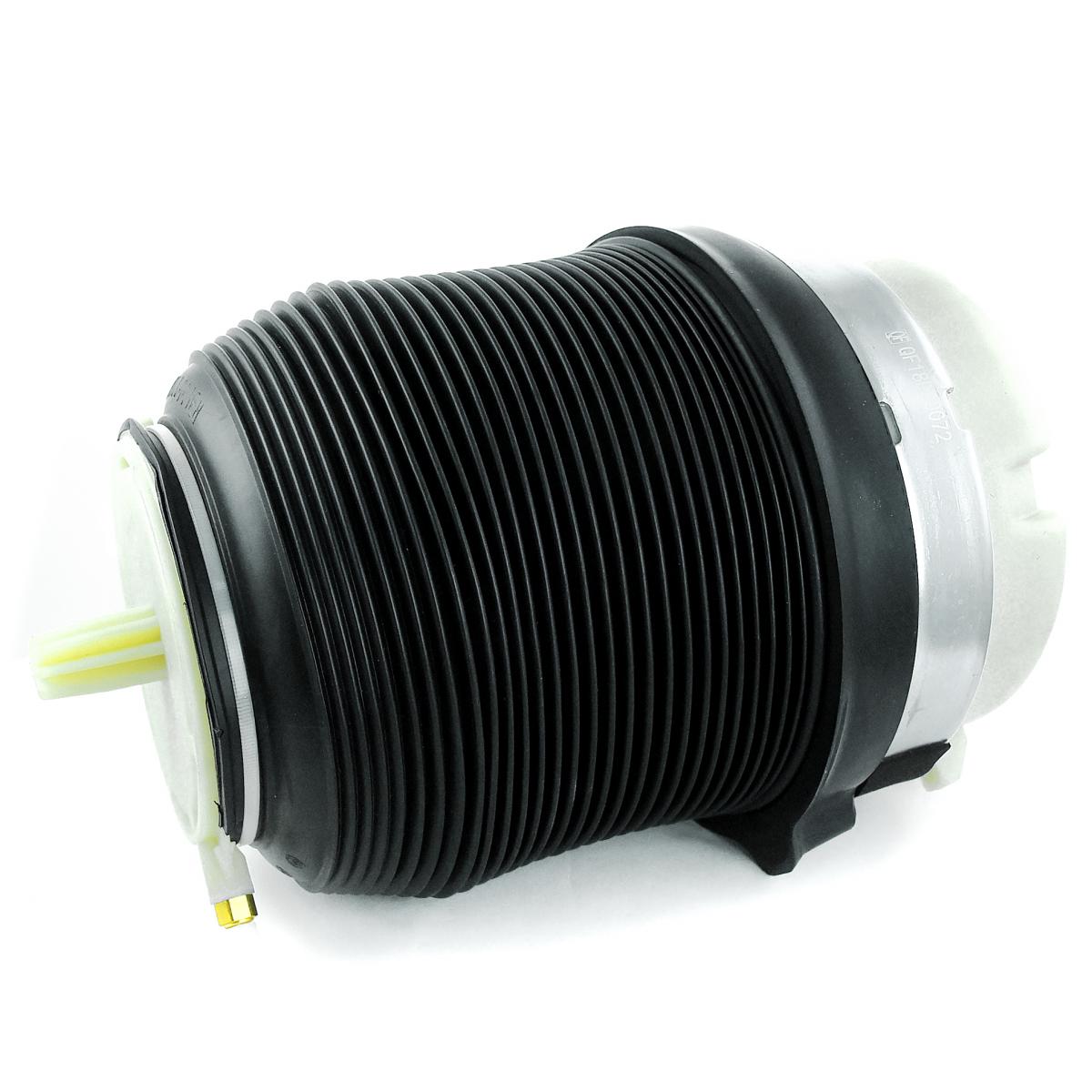
VAG 4F0616001J AIR SPRING
Product Specifications
| VAG | 4F0616001J |
| VAG | 4F0616001 |
| VAG | 4F0616001Q |
| VAG | 4F0616001K |
| MILES | DAB0046 |
The AIR SPRING is a pressurised rubber-and-fabric bellows element that replaces the conventional steel coil spring in an air suspension system, supporting the vehicle's corner weight on a column of compressed air supplied and regulated by the onboard compressor and control valve block. The air spring consists of a multi-ply reinforced rubber sleeve — typically two or three plies of nylon or polyester cord embedded in a synthetic rubber compound — crimped or clamped between an upper mounting piston and a lower rolling piston or cup that travels inside the sleeve as the suspension moves through its stroke. Inflation pressure is continuously adjusted by the suspension control module in response to ride height sensor signals, maintaining a constant vehicle ride height regardless of load variation and allowing the spring rate to be tuned electronically for comfort or sport modes. Operating pressures range from 4–8 bar at standard ride height to 12–16 bar on lowered sport settings depending on the system design.
This unit — VAG 4F0616001J — is manufactured to OEM-equivalent specifications: sleeve ply count and cord angle, rubber compound tensile strength and ozone resistance rating, upper and lower piston geometry and sealing bead dimensions, air fitting port size and thread, and ride height travel range are matched to the original part. Supplied as a direct replacement for standard fitment. Available wholesale from 61.94 USD, MOQ 30 pcs, production lead time 35-45 days.
Air spring sleeves fail through ozone and UV degradation of the outer rubber layer producing surface cracking that progressively penetrates the cord plies, fatigue cracking at the crimp bead where the sleeve is clamped to the piston under repeated high-cycle flexing, and abrasion damage from road debris contacting the sleeve during full compression. A sleeve that has developed a slow leak forces the compressor to cycle more frequently than its design duty cycle, overheating the compressor motor and dramatically shortening its service life — a failed air spring that is not replaced promptly will cause compressor failure as a secondary consequence, converting a single component replacement into a significantly more expensive repair.
- Use a scan tool to command the suspension to its highest ride height position and then exhaust the air spring completely before raising the vehicle — most air suspension control modules have a service or workshop mode that vents the affected corner to atmosphere; never attempt to remove an air spring under residual pressure as sudden decompression can cause serious injury. Disconnect the battery after exhausting the system to prevent the module from attempting to re-inflate during the repair.
- Support the vehicle body independently of the suspension on chassis stands before allowing the suspension to drop — on fully independent air suspension systems the control arm will drop its full travel distance when the air spring is exhausted and the wheel removed, placing stress on brake hoses, ABS sensor wires, and driveshaft CV joints; support the control arm with a workshop jack set to just below the unloaded position.
- Disconnect the air line from the spring fitting before unbolting the spring from its mounts — press the collet release collar on the push-fit air fitting and pull the line free; cap the disconnected air line immediately with a blanking plug to prevent moisture and contamination from entering the air system. Moisture in the air lines corrodes the compressor valves and valve block solenoids, causing expensive secondary failures.
- Note the orientation of the upper mounting plate and lower piston relative to the suspension arm and body before removing the air spring — air spring upper mounts typically have a specific clocking position relative to the chassis mounting points; an incorrectly oriented spring will place the sleeve in contact with adjacent components during suspension travel, causing abrasion failure.
- Inspect the shock absorber or strut inside the air spring where applicable — on combined air spring and damper assemblies (air struts), the damper must be inspected for oil leakage and shaft seal condition; fitting a new air spring to a damper with a leaking shaft seal will contaminate the inside of the new sleeve with damper oil, dramatically accelerating rubber degradation.
- Install the new AIR SPRING (VAG 4F0616001J), reconnect the air line until the push-fit collet locks positively, reconnect the battery, use the scan tool to inflate the corner to the standard ride height, apply soapy water to all air fittings and the sleeve surface to verify no leaks under pressure, then perform a full suspension calibration or ride height relearn as specified by the OEM procedure for this vehicle before returning it to service.