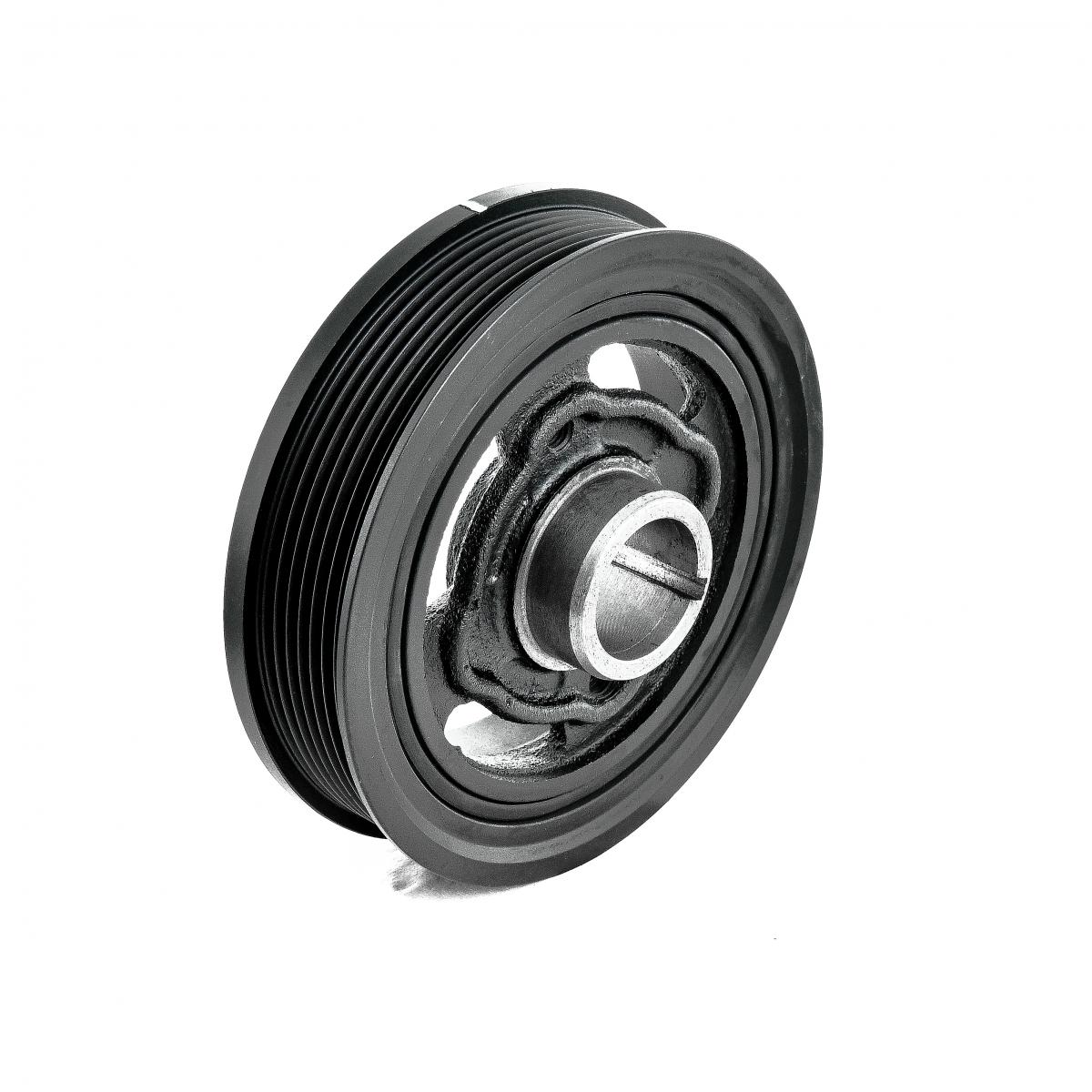
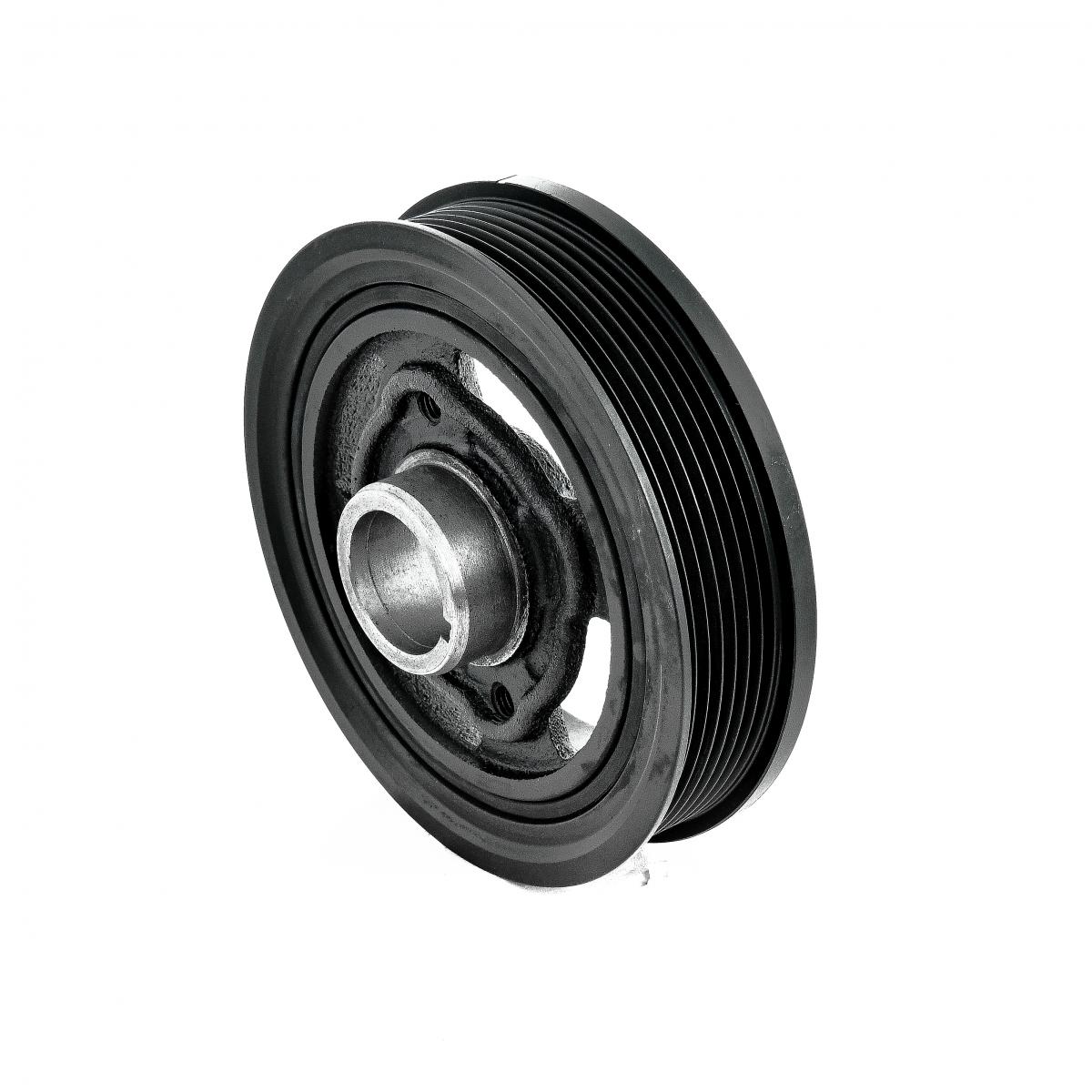
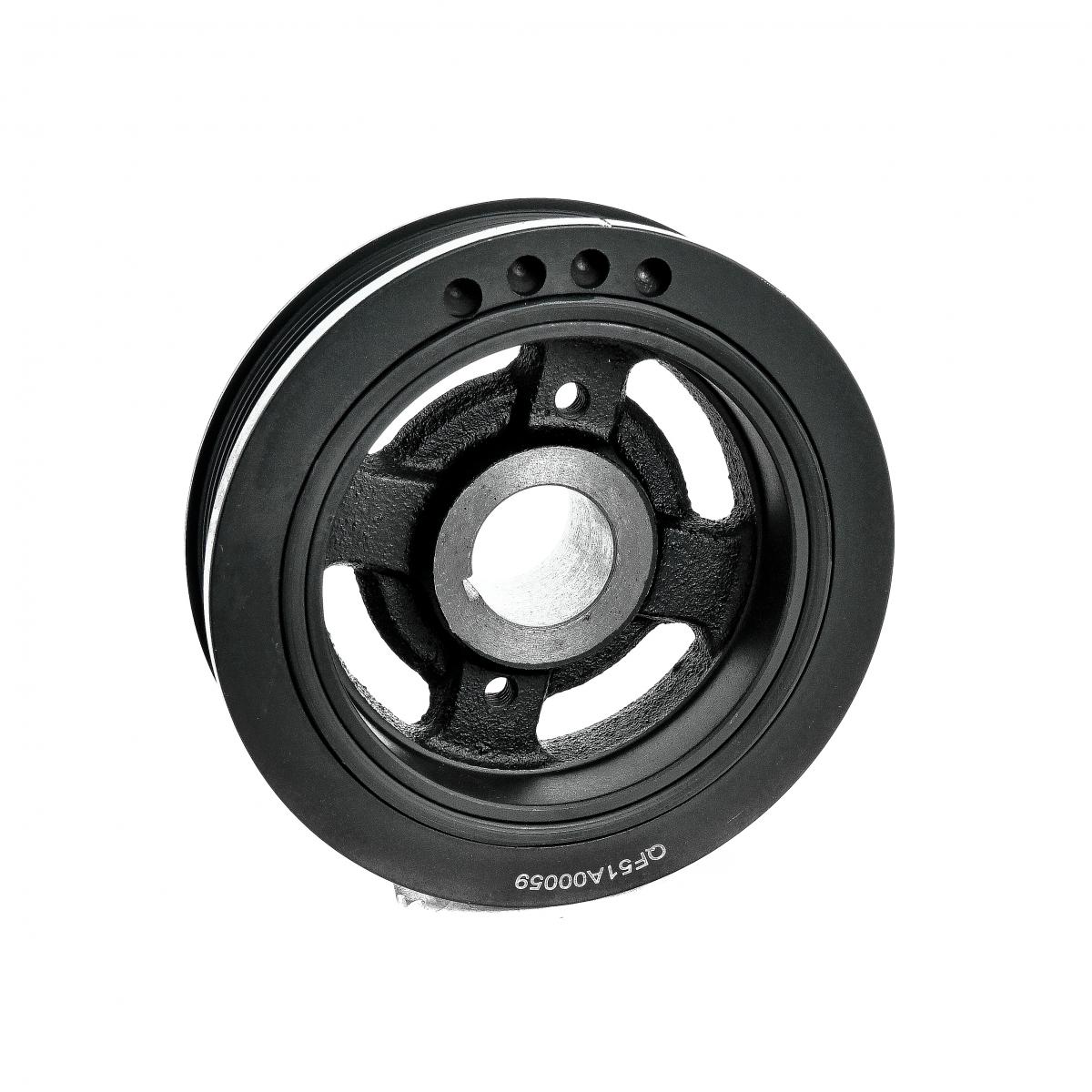
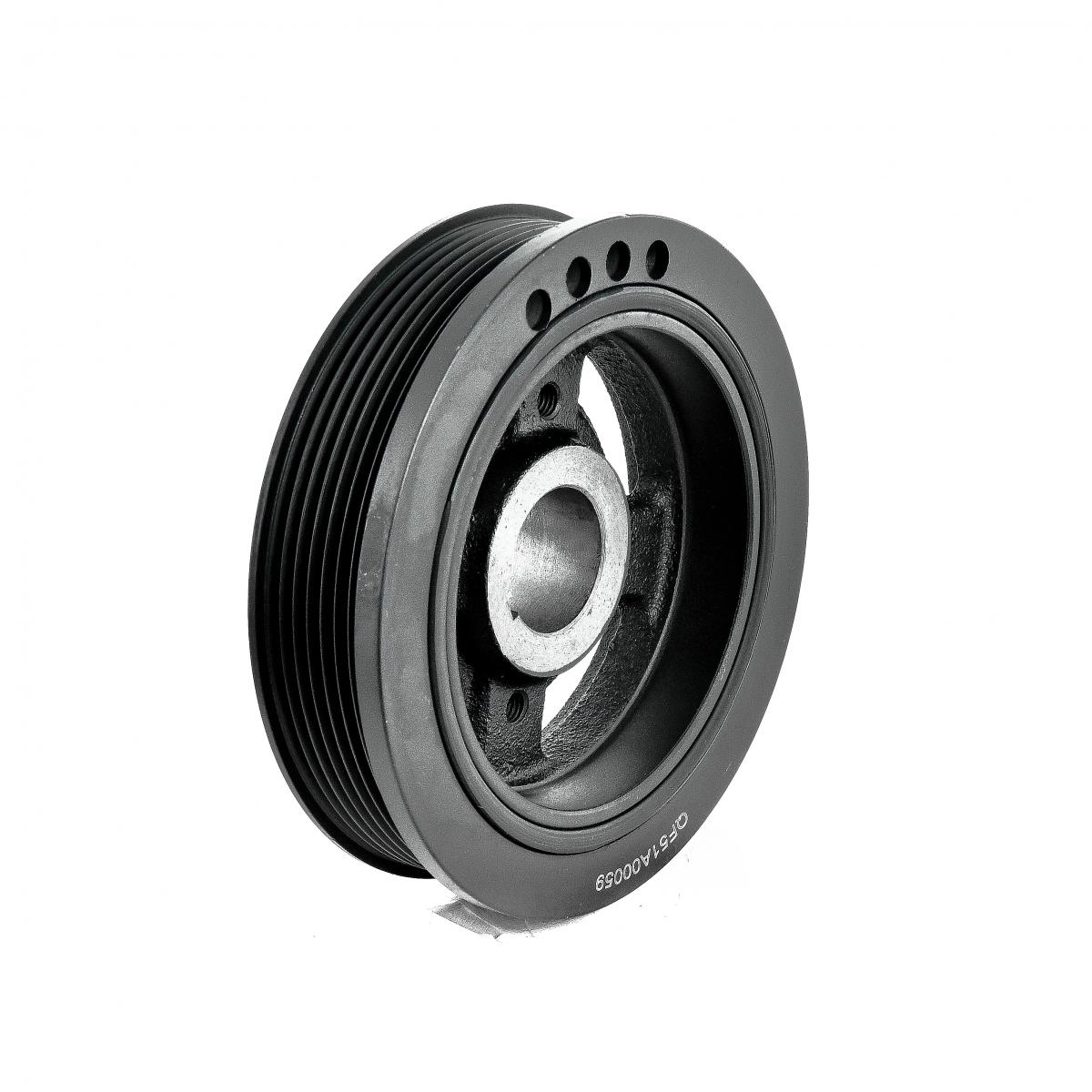
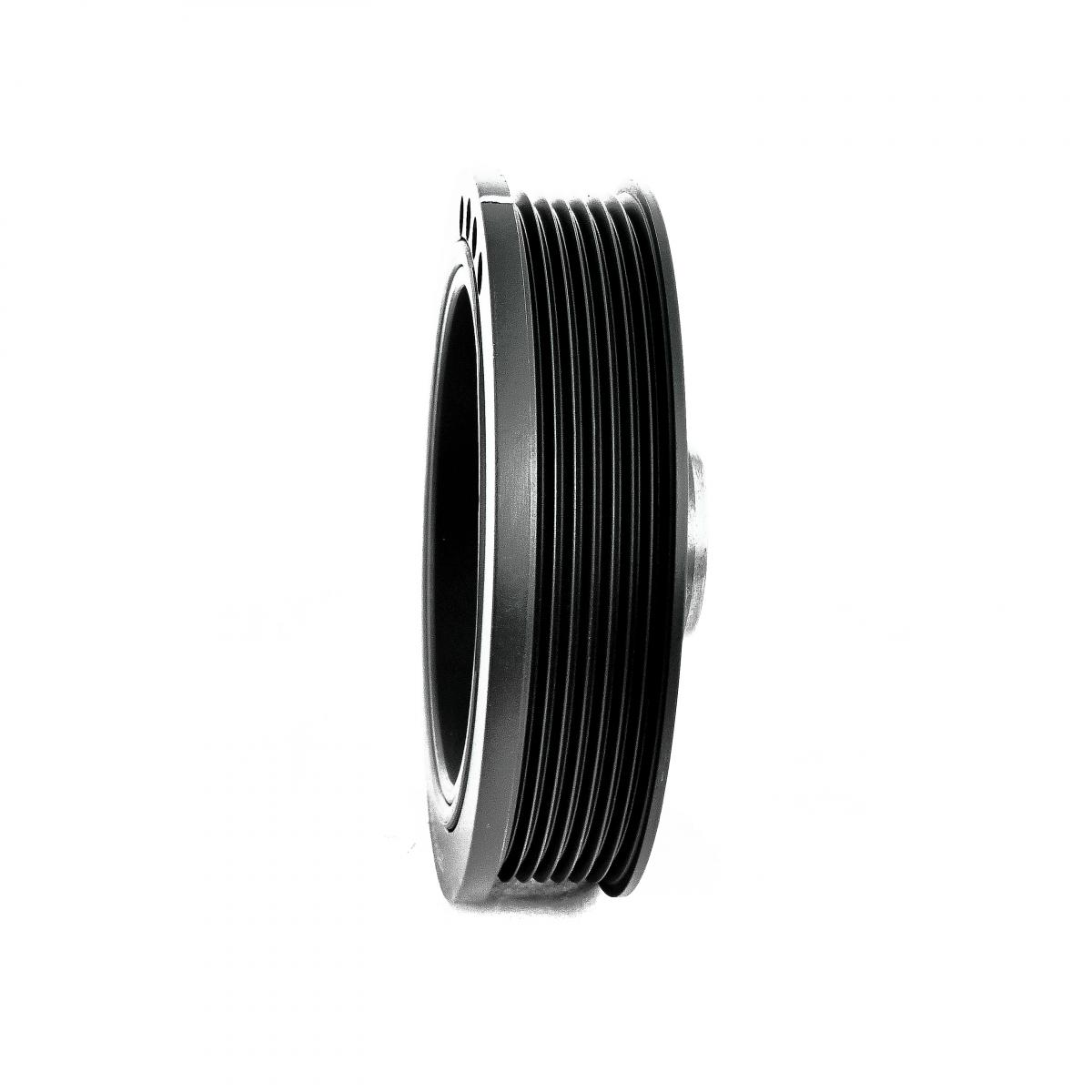
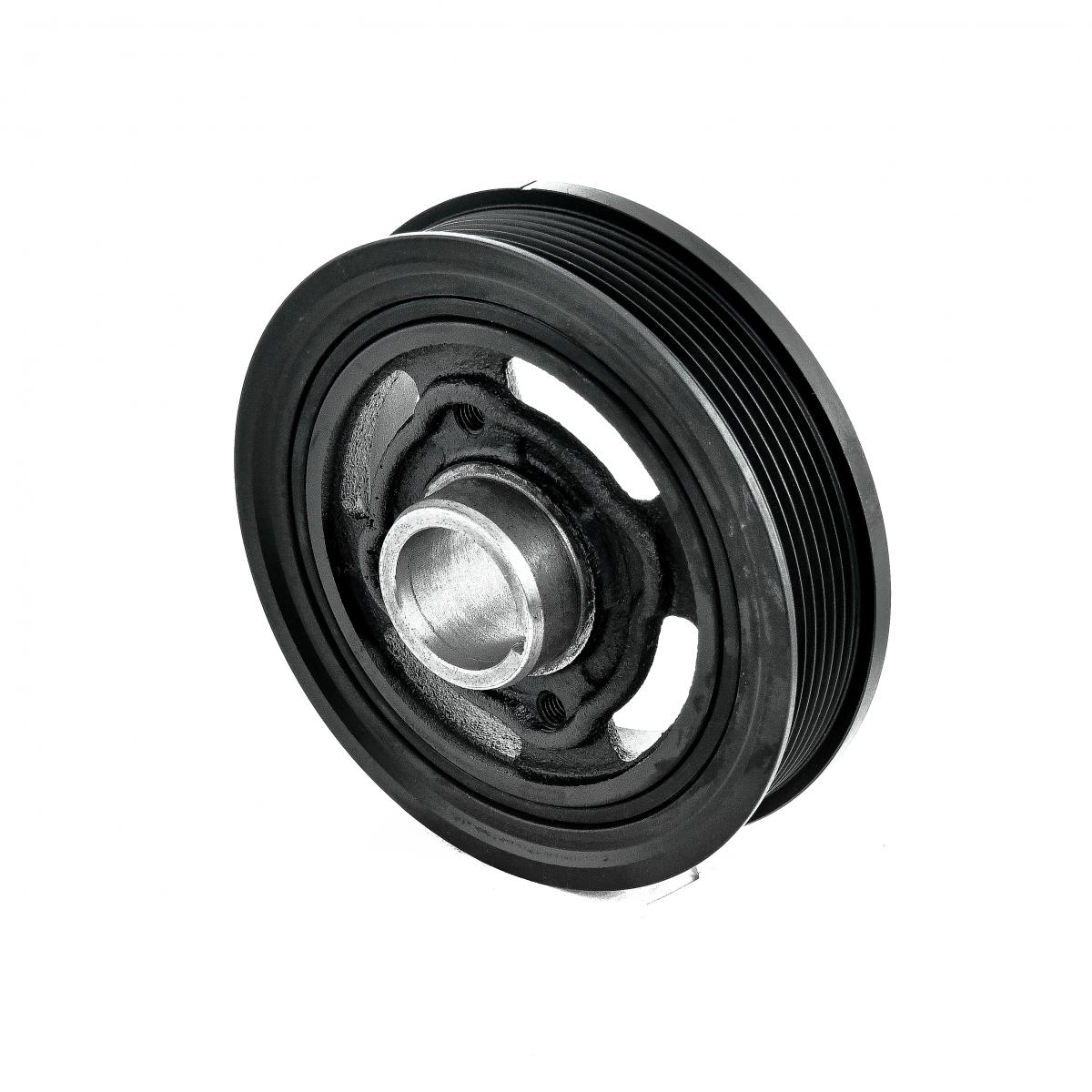
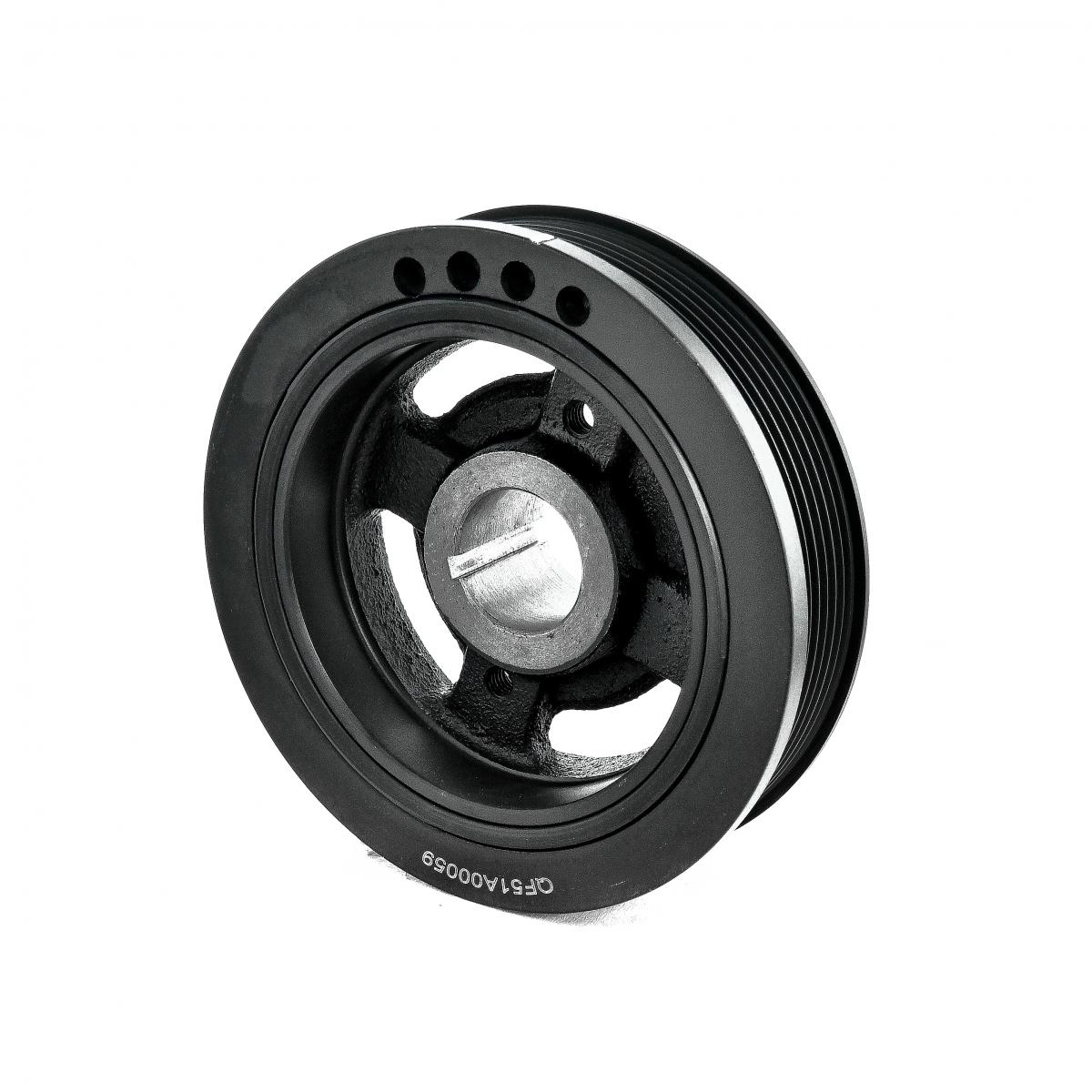
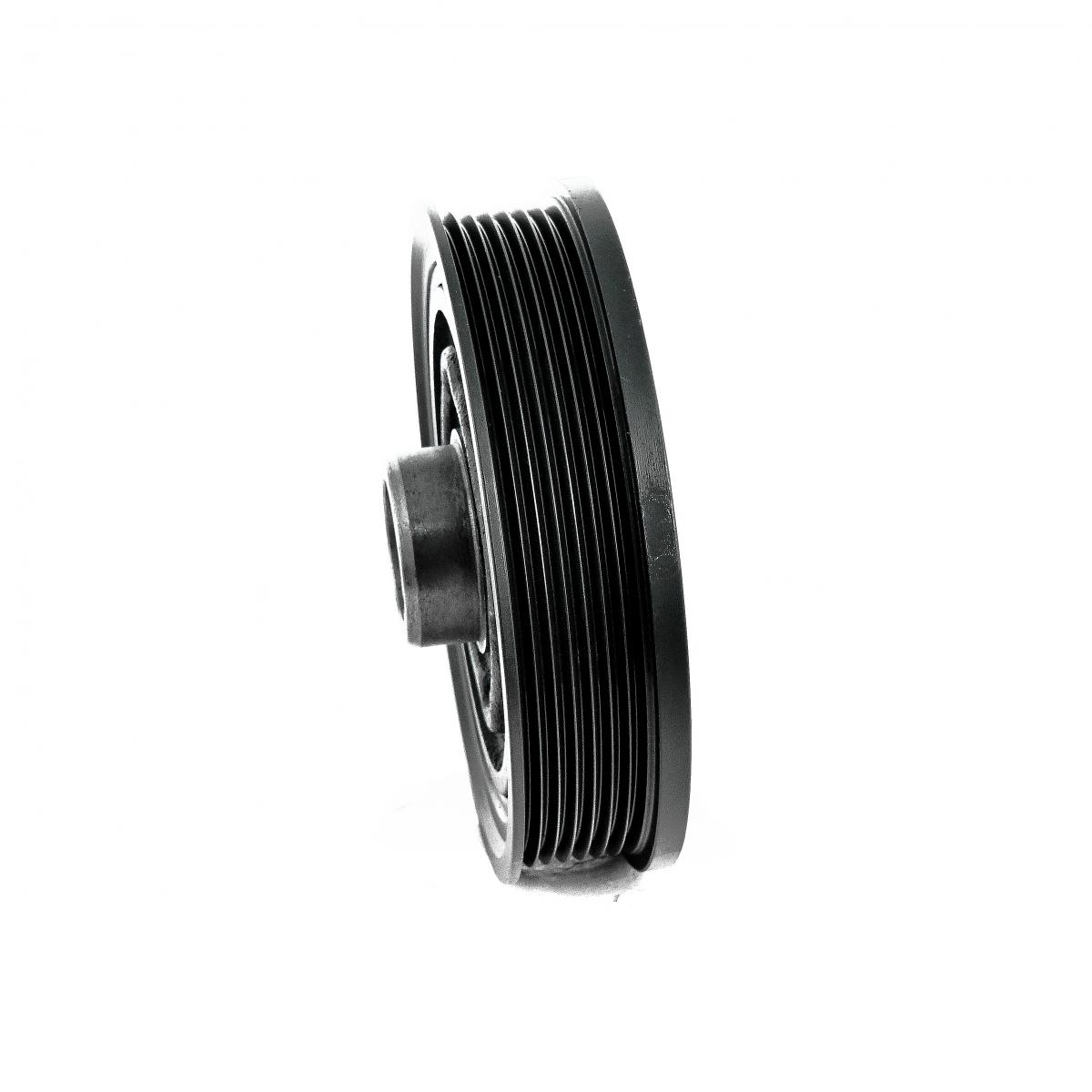
TOYOTA/LEXUS 1347031030 PULLEY ASSY
Product Specifications
| TOYOTA/LEXUS | 1347031014 |
| TOYOTA/LEXUS | 1347031010 |
| TOYOTA/LEXUS | 1347031012 |
| TOYOTA/LEXUS | 1347031013 |
| TOYOTA/LEXUS | 1347031011 |
| TOYOTA/LEXUS | 1347031030 |
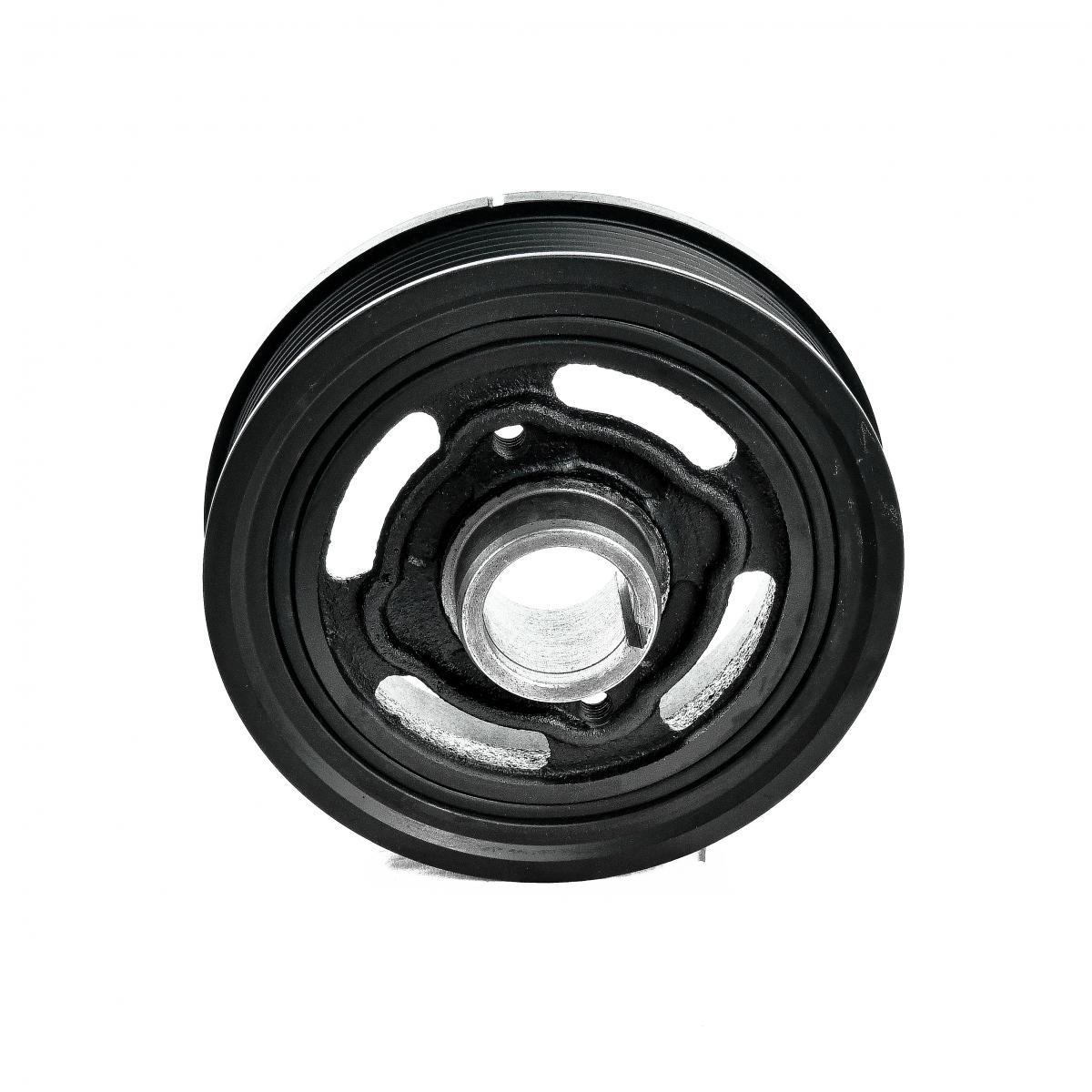
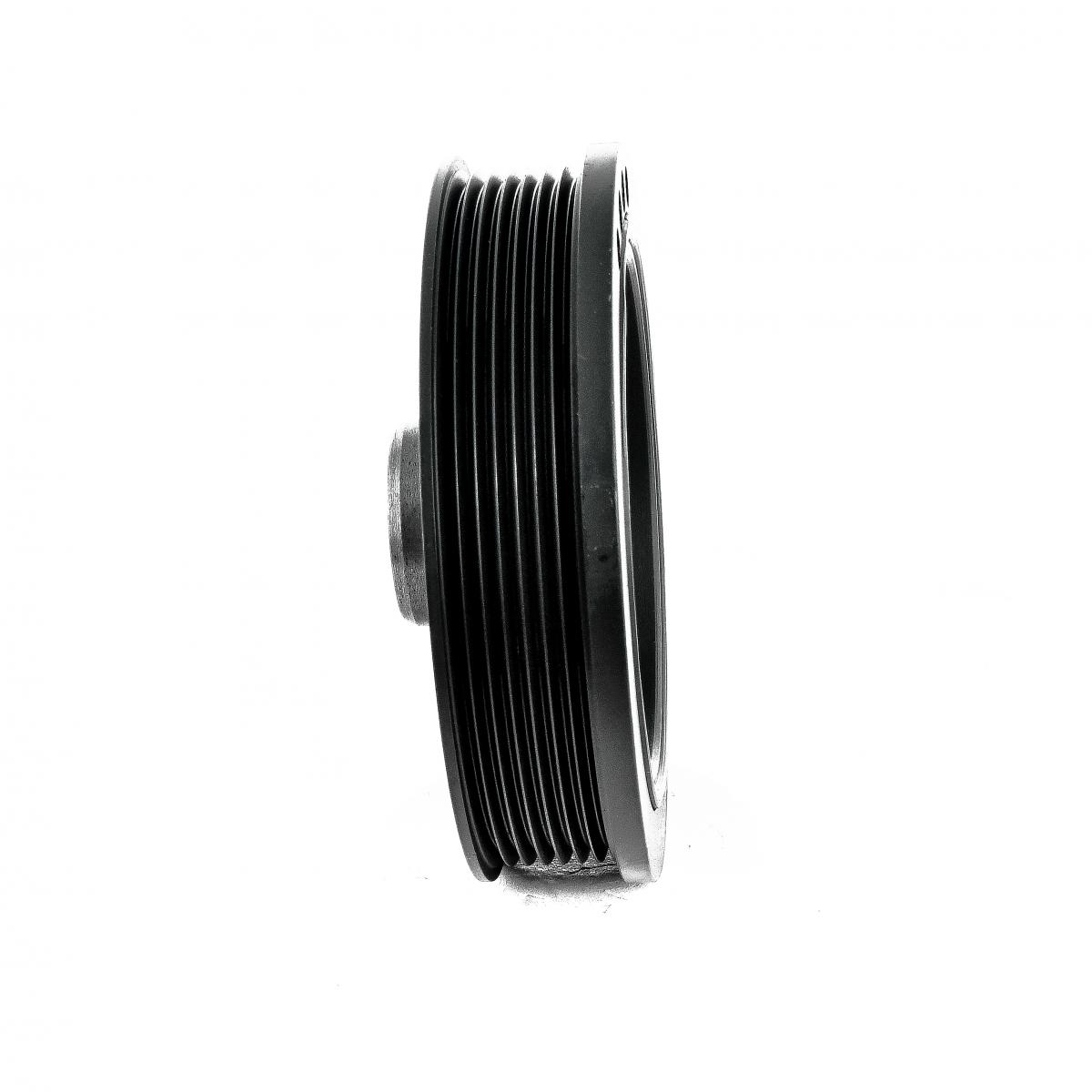
The PULLEY ASSY is the crankshaft pulley and harmonic balancer assembly mounted on the front nose of the crankshaft that simultaneously drives the accessory belt circuit and attenuates the torsional vibration pulses generated by each combustion event that would otherwise fatigue the crankshaft, accessory belt, and driven component bearings. The assembly integrates two concentric components bonded by a precision-formulated rubber isolator ring: an inner hub that is keyed and bolted directly to the crankshaft nose and rotates at crankshaft speed, and an outer inertia ring — the pulley rim carrying the multi-rib accessory belt grooves — whose rotational inertia and compliance through the rubber isolator absorbs and damps the torsional vibration impulses from the firing order before they propagate into the belt drive system. On modern engines with variable valve timing, start-stop, or 48V mild hybrid systems, the crankshaft pulley incorporates an overrunning alternator decoupler (OAD) mechanism that allows the pulley to freewheel relative to the belt during engine deceleration and compression-braking events, preventing belt snap and alternator bearing overload during the rapid speed changes inherent in these systems. The outer rim also carries the crankshaft position sensor reluctor ring — a series of equally spaced teeth with a reference gap — that the CKP sensor reads to provide the ECU with crankshaft angle and engine speed for ignition and injection timing.
This unit — TOYOTA/LEXUS 1347031014 — is manufactured to OEM-equivalent specifications: inner hub bore diameter and keyway geometry, outer ring multi-rib groove profile and diameter, rubber isolator compound Shore hardness and torsional compliance characteristics, CKP reluctor ring tooth count and reference gap position, and overall assembly width and axial protrusion from the front cover are matched to the original part. Supplied as a complete assembly ready for installation. Available wholesale from 15.05 USD, MOQ 50 pcs, production lead time 20-50 days.
Crankshaft pulley assemblies fail through rubber isolator delamination from the inner hub or outer ring — the most common failure mode — which allows the outer ring to rotate independently of the hub, immediately producing accessory belt slip, alternator output loss, power steering failure, and overheating as the water pump loses drive. Isolator degradation is progressive and produces characteristic symptoms before complete delamination: belt chirping, alternator output fluctuations under load, and a wobbling pulley visible at idle are all early indicators of isolator bond fatigue. On OAD-equipped pulleys, the overrunning clutch mechanism wears after high mileage, producing a characteristic ratcheting noise during deceleration events.
- Lock the crankshaft against rotation before attempting to remove the pulley centre bolt — the crankshaft pulley centre bolt is torqued to 150–250 Nm on most engines and cannot be removed without holding the crankshaft stationary; use the OEM-specified crankshaft locking tool engaged in the flywheel ring gear, a crankshaft holding bar through the starter aperture, or the correct ring gear locking pin; never use the flywheel ring gear teeth as a lever or place a bar in the combustion chamber through a spark plug hole as these methods damage the engine.
- Use a dedicated crankshaft pulley puller tool to withdraw the assembly from the crankshaft nose after the centre bolt is removed — the pulley hub is an interference fit on the crankshaft nose taper or parallel spigot; striking the pulley with a hammer or prying against the engine front cover will damage both the pulley hub and the front cover seal housing; the correct puller engages in threaded holes in the hub face and applies even axial withdrawal force without impact or side loading.
- Clean the crankshaft nose thoroughly before fitting the new pulley — remove all corrosion and old thread lock compound from the nose surface and bolt thread with a fine wire brush and brake cleaner; inspect the crankshaft woodruff key and its keyway for damage; a chipped or missing key will prevent the pulley from transmitting the correct angular position of the CKP reluctor ring to the crankshaft and will produce immediate CKP sensor fault codes.
- Apply thread lock compound to the centre bolt thread and torque in two passes to the OEM specification — crankshaft pulley centre bolts are frequently torque-plus-angle specification (e.g. 80 Nm + 90 degrees); always follow the exact OEM procedure for both the thread preparation and the torque sequence; a bolt undertorqued will work loose under the torsional vibration loading the pulley is designed to absorb, destroying the keyway and crankshaft nose.
- Verify the CKP reluctor ring tooth gap position relative to the crankshaft TDC mark after installation by manually rotating the crankshaft to TDC and confirming the reluctor reference gap is at the expected angular position relative to the CKP sensor — the reference gap position encodes cylinder 1 TDC for the ECU; an incorrectly positioned reluctor ring causes immediate ignition timing errors and may prevent the engine from starting.
- Install the new PULLEY ASSY (TOYOTA/LEXUS 1347031014), fit the new accessory belt, start the engine and immediately check for belt tracking — confirm the belt runs centrally in all accessory pulley grooves without edge contact — then run to operating temperature and verify no belt chirp, no battery warning light, and no CKP fault codes before returning the vehicle to service.
| Part | Reason for Combined Replacement |
|---|---|
| Front Crankshaft Oil Seal OEM ref. varies by engine front cover design | The front crankshaft oil seal is fully accessible with the pulley removed and shares the same replacement labour cost as the pulley. A seal that has been running on the same contact surface for the same mileage as the failed pulley will have developed a wear groove that prevents a new seal from sealing reliably. Always replace the front seal simultaneously with the pulley to complete a full crankshaft front end service in a single operation. |
| Accessory Drive Belt OEM ref. varies by engine configuration | A pulley with a degraded rubber isolator subjects the accessory belt to abnormal torsional vibration loading that fatigues the belt's cord reinforcement and abrades the rib surface. A belt that has been running on a vibrating isolator-failed pulley will have accumulated hidden internal cord fatigue that makes it at elevated risk of snapping under normal load even if it appears externally undamaged. Always fit a new belt when replacing the crankshaft pulley. |
| Tensioner and Idler Pulley Kit Complete accessory drive pulley set | The abnormal torsional vibration from a failing crankshaft pulley isolator is transmitted to the tensioner and idler pulley bearings at a frequency that accelerates bearing fatigue. Replacing the complete accessory drive pulley set — crankshaft pulley, tensioner, and all idlers — simultaneously restores the entire accessory drive to matched new condition and ensures the new belt runs on a completely renewed pulley system for its full service life. |