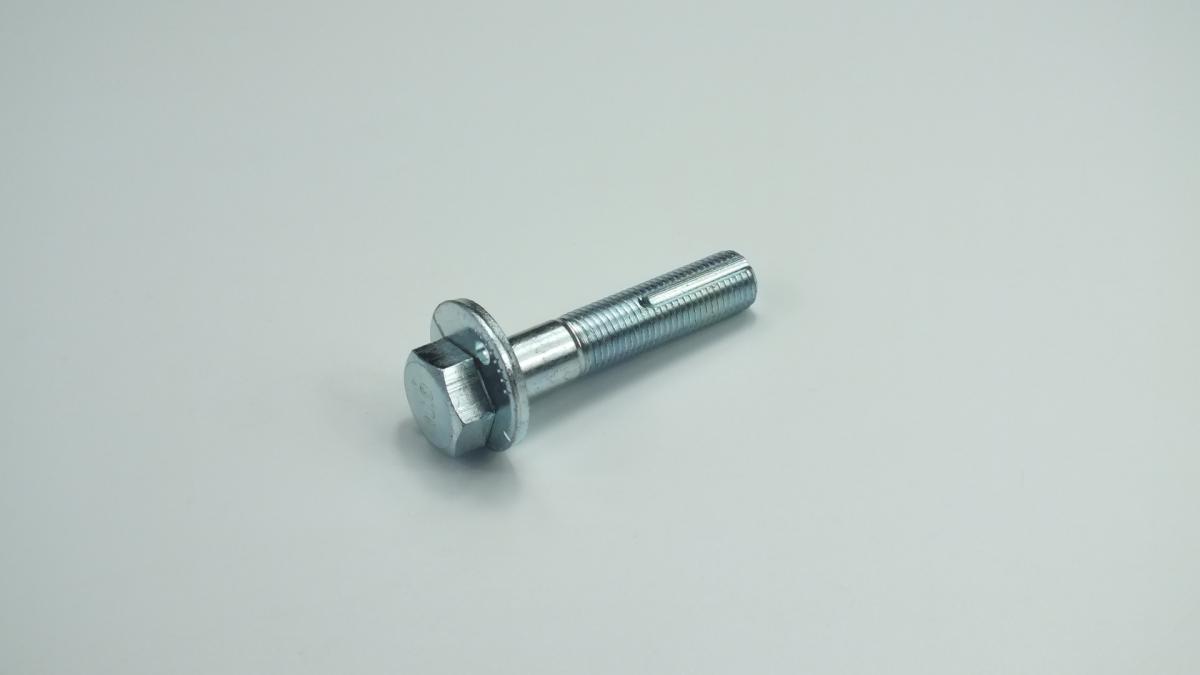
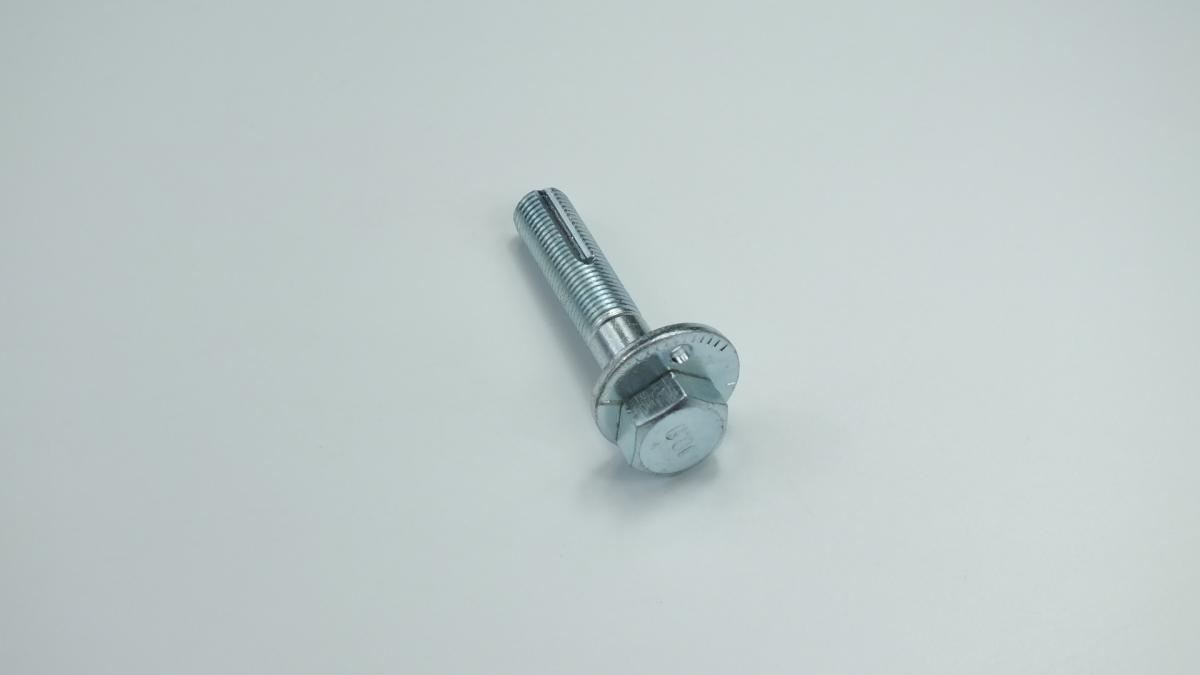
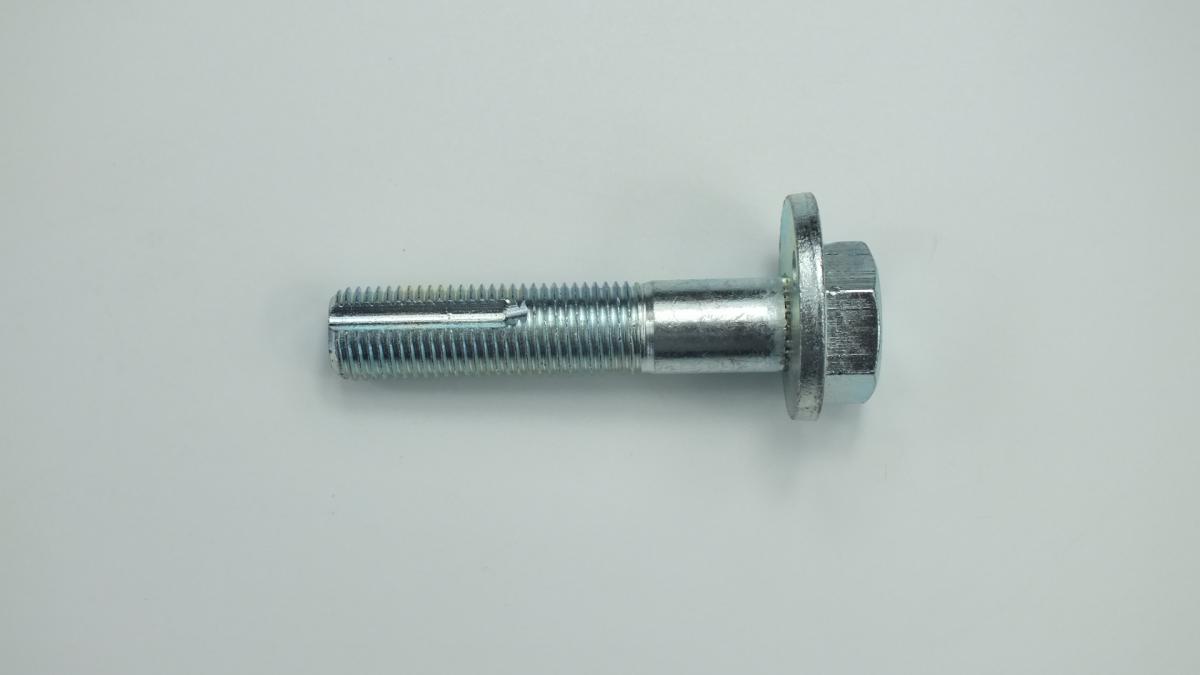
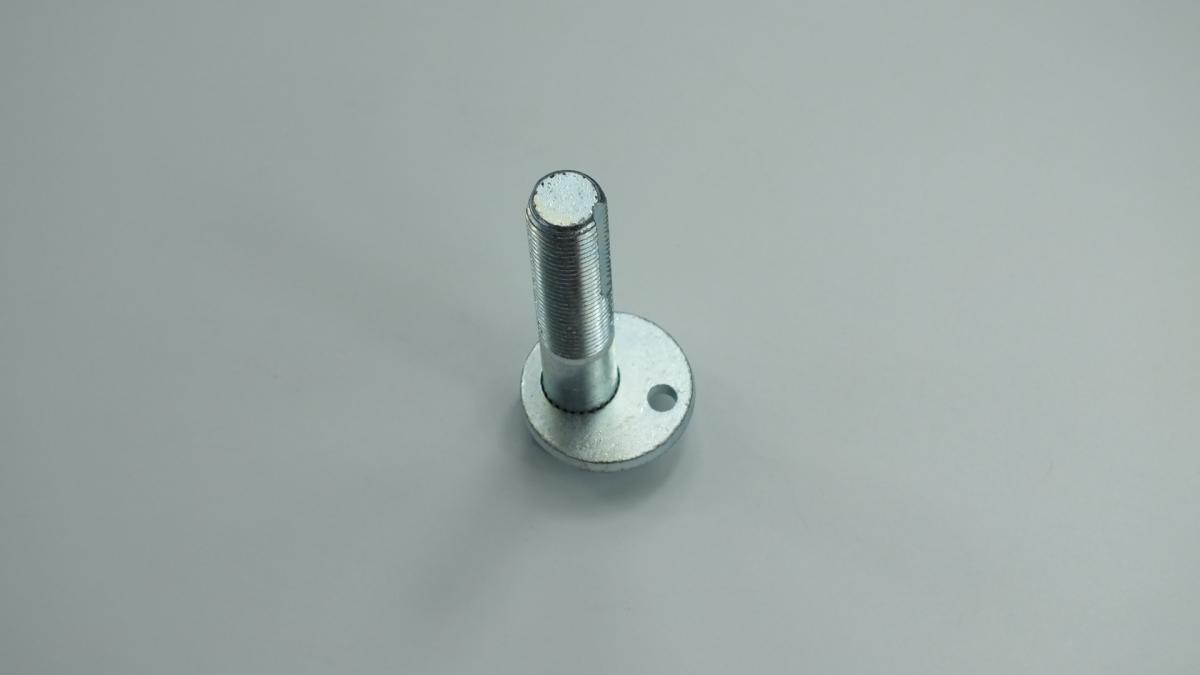
SUBARU 901700154 BOLT
Product Specifications
| SUBARU | 901700154 |
| SUBARU | 901700122 |
| SUBARU | 903120003 |
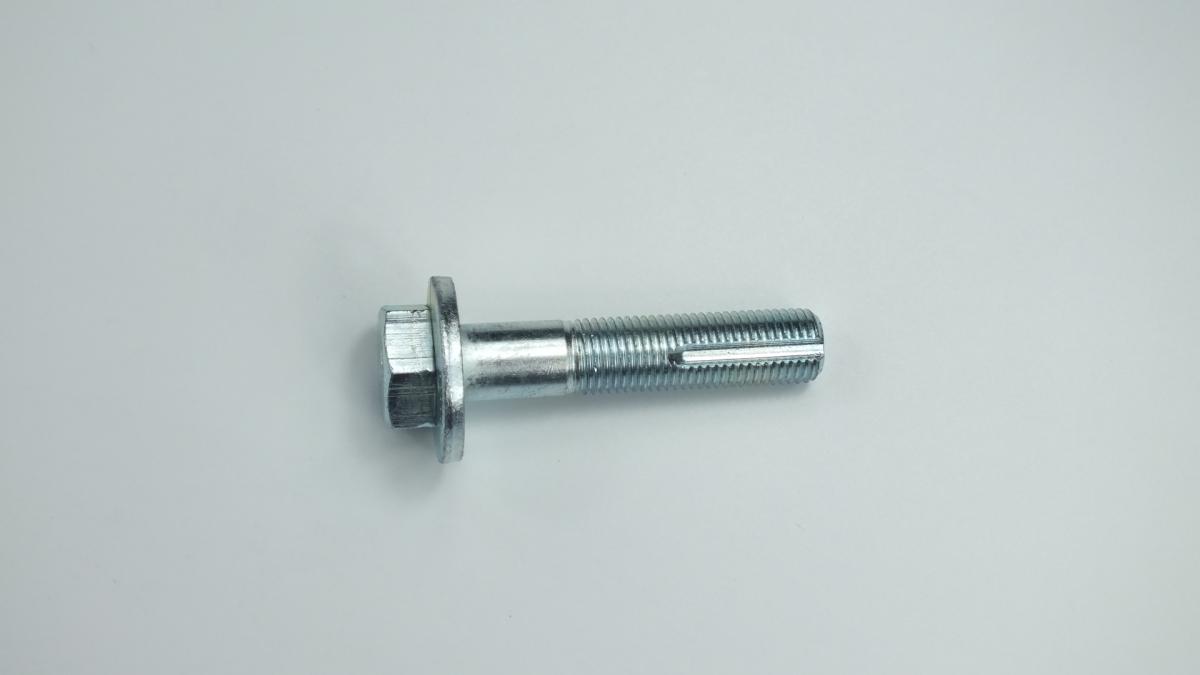
The Subaru 901700154 is the Rear Suspension Lateral Arm Cam Bolt (Eccentric Adjustment Bolt) — M14, fitted to the rear lateral link outer mounting position across essentially the entire modern Subaru vehicle range (1998-2025+). Subaru's official catalogue name is "BOLT CAM" / "Lateral Arm Bolt". The component is a high-strength M14 cam-headed steel bolt with an eccentric cam profile under the head — rotating the bolt during alignment service moves the lateral link mounting position through a small offset arc, providing adjustment of rear wheel camber and toe angles. The 901700154 is a safety-critical, single-use fastener requiring replacement after every disassembly — Subaru designates "Part cannot be reused/reinstalled" in official service literature.
Subaru's multi-link rear suspension uses a lateral link (transverse arm) controlling wheel position horizontally. The 901700154 cam bolt secures the inner mounting position. The bolt's head assembly incorporates an eccentric cam profile — the bolt's effective rotational centre is offset from its geometric centre by approximately 1.5-2 mm. Rotating the bolt in its mounting bore shifts the lateral link mounting position through a small arc.
Effect on alignment: camber adjustment — lateral movement of inner mounting point changes wheel's vertical inclination; toe adjustment — same movement produces secondary effect on wheel pointing angle. Adjustment range is typically ±1.5 degrees camber per side with proportional toe variation. The cam bolt's adjustment is set during alignment service before final torque.
Three failure mechanisms: (1) corrosion seizure from road salt / moisture — bolt becomes corrosion-bonded to bushing inner sleeve, often fracturing on attempted removal; (2) thread damage from forcing rotation against a seized assembly; (3) head deformation from incorrect tool engagement. Subaru designates the bolt as single-use: any disassembly produces micro-deformation in the preload zone and surface coating; reusing produces unreliable preload and compromised corrosion protection.
| International HS Code | 7318.15 |
| EAEU Customs Code (TN VED) | 7318 15 900 0 |
| Country of Manufacture | China |
| Quality standard | IATF 16949 |
| Hazardous goods | No |
| Shipping weight per piece | 0.122 kg (122 grams) |
| Packaging | Individual sealed bag with part label and corrosion-protective packaging |
Threaded fasteners of iron or steel are classified under HS 7318.15 (other screws and bolts, with or without their nuts or washers). Confirm exact 10-digit subheading with your customs broker. Commercial invoice description: high-strength M14 steel cam bolt (eccentric adjustment bolt), zinc-flake corrosion coating, for automotive rear suspension lateral arm mounting position. Designed for single-use installation following Subaru OEM service procedure.
| Subaru model | Years & details |
|---|---|
| Subaru Ascent | 2019-2025 3-row SUV |
| Subaru BRZ | 2013-2025 sports coupe (Toyota 86 / GR86 platform partner) |
| Subaru Crosstrek / XV | 2013-2025 crossover |
| Subaru Forester | 2006-2025, multiple generations |
| Subaru Impreza | 2006-2025, GD/GR/GP/GT chassis multi-generations |
| Subaru Legacy | 1998-2025, BE/BL/BM/BN/BW multi-generations |
| Subaru Outback | 2008-2025 wagon / crossover |
| Subaru WRX / STI | 2006-2025 performance variants |
| Subaru Tribeca | 2006-2014 3-row SUV (discontinued) |
| Subaru Legacy Hybrid | 2014MY-2016MY hybrid variant |
Engine variants: covers all Subaru gasoline boxer engines (FB16/FB20/FB25/FA20/FA24/EJ20/EJ25/EZ30/EZ36) and diesel boxer engines (EE20) across the listed model range — the cam bolt is a chassis fastener independent of engine variant. Does NOT fit: Subaru kei vehicles (Stella, R1, R2, Sambar — different platform); Pre-1998 Subaru with older suspension architecture; Subaru Trezia / Justy (rebadged Toyota / Daihatsu platform — different fasteners). Always verify by VIN or existing bolt identification stamp before ordering — suspension fastener references can vary with production date even within the same model. Some Subaru applications use two different cam bolt references depending on suspension trim level (with stabilizer vs without stabilizer); 901700154 covers the standard application; specific stabilizer-related references may differ. The bolt is fitted in "REAR SUSPENSION" diagram position #M700154 across all compatible models.
Difficulty: Moderate — mandatory subsequent alignment service. Estimated time: 45–90 minutes per side for cam bolt service alone; add full alignment service afterwards. Replace BOTH LH and RH cam bolts together — both at same corrosion stage; both must be retorqued after disturbance. Mandatory alignment service required after cam bolt replacement.
- 1Vehicle safely raised and supported on rated jack stands at correct lift points. Wheels removed for access. Position vehicle on a flat surface for subsequent alignment service.
- 2Locate cam bolts at rear lateral link outer mounting position (where lateral link meets the subframe). The cam bolt's head has a visible eccentric cam profile and engages with a matching cam plate.
- 3Mark current cam bolt position with paint pen relative to cam plate — provides a baseline reference if alignment service is delayed or not available immediately. Note that final alignment will determine new position regardless.
- 4Apply penetrating fluid to bolt thread engagement zone and to the bolt's bushing sleeve interface. Allow extended soak time (30+ minutes for heavily corroded fasteners) — Subaru rear lateral link cam bolts are highly prone to corrosion seizure on vehicles operated in salt-exposure environments.
- 5Loosen the cam bolt's retaining nut with appropriate-size socket (typically 19mm or 22mm hex). Use thin-wall, full-hex-engagement socket — standard sockets with edge-only contact will round the nut hex. Apply steady force; if rotation does not begin within reasonable torque, return to penetrating fluid soak before increasing force.
- 6If bolt rotates freely after nut removal: extract bolt from bushing sleeve. If bolt is seized to bushing sleeve: tap bolt head gently with brass hammer and penetrating fluid; rotate bolt slightly to break corrosion bond. If bolt fractures during extraction: stop work; professional extraction (drilling, stud welding) or lateral link replacement is required.
- 7Inspect bolt bore and bushing sleeve for damage. Clean any corrosion residue with wire brush. Inspect cam plate (eccentric receiving plate) for wear or damage — replace cam plate if visible deformation.
- 8Compare new cam bolt to old — verify thread size (M14), shank length, head diameter and cam profile geometry, and nut compatibility. Confirm OEM 901700154 or verified Subaru cross-reference (901700122 / 903120003).
- 9Apply specified thread lubricant to new bolt thread per Subaru service procedure (typically clean engine oil or specified anti-seize compound). Critical: tightening dry threads to the same torque produces a clamp load typically 20-40% below the lubricated value, leaving the joint inadequately clamped.
- 10Install new cam bolt with cam profile aligned roughly central in cam plate slot. Hand-thread the nut. Do NOT torque to final value yet — final torque must be applied only after alignment adjustment is complete.
- 11Perform full 4-wheel alignment service — vehicle on alignment rack, rear suspension loaded at correct ride height. Rotate cam bolt to set rear camber and toe within Subaru OEM specification. Repeat for opposite side; both LH and RH require simultaneous adjustment to achieve balanced rear alignment.
- 12Torque cam bolt to Subaru OEM specification using calibrated torque wrench — typical Subaru lateral arm cam bolt specification is 140-160 Nm (verify exact value in Subaru service manual for specific model and year). Verify final alignment with post-torque measurement; cam bolt rotation during final torquing can shift alignment slightly. Confirm final alignment is in OEM specification before releasing vehicle.
| Part | Reference | Reason for Combined Replacement |
|---|---|---|
| Opposite-Side Cam Bolt (LH + RH pair) | Subaru 901700154 (same part, second unit) | Mandatory pair replacement. Both rear cam bolts experience identical corrosion / thermal cycling; if one has failed, opposite side is at same wear stage and will fail soon. Pair replacement avoids repeat alignment service visit. |
| Lateral Link Outer Bushing | Subaru lateral link bushing, application-specific (e.g. 20254AE02A for Crosstrek/Forester) | Cam bolt corrosion seizure typically involves bushing inner sleeve bonding; forcing extraction often damages bushing. Inspect bushing condition at cam bolt replacement; if visible cracking, separation, or compression set, replace bushing simultaneously — most efficient timing. |
| Cam Plate / Eccentric Washer | Subaru cam plate (application-specific reference) | The cam plate engages with the eccentric profile of the cam bolt head. Worn / corroded cam plate produces inconsistent adjustment behaviour and compromised joint preload. Inspect cam plate at bolt replacement; replace if visible wear groove from previous cam bolt operation. |
| Rear Lateral Link Assembly | Subaru rear lateral link, application-specific (varies by model and year) | If cam bolt fracture has damaged the lateral link bushing housing or bushing eye, complete lateral link assembly replacement is required. Repair attempts on damaged lateral link bushing housing are typically unreliable; complete arm replacement is the correct approach. |
| 4-Wheel Alignment Service | Workshop alignment service appointment | Mandatory. Cam bolt replacement disturbs rear wheel alignment regardless of careful installation. Full 4-wheel alignment service is required to verify rear camber and toe are within Subaru OEM specification, re-adjust using the new cam bolt's adjustment range, and prevent abnormal rear tyre wear from uncorrected alignment offset. Without alignment service, replacing the cam bolt does not complete the repair. |