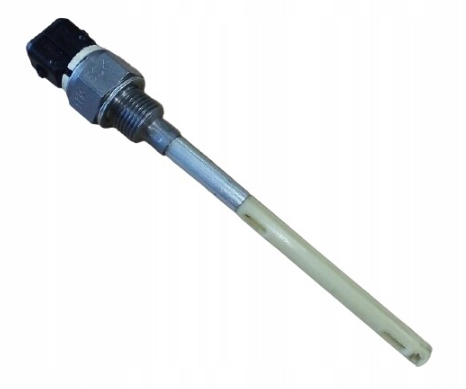
NISSAN/INFINITI 11145CK80B OIL LEVEL SENSOR
Product Specifications
| NISSAN/INFINITI | 11145CK80B |
| NISSAN/INFINITI | 11145CK80A |
| RENAULT | 11145CK80B |
The OIL LEVEL SENSOR is an electronic oil level sensor installed in the engine oil sump that continuously monitors the oil level and on some designs also measures oil temperature and oil quality degradation, providing the instrument cluster, engine management system, and driver information display with real-time oil status data that allows the engine's oil change interval to be adapted to actual oil condition rather than fixed mileage — the basis of the condition-based service (CBS) and Oil Life Monitor (OLM) systems used by most current European and North American vehicle manufacturers. The sensor uses one of several detection principles depending on the generation and specification: capacitance-type sensors measure the dielectric permittivity of the oil column between two concentric cylindrical electrodes — the dielectric constant changes measurably as the oil level drops to expose a greater proportion of the electrode to air, and as the oil's additive chemistry degrades through use, altering its molecular composition; resistive reed-switch sensors use a float on a pivot arm that operates a reed switch at the minimum level threshold; and ultrasonic sensors measure the time-of-flight of an acoustic pulse reflected from the oil surface to calculate the precise oil depth in the sump. The sensor is mounted in the lowest accessible point of the sump and communicates with the instrument cluster or ECU through the vehicle's CAN bus or a dedicated signal wire, triggering the oil level warning light when the level drops below the minimum threshold and providing continuous level data for the digital oil level display on vehicles so equipped.
This unit — NISSAN/INFINITI 11145CK80B — is manufactured to OEM-equivalent specifications: sensor housing thread size and pitch for sump installation, sensing electrode geometry and calibration for the specific sump oil column height, operating temperature range, CAN bus communication protocol or analogue signal output range, connector pinout, and oil temperature measurement range where applicable are matched to the original part. Supplied as a direct replacement for standard fitment. Available wholesale from 9.03 USD, MOQ 100 pcs, production lead time 63 days.
Oil level sensors fail through capacitance element drift from oil sludge depositing on the electrode surfaces, altering the measured capacitance independently of actual oil level; through connector pin corrosion at the underbody sump environment; through sensor body thread failure from overtightening that cracks the plastic sensor housing; and through internal circuit board failure from oil contamination when the sensor housing seal degrades. A failed sensor that reads low when the oil level is correct will cause unnecessary driver concern and workshop investigations; a sensor that reads correct when the level is low — the more dangerous failure mode — prevents the oil level warning from activating and allows the engine to run with dangerously low oil without alerting the driver.
- Drain the engine oil before removing the oil level sensor — the sensor is installed in the sump at the oil level zone; removing it without draining allows oil to pour from the sensor aperture; even with the dipstick level at minimum, there is sufficient oil in the sump above the sensor port to produce a significant spillage; drain the oil completely, completing the oil change simultaneously with the sensor replacement to avoid wasting serviceable oil.
- Use the correct sensor socket tool — oil level sensors have a proprietary socket engagement profile (typically a multi-point hex or a bi-hex) that requires a dedicated sensor socket; standard hex sockets cannot engage the sensor correctly and will round the sensor housing; on sensors with a thin outer body wall, standard sockets may crack the housing before the thread releases; confirm the correct socket specification from the OEM service data before attempting removal.
- Inspect the sump thread for damage before installing the new sensor — a sensor housing that has cracked from overtightening may have damaged the sump thread; run a thread chaser of the correct pitch through the thread before fitting the new sensor; a damaged thread that cannot be chased clean requires a Helicoil insert before the new sensor can be reliably installed and sealed; a cross-threaded sensor installation produces an immediate oil leak from the first engine start.
- Torque the new sensor to OEM specification using a torque wrench — typical oil level sensor installation torque is 8–15 Nm; this is significantly lower than most technicians estimate by feel; overtightening by 50% above specification is sufficient to crack a nylon sensor housing at the thread engagement zone, producing an oil leak that is not immediately apparent and may not appear until the sump oil temperature has cycled several times; always use a calibrated torque wrench for sensor installation.
- On CBS and OLM systems, perform the sensor adaptation or oil change reset procedure via a manufacturer-specific scan tool after installation — many condition-based service systems store the sensor's calibration reference values for the previous oil batch and require a reset to establish new reference values for the fresh oil; without this reset the CBS display may show incorrect service intervals or persistent quality warnings despite correct sensor function; the exact reset procedure varies by manufacturer and vehicle — confirm the procedure from the vehicle-specific service data.
- Install the new OIL LEVEL SENSOR (NISSAN/INFINITI 11145CK80B), refill with fresh oil of the correct specification and quantity, start the engine and check for leaks at the sensor, allow the engine to reach operating temperature, confirm the oil level display or warning light shows the correct status on a level surface with the engine at operating temperature, and clear any stored fault codes with a scan tool before returning the vehicle to service.
| Part | Reason for Combined Replacement |
|---|---|
| Engine Oil and Filter Grade and specification per OEM requirement | Oil level sensor removal requires draining the sump — making sensor replacement the correct time to perform the oil and filter change simultaneously. A sensor replaced without an oil change wastes the oil drain and refill labour that must be repeated at the next service interval anyway. On CBS systems the oil change reset procedure is mandatory after sensor replacement, linking the two operations operationally. Always complete the oil and filter change at every oil level sensor replacement. |
| Sump Drain Plug and Washer Application-specific aluminium or copper crush washer | The sump drain plug washer is a single-use crush seal that must be renewed at every oil drain; reusing a previously compressed washer produces a slow oil seep at the drain plug that typically appears within the first few heat cycles after the drain. With the sump drain opened for sensor replacement and oil change, always include a new drain plug washer — the washer cost is negligible relative to the labour of a repeat sump drain to address the drain plug seep. |
| Oil Pan / Sump Gasket OEM ref. varies by engine | If the oil level sensor removal has revealed the sump gasket is seeping oil at the sump-to-block interface — visible as an oil film around the sump perimeter — replacing the sump gasket simultaneously with the sensor during the same drain and access operation eliminates a separate sump removal within a short interval. A sump gasket replacement requires draining the oil completely, making any concurrent sump access work cost-effective when combined with the sensor replacement. |