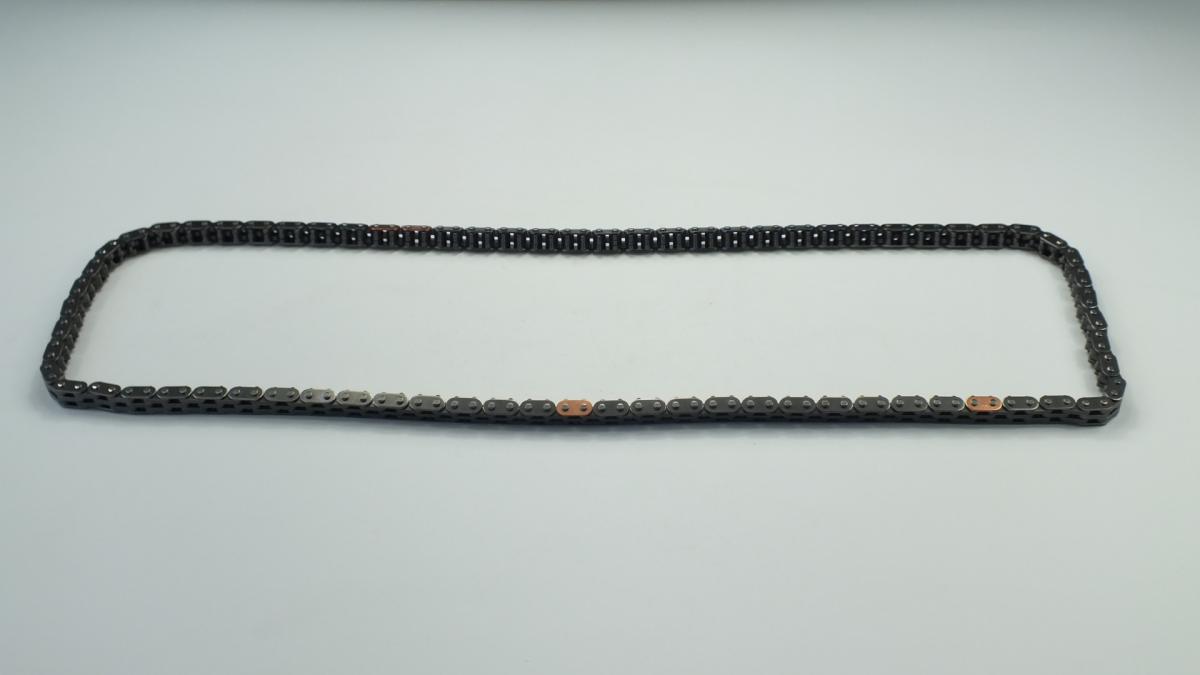
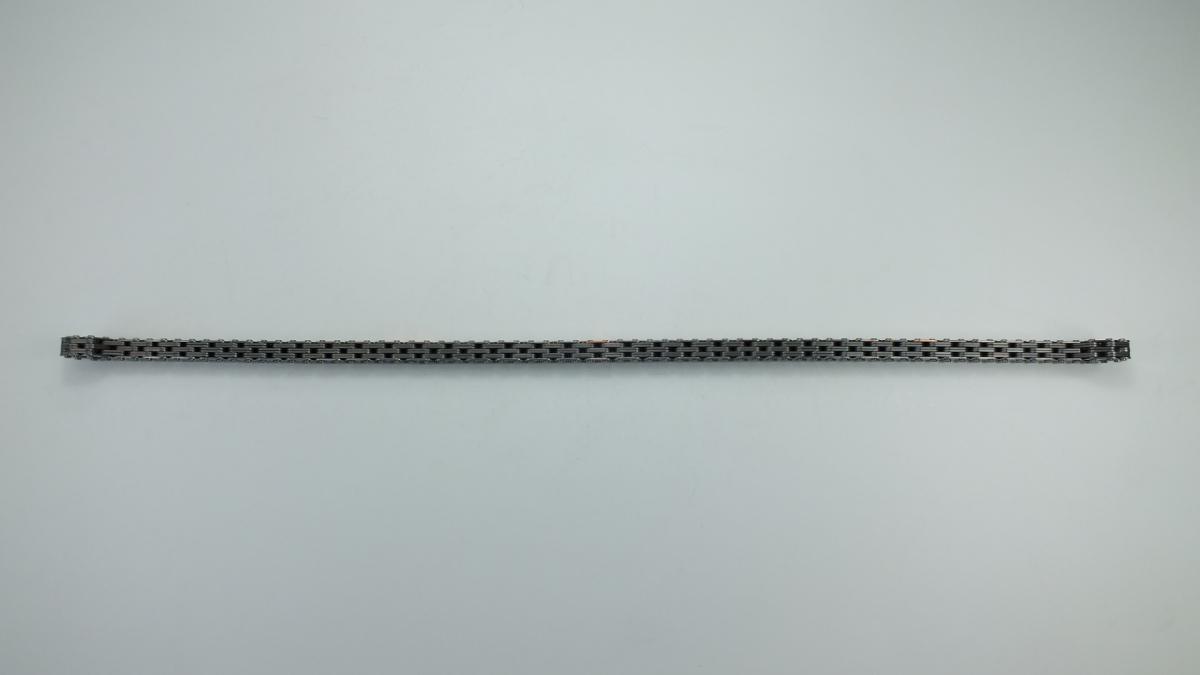
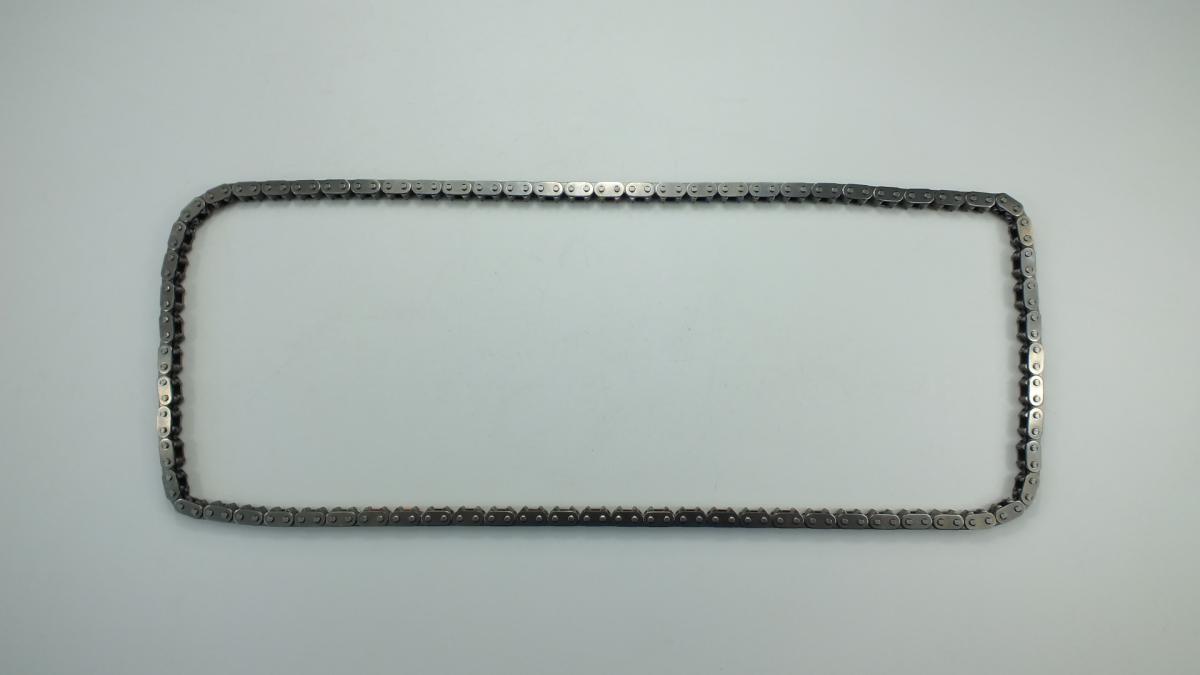
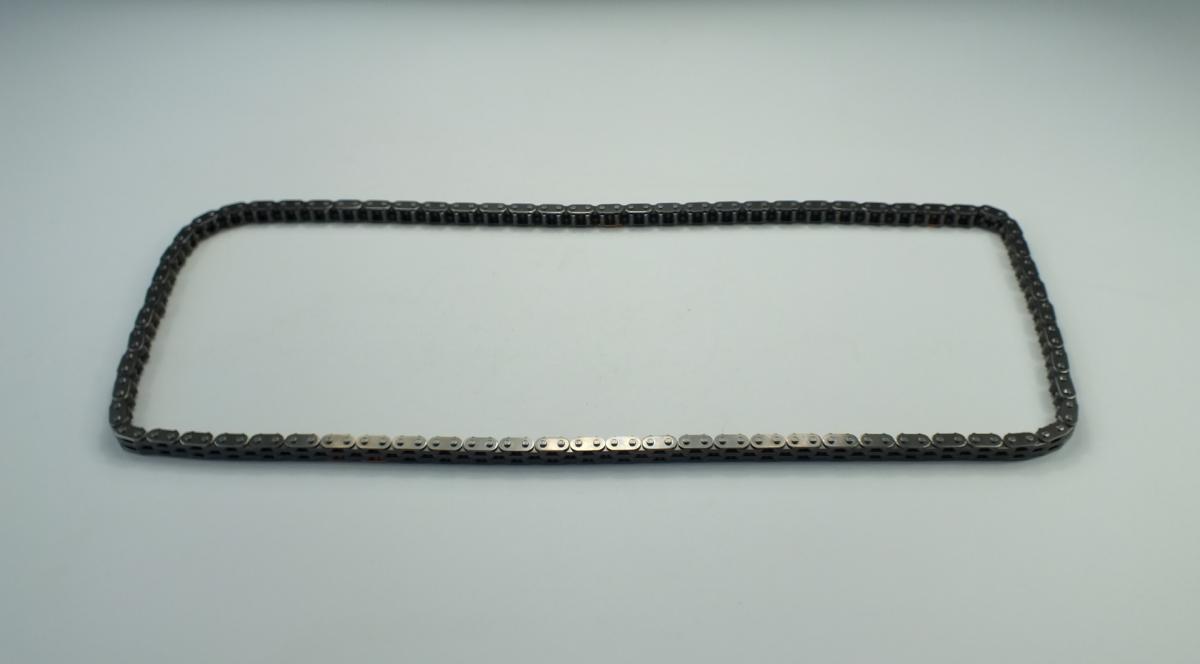
SSANGYONG 1729970094 CHAIN SUB-ASSY
Product Specifications
| SSANGYONG | 1729970094 |
| SSANGYONG | 1729979094 |
| MILES | AB10325 |
The CHAIN SUB-ASSY is the roller or silent chain that drives the camshaft or camshafts from the crankshaft sprocket at the precise 2:1 speed reduction ratio required to synchronise valve opening events with piston position throughout the engine's operating speed range, maintaining the valve timing accuracy that determines combustion efficiency, power output, emissions compliance, and on interference engines, the physical clearance between the valves and piston crown. Roller chains use cylindrical rollers on hardened pins between inner and outer link plates that engage the teeth of the crankshaft and camshaft sprockets at their pitch diameter; silent (inverted tooth) chains use shaped link plates with internal teeth that mesh with the sprocket profiles more quietly and at lower dynamic loads at high RPM. The chain runs in a pressurised oil bath inside the timing cover, continuously lubricated by the engine's oil pressure circuit through dedicated jets or spray bars directed at the chain running faces; this lubrication both lubricates the pin-to-bushing and roller-to-sprocket contact zones and provides a hydraulic film that cushions the chain's engagement with each sprocket tooth at high engine speeds. The hydraulic chain tensioner — a spring-loaded or oil-pressure-actuated piston that bears against the slack side guide — automatically compensates for chain elongation from pin wear as the chain accumulates mileage, maintaining correct chain tension throughout its service life until the tensioner reaches its maximum extension limit.
This unit — SSANGYONG 1729970094 — is manufactured to OEM-equivalent specifications: chain pitch (distance between pin centres), link plate width and thickness, pin and bushing hardness and surface treatment, roller diameter and hardness, total chain length in links, and tensile strength are matched to the original part. Supplied as a direct replacement for standard fitment. Available wholesale from 6.02 USD, MOQ 20 pcs, production lead time 48 days.
Timing chains fail through pin and bushing wear elongation — the chain's effective pitch increases as each pin wears within its bushing, producing a chain that no longer meshes correctly with the sprocket tooth profiles and advances the camshaft timing retard progressively until the tensioner reaches its travel limit and the chain begins to rattle; through link plate fatigue fracture under sustained high-load cycles on engines with extended oil change intervals that degrade the lubricant film; and through catastrophic link fracture from impact with a failed tensioner or guide that allows the chain to make uncontrolled contact with the timing cover. Chain elongation is the most common failure mode and produces a characteristic cold-start rattle from the timing cover area that clears within seconds as oil pressure builds and the tensioner extends — this rattle indicates the tensioner's reserve travel is nearly exhausted and chain replacement is overdue.
- Lock the engine at TDC on cylinder 1 compression stroke and install all crankshaft and camshaft locking tools before removing any timing component — the camshafts are under valve spring load at multiple positions simultaneously; removing the chain without locking tools allows the springs to rotate both camshafts from their timed positions, making correct re-timing impossible without returning to TDC and verifying all timing marks; on interference engines an incorrectly timed engine will destroy valves on the first compression stroke.
- Replace the chain by working in the correct link-by-link transfer sequence if the engine design does not allow the chain to be threaded directly — connect the new chain to the old chain's end link with a joining link, carefully rotate the crankshaft by hand to transfer the new chain through the system as the old chain is removed, confirming each sprocket remains correctly positioned on its timing mark throughout the transfer; never allow any sprocket to rotate without the chain maintaining its timing position.
- Inspect every guide rail and tensioner shoe surface after removing the old chain — nylon guide rails that have been in contact with an elongated chain develop grooves and wear steps that prevent the new chain from running smoothly and can cause the new chain to skip teeth under dynamic load; replace all guide rails showing more than 1 mm groove depth; never fit a new chain to worn guides.
- Flush the timing chain oil jets with clean engine oil or compressed air before installing the new chain — elongated chain wear deposits fine iron swarf in the oil passages leading to the timing chain jets; this swarf will be immediately delivered to the new chain's pin and bushing contact zones on the first start, causing accelerated wear that reproduces the original failure within a fraction of the normal chain service life.
- Verify all timing mark alignments with the locking tools installed after fitting the new chain and before removing the locking tools — confirm the crankshaft TDC mark, all camshaft timing marks, and any balance shaft marks are precisely aligned to their reference positions with zero angular error; remove the locking tools and rotate the crankshaft by hand through two complete revolutions, recheck all marks — both must return to their exact TDC positions; any deviation of even a single tooth requires immediate correction before the engine is started.
- Install the new CHAIN SUB-ASSY (SSANGYONG 1729970094), refit the timing cover with new front crankshaft and camshaft seals, fill with fresh engine oil of the correct specification and viscosity, prime the oil system by cranking without spark for 5 seconds before starting, start the engine and immediately listen for any timing chain noise, run to operating temperature, check for oil leaks at the timing cover, and perform a scan tool check for camshaft timing codes before returning the vehicle to service.
| Part | Reason for Combined Replacement |
|---|---|
| Chain Tensioner and Guide Rail Set Hydraulic tensioner, fixed and sliding guides | The tensioner and guide rails must always be replaced simultaneously with the chain — a tensioner at its maximum extension limit has no reserve capacity to accommodate the slight initial slack of a new chain during its bedding-in period, and worn guide grooves accelerate new chain wear from the first revolution. Fitting a new chain to old components is the single most common cause of timing chain system failure within a short mileage of a chain replacement service. |
| Camshaft and Crankshaft Sprockets Complete sprocket set for the application | Sprocket teeth worn by a stretched chain have asymmetric flanks that do not match the new chain's roller geometry — the loaded side of each tooth has a hook profile that the new rollers ride over rather than engaging correctly, causing chain jump under high-torque deceleration events. Replacing all sprockets simultaneously with the chain eliminates this mismatch and ensures the complete timing drive operates as a matched new system with full resistance to chain jump. |
| Engine Oil and Filter Grade and specification per OEM requirement | Timing chain elongation generates iron swarf from the worn pin and bushing surfaces that contaminates the entire oil circuit. Fitting a new chain into an engine filled with contaminated oil recirculates this abrasive swarf through the new chain's contact zones from the first revolution, reproducing the original wear mechanism. Always perform a complete oil and filter change immediately after chain replacement and repeat the oil change after the first 500–1,000 km to purge any residual swarf from the oil galleries. |