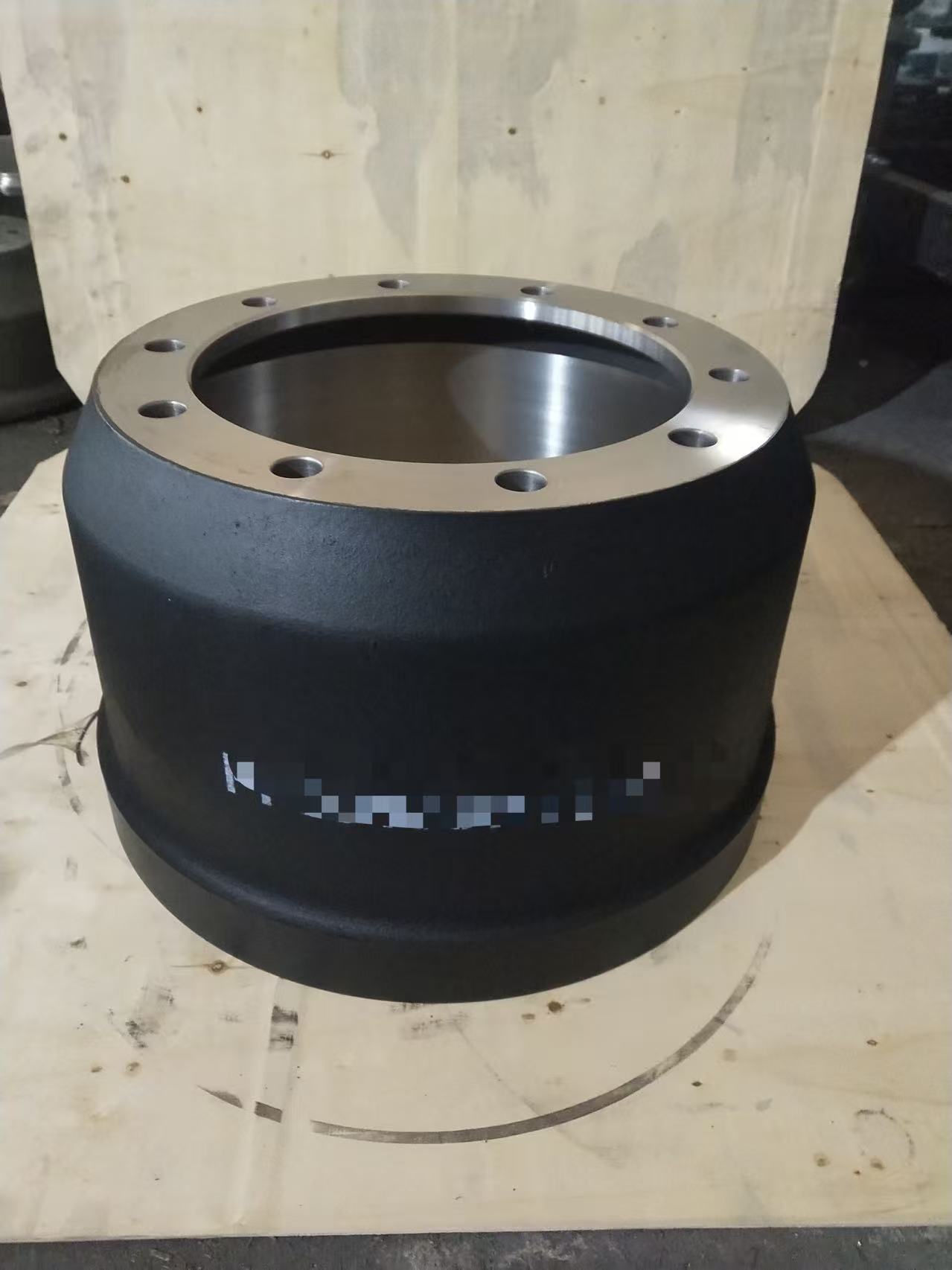
BPW 0310977440 DRUM BRAKE
Product Specifications
| BPW | 0310977440 |
| BPW | 0310677670 |
The BPW 0310977440 is a premium brake drum engineered for BPW’s ECO Plus, ECO Maxx, and ECO Plus 2 trailer axle systems. This 420×200mm drum represents BPW’s evolution toward larger braking surfaces for enhanced stopping power and thermal capacity in medium to heavy-duty commercial trailer applications. Designed to work seamlessly with BPW’s advanced S-camshaft drum brake assemblies, this component delivers reliable, consistent braking performance under demanding European transport conditions.
Operating Principle: The brake drum rotates with the wheel assembly, providing the friction surface against which brake shoes are forced during braking events. When the driver applies air pressure to the brake system, the brake chamber activates the slack adjuster, rotating the S-cam shaft. The cam’s eccentric lobes push the brake shoes radially outward against the drum’s precision-machined inner surface. The resulting friction converts kinetic energy into thermal energy, decelerating the trailer. The 420mm diameter and 200mm width provide increased friction area compared to smaller drums, improving heat dissipation and reducing brake fade during extended downhill operation or repeated heavy braking.
- Drum Diameter: 420mm (16.54 inches)
- Drum Width: 200mm (7.87 inches)
- Overall Height: Approximately 287–290mm
- Stud Pattern: 10 studs × Ø23mm
- Pitch Circle Diameter (PCD): 335mm
- Material: High-grade cast iron with optimized carbon content for friction stability
- Compatible Systems: BPW ECO Plus, ECO Maxx, ECO Plus 2
- Typical Axle Capacity: 12–16 tonne rating
Note: This is the brake drum component only. Complete brake assemblies include additional components such as brake shoes, S-cam shaft, slack adjuster, springs, and mounting hardware sold separately. The 420×200 specification indicates a heavier-duty application compared to 300×200 or 420×180 variants.
Common Symptoms of Brake Drum Wear or Failure:
- Deep Scoring or Grooving: Radial grooves on the friction surface indicate brake shoe rivets contacting the drum or embedded debris. Scoring deeper than 1.0–1.5mm compromises braking efficiency and accelerates shoe wear. Replacement is mandatory when grooves exceed service limits.
- Excessive Internal Diameter: Normal wear gradually increases the drum’s internal bore. When diameter exceeds maximum specification (typically +2–3mm from nominal 420mm), the brake shoe arc no longer matches the drum contour, reducing contact area and braking force. Measure at multiple points to detect uneven wear patterns.
- Cracking: Thermal stress cracks typically radiate from stud holes or appear as circumferential cracks across the friction surface. Any visible cracks mandate immediate replacement regardless of other measurements, as crack propagation can lead to catastrophic drum failure during braking.
- Out-of-Round or Elliptical Wear: Uneven wear creates an oval-shaped drum bore, causing cyclic pulsation during braking. Maximum allowable out-of-round is typically 0.15–0.20mm. Causes include misaligned brake components, sticking S-cams, or hub bearing play.
- Hard Spots or Case Hardening: Overheating creates localized hard spots (martensitic transformation) on the friction surface. These areas appear discolored (blue/purple tint) and resist brake shoe contact, causing vibration and reduced stopping power. Hard spots cannot be machined away and require drum replacement.
- Brake Fade Under Load: Progressive loss of braking effectiveness during sustained use, often accompanied by burning odor, indicates thermal degradation. The drum’s friction coefficient decreases as temperatures exceed design limits, requiring longer stopping distances.
- Pulling or Uneven Braking: If one drum is significantly more worn than its counterpart on the same axle, brake force imbalance causes the trailer to pull sideways during application. This is particularly dangerous during wet conditions or when towing at highway speeds.
- Abnormal Noise: Grinding, scraping, or howling sounds during braking indicate metal-to-metal contact (worn-through brake shoes), contamination, or drum surface irregularities. Investigate immediately to prevent damage to other brake components.
- Remove wheel and conduct visual inspection for cracks, scoring depth, discoloration, and surface contamination (oil, grease, brake fluid)
- Measure internal diameter using precision drum micrometer at 90-degree intervals and at multiple heights within the friction surface; document all readings
- Calculate out-of-round by subtracting minimum diameter from maximum diameter; compare to specification (typically ≤0.15mm)
- Inspect stud holes for elongation, cracks radiating from holes, or thread damage
- Check drum mounting face for warping or distortion using dial indicator or precision straight edge
- Verify hub bearing endplay and rotation smoothness — excessive bearing play (>0.08mm axial) causes accelerated drum wear
- If measurements are near service limits, consider axle-set replacement to maintain balanced braking performance
Brake drum inspection requires specialized measuring equipment and expertise. Replacement is mandatory if cracks are present, diameter exceeds maximum specification, or out-of-round exceeds tolerances. Always replace drums in axle sets (both drums on the same axle) to ensure balanced brake performance and prevent trailer instability during braking.
This brake drum is specifically engineered for BPW’s modern ECO family of trailer axle systems, which represent the manufacturer’s advanced generation of running gear with improved serviceability and performance characteristics. The 420×200mm specification provides the braking capacity required for medium to heavy-duty trailer operations across European and international markets.
| Axle System | Trailer Application | Brake Configuration | Typical Capacity |
|---|---|---|---|
| BPW ECO Plus | Semi-trailers, refrigerated trailers | S-cam drum brake SN 4220 | 12–13 tonnes |
| BPW ECO Maxx | Heavy curtainsiders, platform trailers | S-cam drum brake SN 4220 | 13–16 tonnes |
| BPW ECO Plus 2 | Box trailers, bulk transporters | S-cam drum brake SN 4220 | 12–16 tonnes |
- Part number 0310977440 (alternate format: 03.109.77.44.0) is specific to BPW ECO family axles manufactured from approximately 2000 onwards
- The 420×200mm size designation indicates: 420mm internal diameter, 200mm friction width (8mm wider than 420×180 variant for increased braking surface)
- 10-stud pattern with Ø23mm holes and 335mm PCD is standard European ISO configuration for medium-heavy trailers
- Not backward-compatible with older BPW H/K/N conventional series axles or BPW disc brake systems
- Verify exact compatibility using BPW axle identification plate (located on axle beam, typically rear face near center line)
- Cross-reference numbers: Similar family includes 0310977170, 0310977420 (dimensional variants)
BPW ECO axle systems feature the patented torque-limited ECO nut for simplified hub service. The 420×200 drum is designed to work with matching BPW brake shoes and hardware; using non-OEM components may compromise braking performance and warranty coverage. Always consult BPW technical documentation or authorized distributors to confirm exact axle specification before ordering replacement drums.
Required Tools & Materials:
- Hydraulic jack and heavy-duty axle stands (minimum 12-tonne capacity per stand)
- Wheel chocks (minimum two sets)
- Socket set including deep sockets for ECO axle nut (verify size for specific axle model)
- Calibrated torque wrench (0–800 Nm range recommended)
- Drum brake micrometer or inside micrometer (420mm capacity)
- Drum puller or slide hammer with adapter (if drum is seized)
- Wire brush, brake cleaning solvent (non-petroleum based)
- High-temperature anti-seize compound
- New hub bearings, seals, and hardware if servicing complete wheel end
- Personal protective equipment: safety glasses, gloves, respirator (brake dust hazard)
- Safety Preparation: Position trailer on level, solid surface. Apply parking brake and place transmission in park (if applicable). Chock wheels on opposite axle in both directions. Jack trailer at approved lift points and support securely on rated axle stands — never rely solely on hydraulic jack for support during service.
- Wheel Removal: Loosen wheel nuts in star pattern while tire is still on ground (prevents wheel rotation). Raise trailer fully and remove wheel nuts completely. Remove wheel assembly and set aside on clean surface. Inspect wheel studs and nuts for thread damage, elongation, or corrosion; replace any questionable fasteners.
- Drum Removal: If drum has not been serviced recently, corrosion may have bonded it to hub. Apply penetrating oil around hub interface and allow 15–30 minutes to penetrate. For BPW ECO axles, remove the central ECO nut using appropriate socket. If drum remains seized, use drum puller with even pulling force — avoid striking drum with hammers as impact can damage hub bearings and brake components. Some drums have threaded puller holes; use bolts to jack drum off hub face.
- Brake System Inspection: With drum removed, thoroughly inspect brake shoes (minimum lining thickness 3–4mm above rivet heads), return springs for tension loss or corrosion, S-cam for wear or seizing, slack adjuster for smooth operation, brake chamber pushrod stroke, and camshaft bushings for excessive play. Clean all components with approved brake cleaner and shop rags — do not use compressed air due to potential asbestos or ceramic fiber dust hazards. Replace any components showing excessive wear.
- Hub Surface Preparation: Clean hub mounting face, wheel stud threads, and bearing surfaces with wire brush and solvent. Remove all rust scale, old anti-seize compound, and contamination. Inspect hub bearings for roughness during rotation, excessive radial or axial play, or signs of overheating (bluish discoloration). For BPW ECO systems, bearing service follows specific procedures outlined in workshop manual. If bearings require replacement, complete this service before installing new drum.
- Brake Adjustment Pre-Setting: Before installing new drum, manually adjust brake shoes to approximate correct position. Rotate manual adjuster or automatic adjuster mechanism to bring shoes close to their operating position. This prevents excessive shoe movement during initial drum installation and ensures proper initial clearance.
- New Drum Installation: Apply thin, even coat of high-temperature anti-seize to hub mounting face and first few threads of wheel studs (avoid contaminating friction surface or getting compound inside drum). Carefully slide new drum over studs and onto hub, ensuring drum seats completely against mounting face with no interference. Drum should rotate freely by hand without binding or scraping. For BPW ECO axles, install ECO nut and tighten according to manufacturer specification (ECO nut features integrated torque limitation).
- Brake Clearance Adjustment: Adjust brake shoes for proper clearance using the slack adjuster or manual adjustment mechanism. Proper procedure: rotate adjuster to eliminate all clearance (slight drag when rotating drum), then back off adjuster specified number of clicks or until drum rotates freely with minimal drag. Incorrect adjustment causes premature wear or reduced braking efficiency. Verify adjustment by measuring pushrod stroke at brake chamber — stroke should be within specification (typically 38–51mm for standard chambers).
- Wheel Installation & Torque: Clean wheel mounting surface on drum. Position wheel on studs and install wheel nuts finger-tight in star pattern. Lower trailer until tire just contacts ground (prevents rotation during torquing). Torque wheel nuts to manufacturer specification in progressive star pattern (typically 450–600 Nm for M22×1.5 studs, but verify with specific axle documentation). Complete final torque pass to ensure even loading.
- Final Verification & Road Test: Remove axle stands and lower trailer to ground. Rotate wheel by hand to verify smooth rotation without binding or abnormal noise. Check brake chamber pushrod stroke meets specifications. Perform low-speed brake test in safe area to verify proper brake operation and absence of pulling. Monitor drum temperature during initial operation — excessive heat indicates dragging brakes requiring adjustment. Re-torque wheel nuts after first 50–100 km of operation and periodically thereafter per maintenance schedule.
Critical Safety Notice: Brake system service must be performed by qualified technicians with appropriate training and equipment. Improper installation, adjustment, or torque specifications can result in brake failure, wheel detachment, or loss of vehicle control. If you do not have access to verified torque specifications and service procedures for your specific BPW axle model, consult the official BPW workshop manual or contact an authorized BPW service center before proceeding. The ECO nut system requires specific procedures — do not substitute conventional hub nuts or attempt service without proper training.
High-quality aftermarket replacement brake drum supplied by OK.Parts for wholesale distribution to commercial vehicle service centers, trailer fleet operators, parts distributors, and maintenance facilities throughout global markets.
Complete customs documentation including HS code, EAEU code, exact net weight, and country of origin not provided on source page. Contact OK.Parts sales team for detailed shipping specifications, pallet configurations, and import/export documentation required for international orders.
- OEM Reference: BPW 0310977440 / 03.109.77.44.0
- Part Description: Brake Drum 420×200mm for BPW ECO Plus/Maxx/Plus 2
- Application: Medium to heavy-duty trailer axles, 12–16 tonne capacity
- Packaging: Individual cartons with protective packaging; palletized for bulk orders
- Volume Pricing: Available for fleet maintenance programs and distributor networks
- White-Label Options: Custom packaging and branding available for qualifying orders
1. Which BPW axle systems are compatible with this brake drum?
This 420×200mm brake drum is engineered specifically for BPW ECO Plus, ECO Maxx, and ECO Plus 2 axle systems, typically rated for 12–16 tonne capacity. These are modern BPW axle families featuring the patented ECO hub technology with torque-limited central nut for simplified service. The drum is not compatible with older BPW H/K/N conventional series axles (which use different mounting specifications) or BPW disc brake systems. Always verify compatibility using the BPW identification plate on your axle beam before ordering. See the Axle & Trailer Applications section above for detailed fitment information.
2. What components are included with this brake drum?
This is the brake drum component only — the cast iron rotating drum that provides the friction surface for braking. It does not include brake shoes, return springs, hold-down hardware, S-cam shaft, slack adjuster, brake chamber, wheel bearings, hub seals, or wheel studs. These components are sold separately. When replacing drums due to wear or damage, it is strongly recommended to inspect all brake system components and replace shoes, springs, and hardware as a complete service kit to ensure optimal performance and reliability.
3. How do I know when this brake drum needs replacement?
Brake drums require replacement when they exhibit: deep scoring or grooving exceeding 1.0–1.5mm depth; internal diameter exceeding maximum specification (typically +2–3mm from nominal 420mm); any visible cracks (immediate replacement mandatory); out-of-round condition exceeding 0.15–0.20mm; hard spots or case hardening from overheating; excessive brake fade during operation; or pulling to one side during braking. Professional measurement with drum micrometers is required for accurate assessment. See the Symptoms & Inspection Criteria section above for detailed inspection procedures and warning signs.
4. If replacing the drum does not solve my braking problem, what else should I check?
Persistent braking issues after drum replacement may indicate: worn or contaminated brake shoes requiring replacement; malfunctioning automatic or manual slack adjuster causing improper shoe clearance; seized or worn S-cam shaft and bushings; air system problems including low pressure, leaking chambers, or incorrect pushrod stroke; wheel bearing play causing drum runout; contamination from leaking hub seals; incorrect brake adjustment procedure; mismatched components (mixing brake shoe types or using incorrect hardware); or suspension and alignment issues affecting weight distribution. A systematic diagnosis of the complete brake system and air supply circuit is necessary to identify root causes of braking deficiencies.
5. Do you offer custom packaging or private label options for bulk fleet purchases?
Yes. OK.Parts provides custom packaging solutions, white-label branding, and private label programs for qualifying bulk orders. This service is particularly valuable for fleet maintenance operations, independent parts distributors, trailer dealerships, and workshop chains seeking to develop their own branded product lines. Custom options may include branded cartons, technical documentation, bar coding systems, and inventory management support. Minimum order quantities, lead time adjustments, and pricing structures for private label programs vary based on customization requirements. Contact the OK.Parts sales team to discuss your specific needs and obtain detailed quotations for branded bulk procurement programs.
When replacing brake drums on BPW ECO axle systems, professional technicians typically service these related components simultaneously to ensure complete brake system integrity, balanced performance, and maximum service life:
- Brake Shoe Set (Complete Axle): Friction linings wear in direct contact with the drum surface and should be replaced when lining thickness approaches minimum specifications (typically 3–4mm above rivets). If drum replacement is due to scoring or excessive diameter, shoes have likely exceeded service limits. Always replace shoes in complete axle sets (all shoes on both drums) to maintain balanced braking force and prevent trailer pull during braking events.
- Brake Hardware & Spring Kit: Return springs lose tension over time due to heat cycling, hold-down springs fatigue, and pins/clips corrode or wear. Degraded hardware causes incomplete shoe retraction, leading to drag, overheating, and accelerated drum wear. Replace complete hardware kits during major brake service to ensure proper shoe positioning and return function. Quality hardware kits include all springs, pins, clips, and washers for one complete axle.
- Wheel Hub Bearings & Seal Kit: Excessive hub bearing play (axial or radial) causes drum runout, uneven brake shoe contact, and premature wear patterns. BPW ECO systems use tapered roller bearings that require proper preload adjustment. If bearings show wear, roughness, or contamination during drum service, replace immediately with complete bearing kit including inner/outer bearings, races, and grease seal. Contaminated bearings can leak grease onto brake friction surfaces, requiring complete system cleaning.
- S-Cam Shaft Bushing & Seal Kit: The S-cam shaft rotates in bushings mounted in the axle tube. Worn bushings allow excessive cam movement, creating uneven brake shoe application and reducing braking efficiency. If bushings show wear grooves, replace along with cam shaft seals to prevent moisture and contaminant entry. This service typically requires specialized tools and is often performed during complete brake overhaul.
- Wheel Studs & Nut Set: Inspect all wheel stud threads, lengths, and nut conditions during drum removal. Stretched, corroded, or damaged studs compromise wheel retention safety — a critical failure mode. Replace any questionable studs (individual or complete set) along with corresponding nuts. For BPW ECO systems using ISO spigot-aligned wheels, ensure correct stud length and thread specification. Never reuse damaged wheel fasteners.
Complete brake system overhaul (drums, shoes, hardware, and inspection of all related components) provides the most reliable and cost-effective maintenance approach for commercial trailers. Replacing components individually may result in mismatched wear characteristics, comeback failures, and suboptimal braking performance. Consult BPW service documentation or authorized distributors for complete axle-specific overhaul kits that include all necessary components for comprehensive brake renewal.