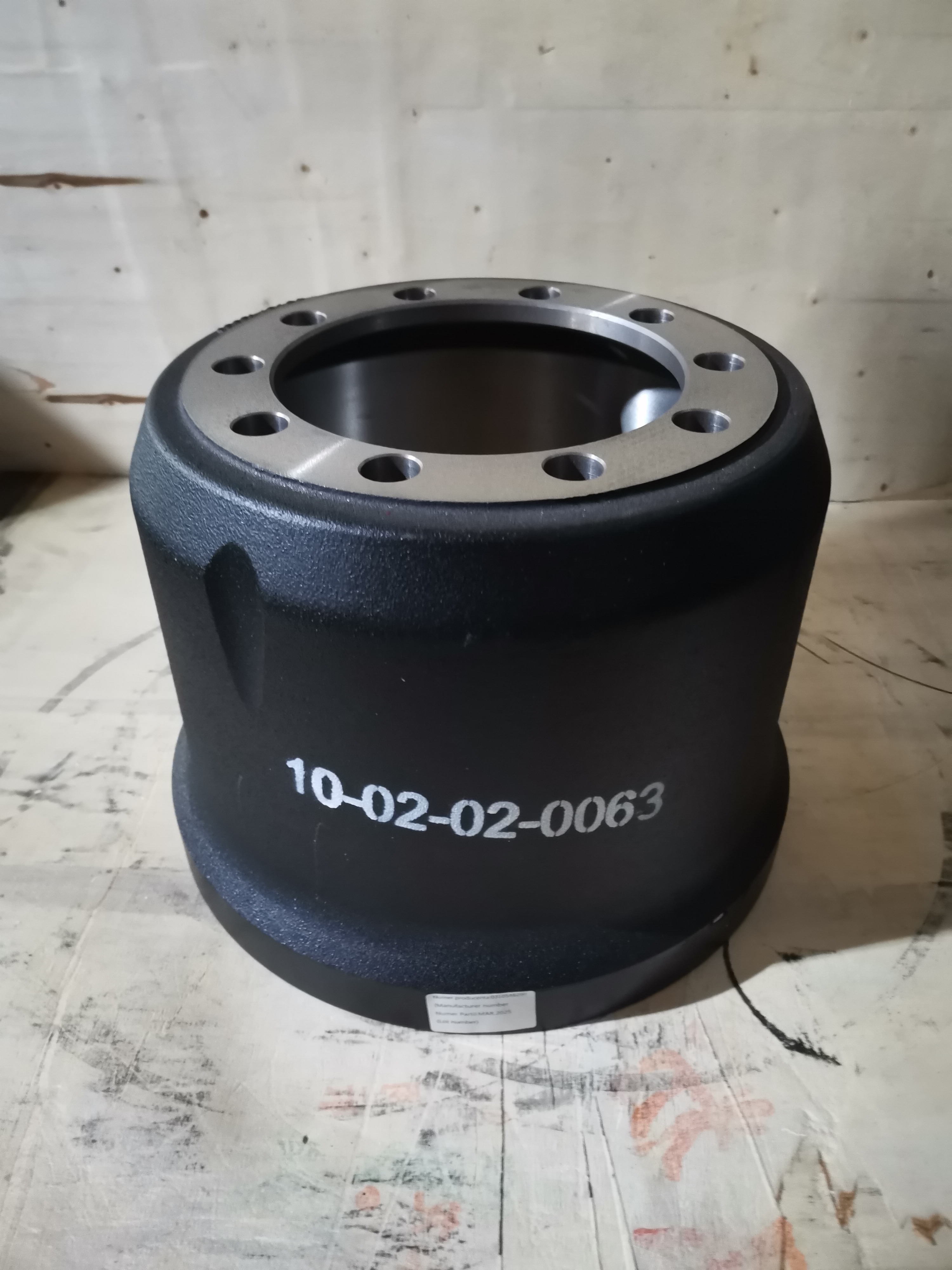
BPW 0910946070 DRUM BRAKE
Product Specifications
| BPW | 0910946070 |
The BPW 0910946070 is a heavy-duty brake drum designed for commercial trailer axle systems. As a critical component of the drum brake assembly, it provides the friction surface against which brake shoes press to generate stopping force. This part is manufactured to BPW’s exacting standards for European semi-trailers and rigid trucks operating under demanding conditions.
Operating Principle: When the driver applies the brakes, compressed air actuates the brake chamber, which pushes the slack adjuster and rotates the S-cam shaft. The S-cam forces the brake shoes outward against the inner friction surface of this brake drum. The resulting friction converts the vehicle’s kinetic energy into heat, slowing the trailer. The drum’s cast iron construction provides consistent friction characteristics and heat dissipation across a wide temperature range.
- Drum Diameter: 300mm
- Drum Width: 200mm
- Overall Height: 260mm
- Stud Pattern: 10 studs × Ø23mm
- Material: Cast iron (high-grade friction surface)
- Application: BPW trailer axles, 9–12 tonne capacity range
Note: This is the brake drum component only. Complete brake assembly includes additional components such as brake shoes, springs, adjusters, and camshaft mechanisms sold separately.
Common Symptoms of Brake Drum Wear or Failure:
- Visible Scoring or Grooving: Deep grooves or scratches on the inner friction surface indicate excessive wear or contamination. Surface scoring beyond 1.0mm depth typically requires replacement.
- Excessive Diameter: Brake drums wear over time, increasing the internal diameter. When diameter exceeds manufacturer maximum specification (typically +3mm from nominal), braking efficiency decreases and replacement is necessary.
- Cracking: Heat cracks radiating from stud holes or across the friction surface compromise structural integrity and can lead to catastrophic failure.
- Out-of-Round Condition: Uneven wear creates an oval-shaped drum, causing pulsation during braking and uneven shoe contact.
- Hard Spots or Glazing: Overheating creates hardened areas on the friction surface that reduce braking effectiveness and cause vibration.
- Brake Fade: Reduced braking power under sustained use, often accompanied by burning smell, indicates thermal degradation of the drum surface.
- Pulling to One Side: If one drum is more worn than its counterpart, the vehicle may pull left or right during braking.
- Grinding or Scraping Noise: Metal-on-metal contact indicates brake shoes have worn through lining material and are damaging the drum.
- Remove wheel and visually inspect drum surface for cracks, scoring, or heat discoloration
- Measure internal diameter with drum micrometer at multiple points; compare to specifications
- Check for out-of-round condition (maximum variation typically 0.15mm)
- Inspect stud holes for elongation or cracks
- Check mounting face for warping using straight edge
- Verify hub bearing condition — excessive play can cause uneven drum wear
Professional brake service equipment is recommended for accurate measurement and safety. Replacement is mandatory if cracks are present or if diameter exceeds maximum specification.
This brake drum is designed for BPW trailer axle systems commonly used throughout Europe and other markets. The 300×200mm specification is a standard size for medium-duty trailer applications in the 9–12 tonne axle load category.
| Axle Series | Trailer Type | Brake System | Typical Capacity |
|---|---|---|---|
| BPW H.. Series | Semi-trailers, box trailers | S-cam mechanical drum brake | 9–10 tonnes |
| BPW K.. Series | Platform trailers, curtainsiders | S-cam mechanical drum brake | 10–12 tonnes |
| BPW N.. Series | Rigid truck applications | S-cam mechanical drum brake | 9–12 tonnes |
- This 300×200mm drum size is common across BPW’s H, K, and N axle series from approximately 1985 onwards
- 10-stud pattern with Ø23mm holes is standard European configuration
- Verify exact axle model and brake specification before ordering — BPW type plate is located on axle beam
- Not compatible with BPW ECO Drum or disc brake systems (different mounting specifications)
Always cross-reference with your axle identification plate or consult BPW parts catalog to confirm exact compatibility. Axle series designations and brake specifications may vary by market and manufacturing period.
Required Tools & Materials:
- Hydraulic jack and axle stands (rated for trailer weight)
- Wheel chocks
- Socket set (sizes vary by axle; typically M22 or M24 for hub nut)
- Torque wrench (calibrated)
- Brake drum puller (if drum is seized)
- Wire brush and brake cleaner
- New cotter pins or lock nuts as required
- High-temperature anti-seize compound
- Safety First: Park trailer on level ground, apply parking brake, and chock wheels on opposite axle. Jack trailer and support on rated axle stands — never work under a vehicle supported only by a jack.
- Remove Wheel: Loosen and remove wheel nuts. Remove wheel and set aside. Inspect wheel studs for damage or excessive wear.
- Remove Old Drum: If drum has not been removed recently, it may be seized to the hub by corrosion. Use penetrating oil and allow time to soak. Apply even pressure with drum puller if necessary. Do not strike drum with hammer as this can damage hub bearings.
- Inspect Brake Components: With drum removed, inspect brake shoes, springs, adjusters, and camshaft for wear. Clean all components with brake cleaner — do not use compressed air as brake dust may contain harmful materials. Replace worn components as needed.
- Prepare Hub Surface: Clean hub mounting face and wheel stud threads thoroughly with wire brush. Remove all rust, corrosion, and old anti-seize. Inspect hub bearings for play or rough rotation — replace if necessary before installing new drum.
- Install New Brake Drum: Apply thin coat of high-temperature anti-seize to hub mounting face (avoid getting compound on friction surface). Slide new drum onto hub, ensuring it seats fully against mounting face. Verify drum rotates freely without binding.
- Adjust Brake Clearance: Rotate brake adjuster to position shoes close to drum inner surface, then back off until drum rotates with slight drag. Proper adjustment is critical for even brake performance and drum life.
- Reinstall Wheel: Mount wheel onto studs. Install and hand-tighten wheel nuts in star pattern. Lower trailer until tire just contacts ground (to prevent wheel rotation), then torque wheel nuts to manufacturer specification in star pattern. Typical specification for M22×1.5 studs is 450–550 Nm, but verify with your specific axle documentation.
- Final Checks: Remove axle stands and lower trailer completely. Rotate wheel by hand to verify no binding or unusual noise. Test brakes at low speed in safe area before returning to service. Re-check wheel nut torque after first 50–100 km of operation.
Important: If you do not have verified torque specifications for your specific axle model, consult BPW service manual or authorized dealer. Improper torque can cause wheel detachment or bearing failure. Brake work should be performed by qualified technicians familiar with commercial vehicle systems.
Product sourced and supplied by OK.Parts for wholesale distribution to commercial vehicle workshops, fleet operators, and parts distributors.
Weight, HS code, EAEU code, and country of origin information not provided on source page. Contact supplier for complete customs documentation and shipping weight calculations required for international orders.
- OEM Reference: BPW 0910946070
- Part Description: Brake Drum 300×200mm, 10-stud
- Suitable for fleet maintenance operations and aftermarket distribution
- Bulk pricing available — contact OK.Parts sales team for volume quotes
1. What trailer axles is this brake drum compatible with?
This 300×200mm brake drum is designed for BPW trailer axles in the H, K, and N series, typically rated for 9–12 tonne capacity. The 10-stud × Ø23mm pattern is standard for European medium-duty trailers. Always verify compatibility using your axle identification plate before ordering. See the Axle & Trailer Applications section above for detailed fitment information.
2. Does this include the complete brake assembly?
No. This is the brake drum component only — the rotating cast iron drum that provides the friction surface. It does not include brake shoes, return springs, adjusters, camshaft, slack adjuster, or other brake mechanism components. These items are sold separately and should be inspected and replaced as needed during drum replacement.
3. What are the symptoms of a worn or damaged brake drum?
Common symptoms include: visible scoring or grooving on the friction surface, internal diameter exceeding specifications, heat cracks, out-of-round condition causing brake pulsation, hard spots or glazing from overheating, brake fade under sustained use, vehicle pulling to one side during braking, and grinding or scraping noises. See the Symptoms & Inspection Criteria section above for detailed inspection procedures.
4. What should I check if replacing the drum doesn’t solve my braking issue?
If brake performance problems persist after drum replacement, inspect the following: brake shoe lining thickness and condition, brake adjuster mechanism function, S-cam and bushings for wear, slack adjuster operation and pushrod stroke, brake chamber diaphragm integrity, air system pressure and leak-down rate, hub bearings for excessive play, and ensure proper brake adjustment. Uneven tire wear or suspension problems can also affect braking performance.
5. Can you provide custom packaging or white-label branding for bulk fleet orders?
Yes. OK.Parts offers custom packaging solutions and white-label branding options for qualifying bulk orders. This is particularly valuable for fleet maintenance operations, parts distributors, and workshop chains seeking to build their own branded product lines. Contact the sales team to discuss minimum order quantities, packaging customization options, lead times, and pricing for private label programs.
When replacing brake drums, consider inspecting and replacing these related components to ensure optimal brake system performance and longevity:
- Brake Shoe Set: Friction linings wear in conjunction with drum surface. If drum replacement is due to wear or scoring, brake shoes have likely reached end of service life. Replace as a complete axle set to maintain balanced braking.
- Brake Hardware Kit: Includes return springs, hold-down springs, pins, and clips. These components fatigue over time and should be replaced during major brake service to prevent shoe misalignment or poor retraction.
- Wheel Studs and Nuts: Inspect stud threads and nut condition during drum replacement. Damaged or stretched studs compromise wheel retention safety. Replace any questionable fasteners.
- Hub Bearings and Seals: Excessive hub bearing play causes uneven drum wear and brake pulsation. If bearings show wear during drum replacement, service immediately. Replace grease seals to prevent contamination of new brake components.
- Brake Adjuster Mechanism: Manual or automatic adjusters wear over time, leading to improper shoe-to-drum clearance. A seized or worn adjuster reduces braking efficiency and accelerates drum wear. Replace if operation is not smooth throughout full range of motion.
Replacing brake system components as assemblies rather than individual parts improves reliability and reduces comebacks. Consult your parts supplier for complete brake overhaul kits matched to your specific axle model.