LONGWISE LWGK60 MOUNTAIN DRIFT GO-KART
Product Specifications
| LONGWISE | LWGK60 |
Product Overview
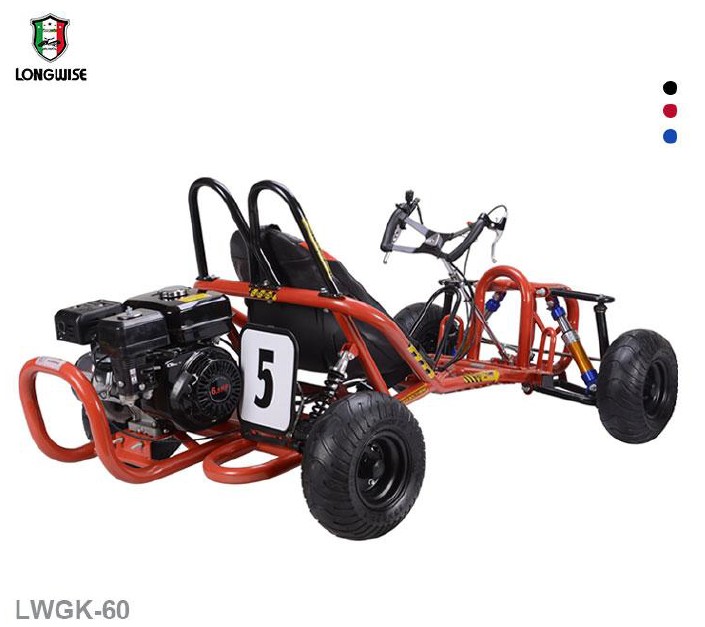
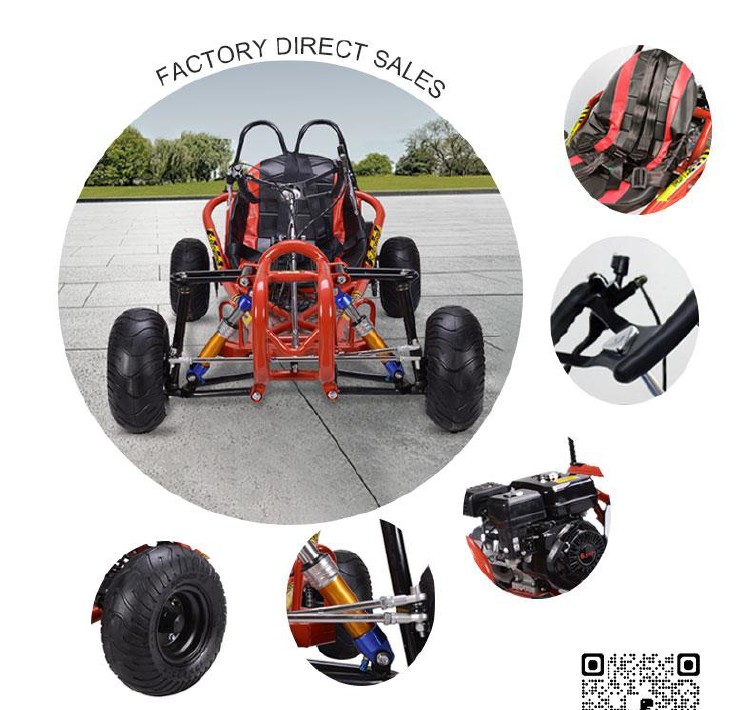
The LWGK-60 Mountain Drift Go-Kart represents a competitive racing platform featuring a 196cc 4-stroke engine with wet clutch system, direct drive shaft configuration, and dual hydraulic rear brakes. Built on a high-carbon steel racing frame with 6-inch performance tires and weighing just 70kg, this go-kart delivers authentic motorsport performance through its 6.5 HP output and responsive pedal brake/throttle controls.
Core Specifications
Detailed Specifications
| Component | Specification |
|---|---|
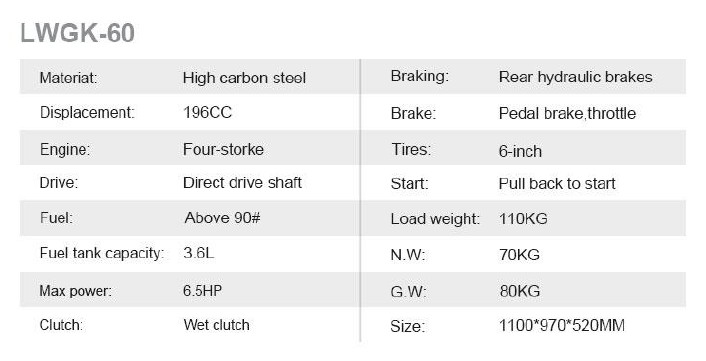
| Frame Material | High Carbon Steel |
| Engine Type | 4-Stroke Single Cylinder |
| Displacement | 196cc |
| Maximum Power | 6.5 HP |
| Fuel Type | Gasoline 90+ octane |
| Fuel Tank Capacity | 3.6 liters |
| Starting System | Pull Back to Start (recoil) |
| Clutch Type | Wet Clutch |
| Transmission | Direct Drive Shaft |
| Braking System | Rear Hydraulic Brakes (dual) |
| Brake Controls | Pedal brake, throttle |
| Tire Size | 6 inch |
| Maximum Load | 110 kg |
| Net Weight | 70 kg |
| Gross Weight | 80 kg |
| Overall Size | 1100 x 970 x 520 mm |
Wet Clutch System
The wet clutch configuration provides significant advantages for competitive racing and aggressive driving:
- Smooth Engagement: Oil-bathed clutch plates deliver progressive power transfer without jerky engagement
- Heat Dissipation: Oil cooling prevents clutch fade during extended racing sessions
- Durability: Wet operation extends clutch life 3-5x compared to dry clutches
- Consistent Performance: Maintains engagement characteristics across temperature ranges
- Reduced Wear: Oil lubrication minimizes friction material degradation
Direct Drive Shaft
Direct shaft drive eliminates chain/belt maintenance while providing:
- Instant power transfer with zero slack or stretch
- No chain lubrication or adjustment required
- Reduced maintenance intervals
- More efficient power delivery to wheels
- Quieter operation than chain drive
Dual Hydraulic Rear Brakes
Advanced braking system optimized for racing:
- Dual Circuit: Two independent hydraulic rear brakes for maximum stopping power
- Progressive Feel: Hydraulic system provides precise brake modulation
- Pedal Control: Racing-style foot pedal for intuitive braking
- Fade Resistant: Hydraulic fluid maintains performance under heavy use
Racing Frame Design
The 1100 x 970 x 520mm racing frame features:
- Low center of gravity (520mm height) for aggressive cornering
- Wide 970mm stance for stability at speed
- Compact 1100mm length for nimble handling
- Race-spec tubular construction for rigidity
- 70kg dry weight for excellent power-to-weight ratio
Performance Profile
| Metric | Performance |
|---|---|
| Power-to-Weight | 6.5 HP / 70kg = 0.093 HP/kg (excellent for this class) |
| Acceleration | Quick launch with wet clutch engagement |
| Handling | Low, wide stance optimized for cornering |
| Braking | Dual hydraulic rear provides strong, progressive stopping |
NOT street legal - track and private property only
Full racing safety gear MANDATORY: helmet, suit, gloves, boots
Experience with racing karts recommended
Professional instruction advised for competitive use
Starting Procedure
- Ensure fuel tank has 90+ octane gasoline
- Check engine oil level
- Turn fuel valve ON
- Set choke if cold start
- Pull recoil starter cord briskly
- Close choke once running
- Warm up 2-3 minutes before racing
Wet Clutch Maintenance
The wet clutch system requires specific maintenance:
| Task | Interval |
|---|---|
| Check clutch oil level | Every 5 hours |
| Change clutch oil | Every 20-25 hours |
| Inspect clutch plates | Every 50 hours |
| Replace clutch oil | Use SAE 10W-30 or 10W-40 |
General Maintenance
| Interval | Tasks |
|---|---|
| Every 10 hours | Check engine oil | Inspect brakes | Check tire pressure |
| Every 20-25 hours | Change engine oil | Bleed hydraulic brakes if needed |
| Every 50 hours | Replace air filter | New spark plug | Inspect wet clutch |
| Annually | Complete overhaul | Hydraulic system service |
Pre-Race Inspection
- Brake pedal firm with good resistance
- No brake fluid leaks in hydraulic lines
- Tire pressure at specification
- Clutch engagement smooth and progressive
- Engine oil at proper level
- All bolts tight to torque spec
Wholesale Information
Note: Database shows $0.17 - incorrect. Racing go-kart pricing: $700-1000 wholesale.
FAQ
Q: What makes wet clutch better for racing?
Wet clutch advantages: Oil cooling prevents fade during races, smoother engagement for consistent starts, 3-5x longer life than dry clutches, maintains performance across temperature ranges. Disadvantages: Slightly more maintenance (oil changes), heavier than dry clutch. For racing/competition use, wet clutch is superior choice.
Q: How does direct drive shaft compare to chain drive?
Direct shaft advantages: Zero maintenance (no chain lubrication/adjustment), instant power transfer, more efficient, quieter, no chain wear/stretch. Chain advantages: Easier gear ratio changes. For racing where reliability matters, direct shaft preferred.
Q: Can beginners use this go-kart?
Not recommended for absolute beginners. 6.5 HP + 70kg weight = quick acceleration. Dual hydraulic brakes + racing geometry requires skill. Best for: experienced kart racers, those transitioning from rental karts to racing karts, competitive motorsport. Beginners should start with lower-powered recreational karts.
Q: What's the maintenance cost compared to rental karts?
Racing karts require more maintenance. Annual costs (50-100 hours use): Engine oil $50, clutch oil $30, brake fluid $20, air filter $25, spark plugs $15, miscellaneous $60 = $200-300/year. Plus: tires every 30-50 hours ($100-200), brake pads as needed ($50-100). Higher than recreational but standard for racing class.
Q: Is it competitive for kart racing?
Competitive in 196cc 4-stroke racing classes. 6.5 HP is standard spec for many amateur racing series. Wet clutch gives advantage in endurance races. Direct drive reliable for wheel-to-wheel racing. Good entry-level racing kart for club competition.