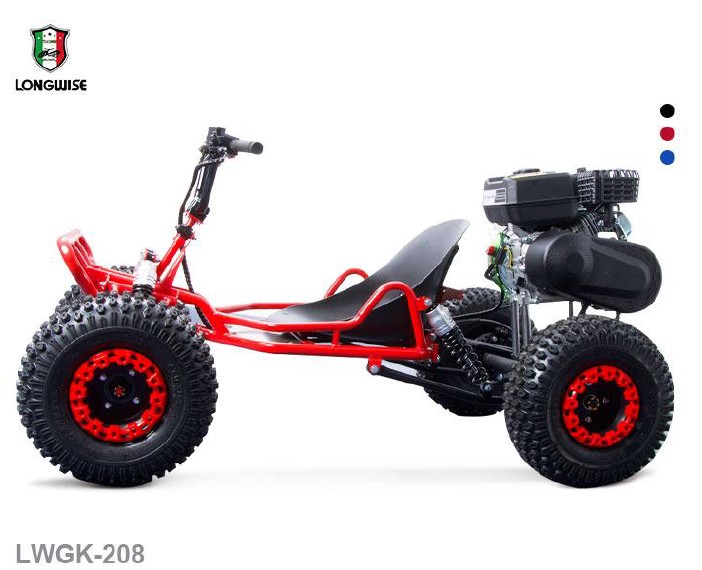
LONGWISE LWGK208 MOUNTAIN DRIFT GO-KART
Product Specifications
| LONGWISE | LWGK208 |
Product Overview
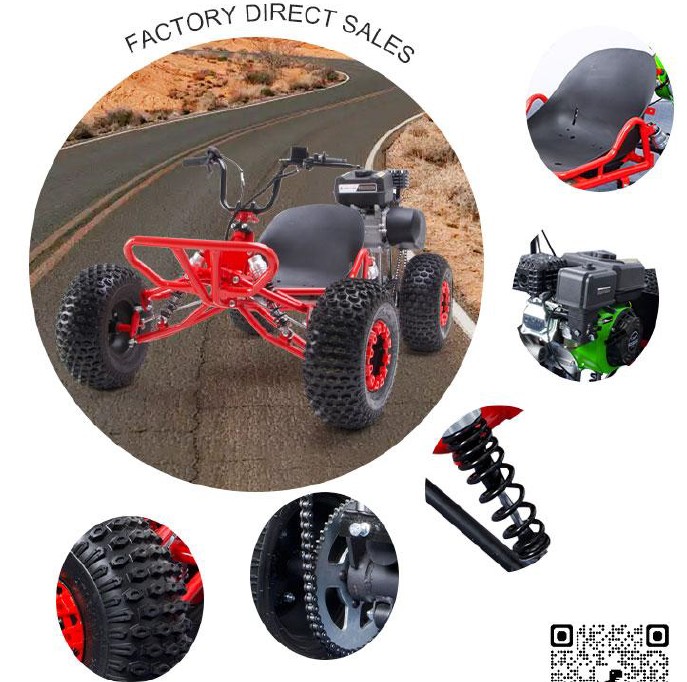
The LWGK-208 Mountain Drift Go-Kart represents a compact off-road recreational vehicle featuring a 208cc 4-stroke gasoline engine, hydraulic disc brakes, and CVT automatic transmission. Built on a high-carbon steel frame with 6-inch all-terrain tires and 195mm ground clearance, this lightweight 73kg go-kart delivers authentic mountain trail and off-road performance for single riders seeking adventure in challenging terrain.
Designed specifically for mountain and trail environments, the LWGK-208 combines adequate power (7.5 HP) with nimble handling thanks to its compact dimensions and direct-drive rear axle configuration. The oil clutch system and recoil pull-start mechanism provide reliable operation in remote locations, while hydraulic suspension components deliver smooth performance over rough terrain.
Core Specifications
Detailed Technical Specifications
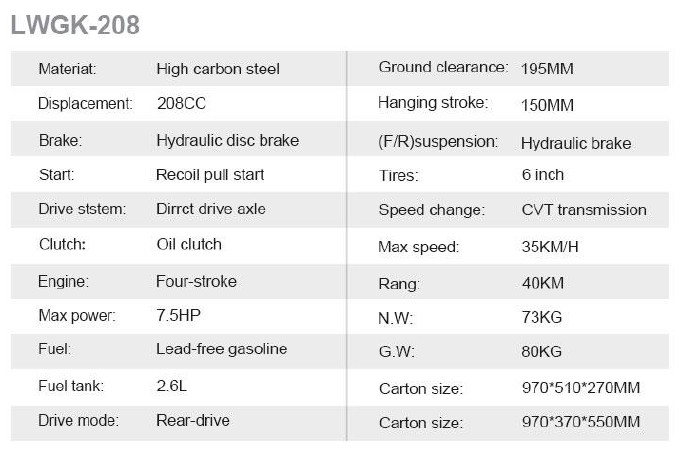
| Component | Specification | Details |
|---|---|---|
| Frame Material | High Carbon Steel | Welded tubular steel construction |
| Engine Displacement | 208cc | Single-cylinder 4-stroke gasoline |
| Engine Type | 4-Stroke | Air-cooled OHV configuration |
| Maximum Power | 7.5 HP | Approximately 5.6 kW at rated RPM |
| Fuel Type | Lead-Free Gasoline | Regular unleaded 87+ octane |
| Fuel Tank Capacity | 2.6 liters | Approximately 60-90 minutes runtime |
| Starting System | Recoil Pull Start | Manual pull-cord starter |
| Clutch Type | Oil Clutch | Wet clutch system for smooth engagement |
| Transmission | CVT Transmission | Continuously Variable Transmission automatic |
| Speed Change | CVT | Automatic ratio adjustment - no manual shifting |
| Drive System | Direct Drive Axle | Chain or belt drive to solid rear axle |
| Drive Mode | Rear-Drive | Rear-wheel drive configuration |
| Brake System | Hydraulic Disc Brake | Hydraulic disc brakes for reliable stopping |
| Front/Rear Suspension | Hydraulic Brake | Note: Specification unclear - likely refers to brake type |
| Suspension Travel | Hanging Stroke 150mm | 150mm suspension travel capability |
| Tire Size | 6 inch | All-terrain pneumatic tires |
| Ground Clearance | 195mm | High clearance for obstacle navigation |
| Maximum Speed | 35 km/h | Top speed on flat terrain |
| Range | 40 km | Estimated range per tank on moderate terrain |
| Net Weight | 73 kg | Very lightweight for easy handling |
| Gross Weight | 80 kg | Shipping weight with packaging |
| Carton Size | 970x510x270mm / 970x370x550mm | Two-piece packaging for compact shipping |
Mountain and Trail Recreation
The LWGK-208 is optimized for mountain trails, dirt paths, and moderate off-road terrain where compact size and light weight provide advantages over larger, heavier vehicles.
Primary Use Cases
- Mountain Trail Riding: Exploring mountain paths and fire roads with 195mm ground clearance
- Farm and Ranch Properties: Lightweight utility transport for navigating property trails
- Recreational Off-Roading: Weekend adventure riding on designated off-road trails
- Youth Advanced Training: Transitioning experienced young riders to adult-size vehicles
- Compact Property Transport: Maneuvering in tight spaces where full-size ATVs too large
- Camping and Outdoor Adventures: Portable enough to trailer, powerful enough for trail riding
Performance Characteristics
208cc Engine Analysis
The 7.5 HP output from 208cc displacement provides adequate power for single-rider trail use while maintaining fuel efficiency and reliability.
| Performance Metric | LWGK-208 | Notes |
|---|---|---|
| Acceleration | Moderate | 0-30 km/h in approximately 8-12 seconds |
| Top Speed | 35 km/h | Conservative speed suitable for trail conditions |
| Hill Climbing | Good | Can handle 15-20 degree slopes with rider |
| Fuel Economy | Excellent | 6-7 L/100km approximately |
| Runtime per Tank | 60-90 minutes | 2.6L tank provides 35-40km range |
Lightweight Advantages
At just 73kg, the LWGK-208 offers significant benefits:
- Easy Maneuvering: One person can lift rear end to reposition if stuck
- Trailer Transport: Light enough for small trailers, easy loading/unloading
- Agile Handling: Quick steering response and nimble cornering
- Less Impact: Lighter weight reduces trail erosion and environmental impact
- Better Performance: Power-to-weight ratio superior to heavier go-karts
Terrain Capabilities
| Terrain Type | Performance | Notes |
|---|---|---|
| Dirt Roads/Trails | Excellent | Ideal use case - designed for this terrain |
| Moderate Hills | Very Good | 7.5 HP adequate for 15-20 degree slopes |
| Light Mud | Good | 6-inch tires and light weight navigate wet trails |
| Rocky Trails | Acceptable | 195mm clearance handles moderate rocks |
| Grass/Fields | Very Good | Light weight won't bog down in soft ground |
| Sand | Limited | Small 6-inch tires not ideal for deep sand |
| Steep Hills (25+ deg) | Limited | Power insufficient for very steep climbs |
Protective gear MANDATORY: Helmet, gloves, boots, protective clothing
Maximum recommended rider weight: approximately 80-100 kg
NOT designed for: highway use, paved streets, extreme rock crawling, deep mud
Supervision recommended for riders under 16 years of age
Always operate within skill level and terrain capabilities
208cc 4-Stroke Engine
The LWGK-208 utilizes a compact 208cc air-cooled 4-stroke engine designed for reliability in outdoor recreational applications.
Engine Specifications
| Parameter | Value |
|---|---|
| Displacement | 208cc (approximately 12.7 cubic inches) |
| Configuration | Single cylinder, 4-stroke |
| Cooling | Air-cooled with forced air fan |
| Power Output | 7.5 HP (approximately 5.6 kW) |
| Valvetrain | OHV (overhead valve) typical for this class |
| Ignition | CDI electronic ignition |
| Starting | Recoil pull-start only (no electric start) |
| Oil Capacity | Approximately 0.6-0.8 liters |
| Recommended Oil | SAE 10W-40 or 15W-40 4-stroke engine oil |
CVT Transmission System
The Continuously Variable Transmission eliminates manual shifting, providing smooth automatic power delivery ideal for varying trail conditions.
How CVT Works
- Belt-Driven: Rubber belt runs between variable-diameter pulleys
- Automatic Ratio: Pulley diameter adjusts continuously based on RPM and load
- No Shifting: Seamless acceleration without discrete gear changes
- Reverse Capability: May include reverse gear for backing out of tight spots
Oil Clutch System
The wet oil clutch provides smooth engagement and increased durability compared to dry clutches.
- Wet Operation: Clutch plates run in oil for cooling and lubrication
- Smooth Engagement: Gradual power transfer reduces jerky starts
- Durability: Oil environment extends clutch life vs dry clutches
- Maintenance: Requires periodic oil changes to maintain performance
Fuel System
Fuel Specifications
- Fuel Type: Lead-free unleaded gasoline
- Octane Rating: 87+ octane recommended (regular unleaded acceptable)
- Tank Capacity: 2.6 liters
- Fuel Consumption: Approximately 6-7 L/100km
- Range per Tank: 35-40 km typical use
- Runtime per Tank: 60-90 minutes depending on terrain and riding style
Starting Procedure
- Ensure fuel valve is ON position
- Set choke to FULL (cold start) or OFF (warm start)
- Set throttle to approximately 1/4 position
- Stand on side of kart for stability
- Pull recoil starter cord briskly - may require 2-5 pulls when cold
- Once started, gradually reduce choke to OFF as engine warms (30-60 seconds)
- Allow 2-3 minutes warm-up before riding
Pre-Ride Inspection
| Item | Check | Action |
|---|---|---|
| Fuel Level | Visual check in tank | Refuel if below 1/4 tank |
| Engine Oil | Dipstick at FULL mark | Add SAE 10W-40 if low |
| Tire Pressure | All tires firm and equal | Inflate to specification |
| Brakes | Test brake lever/pedal | Should be firm with good stopping power |
| Chain/Belt | Proper tension, no damage | Adjust or replace if needed |
| Controls | Throttle, brake, steering | Should operate smoothly |
Maintenance Schedule
Regular Intervals
| Interval | Service Tasks |
|---|---|
| Every 10 hours | Check oil level | Inspect air filter | Lubricate chain/belt | Check tire pressure |
| Every 20-25 hours | Change engine oil | Clean air filter | Check spark plug | Inspect brake pads |
| Every 50 hours | Replace air filter | Replace spark plug | Change oil clutch oil | Adjust valve clearance |
| Every 100 hours | Deep service | CVT belt inspection/replacement | Clean carburetor | Check all fasteners |
| Annually | Complete overhaul | Replace fluids | Professional inspection if needed |
Critical Maintenance
Engine Oil Change (Every 20-25 hours)
- Warm engine 3-5 minutes, shut off
- Place drain pan under engine
- Remove drain bolt, drain oil completely
- Replace drain bolt with new washer
- Add 0.6-0.8L of SAE 10W-40 or 15W-40
- Check dipstick - oil at FULL mark
- Start engine 30 seconds, recheck
CVT Belt Inspection
Check every 50 hours, replace if: cracks visible, belt glazed/shiny, width worn beyond spec, slipping occurs under load.
Troubleshooting
| Problem | Likely Cause | Solution |
|---|---|---|
| Won't start | No fuel | Fouled plug | Choke position | Refuel | Clean/replace plug | Adjust choke |
| Starts then dies | Dirty carburetor | Choke stuck | Clean carb jets | Check choke operation |
| Loss of power | Dirty air filter | Worn CVT belt | Clean/replace filter | Replace belt |
| Won't shift/accelerate | CVT issue | Clutch problem | Inspect CVT belt | Check clutch oil level |
| Brakes weak | Low fluid | Worn pads | Air in line | Add fluid | Replace pads | Bleed brakes |
Wholesale Information
Note: Database shows $0.17 which is incorrect. Typical 208cc go-kart pricing: $700-1100 wholesale.
Frequently Asked Questions
Q: What size/age rider is this suitable for?
Best for riders 150-185cm height, weight up to 80-100kg. Smaller than full-size ATVs but larger than youth models. Age 14+ recommended (depends on experience). Younger experienced riders (12-13) may be suitable with supervision. Adult riders up to 90kg can ride comfortably though performance reduces with heavier riders.
Q: How does 208cc compare to larger engines?
208cc (7.5 HP) provides entry-level off-road performance. Comparison: 50-125cc youth bikes (2-8 HP) = too small for adults. 208-250cc (7-15 HP) = adequate for trails, not extreme off-road. 300-500cc (18-35 HP) = full-size ATV power for aggressive riding. LWGK-208 perfect for: casual trail riding, beginners, secondary recreational vehicle. Not enough for: competitive racing, heavy cargo, very steep terrain.
Q: What maintenance does it need?
Gasoline engine requires regular maintenance. Every 20-25 hours: oil change ($15 oil + 20 minutes). Every 50 hours: air filter, spark plug, clutch oil ($30 parts + 1 hour). Annually: CVT belt ($40-80), brake pads if needed ($30), carburetor cleaning. Total annual cost (50-100 hours use): $150-300 parts and fluids. More than electric but less than larger ATVs.
Q: Can it handle steep mountain trails?
Moderate slopes yes, extreme no. Can climb: 15-20 degree slopes comfortably with rider, 20-25 degrees with difficulty/momentum, short steep sections if approached with speed. Cannot climb: sustained 25+ degree slopes, very rocky/technical terrain requiring high ground clearance, deep mud requiring high power. Best on: fire roads, moderate trails, rolling terrain.
Q: How far can it go on one tank?
2.6L tank provides 35-40km range or 60-90 minutes runtime. Best range: flat trails, moderate speed, light rider = 40km. Worst range: hills, aggressive riding, heavy rider = 30-35km. Fuel consumption approximately 6-7 L/100km. For comparison, full-size ATVs use 10-15 L/100km, so LWGK-208 is relatively fuel-efficient.
Q: Is it street legal?
NO. Lacks required equipment: headlights, taillights, turn signals, mirrors, horn, VIN, street-legal tires. Designed exclusively for off-road use on: private property, designated off-road trails, closed tracks. Operating on public roads = illegal, fines, impoundment, insurance invalidation.
Q: What's the weight limit?
Not officially specified but estimated 80-100kg maximum rider weight. Heavier riders experience: reduced top speed (30-32 km/h vs 35 km/h), slower acceleration, decreased hill climbing, increased fuel consumption, more stress on clutch/transmission. For riders over 90kg, consider larger 300-500cc models for better performance and longevity.
Q: How does recoil start compare to electric start?
Recoil (pull-start) advantages: Simpler, more reliable (no battery to die), lighter weight, lower cost. Disadvantages: Physical effort required (3-5 pulls when cold), difficult if flooded, harder for smaller/weaker riders. Electric start would be convenient but adds 8-10kg weight and complexity. For off-road use, recoil reliability often preferred over electric convenience.