LONGWISE LWGKEB4 ELECTRIC DIRT BIKE
Product Specifications
| LONGWISE | LWGKEB4 |
Product Overview
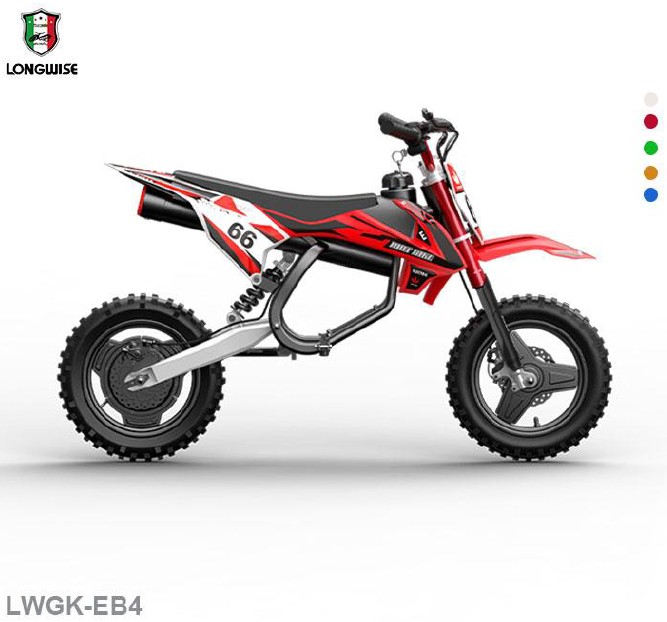
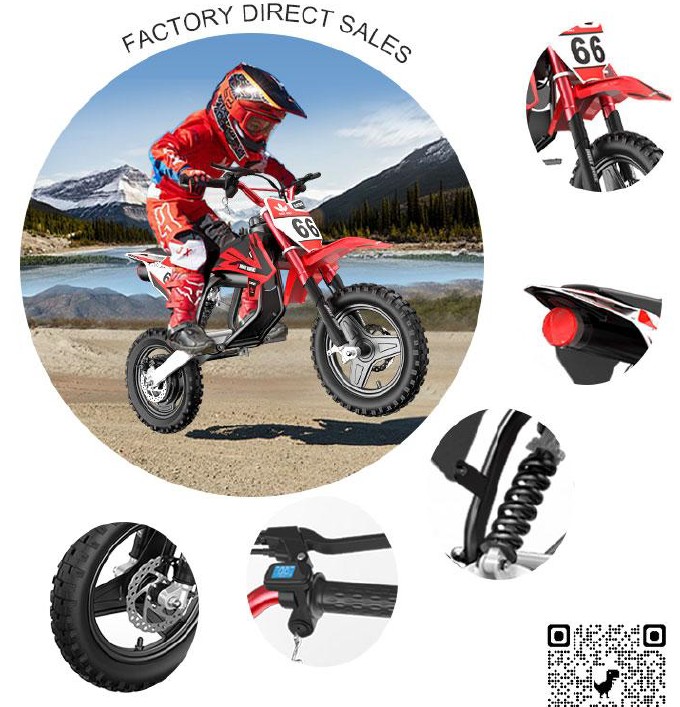
The LWGK-EB4 Electric Dirt Bike represents an entry-level electric motorcycle designed specifically for teenagers transitioning from bicycles to motorized two-wheelers. Featuring a lightweight 250W brushless motor, 36V/8Ah battery system, and authentic dirt bike styling with 14-inch pneumatic tires, this electric bike delivers safe introduction to motorcycling fundamentals while maintaining manageable performance for young riders.
At just 24.3kg, the LWGK-EB4 is significantly lighter than gasoline dirt bikes, making it easier for teens to handle, maneuver, and pick up if dropped. The twist-throttle acceleration, mechanical disc brakes, LCD display, and high-carbon steel frame provide authentic motorcycle experience while 25 km/h top speed and zero emissions ensure safety and environmental responsibility.
Core Specifications
Detailed Specifications
| Component | Specification | Details |
|---|---|---|
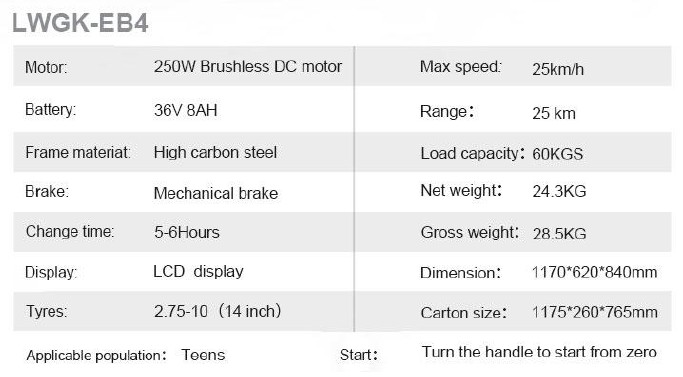
| Motor Type | 250W Brushless DC | Maintenance-free brushless motor for reliability |
| Motor Power | 250 Watts | Approximately 0.33 horsepower equivalent |
| Battery Pack | 36V / 8Ah | Lithium-ion or lead-acid (likely lithium based on weight) |
| Battery Capacity | 288 Watt-hours | 36V x 8Ah = 288 Wh total energy |
| Charging Time | 5-6 hours | Relatively fast charging |
| Range per Charge | 25 km | At moderate speed on flat terrain |
| Maximum Speed | 25 km/h | Safe speed for teen riders |
| Display | LCD Display | Shows speed, battery level, trip distance |
| Frame Material | High Carbon Steel | Durable welded steel frame construction |
| Brake System | Mechanical Brake | Mechanical disc brake (likely rear) |
| Tire Size | 2.75-10 (14 inch) | Pneumatic knobby tires for off-road traction |
| Starting Method | Twist Throttle from Zero | Electric start - turn throttle to accelerate from standstill |
| Target Users | Teens | Designed for teenage riders ages 13-17 |
| Maximum Load | 60 kg | Rider weight capacity |
| Net Weight | 24.3 kg | Very lightweight for easy handling |
| Gross Weight | 28.5 kg | Shipping weight with packaging |
| Dimensions | 1170 x 620 x 840 mm | Length x Width x Height |
| Carton Size | 1175 x 260 x 765 mm | Compact shipping package |
Youth Motorcycle Introduction
The LWGK-EB4 serves as a stepping stone between bicycles and full-size motorcycles, providing controlled environment for teens to develop two-wheel balance, throttle control, and braking skills without the power and complexity of gasoline bikes.
Primary Use Cases
- Backyard Recreation: Safe riding on private property for teen motorcycle enthusiasts
- Farm/Ranch Transport: Lightweight utility transport for teenagers helping with property tasks
- Motorsport Introduction: Teaching motorcycle fundamentals before progressing to larger bikes
- Trail Riding (Light): Exploring moderate trails and dirt paths on family properties
- Commuting (Private Roads): Short-distance transport within private communities or properties
- Youth Racing Programs: Entry-level electric bike racing for age 13-17 categories
Rider Profile
Height: 145-175 cm for comfortable reach to controls
Weight: Maximum 60 kg (most teens 13-17 are 40-70kg - heavier riders reduce performance)
Experience: Suitable for beginners with bicycle riding skills
Physical Ability: Balance on two wheels, sufficient leg strength to support bike at stops
Supervision: Recommended for riders under 16 years
Skill Development Path
Beginner (0-10 hours): Learning balance at speed, throttle modulation, smooth braking, low-speed maneuvering in safe open areas.
Intermediate (10-30 hours): Developing confidence, riding on varied terrain, obstacle avoidance, understanding bike handling dynamics.
Advanced (30+ hours): Trail riding skills, climbing hills, navigating rough terrain, ready for progression to larger electric or small gasoline bikes.
Performance Characteristics
250W Power Analysis
The 250W motor provides modest power suitable for learning. Performance expectations:
- Acceleration: 0-20 km/h in approximately 5-8 seconds - gradual enough for control
- Top Speed: 25 km/h (15.5 mph) - fast enough to be exciting, slow enough to be safe
- Hill Climbing: Can handle moderate inclines (up to 10-12 degrees) with lightweight rider
- Terrain: Best on flat to rolling terrain - struggles on steep hills or very rough off-road
| Comparison | LWGK-EB4 Electric | 50cc Gas Dirt Bike |
|---|---|---|
| Power | 250W (0.33 HP) | 3-5 HP (10-15x more) |
| Top Speed | 25 km/h | 40-60 km/h |
| Weight | 24.3 kg (light) | 40-60 kg (heavy) |
| Noise | Near silent | Loud (90+ dB) |
| Maintenance | Minimal | Regular (oil, plug, etc) |
| Best For | Beginners, young teens, quiet areas | Experienced, older teens, performance |
Protective gear MANDATORY: Helmet (DOT or Snell rated), gloves, boots, knee/elbow pads
Adult supervision recommended for riders under 16
Maximum rider weight 60kg - exceeding reduces safety and performance
Operate only in safe areas away from traffic, pedestrians, obstacles
NOT suitable for highway, city streets, or public roads
36V/8Ah Battery System
The LWGK-EB4 utilizes a 36V/8Ah battery providing 288 Wh of energy - adequate for entry-level electric bike performance while keeping weight and cost reasonable.
Battery Specifications
| Parameter | Value |
|---|---|
| Voltage | 36V nominal |
| Capacity | 8 Amp-hours |
| Total Energy | 288 Wh |
| Estimated Weight | 2-4 kg (if lithium) or 8-10 kg (if lead-acid) |
| Charging Time | 5-6 hours |
| Range | 25 km per charge |
Range and Runtime
Expected Performance by Condition
- Ideal (flat, lightweight rider 40-50kg, moderate 15-20 km/h): 25-30 km range, 90-120 minutes runtime
- Typical (mixed terrain, average teen 50-60kg, varied speeds): 20-25 km range, 60-90 minutes runtime
- Challenging (hills, maximum load 60kg, frequent stops/starts): 15-20 km range, 45-60 minutes runtime
Factors Affecting Range
- Rider Weight: Every 10kg adds approximately 10-15% power consumption
- Terrain: Hills can reduce range by 30-50% compared to flat ground
- Speed: Maximum speed drains battery faster than moderate cruising
- Temperature: Cold weather (below 10C) can reduce range 15-20%
- Tire Pressure: Under-inflated tires increase rolling resistance
Charging
Charging Procedure
- Park bike on level surface, turn off power
- Allow motor and battery to cool 10-15 minutes after riding
- Locate charging port (typically under seat or side panel)
- Connect charger to bike
- Plug charger into standard wall outlet (100-240V AC)
- Wait 5-6 hours for full charge (LED indicator typically shows charging status)
- Disconnect charger when complete
Never charge unattended - fire risk with damaged batteries
Use only provided charger - wrong voltage damages battery
Avoid extreme temperatures during charging
Replace battery if range drops below 50% of original
Basic Operation
Starting and Riding
- Ensure battery is charged (check LCD display)
- Turn main power switch to ON
- Mount bike, support with feet on ground
- Twist throttle gradually to accelerate from standstill
- Release throttle to coast, use brake to stop
- Support bike with legs at stops - no kickstand while riding
Riding Techniques for Beginners
- Balance: Same as bicycle - look ahead, use body weight to balance
- Throttle Control: Smooth gradual twisting - avoid sudden acceleration
- Braking: Progressive braking - squeeze lever gradually, not suddenly
- Turning: Lean bike slightly into turns while looking through turn
- Off-Road: Stand on pegs for rough terrain, keep weight centered
Maintenance Schedule
Weekly (Active Use)
- Check tire pressure - maintain proper inflation for best performance
- Inspect brake function - should be firm and responsive
- Clean bike - remove dirt and mud from frame, wheels
- Check battery charge level
- Inspect for loose bolts or damaged components
Monthly
- Lubricate chain (if chain-driven) or check belt tension (if belt-driven)
- Inspect tires for wear or damage
- Check brake pads for wear
- Clean and inspect battery terminals
- Test all electrical functions (lights, display, throttle response)
Seasonally
- Deep clean and inspection
- Check all bolts to proper torque specification
- Inspect frame for cracks or damage
- Test battery capacity - replace if degraded
- Professional service if needed
No spark plug replacement or air filter cleaning
No carburetor adjustments or fuel system maintenance
Minimal moving parts reduce breakdown risk
Annual maintenance: 2-3 hours electric vs 10-15 hours gasoline
Troubleshooting
| Problem | Solution |
|---|---|
| Won't power on | Check battery charged | Verify power switch ON | Inspect fuse |
| Reduced speed/power | Charge battery fully | Check tire pressure | Inspect for brake drag |
| Battery won't charge | Test charger | Check charging port | Battery may need replacement |
| Display not working | Check connections | May need display replacement |
| Brake not effective | Adjust brake cable tension | Replace brake pads if worn |
Wholesale Pricing
Note: Database shows $0.17 which is incorrect. Typical pricing: $250-450 wholesale.
Frequently Asked Questions
Q: What age is this dirt bike suitable for?
Manufacturer specifies "Teens" - practically ages 13-17 years. Physical requirements more important than age: minimum 145cm height to reach ground comfortably, maximum 60kg weight, able to balance two-wheeler. Some advanced 11-12 year olds with prior bicycle/motorcycle experience may be suitable with close supervision. Not recommended for children under 11 regardless of size due to traffic awareness and judgment requirements.
Q: How does 250W compare to gasoline dirt bikes?
Very modest power. 250W = approximately 0.33 HP. Entry-level 50cc gas dirt bikes produce 3-5 HP (10-15x more power). LWGK-EB4 advantages: Quieter, simpler, safer for absolute beginners, works in noise-restricted areas. Gas bike advantages: Much faster, better for experienced riders, longer range. LWGK-EB4 best as first motorcycle before upgrading to gas bike later.
Q: Can it be used on trails or only pavement?
Can handle light trails. 14-inch pneumatic knobby tires provide decent off-road traction. Best on: dirt paths, gravel roads, light trails, grass fields. Struggles with: steep rocky trails, deep mud, sand dunes, technical single-track. 250W power limits performance on challenging terrain. Think smooth dirt roads rather than aggressive motocross tracks.
Q: What's the actual top speed and is it safe?
Manufacturer claims 25 km/h (15.5 mph). Realistic: 20-25 km/h on flat ground with lightweight rider. This is SAFE speed - about as fast as a quick bicycle ride. Much slower than gas dirt bikes (40-60+ km/h). Appropriate for beginners learning motorcycle control. Experienced riders may find it slow, but that's intentional for safety.
Q: How far can it go on one charge?
Manufacturer claims 25 km range. Real-world: 15-25 km depending on conditions. Best range: lightweight rider, flat terrain, moderate speed = 25 km. Worst range: heavy rider, hills, maximum speed, cold weather = 15 km. Runtime: 45-90 minutes depending on usage. For typical teen backyard riding (15-30 minute sessions), battery life more than adequate.
Q: What maintenance does it need?
Minimal compared to gas bikes. Weekly: tire pressure check, quick clean. Monthly: brake check, chain/belt inspection. Annually: deep service, battery capacity test. No oil changes, no spark plugs, no carburetor work. Total annual maintenance: 2-3 hours vs 10-15 hours for equivalent gas dirt bike. Main cost: battery replacement every 1-3 years ($80-150).
Q: Is it street legal?
NO. Lacks required equipment: headlight, taillight, turn signals, mirrors, horn, license plate mount. Designed for off-road and private property only. Do not ride on: public streets, sidewalks, bike paths (unless specifically allowed). Legal only on: private property, designated off-road areas, closed tracks. Violating = fines, impoundment, liability.
Q: How much does it cost to operate per year?
Very low. Recreational use (50 hours/year): Electricity $5 (50 charges x $0.10), Maintenance $50 (tires, brakes, misc), Battery reserve $50 (replacement cost amortized). Total: ~$105/year. Gas equivalent: Fuel $100+, Oil/maintenance $150+, Parts $100+ = $350+/year. Electric saves $200-300 annually in operating costs.