LONGWISE LWGKK1 ELECTRIC DRIFTING GO-KART
Product Specifications
| LONGWISE | LWGKK1 |
Product Overview
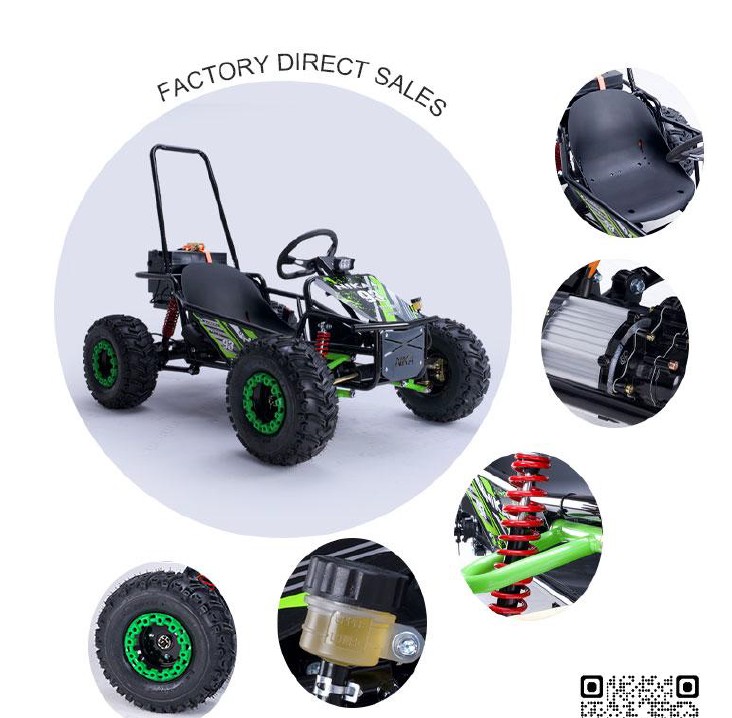
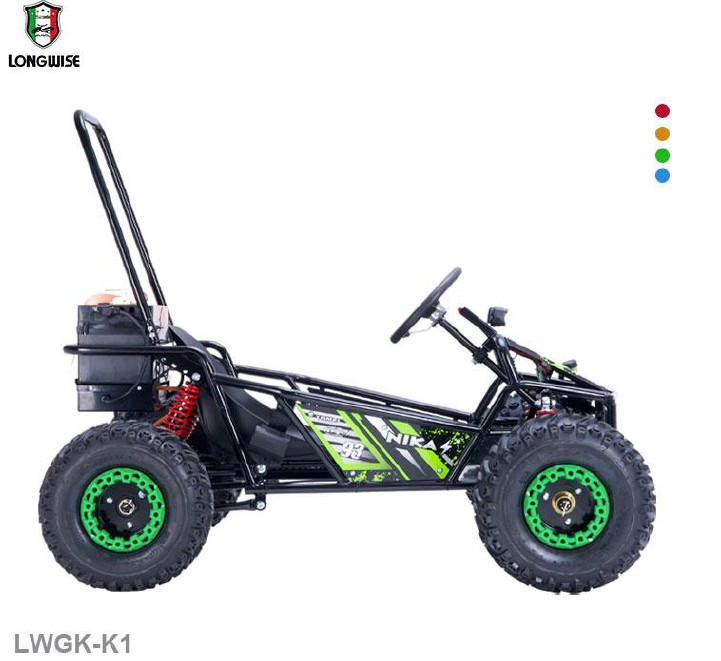
The LWGK-K1 Electric Drifting Go-Kart represents a youth-oriented electric recreational vehicle combining substantial power with robust construction. Featuring a 1000W electric motor, 40V/20Ah lead-acid battery system, and professional suspension components including double A-arm independent front suspension, this electric go-kart delivers authentic off-road and track performance for young drivers.
Built on a high-carbon steel frame with hydraulic disc brakes, 7-inch all-terrain tires, and capable of 40 km/h top speed, the LWGK-K1 bridges the gap between entry-level electric toys and professional motorsport equipment. The 150kg load capacity accommodates teenage drivers and even smaller adults, while zero-emission electric operation makes it suitable for noise-restricted environments and indoor facilities.
Core Specifications
Detailed Technical Specifications
| Component | Specification | Details |
|---|---|---|
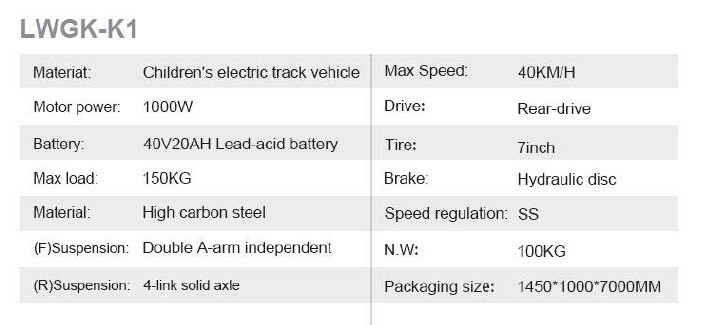
| Frame Material | High Carbon Steel | Welded tubular construction for durability |
| Target Market | Children/Youth Electric Vehicle | Designed for ages 10-16 (supervision required) |
| Motor Type | 1000W Electric Motor | Brushless DC motor with electronic controller |
| Motor Power | 1000 Watts | Approximately 1.3 horsepower equivalent |
| Battery Pack | 40V / 20Ah Lead-Acid | Total capacity: 800 Watt-hours (Wh) |
| Battery Type | Lead-Acid | Sealed maintenance-free lead-acid batteries |
| Battery Weight | Approximately 25-30kg | Significant portion of total vehicle weight |
| Charging Time | 6-8 hours | Standard charging with included charger |
| Range per Charge | 25-40 km (estimated) | Varies with terrain, speed, and rider weight |
| Maximum Speed | 40 km/h | Top speed on flat terrain with lightweight rider |
| Speed Regulation | SS (Speed Settings) | Multiple speed modes for different skill levels |
| Drive System | Rear-Drive | Rear-wheel drive configuration |
| Transmission | Single-Speed Direct Drive | No gearbox - simple and reliable |
| Front Suspension | Double A-arm Independent | Professional-grade independent suspension with coil-over shocks |
| Rear Suspension | 4-Link Solid Axle | 4-link rear suspension for improved articulation |
| Brake System | Hydraulic Disc Brakes | Hydraulic disc brakes for reliable stopping power |
| Tire Specification | 7-inch All-Terrain | Knobby tires for mixed surface traction |
| Maximum Load | 150 kg | Driver plus minimal cargo capacity |
| Net Weight | 100 kg | Vehicle weight including battery |
| Packaging Dimensions | 1450 x 1000 x 700 mm | Shipping carton size |
Youth Motorsport Introduction
The LWGK-K1 serves as an entry point into motorized recreation for young drivers, providing authentic driving experiences with appropriate power levels and safety features for supervised use.
Primary Use Cases
- Youth Recreation Parks: Commercial facilities offering supervised electric go-kart experiences for children and teens
- Family Entertainment Centers: Indoor/outdoor entertainment venues with electric vehicle attractions
- Private Property Recreation: Families with suitable land wanting safe motorized vehicles for children
- Youth Driving Schools: Teaching vehicle control and safety awareness in controlled environment
- Amusement Parks: Junior go-kart attractions for age-appropriate thrill experiences
- Resort Activities: Guest entertainment for families with children at resorts and campgrounds
Secondary Applications
- Farm/Ranch Use: Light utility transport for youth helping with property tasks
- Motorsport Training: Teaching throttle control and vehicle dynamics to young aspiring racers
- Special Needs Recreation: Adapted mobility and recreation for youth with accessibility requirements
- Promotional Events: Demonstration vehicles for product launches or community events
Rider Profile and Age Guidelines
Height: 135-170 cm for comfortable control and visibility
Weight Limit: Maximum 150 kg (accommodates most teens and smaller adults)
Physical Requirements: Able to reach controls, sufficient strength to steer and brake
Experience Level: Suitable for beginners with proper instruction
Licensing: No license required but safety training mandatory
Age-Appropriate Speed Settings
| Age Group | Recommended Speed | Speed Mode Setting |
|---|---|---|
| 10-12 years (beginner) | 15-20 km/h | Low speed mode (Economy/Beginner) |
| 12-14 years (intermediate) | 25-30 km/h | Medium speed mode (Sport) |
| 14-16 years (advanced) | 35-40 km/h | Full speed mode (Performance) |
| Small adults | 40 km/h maximum | Full speed unrestricted |
Electric vs Gasoline for Youth Vehicles
Advantages of Electric Power
- Safety: Instant throttle cut-off eliminates runaway scenarios common with gas engines
- Noise: Quiet operation reduces complaints from neighbors and allows indoor use
- Simplicity: No mixing fuel, no pull-start cords, no engine maintenance for young operators
- Control: Smooth progressive power delivery easier for beginners to manage
- Environment: Zero emissions safe for indoor facilities and sensitive outdoor areas
- Supervision: Parents can limit speed electronically, easier remote monitoring
Considerations vs Gasoline
| Factor | Electric (LWGK-K1) | Gas Youth Karts |
|---|---|---|
| Runtime | 60-90 minutes per charge | 2-3 hours per tank |
| Refuel Time | 6-8 hours charging | 2 minutes refueling |
| Maintenance | Minimal (battery, brakes) | Regular (oil, plugs, carb) |
| Operating Cost | $0.50-1 per charge | $3-5 fuel per session |
| Weight | 100kg (battery heavy) | 60-80kg (lighter) |
| Noise | 55-60 dB (very quiet) | 80-90 dB (loud) |
Proper safety gear REQUIRED: Helmet (full-face or motocross), gloves, long sleeves/pants, boots
Operate only in controlled environments - NEVER on public roads
Pre-ride safety briefing essential for first-time young drivers
Speed settings must match rider skill level and experience
Emergency stop procedures must be taught before first ride
Maximum rider weight 150kg - exceeding reduces performance and safety
Lead-Acid Battery System
The LWGK-K1 utilizes a 40V/20Ah sealed lead-acid battery system, offering advantages in cost and durability compared to lithium-ion, with trade-offs in weight and charging time.
Battery Specifications
| Parameter | Specification |
|---|---|
| Voltage | 40V Nominal (36V-42V operating range) |
| Capacity | 20Ah (Amp-hours) |
| Total Energy | 800 Wh (40V x 20Ah) |
| Battery Chemistry | Sealed Lead-Acid (SLA) |
| Maintenance | Maintenance-free sealed design |
| Cycle Life | 300-500 charge cycles (1-2 years typical use) |
| Charging Time | 6-8 hours with standard charger |
| Operating Temperature | -10C to +45C (avoid charging below 0C) |
| Weight | Approximately 25-30 kg |
Range and Performance
Range Estimates by Condition
- Flat terrain, light rider (40kg), low speed (20 km/h): 35-40 km range
- Mixed terrain, average youth (60kg), moderate speed (30 km/h): 25-30 km range
- Hilly terrain, heavy rider (80kg), full speed (40 km/h): 20-25 km range
- Aggressive off-road, maximum load, cold weather: 15-20 km range
Performance Characteristics
1000W Motor Power: Delivers approximately 1.3 horsepower, providing brisk acceleration suitable for youth without being overwhelming. Comparable to small gasoline engines (50-70cc).
Acceleration: 0-30 km/h in approximately 4-6 seconds with lightweight rider. 0-40 km/h in 8-12 seconds. Instant electric torque provides exciting launches.
Top Speed: 40 km/h maximum with full charge and lightweight rider. Speed reduces to 30-35 km/h as battery depletes or with heavier riders.
Hill Climbing: 1000W motor provides adequate power for moderate hills (up to 15-20 degree slopes) with single rider. Steep hills require momentum approach.
Avoid full depletion - recharge when performance noticeably drops
Store in temperature-controlled environment (15-25C ideal)
Use low/medium speed modes to extend range significantly
Keep rider weight reasonable - extra weight dramatically reduces performance
Maintain proper tire pressure - under-inflation increases power consumption
Charging System
Charger Specifications and Procedure
- Input Voltage: AC 100-240V, 50/60Hz (universal compatibility)
- Output: DC 42V for 40V battery pack charging
- Charge Current: Typically 2-3A for safe overnight charging
- Charging Time: 6-8 hours from depleted to full
- LED Indicator: Red = Charging | Green = Fully charged
Safe Charging Procedure
- Park vehicle in well-ventilated area away from flammable materials
- Turn off main power switch
- Allow vehicle to cool 15-30 minutes if just finished riding
- Connect charger to vehicle charging port
- Plug charger into wall outlet
- Verify LED shows RED (charging in progress)
- Wait 6-8 hours until LED turns GREEN
- Disconnect charger from wall, then from vehicle
- Store charger in dry location
DO NOT charge in enclosed spaces - ensure ventilation
AVOID charging immediately after riding - allow cooling period
NEVER use damaged charger or expose battery to water
DO NOT leave battery fully discharged for extended periods
Replace battery when range drops below 50% of original capacity
Pre-Ride Inspection
| Item | Check | Acceptable Condition |
|---|---|---|
| Battery Charge | Check gauge/indicator | Minimum 40% for intended ride |
| Tire Pressure | Visual and squeeze test | All four tires firm and equal |
| Brakes | Test front and rear | Firm lever, wheels lock when applied |
| Steering | Turn full lock both ways | Smooth movement, no unusual play |
| Throttle | Twist and release | Returns to closed position immediately |
| Safety Equipment | Seat belt, frame integrity | Belt functional, frame solid |
Basic Operation for Young Drivers
Starting Procedure (Simplified)
- Put on all safety gear (helmet, gloves, protective clothing)
- Sit in seat and fasten seat belt securely
- Place feet on footrests, hands on steering wheel
- Turn main power switch to ON position
- Wait for system ready indicator (light or beep)
- Select appropriate speed mode for skill level
- Place foot on brake, release parking brake
- Gently press throttle pedal to begin moving
Driving Techniques for Beginners
- Smooth Inputs: Gentle throttle and steering movements - avoid jerky actions
- Look Ahead: Eyes up, looking where you want to go, not at front of kart
- Weight Distribution: Lean slightly into turns to maintain balance
- Braking: Progressive braking - start gentle, increase pressure smoothly
- Emergency Stop: Both feet on brake pedal, pull parking brake if needed
Maintenance Schedule
Youth Recreation Use (Occasional Weekend Use)
| Interval | Tasks |
|---|---|
| Before Each Use | Pre-ride safety inspection | Battery charge check | Tire pressure |
| Weekly | Clean vehicle | Check all bolts tight | Lubricate moving parts |
| Monthly | Deep clean | Inspect brake pads | Check battery terminals | Test all functions |
| Seasonally | Professional inspection | Brake service | Suspension check | Battery load test |
Commercial Recreation Use (Daily Operations)
| Interval | Tasks |
|---|---|
| Daily | Pre-session inspection | Battery check | Quick clean | Safety equipment check |
| Weekly | Brake inspection | Tire wear check | Bolt torque verification | Deep clean |
| Monthly | Brake pad replacement if needed | Bearing grease | Electrical connection inspection |
| Quarterly | Complete service | Battery capacity test | Suspension service | Replace worn components |
No spark plugs, air filters, or carburetor service
No fuel system maintenance or fuel quality issues
Fewer moving parts = less to break or wear out
Annual maintenance time: 3-5 hours electric vs 12-15 hours gasoline
Annual maintenance cost: $100-200 electric vs $300-500 gasoline
Troubleshooting
| Problem | Cause | Solution |
|---|---|---|
| Won't power on | Dead battery | Loose connection | Blown fuse | Charge battery | Check all connectors | Replace fuse |
| Weak acceleration | Low battery | Motor issue | Controller fault | Charge battery | Check motor wiring | Inspect controller |
| Reduced range | Battery aging | Tire pressure low | Brake dragging | Test battery capacity | Inflate tires | Adjust brakes |
| Won't charge | Charger fault | Port damaged | Battery dead | Test charger | Inspect port | Battery replacement needed |
Wholesale Pricing
Volume Pricing
| Quantity | Discount | Best For |
|---|---|---|
| 3-5 units | List price ($749) | Private families, small venues |
| 6-10 units | 5-8% off | Recreation centers, farms |
| 11-20 units | 8-12% off | Commercial rental operations |
| 21-50 units | 12-18% off | Amusement parks, large venues |
| 50+ units | 18-25%+ off | Theme park chains, distributors |
Customization Options
- Color Options: Custom frame and body panel colors (MOQ 10 units)
- Branding: Venue logos, custom graphics packages
- Safety Upgrades: Enhanced padding, 5-point harness, additional roll cage
- Battery Upgrade: Lithium-ion battery option for lighter weight and faster charging
Shipping and Logistics
Container Loading
| Container Type | Approximate Capacity |
|---|---|
| 20' Standard | 45-55 units |
| 40' Standard | 100-120 units |
| 40' High Cube | 120-140 units |
HS Code: 8711.60 - Electric motorcycles and cycles with electric motor for propulsion
Packaging: Each unit packed in protective carton (1450x1000x700mm). Some assembly required: attach steering wheel, install battery, mount seat. Assembly time: 30-60 minutes per unit.
Q: What age is this go-kart suitable for?
Recommended ages 10-16 years with adult supervision. Physical requirements more important than age: child must be tall enough to reach pedals and steering (minimum 135cm height), strong enough to control steering and braking, and mature enough to follow safety instructions. Younger children (8-9) may be suitable if physically large enough and with very close supervision. Always start with lowest speed setting regardless of age.
Q: Is adult supervision required?
YES - mandatory at all times. Adult must: (1) Conduct pre-ride safety inspection, (2) Ensure proper safety gear worn, (3) Set appropriate speed mode for child's skill level, (4) Monitor operation constantly, (5) Have ability to intervene if needed, (6) Know emergency shut-off procedures. Commercial operations require trained staff supervision at minimum 1:8 staff-to-vehicle ratio.
Q: Can adults ride this go-kart?
Yes, smaller adults up to 150kg can ride. Performance considerations: Designed for youth (40-70kg), so adult weight (70-90kg+) reduces acceleration 30-40%, lowers top speed 5-10 km/h, decreases range 25-35%, increases brake and tire wear. Better adult options available if primary use is for adults. This excels as youth vehicle with occasional adult test rides.
Q: How long does the battery last?
Runtime per charge: 60-90 minutes continuous operation at moderate speeds. Distance per charge: 25-40 km depending on terrain, rider weight, and speed. Battery lifespan: 300-500 charge cycles (approximately 1-2 years with regular use). Performance degrades gradually - expect 70-80% of original capacity after 1 year, 50-60% after 2 years. Replace battery when range drops below acceptable level.
Q: Lead-acid vs lithium battery - what's the difference?
Lead-acid (standard LWGK-K1): Lower cost ($100-150 replacement), proven reliability, heavier weight (25-30kg), 6-8 hour charge time, 300-500 cycles. Lithium upgrade (optional): Higher cost ($400-600 replacement), lighter weight (8-12kg), 2-3 hour fast charge, 800-1200 cycles, better cold weather performance. For recreational use, lead-acid is cost-effective. For commercial daily use, lithium upgrade pays for itself in longevity and reduced downtime.
Q: What maintenance is required?
Minimal compared to gasoline. Regular tasks: Weekly tire pressure check and cleaning, monthly brake inspection, quarterly battery terminal cleaning, annual brake pad replacement. No oil changes, no spark plugs, no air filters, no carburetor maintenance. Total maintenance time: 4-6 hours annually recreational use, 12-20 hours annually commercial use. Cost: $100-200/year recreational, $300-500/year commercial.
Q: Can it be used in rain or wet conditions?
Light rain acceptable but not ideal. Water-resistant but NOT waterproof. Safe: Damp conditions, light drizzle, shallow puddles (5cm max), washing with garden hose (avoid battery/motor/controller). Unsafe: Heavy rain, water deeper than 10cm, pressure washing electrical components, submersion, leaving outside in rain. After wet use, dry thoroughly before storage and charging. Water + electricity = dangerous.
Q: What operating costs should I expect?
Recreational use (50 hours/year): Electricity $10 (50 charges x $0.20), Maintenance $150 (tires, brakes, misc), Battery replacement reserve $75 (replacement cost amortized), Insurance $0-100. Total: $235-335/year. Commercial use (500 hours/year): Electricity $100, Maintenance $400, Battery replacement $200, Insurance/liability varies. Total operating: $700+/year. Much lower than gasoline equivalent.