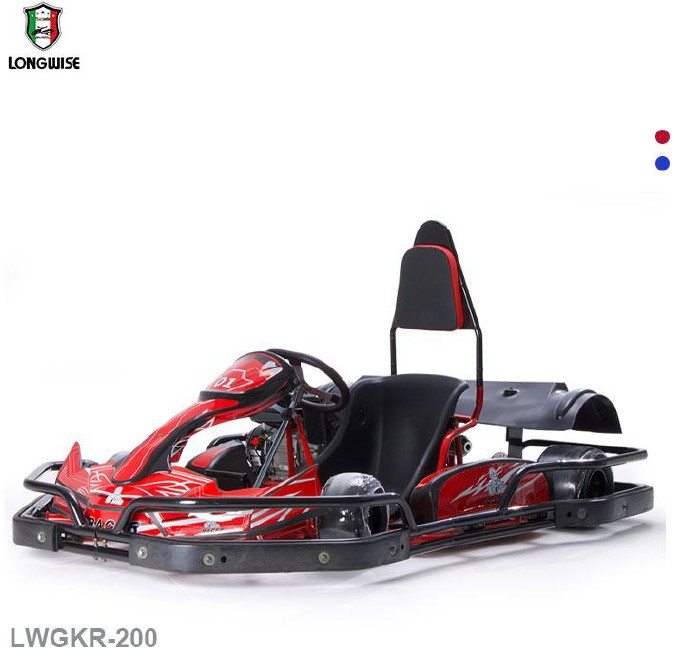
LONGWISE LWGKR200 SINGLE SEAT DRIFT KART
Product Specifications
| LONGWISE | LWGKR200 |
Product Overview
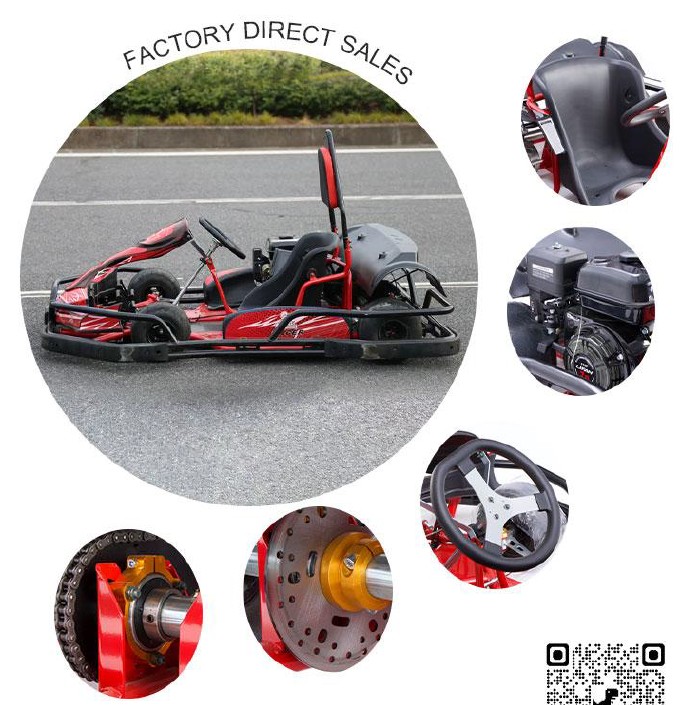
The LWGKR-200 Solo Drift Kart represents a professional single-seat drift karting machine engineered for maximum performance on asphalt surfaces. Built on a lightweight high-carbon steel tubular frame with a powerful 212-270cc 4-stroke engine, this drift kart delivers authentic motorsport thrills with superior agility and responsiveness compared to double-seat variants.
Designed specifically for competitive drift karting, advanced training, and pure performance enthusiasts, the single-seat configuration maximizes power-to-weight ratio, acceleration, and maneuverability. The LWGKR-200 features 5-inch racing slick tires, hydraulic disc brakes, dry clutch transmission, and precision steering geometry optimized for controlled sideways driving on paved tracks.
Core Specifications
Detailed Technical Specifications
| Component | Specification | Details |
|---|---|---|
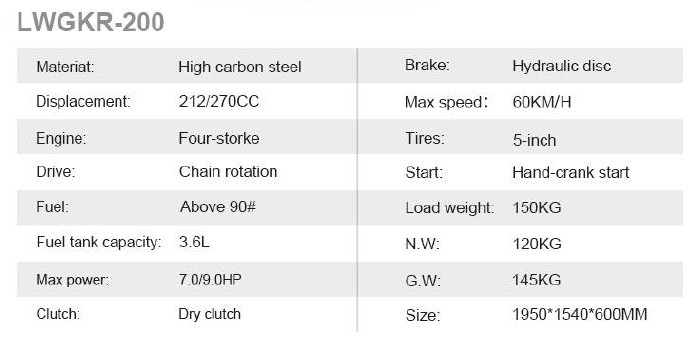
| Frame Material | High Carbon Steel | Lightweight tubular racing frame with driver roll cage |
| Engine Displacement | 212cc or 270cc | Two engine options: 212cc (7HP) or 270cc (9HP) |
| Engine Type | 4-Stroke Gasoline | Air-cooled single-cylinder OHV horizontal shaft |
| Power Output | 7.0 or 9.0 HP | 212cc = 7HP @ 3600 RPM | 270cc = 9HP @ 3600 RPM |
| Starting System | Hand-Crank Start | Manual recoil pull-start mechanism |
| Fuel Type | Gasoline 90+ octane | Regular unleaded (90+ octane recommended) |
| Fuel Tank Capacity | 3.6 liters | 60-90 minutes continuous runtime per tank |
| Transmission | Manual Dry Clutch | Centrifugal dry clutch, automatic engagement |
| Clutch Type | Dry Clutch | Engages automatically at specific RPM |
| Drive System | Chain Rotation | Chain-driven solid rear axle |
| Brake System | Hydraulic Disc Brake | Rear hydraulic disc for controlled stopping |
| Tire Specification | 5-inch Racing Slicks | Low-profile drift tires for asphalt |
| Maximum Speed | 60 km/h | Top speed on flat asphalt (single rider) |
| Maximum Load | 150 kg | Driver plus minimal cargo |
| Net Weight | 120 kg | Kart weight without fuel or driver |
| Gross Weight | 145 kg | Shipping weight with packaging |
| Overall Dimensions | 1950 x 1540 x 600 mm | Length x Width x Height |
| Wheelbase | Approximately 1300mm | Distance between front and rear axles |
| Track Width | Approximately 1300mm | Wide stance for drift stability |
| Ground Clearance | 50-70mm | Low center of gravity for minimal body roll |
| Seating Capacity | 1 person (solo) | Single driver seat only |
Single-Seat Performance Benefits
The solo configuration offers significant performance advantages over double-seat variants, making it the preferred choice for serious drift enthusiasts and competitive operations.
Performance Advantages vs Double-Seat
- Better Power-to-Weight Ratio: Same engine power with lighter total weight = faster acceleration and higher top speed
- More Agile Handling: Lighter weight allows quicker transitions between drifts and tighter cornering
- Easier Drift Control: Less mass means easier to initiate and maintain controlled slides
- Lower Operating Costs: Less tire wear, lower fuel consumption, reduced brake pad wear
- Simpler Maintenance: Fewer components to maintain, lighter weight easier to transport/work on
Primary Use Cases
- Competitive Drift Karting: Racing events and drift competitions where performance matters
- Advanced Training: Experienced drivers developing drift skills without passenger distraction
- Time Attack Sessions: Solo timed laps where maximum speed and agility required
- Commercial Rental (Performance Tier): Premium single-driver experiences for experienced customers
- Private Enthusiasts: Hobbyists wanting maximum performance from their drift kart
- Drift Demonstrations: Professional drivers performing demonstrations and exhibitions
Performance Comparison
| Metric | Single Seat (LWGKR-200) | Double Seat (LWGKR-2002) |
|---|---|---|
| Weight | 120kg kart + 75kg driver = 195kg | 120kg kart + 150kg riders = 270kg |
| Acceleration (0-50 km/h) | 4-6 seconds (270cc engine) | 6-8 seconds (270cc engine) |
| Top Speed | 60+ km/h | 55-60 km/h (with two riders) |
| Drift Initiation | Easier - less weight to rotate | More difficult - heavier mass |
| Tire Longevity | 20-30% longer | Baseline (wears faster) |
| Fuel Efficiency | 15-20% better | Baseline |
| Best For | Performance, competition, solo fun | Instruction, passenger rides, sharing |
Rider Profile
Height: 150-190 cm for comfortable seating and control reach
Weight: Up to 150 kg (lighter drivers experience better performance)
Experience: Previous go-kart or driving experience highly recommended
Skill Level: Best for intermediate to advanced drivers who can handle increased performance
Skill Progression Path
Beginner (0-5 hours): Learning basic kart control, throttle modulation, smooth steering inputs. Focus on controlled driving before attempting drifts.
Intermediate (5-20 hours): Developing drift initiation techniques, maintaining controlled slides, linking corners. Single-seat responsiveness accelerates skill development.
Advanced (20+ hours): Mastering transitions, competitive lap times, maximum drift angles, precise car placement. Single-seat configuration allows pushing limits safely.
NOT recommended for complete beginners without supervision
Protective gear MANDATORY: Full-face helmet, gloves, long sleeves/pants, closed-toe shoes
Operate only on dedicated tracks with safety barriers - NEVER on public roads
Pre-session safety briefing essential
Commercial operations require insurance and liability waivers
Engine Options
212cc Configuration (7 HP) - Economy/Beginner
- Power Output: 7.0 HP at 3600 RPM
- Torque: 12-14 Nm peak torque
- Acceleration: 0-50 km/h in 5-7 seconds (single rider)
- Top Speed: 55-60 km/h
- Fuel Consumption: 2.5-3.0 L/hour at full throttle
- Runtime per Tank: 60-85 minutes continuous
- Best For: Beginner programs, lower operating costs, younger/lighter drivers
270cc Configuration (9 HP) - Performance/Advanced
- Power Output: 9.0 HP at 3600 RPM
- Torque: 15-17 Nm peak torque
- Acceleration: 0-50 km/h in 4-6 seconds (single rider)
- Top Speed: 60+ km/h
- Fuel Consumption: 3.0-3.5 L/hour at full throttle
- Runtime per Tank: 60-75 minutes continuous
- Best For: Advanced drivers, competitive events, maximum performance
Single-Seat Performance Impact
With single rider (approximately 75kg) vs two riders (approximately 150kg combined), the same engine delivers dramatically different performance:
| Engine | Metric | Single Seat | Double Seat | Improvement |
|---|---|---|---|---|
| 212cc (7HP) | 0-50 km/h | 5-7 sec | 7-9 sec | ~30% faster |
| Top Speed | 58-60 km/h | 52-55 km/h | +5-8 km/h | |
| Hill Climbing | Excellent | Good | Noticeably better | |
| 270cc (9HP) | 0-50 km/h | 4-6 sec | 6-8 sec | ~35% faster |
| Top Speed | 62-65 km/h | 55-60 km/h | +7-10 km/h | |
| Drift Power | Excellent | Very Good | More responsive |
Fuel System
Specifications
- Fuel Type: Unleaded gasoline 90+ octane (premium recommended for 270cc)
- Tank Capacity: 3.6 liters
- Consumption: 2.5-3.5 L/hour (varies with engine and intensity)
- Range: 50-70km per tank (track dependent)
- Runtime: 60-90 minutes continuous operation
Starting Procedure
- Turn fuel valve to ON
- Set throttle to 1/3 position
- Pull choke to FULL (cold start)
- Grasp hand-crank cord firmly
- Pull cord briskly 2-3 times until engine starts
- Reduce choke gradually as engine warms (30-60 seconds)
- Allow 2-3 minute warm-up before driving
Pre-Session Inspection
| Item | Check | Action if Problem |
|---|---|---|
| Fuel Level | Visual tank inspection | Refuel if below 1/4 tank |
| Engine Oil | Dipstick at FULL | Add SAE 10W-30 if low |
| Tire Pressure | All four equal and firm | Inflate to specification |
| Brake Function | Pedal firm, no sponginess | Bleed or adjust as needed |
| Chain Tension | 15-20mm mid-span deflection | Adjust tension |
| Steering | Full lock both directions | Should be smooth |
| Safety Equipment | Seat belt functional | Replace if damaged |
Maintenance Schedule
Commercial Operation (Daily Use)
| Interval | Tasks |
|---|---|
| Daily | Pre-session inspection | Oil check | Clean air filter if dusty | Lube chain |
| Every 20 Hours | Oil change | Air filter service | Chain adjustment | Tire inspection |
| Every 50 Hours | Spark plug replacement | Brake pad check | Bolt torque check | Bearing grease |
| Every 100 Hours | Deep service | Carburetor clean | Chain/sprocket replacement | Valve clearance |
Recreational Use (Occasional)
- Before Each Session: Complete pre-session inspection checklist
- Every 10 Hours: Oil change, chain lubrication, brake check
- Seasonally: Full service including plug, filter, carburetor cleaning
- Winter Storage: Drain fuel, fog engine, cover, store dry
Tires last 20-30% longer due to less load
Brake pads wear slower - fewer pad replacements needed
Chain and sprockets experience less stress - longer lifespan
Overall maintenance costs 15-25% lower than double-seat variant
Troubleshooting
| Problem | Solution |
|---|---|
| Won't start | Check fuel | Clean/replace spark plug | Adjust choke |
| Dies under load | Clean carburetor jets | Replace fuel filter |
| Clutch slipping | Replace clutch pads | Clean with brake cleaner |
| Poor acceleration | Adjust clutch | Clean air filter |
| Pulls to one side | Equalize tire pressure | Inspect axle alignment |
Wholesale Pricing
Note: Database shows $0.17 which is incorrect. Typical single-seat drift kart pricing: $1100-1500.
Volume Pricing
| Quantity | Discount | Best For |
|---|---|---|
| 3-5 units | List price | Private buyers, small tracks |
| 6-10 units | 8-12% off | Karting facilities |
| 11-20 units | 12-18% off | Multi-location operations |
| 21-50 units | 18-25% off | Large chains, distributors |
| 50+ units | 25-35%+ off | Theme parks, fleet operators |
Customization
- Engine: 212cc or 270cc at order time
- Colors: Custom frame colors and graphics (MOQ 10)
- Branding: Team graphics, sponsor logos
- Safety: Enhanced roll cage, racing harness upgrades
Shipping
| Container | Capacity |
|---|---|
| 20' Standard | 30-35 units |
| 40' Standard | 65-75 units |
| 40' High Cube | 75-85 units |
Q: Single seat vs double seat - which should I buy?
Single seat (LWGKR-200) best for: Competitive racing, advanced training, maximum performance, lower operating costs, experienced solo drivers. Lighter weight = better acceleration, handling, and efficiency. Double seat (LWGKR-2002) best for: Instruction (teacher rides with student), passenger experiences, shared rides, commercial operations wanting both driver and passenger revenue. Heavier = slower but more versatile. For commercial operations, recommend fleet mix: 70% single-seat for performance customers, 30% double-seat for instruction/passenger rides.
Q: Can complete beginners use single-seat drift karts?
Possible but not ideal. Single-seat karts are more responsive and faster than double-seat, making them more challenging for beginners. Recommend: Start with slower karts or supervised sessions, then progress to single-seat after developing basic car control skills. Minimum recommendation: Age 16+ with prior go-kart experience, or age 18+ with comprehensive safety briefing. For commercial beginner programs, double-seat with instructor riding along is safer teaching approach.
Q: 212cc vs 270cc - which engine for single-seat?
212cc (7HP) sufficient for most single-seat applications - lighter driver weight means good performance even with smaller engine. Advantages: Lower cost, better fuel economy, longer engine life, easier for intermediate drivers to control. 270cc (9HP) recommended for: Competitive racing where every fraction of a second matters, heavier drivers (over 90kg), tracks with long straights where top speed matters, experienced drivers who can handle extra power. For recreational/commercial mix, 212cc is better value for money.
Q: How much faster is single-seat vs double-seat?
Significantly faster with same engine. With 270cc engine: Single-seat (120kg kart + 75kg driver = 195kg total) accelerates 0-50 km/h in 4-6 seconds, reaches 60-65 km/h top speed. Double-seat (120kg kart + 150kg riders = 270kg total) accelerates 0-50 km/h in 6-8 seconds, reaches 55-60 km/h. Difference: ~30-35% better acceleration, ~10-15% higher top speed, noticeably more agile handling, easier drift initiation.
Q: What are operating costs for single-seat drift karts?
Annual costs (200 hours commercial use): Fuel ~$120 (3 L/hr, $1.50/L, 200 hours), Oil ~$40 (every 20 hours), Filters ~$25, Spark plugs ~$15, Chain/sprockets ~$60, Brake pads ~$40, Tires ~$240, Misc ~$80. Total: ~$620/year operating costs. 20-25% lower than double-seat due to less wear. Revenue potential: $25-50 per 10-minute session, 15-25 sessions daily = $375-1250 daily revenue potential per kart.
Q: How long do drift tires last on single-seat karts?
Longer than double-seat. Single-seat: 25-45 hours recreational use, 15-25 hours commercial operation, 8-15 hours competitive events. Double-seat: 20-35 hours recreational, 10-20 hours commercial, 5-10 hours competition. Lighter weight = 20-30% longer tire life. Tire cost: $30-60 per tire, $120-240 for full set. Budget: $240-400 annual tire costs for 200-hour/year commercial operation.
Q: Is it street legal?
NO. Drift karts lack: headlights, taillights, turn signals, horn, mirrors, VIN, emissions compliance. Operate ONLY on: Private property with permission, dedicated karting tracks, closed motorsport facilities. Never on public roads. Some jurisdictions allow brief road transport to/from trailer - check locally.
Q: What lap times should I expect?
Highly track dependent. Example (500-meter technical drift track): Beginner (first sessions): 60-90 seconds. Intermediate (10-20 hours practice): 45-60 seconds. Advanced (50+ hours): 35-50 seconds. Competitive/expert: 30-40 seconds. Single-seat typically 5-15% faster lap times than double-seat on same track due to better acceleration and agility.