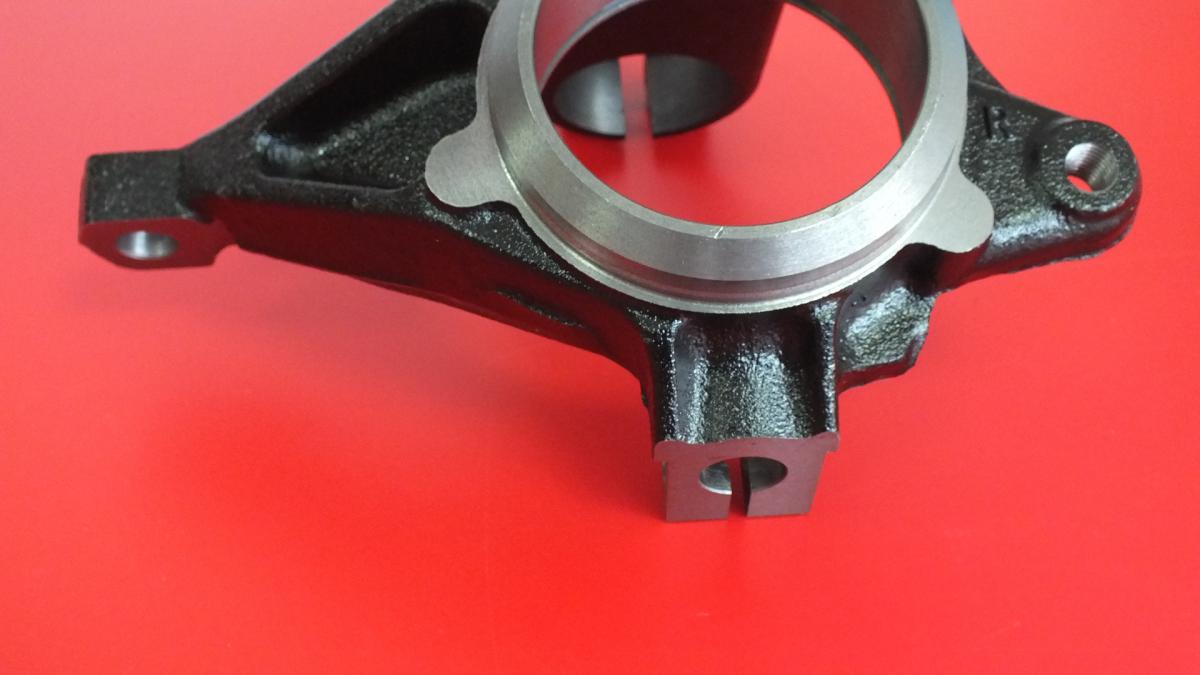
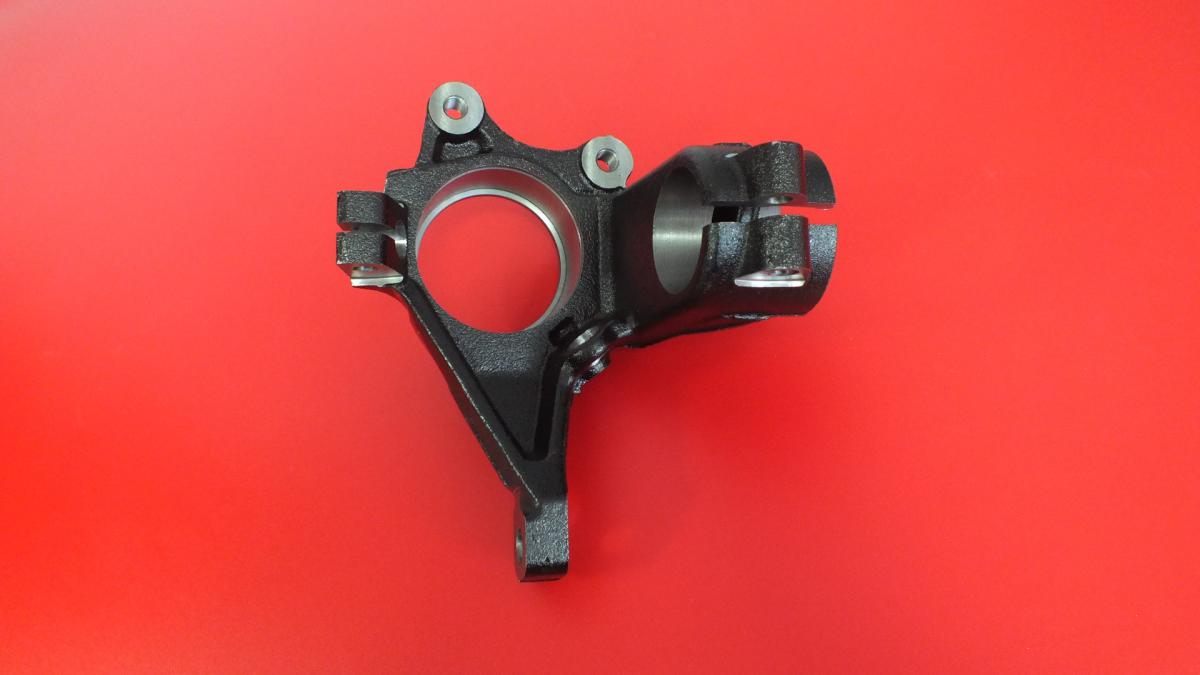
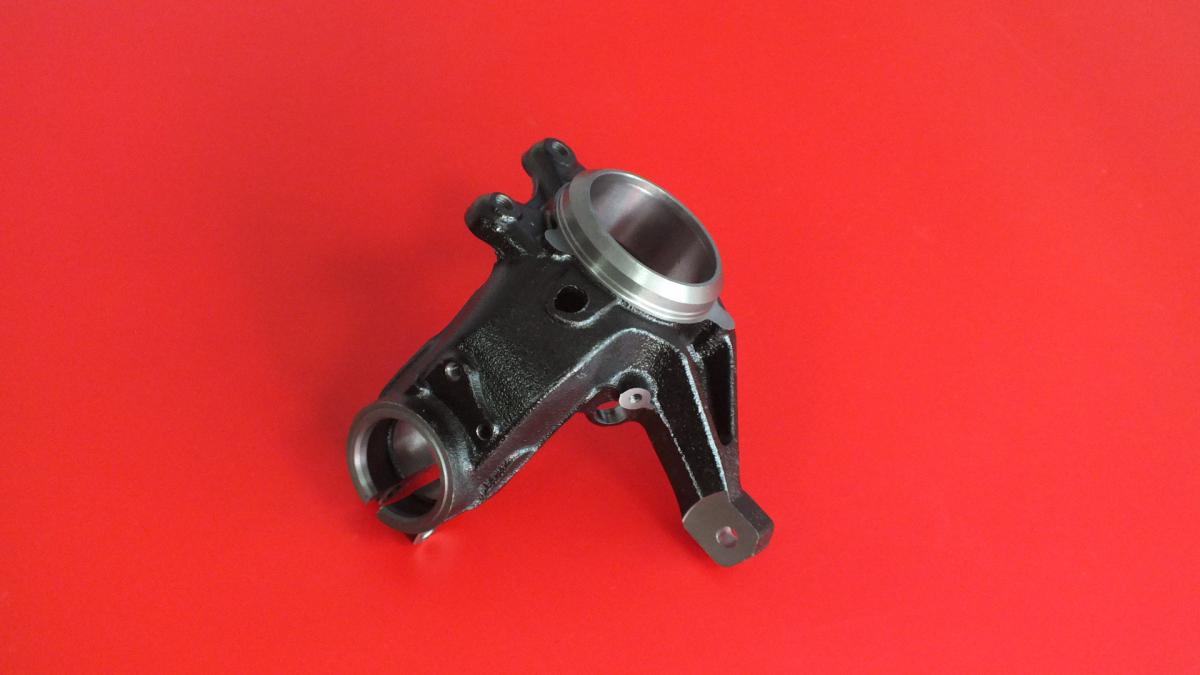
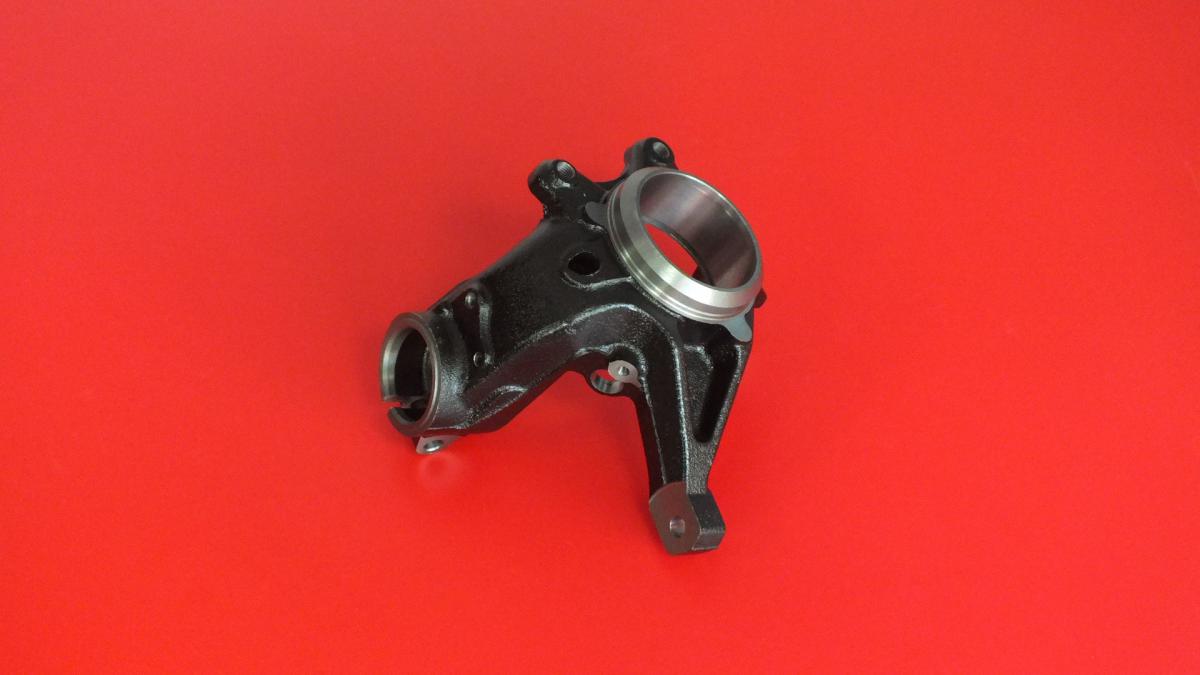
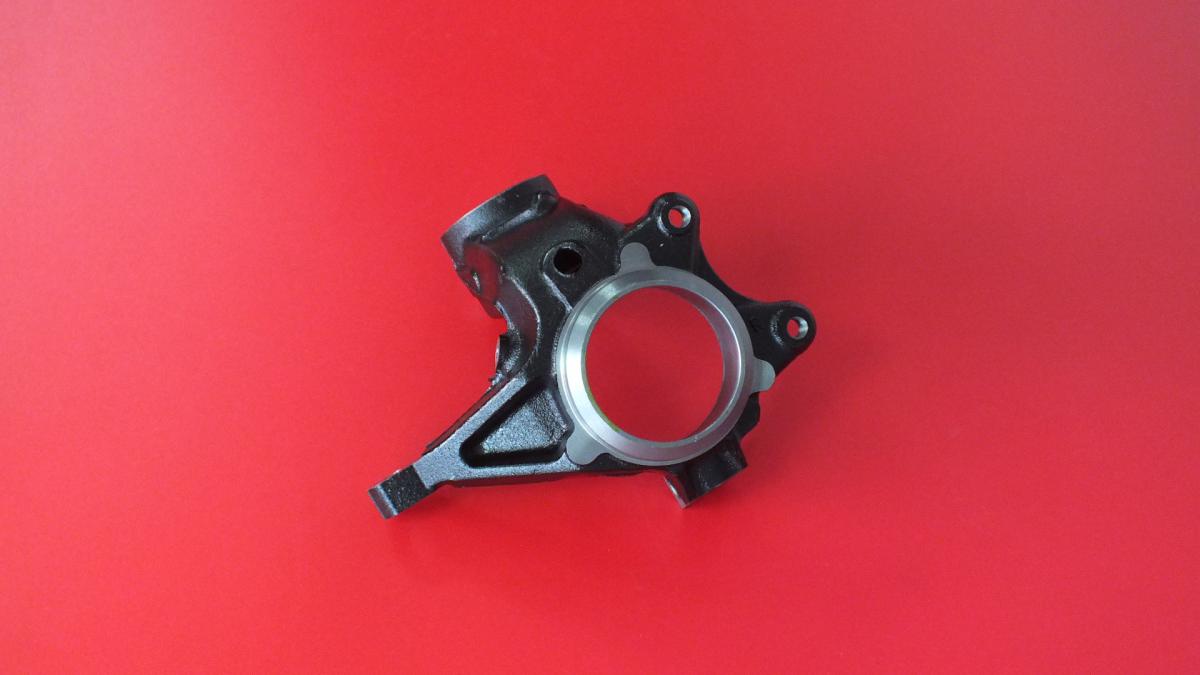
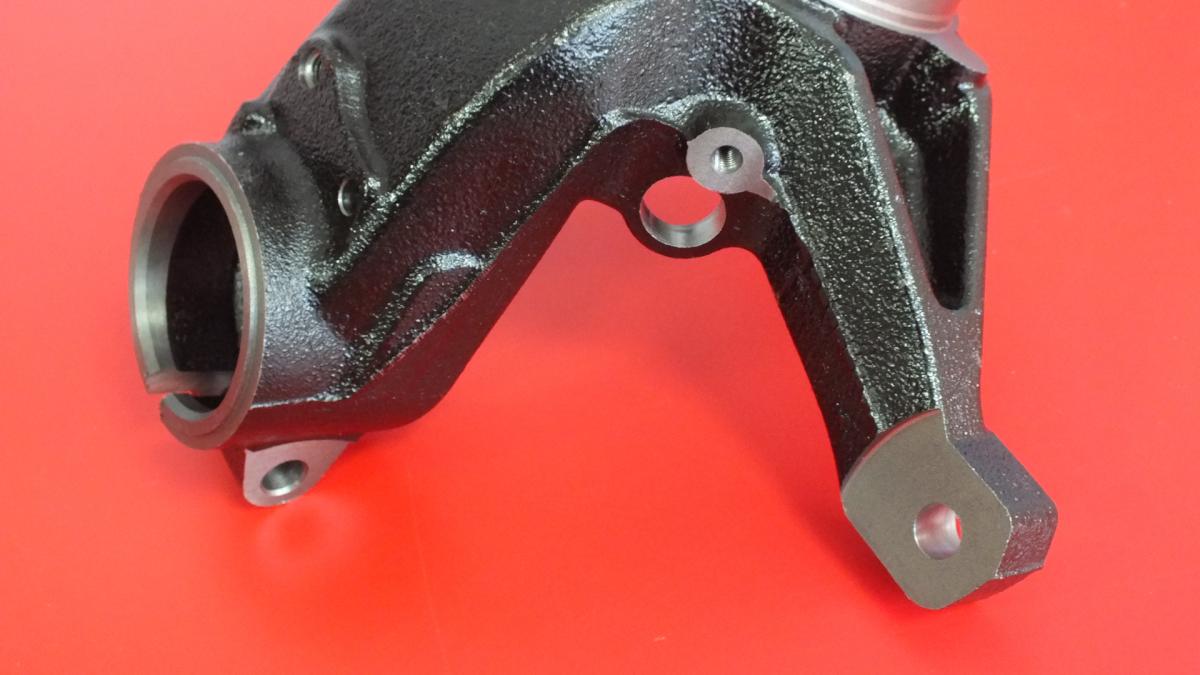
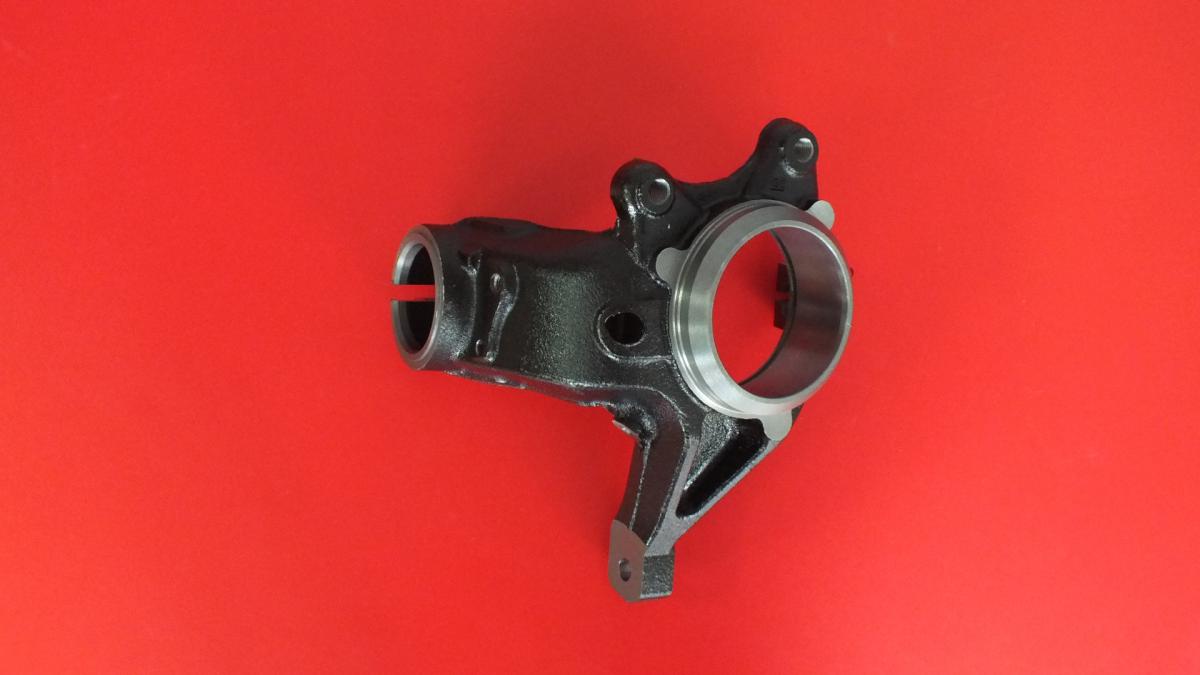
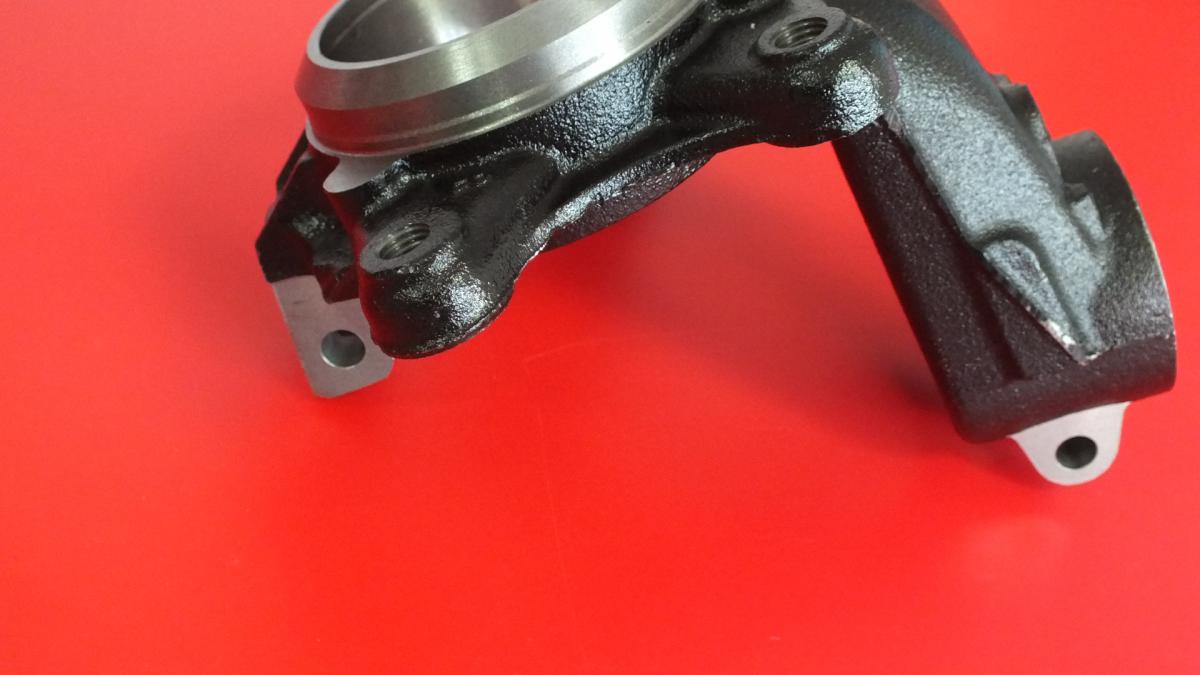
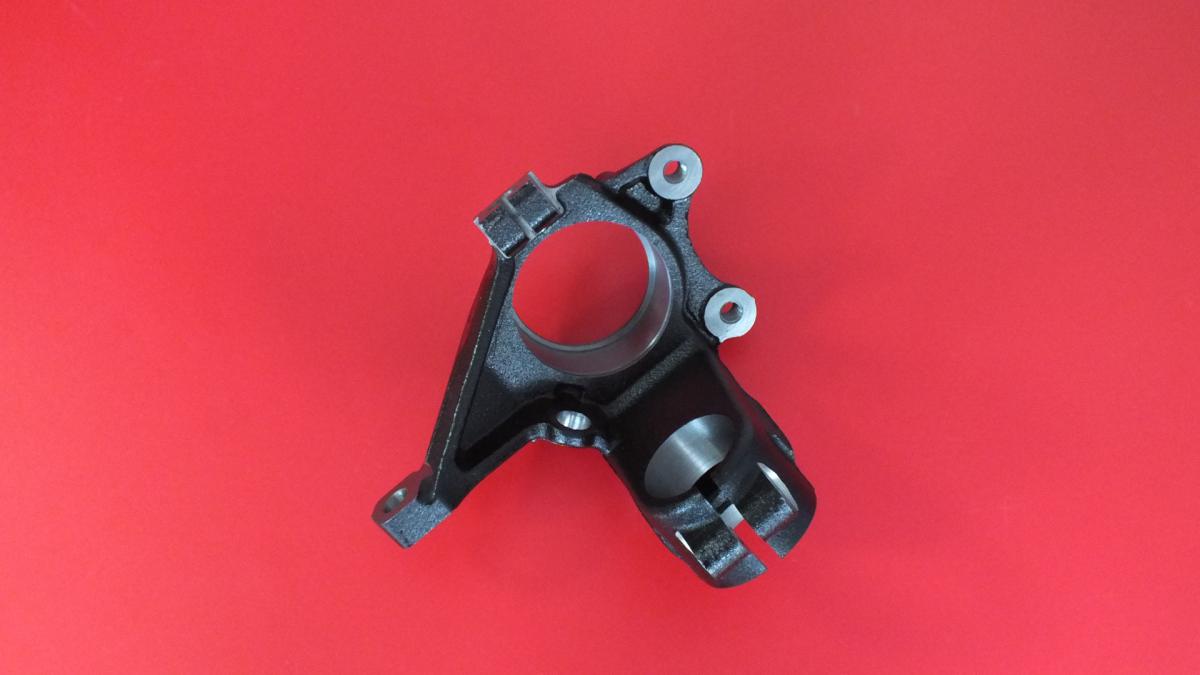
PEUGEOT/CITROËN 364754 KNUCKLE STEERING
Product Specifications

Product quality
OEM Equivalent Grade
starstarstar
50 sold
Wholesale price USD $13.39
Wholesale price CNY ¥91.2
bolt MOQ (Minimal order)
50 pcs
local_shipping Production time
26 days
package_2 Shipping Weight: 3.35 kg
PEUGEOT/CITROËN 364754
PEUGEOT/CITROËN 364654
PEUGEOT/CITROEN 364754
Overview & Operating Principle

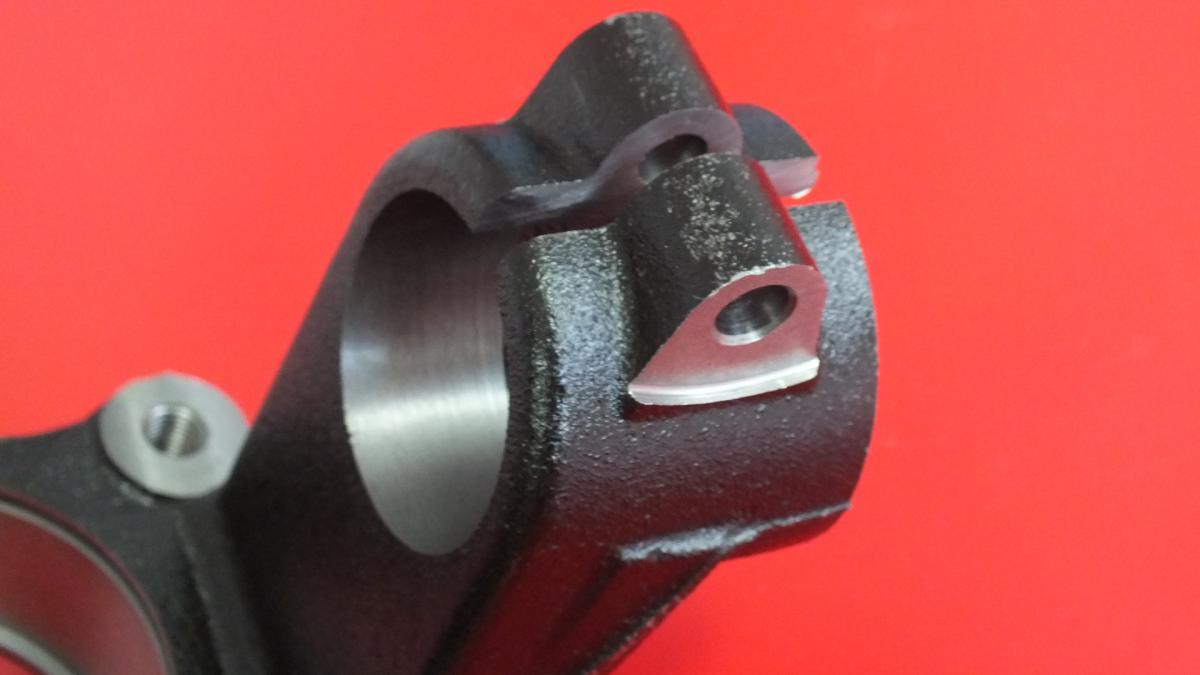
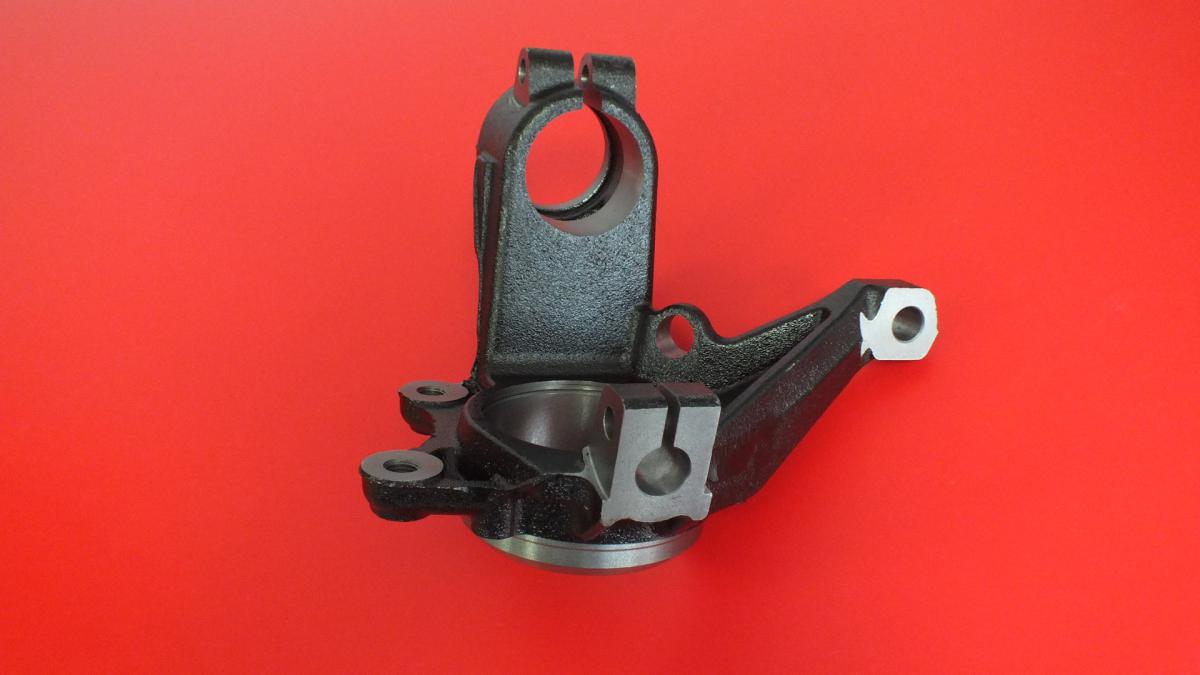
The KNUCKLE STEERING is the primary structural hub carrier at the front axle that pivots about the upper and lower ball joints or the strut top mount and lower ball joint to provide the steering axis around which the wheel assembly turns, simultaneously serving as the rigid mounting platform for the wheel bearing hub assembly, brake caliper, ABS wheel speed sensor, and tie rod end. Cast from grey iron, nodular iron, or aluminium alloy depending on the vehicle's weight class and performance requirements, the knuckle is a highly loaded structural component that transmits all lateral, longitudinal, and vertical forces generated at the tyre contact patch into the suspension linkage during cornering, braking, and road surface impacts. Its geometry is precision-machined to define the kingpin inclination angle, steering axis offset, and wheel bearing bore concentricity that are fundamental inputs to the vehicle's steering geometry — caster, camber, and scrub radius are all determined by the knuckle's design dimensions and cannot be adjusted independently of the knuckle itself on most modern suspension designs.

This unit — PEUGEOT/CITROËN 364754 — is manufactured to OEM-equivalent specifications: overall casting geometry and machined bore dimensions, wheel bearing bore diameter and face runout tolerance, ball joint taper bore angle and thread size, tie rod end taper bore, brake caliper mounting face position and thread specification, and ABS sensor bore diameter are matched to the original part. Supplied as a direct bolt-in replacement for standard fitment. Available wholesale from 13.39 USD, MOQ 50 pcs, production lead time 26 days.

Steering knuckles are damaged primarily through impact events — kerb strikes, pothole impacts at speed, and collision damage — that bend or crack the casting, distorting the wheel bearing bore from round and shifting the ball joint taper bores out of their design angular relationship. A bent knuckle produces a characteristic steering pull, rapid inner tyre wear, and a camber angle that cannot be corrected by alignment adjustment alone because the knuckle geometry itself has changed. Always inspect the knuckle for dimensional integrity after any significant wheel impact before performing alignment — a knuckle with a distorted bearing bore or cracked casting cannot be safely returned to service regardless of how the alignment measures.

Symptoms & Diagnostics
Camber angle that is outside specification and cannot be corrected by alignment adjustment on one corner — the knuckle casting has been deformed by an impact, shifting the wheel bearing bore axis from its design angle; a bent knuckle produces a fixed camber error that does not respond to adjustment of the strut top mount or control arm eccentric bolts.
Persistent rapid inner or outer edge tyre wear on one corner despite correct alignment readings immediately after adjustment — the knuckle bearing bore is distorted, causing the wheel hub to run at a slight angle even when the alignment reads correctly at static ride height; dynamic camber during cornering differs from static because the distorted bore changes its angular relationship as suspension load varies.
Wheel bearing that fails repeatedly within a short period after correct installation — a distorted or out-of-round knuckle bearing bore subjects the new bearing to preload stress that causes premature fatigue of the outer race; confirm bore roundness with a dial bore gauge before condemning a bearing that has failed for the second time in the same location.
Steering pull that persists after wheel alignment, tyre rotation, and brake inspection have all been confirmed correct — a bent knuckle with asymmetric kingpin inclination produces a caster difference between left and right that pulls toward the side with reduced caster; the pull is load-sensitive and worsens under braking.
Visible crack in the knuckle casting detected on visual inspection after a kerb or pothole impact — any crack in a safety-critical steering and suspension component requires immediate replacement; a cracked knuckle must not be welded or returned to service in any condition as casting cracks propagate under fatigue loading and fracture without warning.
Abnormal steering effort or binding through a specific arc of steering lock following a frontal impact — the knuckle's strut mounting bore or upper ball joint seat has been deformed, changing the effective kingpin inclination and creating a geometry that binds at certain steering angles; confirm by measuring steering effort at the wheel rim through the full lock-to-lock range.
Logistics & Customs
International HS Code
8708.50
EAEU Customs Code (TN VED)
8708 50 200 0
Typical Net Weight
3.35 kg
Country of Manufacture
China
Standard MOQ
50 pcs
Production Lead Time
26 days
Always verify the exact 8-digit or 10-digit subheading with your customs broker for the destination country, as tariff schedules and duty rates vary by jurisdiction.
Installation Tips
  1. Support the vehicle on chassis stands and remove the wheel before beginning disassembly — the knuckle carries the full weight of the wheel, hub, brake disc, and caliper; support the lower control arm with a workshop jack set just below its unloaded position before releasing the ball joint to prevent the arm from dropping suddenly and over-extending the driveshaft CV joint or brake hose beyond its travel limit.
  2. Release the tie rod end, lower ball joint, and strut-to-knuckle pinch bolts in sequence before attempting to withdraw the knuckle — use a ball joint separator tool rather than a hammer to release taper joints; striking the knuckle boss with a hammer to free a taper can crack the casting boss or damage the new knuckle's taper bore if the tool slips. Never use a pickle fork on a ball joint that is being retained for reuse.
  3. Press the wheel hub and bearing out of the knuckle before transferring to the new unit — the wheel bearing outer race is an interference fit in the knuckle bore; use a hydraulic press with the correct support plates to remove and install bearings without applying force through the rolling elements. Never use an impact hammer to drive a bearing into an aluminium knuckle as this cracks the bore and destroys both the new knuckle and the bearing.
  4. Measure the new knuckle bearing bore with a dial bore gauge before pressing in the new bearing — confirm the bore is within the OEM tolerance for interference fit; a bore that is oversized from a previous oversized bearing installation or manufacturing variance will not retain the new bearing outer race under cornering loads; an undersized bore will crack during pressing.
  5. Torque all taper joint nuts and strut pinch bolts to OEM specification with the suspension at ride height — ball joint and tie rod end nuts must be torqued with the joint in its normal loaded position to prevent the rubber boot from twisting and tearing; tighten all fasteners with the vehicle on its wheels at ride height or with the suspension jacked to the ride height position before final torquing.
  6. Install the new KNUCKLE STEERING (PEUGEOT/CITROËN 364754), torque all fasteners to specification, refit the wheel, lower the vehicle, and perform a four-wheel alignment immediately — knuckle replacement changes camber, caster, and toe simultaneously; never return a vehicle to the customer after knuckle replacement without a full alignment check and adjustment; confirm ABS sensor air gap is within specification and the sensor produces a clean signal on a scan tool before road testing.
Tools: hydraulic press with bearing installation plates, dial bore gauge, ball joint separator, torque wrench, workshop jack, four-wheel alignment equipment, OBD-II scanner for ABS sensor signal verification.
Frequently Asked Questions
Is wheel alignment always required after steering knuckle replacement, and which angles are affected?
Wheel alignment is mandatory without exception after any steering knuckle replacement. The knuckle defines the geometric relationship between the wheel bearing axis, the ball joint axis, and the tie rod attachment point — replacing it changes camber, caster, and toe simultaneously even when the new knuckle is dimensionally identical to the original, because reassembly variation and new component tolerances shift all three angles from their previous settings. A full four-wheel alignment including caster where adjustable, camber, and toe must be performed and set to OEM specification before the vehicle is returned to service. ok.parts supplies steering knuckles at wholesale MOQ from 13.39 USD per unit.
Should the wheel bearing always be replaced when the knuckle is replaced, or can the existing bearing be transferred?
The wheel bearing must always be replaced when the knuckle is replaced. The bearing outer race is an interference fit in the knuckle bore — pressing it out of the old knuckle and into the new knuckle applies force through the bearing that fatigues the outer race and rolling element contact zones, shortening the bearing's remaining service life unpredictably. More critically, a bearing that was operating in a distorted bore on the old knuckle will have uneven outer race wear patterns that cause noise and vibration in the new correctly-dimensioned bore. Fitting a new bearing in the new knuckle eliminates both risks and ensures the full bearing service life is available.
How does the OEM-equivalent aftermarket unit compare to the genuine OEM part?
OEM-equivalent units in this catalogue replicate the current OEM design geometry and material specification. Quality is verified against OEM cross-reference data. When ordering in bulk, confirm with our team that the specification matches the latest OEM revision for your application.
Is white-label or custom packaging available for wholesale orders?
Yes. ok.parts works directly with the manufacturing facility and can accommodate neutral white-label packaging or fully branded packaging with your company logo, part numbers, and barcode. Minimum order quantities and lead times for custom packaging may differ from standard stock. Contact the team via the inquiry form to discuss your specific requirements.
Frequently Replaced Together