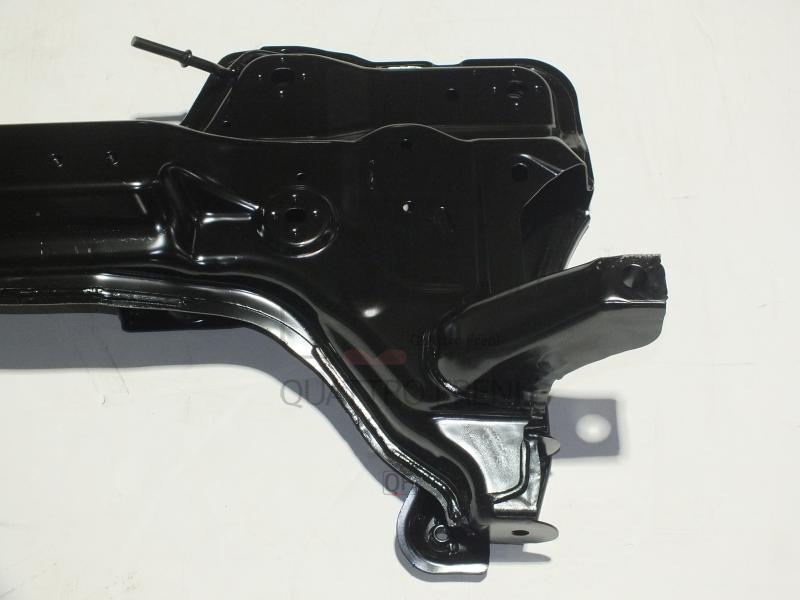
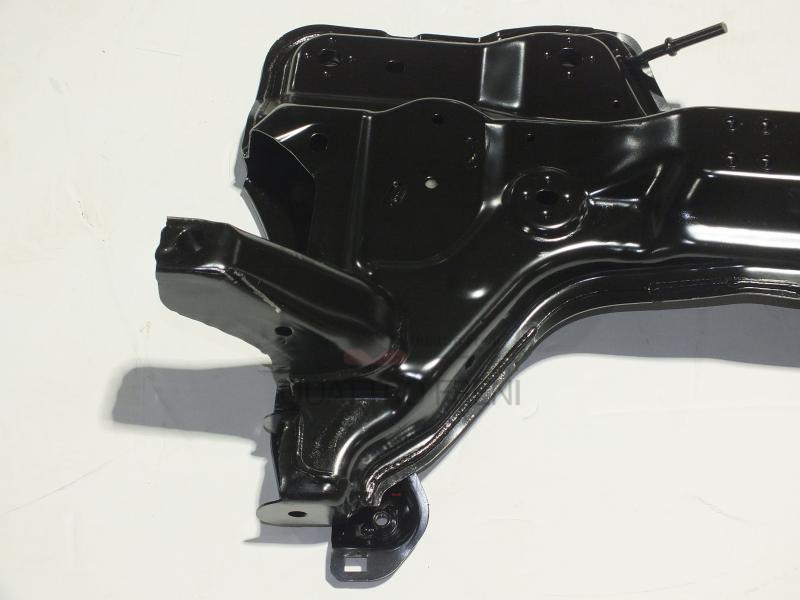
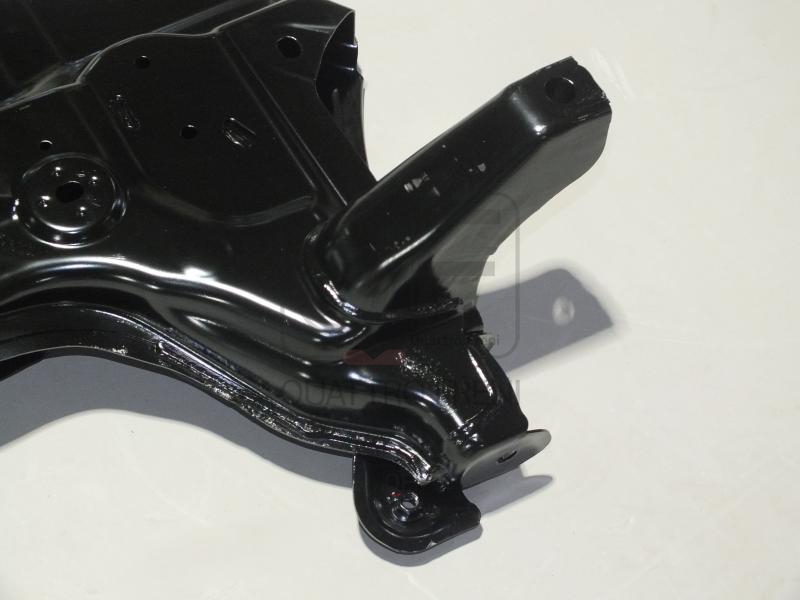
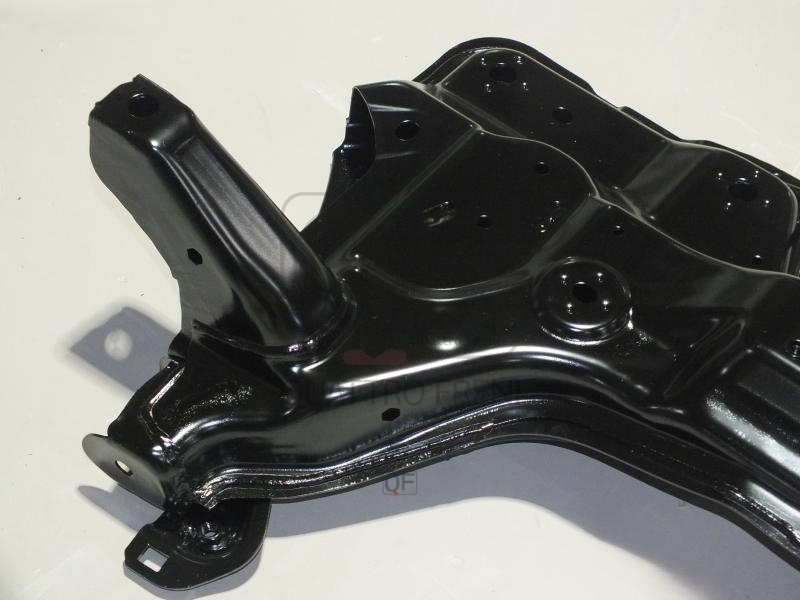
GENERAL MOTORS 55703234 CROSSMEMBER
Product Specifications
| GENERAL MOTORS | 55703234 |
| GENERAL MOTORS | 0302109 |
| GENERAL MOTORS | 13427070 |
| GENERAL MOTORS | 302109 |
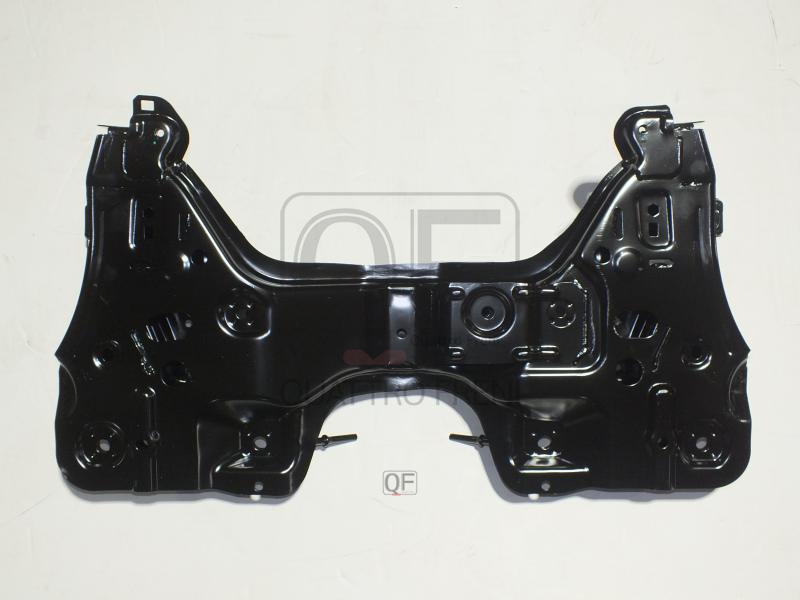
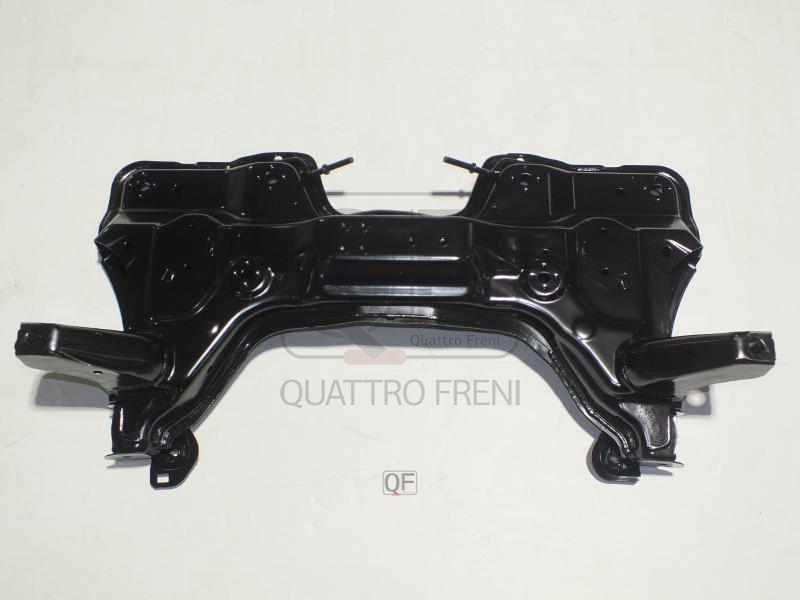
The GM 13427070 is a Front Subframe / Engine Crossmember Cradle for the Opel / Vauxhall Corsa D (all petrol and diesel variants including VXR, 2006–2014). The same subframe is shared across the SCCS platform family: Fiat Grande Punto (2005+), Fiat Punto Evo (2009–2012), and Alfa Romeo Mito (2008–2018). Additional OEM cross-references on this page: 55703234, 0302235, and 302235. The subframe is commonly replaced on high-mileage Corsa D examples due to corrosion perforation, which is a recognised structural failure mode in road-salt regions.
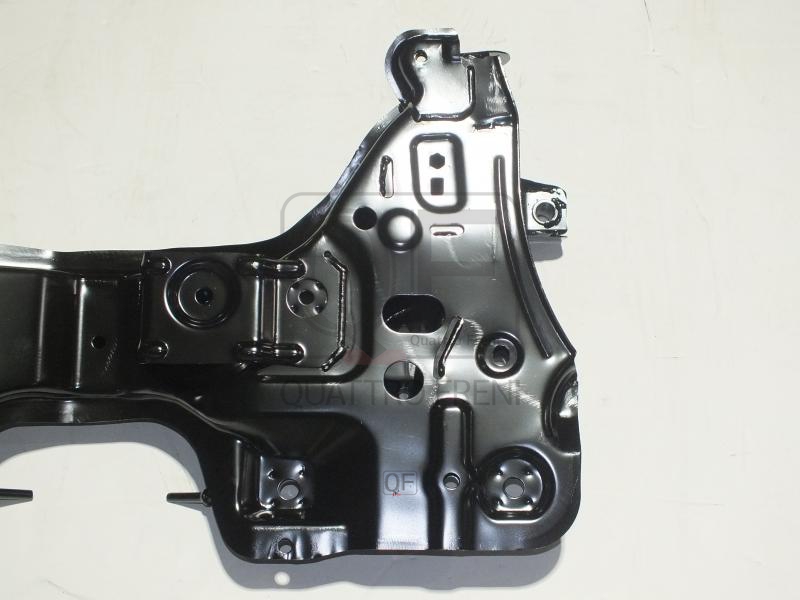
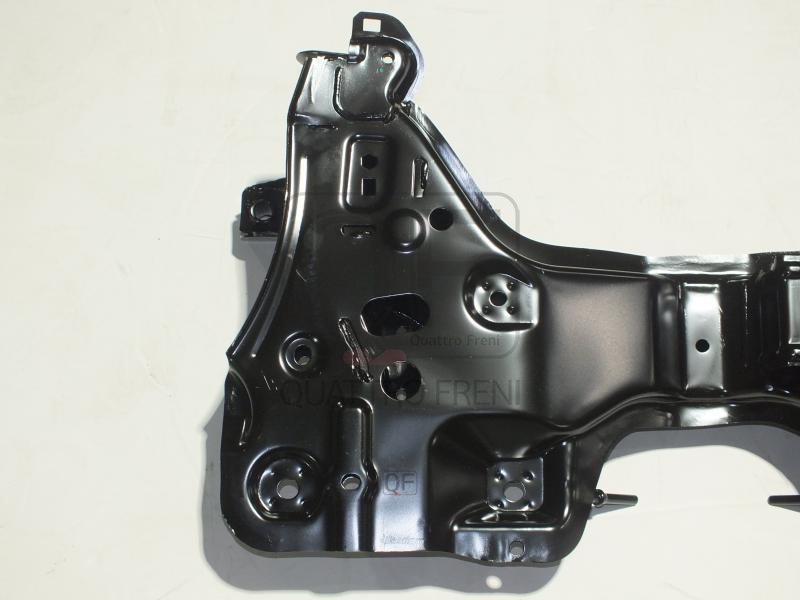
The front subframe is the primary structural cradle that bolts to the vehicle body via four large mounting points and carries the entire front drivetrain and suspension system. On the Corsa D and its platform siblings, the subframe simultaneously supports the engine and gearbox through rubber-isolated mounts, anchors the front lower suspension arms (track control arms) to the vehicle structure, provides the mounting brackets for the steering rack, and carries the anti-roll bar through its drop links and mounting bushings.
Because all front suspension geometry — camber, castor, and toe — is referenced from the subframe mounting points, a corroded, cracked, or collision-damaged subframe directly compromises wheel alignment, steering precision, and suspension articulation. On the Corsa D in particular, the subframe is a known corrosion hotspot: road salt accumulates in the box sections and weld seams of the rear flanges where the subframe attaches to the body, and moisture trapped there progressively perforates the steel. Many Corsa D examples fail MOT/roadworthiness inspection on subframe corrosion alone.
| International HS Code | 8708.29 |
| EAEU Customs Code (TN VED) | 8708 29 100 0 |
| Country of Manufacture | China |
| Hazardous goods | No |
| Packaging | Individually packed — export-ready |
Front subframes and axle crossmember cradles are classified under HS 8708.29 (other parts and accessories of motor vehicles). Verify the exact 10-digit subheading and applicable duty rates with your customs broker. Commercial invoice description: Front axle subframe crossmember for motor vehicle.
| Brand / Model | Body Code / Years | Engines |
|---|---|---|
| Opel / Vauxhall Corsa D | 2006–2014 (all variants incl. VXR) | All petrol and diesel — 1.0 / 1.2 / 1.4 / 1.6T / 1.7CDTi / 1.3CDTi |
| Fiat Grande Punto | 2005–2012 | 1.2 / 1.4 / 1.6 Mjet / 1.9 Mjet |
| Fiat Punto Evo | 2009–2012 | 1.2 / 1.4 / 1.3 Mjet / 1.6 Mjet |
| Alfa Romeo Mito | 2008–2018 | 1.4 / 1.4 TB / 1.3 Mjet / 1.6 Mjet |
Subframe specifications may vary between certain engine configurations. Some markets use slightly different subframe variants — confirm the exact OEM number stamped on your existing subframe before ordering. The Corsa D Corsavan shares the same subframe as the hatchback.
Difficulty: Advanced — full front suspension and drivetrain lowering required. Engine support, transmission jack, and a full set of suspension component torques are needed. A 4-post lift or vehicle pit is strongly recommended. A full 4-wheel alignment must be performed after fitting. Estimated workshop time: 4–8 hours depending on corrosion and condition of ancillary components.
- 1Support the engine and gearbox before removing the subframe. Use an engine support bar across the engine bay top or a transmission jack from below. The engine and gearbox must remain supported throughout the subframe removal — they are not self-supporting with the subframe removed.
- 2Raise the vehicle on a 4-post lift or axle stands and remove both front road wheels. Apply penetrating oil to all subframe mounting bolts and suspension fasteners at least 24 hours before the job where possible — corrosion on Corsa D subframe bolts is severe and snapping is common.
- 3Disconnect the steering rack from the steering column intermediate shaft. Mark the shaft position before separation to preserve steering wheel alignment. Disconnect the steering rack track rod ends from the steering knuckles at both sides (loosen the track rod end nuts and use a separator tool).
- 4Unbolt the front lower control arms from the subframe inner pivot bolts at both sides. Unbolt the anti-roll bar drop link lower ends from the bar. Unbolt the anti-roll bar mounting clamps from the subframe.
- 5Remove the engine and gearbox mounts from the subframe mounting brackets. The subframe carries the engine mount bracket on the right side and the gearbox torque mount bracket on the left — both must be separated from the subframe before it can be lowered.
- 6Support the subframe from below with a transmission jack or workshop trolley before removing the four main body mounting bolts (two front, two rear). Remove the body mounting bolts carefully — the rear bolts on corroded Corsa D subframes often round off or snap. Have a bolt extractor set and thread repair inserts available for the body mounting holes.
- 7Lower the old subframe and inspect the body mounting holes in the vehicle body for corrosion or thread damage. Repair any thread damage with appropriate inserts before fitting the new subframe.
- 8Transfer all reusable components to the new subframe: anti-roll bar with its bushings, engine mount brackets, steering rack (inspect rack mounting bushings and replace if worn), and any sub-bracket hardware. Replace all control arm inner pivot bolts and subframe body mounting bolts with new items — do not reuse stretch bolts.
- 9Raise the new subframe into position and align the four body mounting holes. Hand-start all four body mounting bolts before torquing any of them. Torque the body mounting bolts to OEM specification: typically 120–140 Nm for the rear bolts and 100–120 Nm for the front bolts on the Corsa D — verify in the GM workshop manual for your specific year.
- 10Reinstall all suspension components, steering rack connections, engine and gearbox mounts in reverse order. Torque all suspension fasteners to specification with the suspension at ride height (simulate full suspension load with a jack under the lower arm before tightening inner pivot bolts). Refit road wheels.
- 11Perform a full 4-wheel alignment immediately after fitting — this is mandatory. Even if the subframe is positioned in exactly the correct location, any variation in mounting position, new subframe bush geometry, or steering rack position will alter castor, camber, and toe. A geometry check is required before the vehicle is returned to road use.
| Part | Reference | Reason for Combined Replacement |
|---|---|---|
| Front Lower Control Arms (Track Control Arms) | Opel / Vauxhall Corsa D front lower control arms — confirm by year | If the subframe is being replaced due to corrosion, the inner pivot bushings of the front lower control arms are very likely to be in a degraded condition as well — corrosion and rubber deterioration occur on the same timeline. Since the control arm inner pivot bolts must be removed to extract the subframe, and since new stretch bolts must be fitted regardless, replacing the control arms simultaneously adds minimal additional labour while restoring the complete front suspension system to full specification. |
| Anti-Roll Bar and Drop Links | Opel / Vauxhall Corsa D front anti-roll bar and drop links — confirm by year | The front anti-roll bar is bolted to the subframe via mounting clamps and rubber bushings. The drop links connect the bar to the front struts. On high-mileage Corsa D examples where the subframe is corroded, the anti-roll bar bushings and drop links are typically worn to the point of causing knocking noise. Since the bar is fully accessible with the subframe removed, replacing both the bar mounting bushings and the drop links simultaneously is efficient and prevents recurring noise complaints after the subframe job. |
| Steering Rack Mounting Bushings | Opel / Vauxhall Corsa D steering rack mounting bushings | The steering rack mounts to the subframe via rubber isolation bushings that absorb road vibration and prevent noise transfer. These bushings deteriorate with age and are a common source of steering imprecision and rattling over rough roads on older Corsa D vehicles. Since the steering rack must be partially freed from the subframe as part of the replacement procedure, inspecting and replacing the rack mounting bushings at the same time adds no significant labour. |
| Engine and Gearbox Mounts | Opel / Vauxhall Corsa D engine mount and gearbox torque mount — confirm by engine | The engine and gearbox mounts attach to bracket points on the subframe and must be disconnected during the replacement procedure. On vehicles where the subframe has corroded over many years of use, the rubber in the engine and gearbox mounts is typically hardened, cracked, or collapsed — symptoms of which include vibration through the cabin and knocking during gear engagement. Replacing worn mounts simultaneously eliminates a likely follow-on complaint and is highly efficient given that the mounts are already fully accessible during the subframe job. |