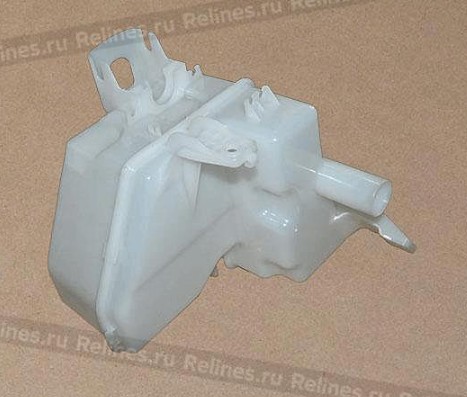
CHERY 607000098AA WINDSCREEN WASHER FLUID RESERVOIR
Product Specifications
| CHERY | 607000098AA |
The Chery 607000098AA is a Windscreen Washer Fluid Reservoir (Washer Bottle) for the latest-generation Chery Tiggo 9 (T26, 2023+) and Jaecoo J8 (2023+) — the new flagship 7-seat SUVs on Chery's M3X platform launched in 2023. The reservoir mounts in the front engine bay (typically driver's-side wheel arch area on Chery T26 platform) and stores washer fluid for the windscreen washer system — supplying the windscreen and (where fitted) headlight washer jets via the integrated electric washer pump. Material: blow-moulded high-density polyethylene (HDPE) or polypropylene (PP).
The reservoir holds the windscreen washer fluid — typically a methanol or isopropanol-based winter mixture (or water + detergent in summer-only specification) — and supplies it on demand to the windscreen washer jets through the integrated electric washer pump. The pump mounts in the lower side wall of the reservoir and delivers fluid through internal tubing to the under-bonnet washer jet manifold, then through external hoses to the jets at the base of the windscreen. The reservoir incorporates a level sensor that triggers the dashboard low-fluid warning indicator when the fluid drops below a calibrated threshold.
On the Chery T26 platform (Tiggo 9 / Jaecoo J8), the reservoir is typically packaged in the driver's-side front wheel arch area with the filler neck routed up to a cap accessible from the engine bay. The reservoir capacity on the Tiggo 9 / Jaecoo J8 is in the typical 4–5 litre range for vehicles equipped with windscreen washer only, or 5–6 litres on variants equipped with combined windscreen + headlight washer where the combined system requires additional fluid capacity. The reservoir filler neck features the standard ISO blue cap with washer fluid pictogram for identification.
Reservoirs fail through cracking of the polymer body (most often at the pump mounting boss from vibration fatigue, or at the filler neck base from over-tightened cap), seal failure at the pump mounting producing slow seepage of fluid onto the wheel arch liner, level sensor failure producing false low-level warnings or no warning at all when fluid is genuinely low, and filler neck cracking from impact or freeze damage in cold climates where water-only filling has occurred.
| International HS Code | 8512.90 |
| EAEU Customs Code (TN VED) | 8512 90 900 0 |
| Country of Manufacture | China |
| Quality standard | IATF 16949 |
| Hazardous goods | No |
| Packaging | Individual branded packaging with vehicle application label |
Windscreen washer reservoirs as parts of the windscreen washing system are typically classified under HS 8512.90 (parts of windscreen wipers, defrosters and demisters of HS 8512.40) or alternately under HS 3926.30 (other articles of plastics, fittings for furniture, coachwork or the like) for the bare polymer reservoir without sensor or pump fitted. Confirm the exact 10-digit subheading and applicable duty rates with your customs broker, particularly for cold-climate market shipments where the Chery Tiggo 9 / Jaecoo J8 fleet population is concentrated. Commercial invoice description: windscreen washer fluid reservoir (washer bottle) for passenger vehicle, blow-moulded polymer body with integrated pump mounting and level sensor provision.
| Vehicle | Years & market |
|---|---|
| Chery Tiggo 9 (T26) | 2023–present — export markets including Middle East, Latin America, Asia. Mid-large 7-seat SUV on Chery M3X platform. Engine variants: 2.0L TGDI petrol turbo, 1.5L PHEV plug-in hybrid (Chery Super Hybrid CSH) |
| Chery Tiggo 9X (China domestic) | 2025–present — renamed designation of Tiggo 9 in Chinese domestic market from September 2025, technically the same vehicle |
| Chery Tiggo 8L (export only) | 2024–present — positioned between Tiggo 8 and Tiggo 9, exported as Tiggo 9 in some markets, may share washer reservoir with the T26 platform — verify by OEM number on existing reservoir |
| Jaecoo J8 | 2023–present — Chery sub-brand premium SUV. Exported to Middle East, Europe (Spain, UK), Australia. Built on Chery T26 / M3X platform sharing major body and trim components with the Tiggo 9 |
Does NOT fit: Chery Tiggo 7 (any generation) — smaller Tiggo platform, different reservoir; Chery Tiggo 8 (any generation including 8 Plus, 8 Pro) — predecessor Tiggo platform with different reservoir reference; Chery Tiggo 4, Tiggo 5, Tiggo 5x, Tiggo 6, Tiggo 2 — smaller / older platforms; Chery Arrizo series (3, 5, 6, 8) — sedan platforms with different reservoirs; Chery Omoda 5, Omoda 7 — despite shared brand parent, different platform and reservoir; Jaecoo J7 — smaller sister model on different Chery platform with different reservoir; Chery Fulwin T8 / T9 — new energy variants of Tiggo line, may share with T26 reservoir; verify by OEM number; Chery EXEED LX / TXL / VX — premium sub-brand on different platforms. Always verify by reading the OEM number stamped on the existing reservoir.
Difficulty: Moderate. Estimated time: 60–90 minutes including wheel arch liner removal. The reservoir is typically supplied bare — the existing washer pump and level sensor are transferred from the old reservoir to the new one. Verify supplied content of the package on receipt.
- 1Park the vehicle on a level surface with the engine cool. Disconnect the negative battery terminal. Open the bonnet and remove the engine top cover for access to the reservoir filler area.
- 2Drain the existing reservoir by activating the washer system repeatedly until the pump runs dry. Alternatively, siphon out the fluid using a hand pump — this is faster and avoids running the pump excessively. Catch the drained fluid in a clean container.
- 3Remove the front wheel on the side where the reservoir is located (typically driver's-side on Chery T26 LHD vehicles). Securely support the vehicle on jack stands — never work under a vehicle supported only by the jack.
- 4Remove the wheel arch liner — typically held by 6–10 plastic clips and 2–4 small hex screws on Chery Tiggo 9 / Jaecoo J8. Note clip positions for refitting. Take care with aged plastic clips on 2–3 year-old vehicles — replacements may be needed.
- 5Disconnect the washer pump electrical connector and the level sensor connector (usually a single 2–3 pin connector each). Photograph connector orientation for refitting reference.
- 6Disconnect the washer hose(s) from the pump outlet. Modern Chery T26 vehicles may have a single hose to the windscreen jets, or two hoses if equipped with combined windscreen + headlight washer. Cap the disconnected hoses to prevent dirt ingress.
- 7Remove the reservoir mounting bolts (typically 2–3 bolts of 8 mm or 10 mm head). Note the position of any spacers or mounting brackets. Lift the reservoir down and out through the wheel arch opening.
- 8Transfer the washer pump and level sensor from the old reservoir to the new one. The pump typically pulls out of its mounting boss with a firm pull (rubber grommet seal); the level sensor may be similarly retained or held by 1–2 small screws. Inspect the pump grommet seal — replace if hardened or damaged. Inspect the pump intake filter — clean if any debris or sludge present.
- 9Lubricate the new reservoir's pump grommet seat with a light film of clean washer fluid. Press the pump firmly into the new reservoir's mounting boss until fully seated. Install the level sensor.
- 10Lift the new reservoir into position, aligning the mounting bolt holes with the body brackets. Install all mounting bolts hand-tight first, then torque to OEM spec (typically 8–10 Nm) in a uniform sequence. Reconnect the washer pump and level sensor electrical connectors. Reconnect the washer hose(s) to the pump outlet.
- 11Refit the wheel arch liner with all original clips and screws. Use new clips for any that broke during removal. Refit the front wheel and torque the wheel nuts to Chery spec (typically 110–130 Nm for the Tiggo 9 / Jaecoo J8).
- 12Fill the reservoir with appropriate-grade washer fluid. For cold-climate operation, use winter-grade fluid rated below the local minimum ambient temperature (typically −25°C minimum, −30°C or −40°C for severe-climate regions). Reconnect the negative battery terminal. Operate the washer system and verify clean jet output, no leaks at the reservoir or hose connections, and correct dashboard low-fluid warning operation.
| Part | Reference | Reason for Combined Replacement |
|---|---|---|
| Washer Pump | Chery T26 / Jaecoo J8 platform-specific washer pump | Replace simultaneously only if confirmed failed by direct testing — pump audible operation but no fluid output OR pump silent with 12 V verified at the connector. Particularly important if the reservoir failure was caused by running the pump dry from undetected leak — sustained dry operation destroys pump impeller seals. Otherwise transfer the existing pump to the new reservoir. |
| Pump Mounting Grommet Seal | Chery T26 / Jaecoo J8 pump grommet | The rubber grommet that seals the pump body to the reservoir mounting boss hardens with age and washer-fluid exposure. A reused hardened grommet on the new reservoir produces immediate fluid seepage at the pump mounting — mimicking a cracked reservoir. Replace alongside the reservoir as inexpensive insurance against repeat-leak symptoms. |
| Washer Fluid Level Sensor | Chery T26 / Jaecoo J8 level sensor | If the original failure mode was a permanently-on or permanently-off low-fluid warning, the level sensor was the primary fault — replace simultaneously with the new reservoir. If the warning was operating correctly before the leak, the sensor can be transferred from the old reservoir. |
| Wheel Arch Liner Clips and Fasteners | Chery T26 / Jaecoo J8 clip kit | The plastic clips retaining the wheel arch liner often break during removal, particularly on 2–3 year-old vehicles where the polymer has aged. Order a clip / fastener kit alongside the reservoir to refit the liner correctly. A poorly retained wheel arch liner allows water and debris ingress that contributes to reservoir vibration damage. |
| Winter-Grade Washer Fluid | Local market winter-grade product, −25°C / −30°C / −40°C rating | Critical for cold-climate operation. The new reservoir must be filled with appropriate winter-grade fluid before the first freeze of the season. Fluid grade must be rated below the lowest expected ambient temperature in the vehicle's operating region. Never use plain water or summer-grade fluid in any climate where freezing is possible — this is the leading cause of polymer reservoir cracking in cold-climate market vehicles. |