Oxygen Sensors (Lambda Sensors): Complete Technical and Wholesale Sourcing Guide
A comprehensive guide to oxygen sensor technology, failure diagnostics, OEM cross-references by vehicle brand, and how to source wholesale from China through verified factories.
The oxygen sensor - also known as the lambda sensor or O2 sensor - is one of the most critical and most frequently replaced engine management components. Every modern vehicle has at least two, and many V6 or V8 engines have four. These sensors are the ECU's primary feedback mechanism for controlling the air-fuel mixture, directly affecting fuel consumption, emissions output, and catalytic converter longevity.
For auto parts distributors and importers, oxygen sensors represent a consistently high-demand, high-margin category. For mechanics and workshop buyers, understanding the differences between sensor types (narrowband vs. wideband, upstream vs. downstream, heated vs. unheated) is essential for correct diagnosis and part selection.
This guide covers the full technical and commercial picture. The complete ok.parts oxygen sensor catalog contains nearly 4,000 SKUs searchable by OEM number, vehicle application, or manufacturer.
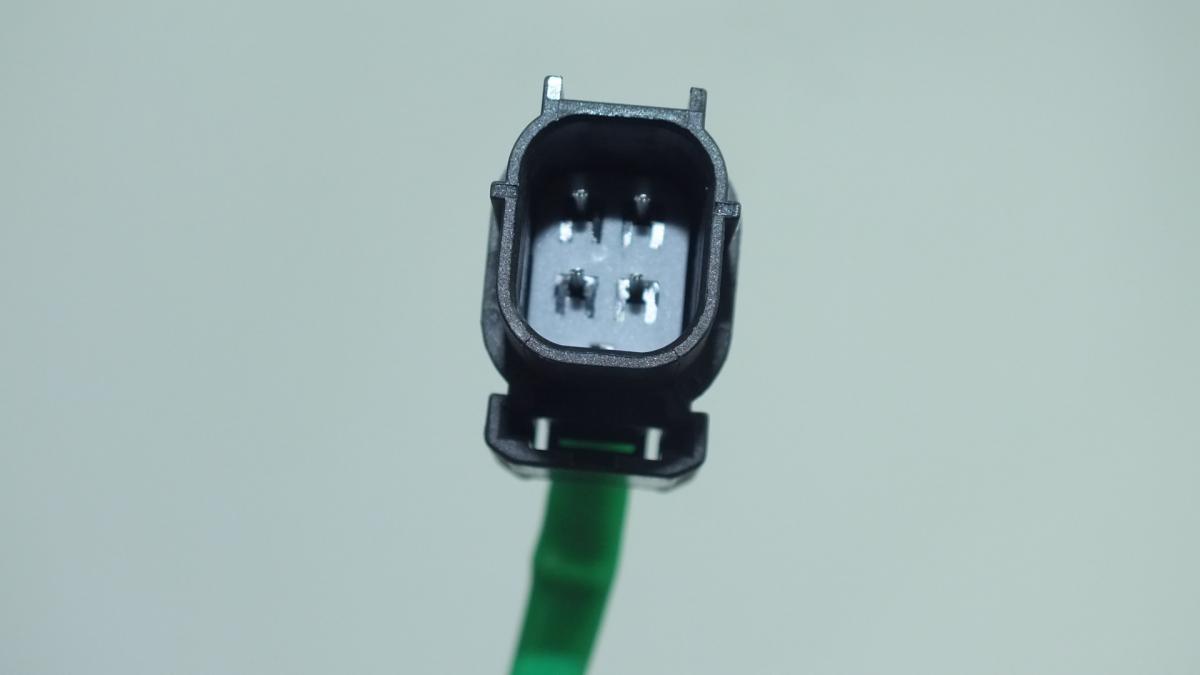
Oxygen sensor (O2/lambda) with wiring harness and connector - OEM-equivalent quality, wholesale from China. View in catalog
1. How Oxygen Sensors Work
An oxygen sensor is an electrochemical device installed in the exhaust system, typically threaded into the exhaust manifold or exhaust pipe. It measures the concentration of oxygen in the exhaust gas stream and generates a voltage signal that the engine control unit (ECU) uses to determine whether the air-fuel mixture is running rich (too much fuel, too little oxygen) or lean (too little fuel, too much oxygen).
The sensing element is typically made of zirconium dioxide (ZrO2) ceramic coated with porous platinum electrodes. One side of the ceramic is exposed to exhaust gas, while the other is exposed to atmospheric reference air. The difference in oxygen concentration between the two sides generates a voltage across the ceramic element - higher voltage when the exhaust is rich (low oxygen), lower voltage when lean (high oxygen).
The ECU uses this signal in a continuous closed-loop feedback cycle: if the sensor reports a rich mixture, the ECU reduces fuel injection duration; if lean, it increases fuel. This cycle happens multiple times per second, keeping the air-fuel ratio oscillating tightly around the stoichiometric ideal of 14.7:1 (for gasoline engines). This precise ratio is critical because catalytic converters operate most efficiently within a very narrow window around stoichiometric.
Modern vehicles use multiple oxygen sensors - at least one upstream (before the catalytic converter) for fuel mixture control, and one downstream (after the converter) to monitor converter efficiency. Vehicles with dual exhaust banks (V6, V8) double this to four sensors total.
2. Types of Oxygen Sensors
Understanding the different sensor types is critical for correct part sourcing. Installing the wrong type will cause driveability problems, increased emissions, and diagnostic trouble codes.
Narrowband (Conventional) Sensors
Narrowband sensors are the original and simplest type. They produce a voltage signal that switches between approximately 0.1V (lean mixture) and 0.9V (rich mixture), with a rapid transition at the stoichiometric point (lambda = 1.0). They can only tell the ECU whether the mixture is rich or lean - not by how much.
Narrowband sensors come in several configurations: one-wire (unheated, signal only), two-wire (unheated, signal plus ground), three-wire (heated, with an internal heating element for faster warm-up), and four-wire (heated, with separate signal ground). Heated sensors reach operating temperature in 20-30 seconds regardless of exhaust temperature, enabling closed-loop fuel control much sooner after engine start.
Narrowband sensors are found on vehicles manufactured from the mid-1980s through the early 2000s, and are still used as downstream (monitoring) sensors on many current production vehicles.
Wideband (Air-Fuel Ratio) Sensors
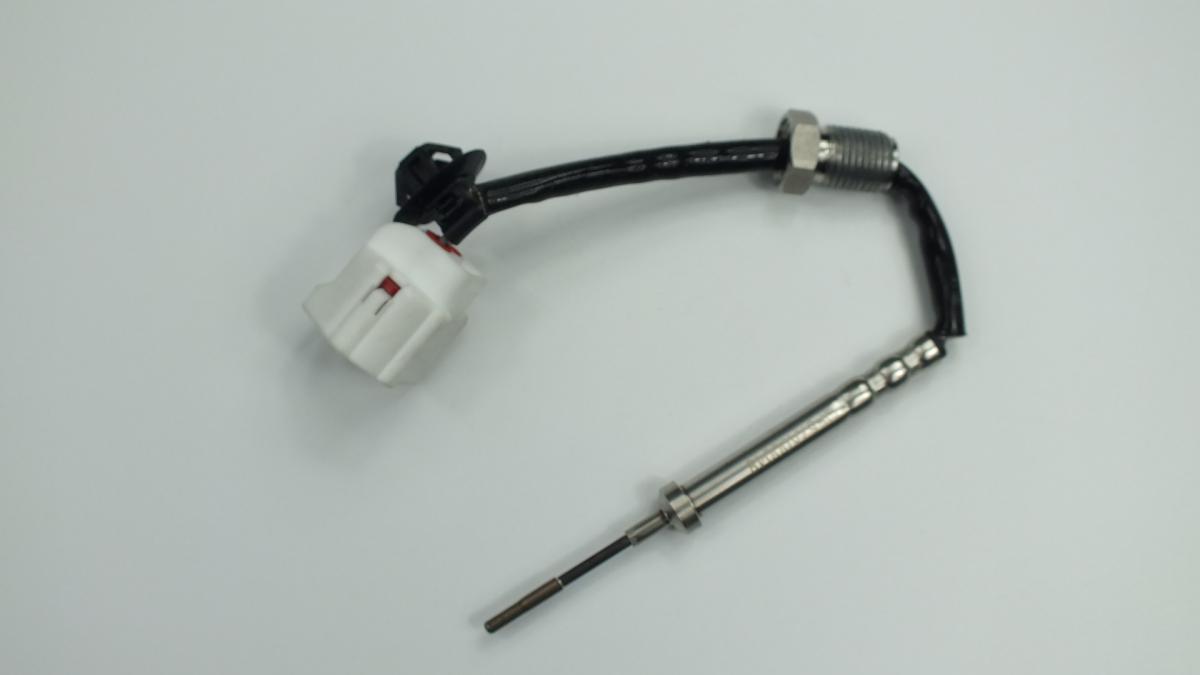
Wideband oxygen sensor (air-fuel ratio sensor) with integrated heating element and multi-pin connector. View in catalog
Wideband sensors (also called air-fuel ratio sensors or AFR sensors) are a more advanced design that can measure the exact air-fuel ratio across a wide range - not just whether the mixture is rich or lean. They use a more complex construction with a Nernst cell (similar to a narrowband sensor) combined with an oxygen pumping cell, controlled by a dedicated IC chip.
Instead of switching between two voltage levels, wideband sensors output a current signal (or a voltage proportional to current) that varies linearly with the air-fuel ratio. This allows the ECU to target any desired AFR - not just stoichiometric - which is critical for lean-burn strategies, direct injection engines, and turbo applications where the ECU intentionally runs rich under boost for engine protection.
Wideband sensors typically have five or six wires and always include a heater element. They are standard as upstream sensors on most vehicles manufactured from approximately 2003 onward. They are NOT interchangeable with narrowband sensors - the signal types are fundamentally different.
Titania Sensors
A minority of vehicles (primarily some older Nissan, Mitsubishi, and Subaru models) use titania (titanium dioxide, TiO2) sensors instead of zirconia. Titania sensors change their electrical resistance based on oxygen concentration rather than generating a voltage. They require an external reference voltage from the ECU. Titania sensors are identified by their connector and wiring - always verify against OEM part numbers when sourcing.
Upstream vs. Downstream: What is the Difference?
Upstream sensors (also called Bank 1 Sensor 1, Bank 2 Sensor 1, or pre-catalyst sensors) are mounted before the catalytic converter. They provide the primary air-fuel ratio feedback signal that the ECU uses for fuel mixture control. These sensors work continuously and switch or modulate rapidly during normal operation.
Downstream sensors (Bank 1 Sensor 2, Bank 2 Sensor 2, or post-catalyst sensors) are mounted after the catalytic converter. Their primary role is to monitor catalytic converter efficiency by comparing their signal pattern to the upstream sensor. A healthy converter produces a relatively steady downstream signal; a failed converter produces a signal that mirrors the upstream sensor's rapid switching.
Upstream and downstream sensors for the same vehicle may be physically different parts (different cable length, different connector, sometimes different sensor type). Always verify the exact position when sourcing by OEM number.
3. Failure Symptoms and Diagnostic Trouble Codes
Oxygen sensor failures are among the most common causes of check engine lights and emissions test failures. Sensors degrade gradually, making early symptoms subtle.
Common Failure Symptoms
Check engine light (MIL) illuminated. The most common first symptom. The ECU detects abnormal sensor behavior and stores a diagnostic trouble code. The vehicle may continue to drive normally in the early stages of failure.
Increased fuel consumption. A degraded upstream sensor provides inaccurate air-fuel ratio data, causing the ECU to run a richer or less optimized mixture. Fuel economy drops 10-40% depending on the severity of sensor degradation.
Failed emissions test. Oxygen sensor faults are the single most common reason for emissions test failure. Both direct sensor codes and catalyst efficiency codes (triggered by downstream sensor data) lead to failure.
Rough idle and hesitation. A sensor with a slow response time or stuck signal causes the ECU's fuel control loop to oscillate too slowly or not at all, resulting in uneven combustion, rough idle, and hesitation during acceleration.
Rotten egg smell from exhaust. A rich-running condition caused by a faulty sensor can overload the catalytic converter with unburned fuel, producing hydrogen sulfide (the "rotten egg" smell). If left unaddressed, this can permanently damage the converter.
Black smoke from exhaust. Extreme rich-running condition caused by a completely failed sensor or open-loop operation. The ECU defaults to a rich fuel map when it loses sensor feedback entirely.
Common Diagnostic Trouble Codes
| DTC Code | Description | Typical Cause |
|---|---|---|
| P0130-P0135 | Bank 1 Sensor 1 circuit, range, response, heater | Upstream sensor failure, wiring fault, heater circuit open |
| P0136-P0141 | Bank 1 Sensor 2 circuit, range, response, heater | Downstream sensor failure, wiring, heater |
| P0150-P0161 | Bank 2 Sensor 1 and Sensor 2 codes (V6/V8 engines) | Same as above but for second exhaust bank |
| P0420 | Catalyst system efficiency below threshold (Bank 1) | Failed catalytic converter OR degraded downstream sensor - diagnose both |
| P0430 | Catalyst system efficiency below threshold (Bank 2) | Same as P0420 for second bank |
| P0171/P0174 | System too lean (Bank 1/Bank 2) | Can indicate upstream sensor reading lean when mixture is actually correct - or a real lean condition |
| P0172/P0175 | System too rich (Bank 1/Bank 2) | Upstream sensor reporting rich or actual rich condition from injector leak, fuel pressure, etc. |
Note: P0420/P0430 are frequently misdiagnosed. Always verify downstream sensor operation before condemning the catalytic converter - a slow-responding downstream sensor can trigger these codes even with a healthy converter.
4. Common Failure Causes
Normal aging and contamination. The platinum electrodes on the sensing element degrade over time from exposure to exhaust gases. Response time slows gradually, and the sensor's ability to accurately detect oxygen levels diminishes. Typical lifespan is 80,000-150,000 km.
Coolant contamination. A head gasket leak or cracked cylinder head introduces silicone compounds from the coolant into the exhaust stream. These compounds coat the sensor element and permanently destroy its sensitivity. If a vehicle has had a coolant-related engine repair, replace all oxygen sensors as a preventive measure.
Oil contamination. Excessive oil consumption from worn piston rings or valve seals deposits carbon and phosphorus compounds on the sensor element. The sensor may read consistently rich or have a slow response time.
Heater circuit failure. The internal heating element burns out, preventing the sensor from reaching operating temperature quickly. The ECU detects this through the heater control circuit and sets a heater-related code (P0135, P0141, etc.). The sensor may still work once exhaust heat warms it up, but closed-loop control is delayed.
Wiring and connector damage. The sensor wiring runs through a high-temperature, high-vibration environment. Connector corrosion, chafed insulation, and thermal damage to the harness are common causes of intermittent sensor codes.
Fuel additive contamination. Leaded fuel additives (still used in some markets), certain fuel system cleaners, and MMT (methylcyclopentadienyl manganese tricarbonyl) contaminate the sensing element. This is especially relevant for markets where fuel quality varies.
5. OEM Cross-Reference Guide by Vehicle Brand
Oxygen sensors are highly vehicle-specific. Each position (upstream/downstream, bank 1/bank 2) has a unique OEM part number. Below are examples of common OEM numbers by brand - all searchable in the ok.parts oxygen sensor catalog.
European Vehicles
| Brand | Example OEM Numbers | Common Applications |
|---|---|---|
| VAG (VW/Audi/Skoda/Seat) | 06A906262BR, 03C906262A, 1K0998262D | Golf, Passat, Tiguan, A3, A4, Octavia |
| BMW / Mini | 11787589121, 11787558055, 11787537984 | 3 Series, 5 Series, X3, X5, Mini Cooper |
| Mercedes-Benz | A0045420818, A0035427018, A0055423218 | C-Class, E-Class, ML/GLE, S-Class, Sprinter |
| Renault | 8200437489, 226A07452R, 8200052063 | Clio, Megane, Scenic, Duster, Kangoo |
| Peugeot/Citroen | 1628HV, 1618Z6, 9674668680 | 308, 3008, C4, C5, Berlingo, Partner |
Japanese and Korean Vehicles
| Brand | Example OEM Numbers | Common Applications |
|---|---|---|
| Toyota/Lexus | 8946533220, 8946506240, 8946548250 | Camry, Corolla, RAV4, Highlander, Land Cruiser |
| Honda | 36531RNAA01, 36531RB0003, 36532RNAA01 | Civic, Accord, CR-V, HR-V, Jazz/Fit |
| Nissan | 226A00E010, 226A04CB0A, 226909N00A | Qashqai, X-Trail, Navara, Pathfinder, Note |
| Hyundai/Kia | 3921023710, 3921025300, 3922003000 | Tucson, Sportage, Creta, Rio, Cerato, Accent |
American and Chinese Vehicles
| Brand | Example OEM Numbers | Common Applications |
|---|---|---|
| General Motors | 12612459, 12607333, 25315809 | Silverado, Equinox, Malibu, Cruze, Tahoe |
| Ford | 1S7F9G444BA, 3M519F472CA, CV6A9Y460CB | Focus, Mondeo, Escape, F-150, Transit |
| Great Wall | 1026200GG010, 1026200EG01 | Haval H6, H9, Wingle, Poer |
| Geely | 1086001218, 1016003757 | Coolray, Atlas, Emgrand, Monjaro |
This is a small sample. The complete oxygen sensor catalog on ok.parts contains nearly 4,000 SKUs covering all major vehicle brands - searchable by OEM number.
6. Why Oxygen Sensors Are a Strong Wholesale Opportunity
Universal, recurring demand. Every gasoline and diesel vehicle has 2-4 oxygen sensors. They are wear items with a defined lifespan of 80,000-150,000 km. As the global vehicle fleet ages, the replacement market grows continuously.
High unit margin. Wholesale pricing from Chinese factories typically ranges from $5-$20 per unit. Aftermarket retail pricing runs $25-$120 depending on sensor type and application. Distributor margins of 50-70% are standard.
Emissions-driven demand. Increasingly strict emissions testing worldwide creates mandated replacement demand. A vehicle cannot pass emissions with a faulty oxygen sensor - the repair is not optional.
Technical complexity creates loyalty. With multiple sensor types, positions, and wire counts, correct part selection requires expertise. Distributors who provide accurate cross-reference data and technical support build long-term customer relationships.
Complementary sales. Oxygen sensor replacement frequently accompanies catalytic converter replacement, exhaust system repair, and engine management diagnostics. A well-stocked O2 sensor range drives additional parts sales.
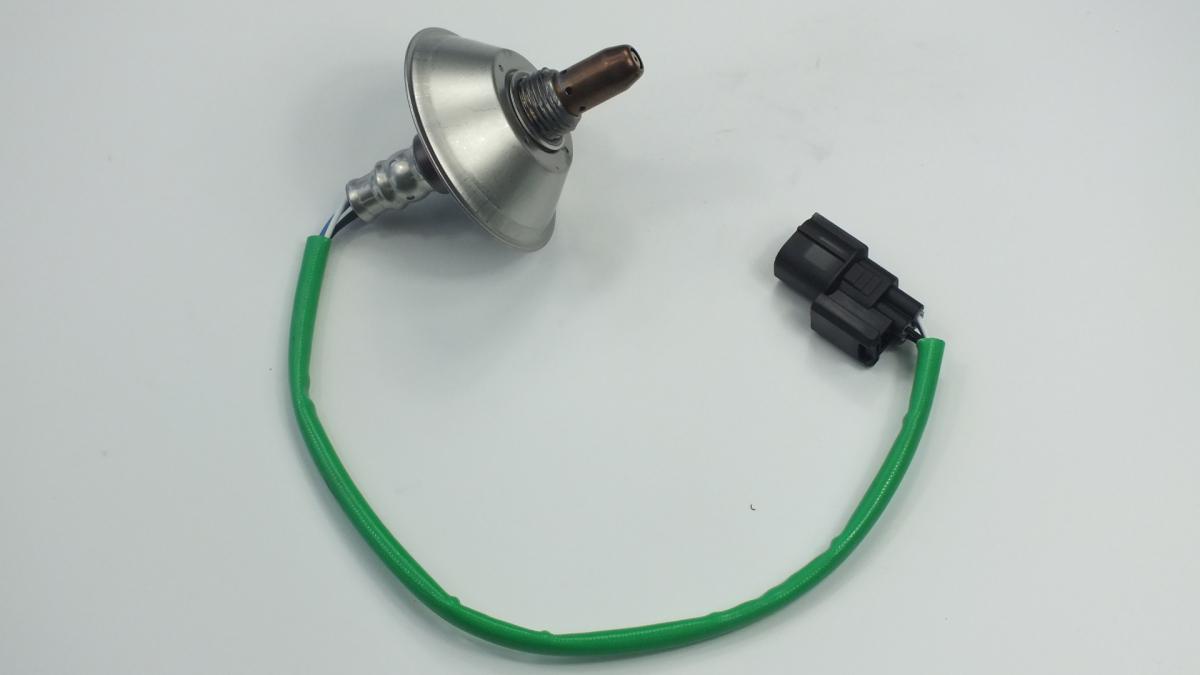
Detail view of an oxygen sensor showing the threaded mounting body and protective sensor tip.
7. Sourcing Oxygen Sensors Wholesale from China
China's primary manufacturing clusters for oxygen sensors are in Ruian (Zhejiang), Guangzhou (Guangdong), and Xingtai (Hebei). These regions house specialized factories producing both narrowband and wideband sensors for the global aftermarket.
Critical Quality Checks for O2 Sensors
Sensor type verification. Confirm narrowband vs. wideband and wire count matches the OEM specification exactly. A wideband sensor in a narrowband application (or vice versa) will not function.
Heater resistance. Measure the heater element resistance with a multimeter - it must match the OEM specification (typically 2-14 ohms depending on sensor type). Out-of-spec heater resistance indicates substandard heating element quality.
Signal output test. For narrowband sensors: verify the voltage switches between 0.1V and 0.9V when exposed to propane (rich) and ambient air (lean). For wideband sensors: verify the current output matches the factory specification across the AFR range.
Thread specification. Most oxygen sensors use M18x1.5 threads, but variations exist. Verify thread size, pitch, and length match the OEM part. Incorrect thread engagement can cause exhaust leaks that create false lean readings.
Connector pinout. Verify the connector type, pin arrangement, and wire colors match the vehicle application. Oxygen sensor connectors are not universal - each manufacturer and often each model has unique connector specifications.
ok.parts applies its 3-stage quality control process to all oxygen sensor orders - including heater resistance testing and signal verification on sampled units.
8. Installation Best Practices
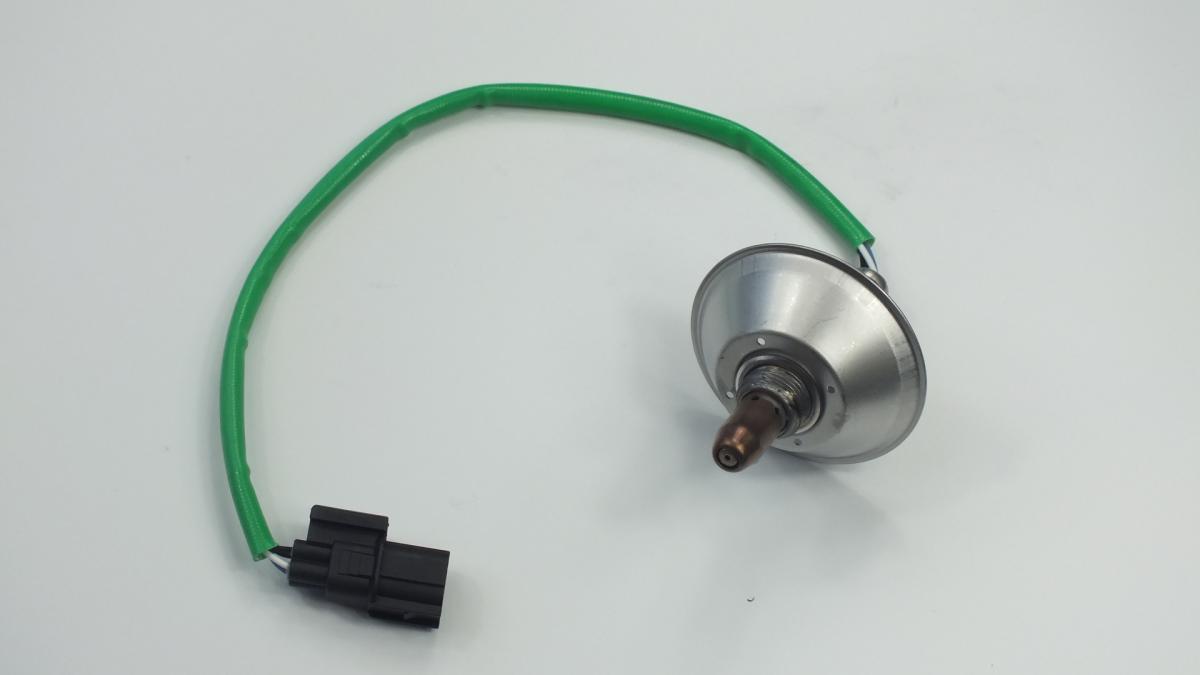
Oxygen sensor with protective cap on sensing element - remove cap before installation.
Apply anti-seize to threads only. Use a thin coat of anti-seize compound on the sensor threads. Never apply anti-seize, grease, or any substance to the sensor tip or sensing element - contamination will destroy the sensor immediately.
Do not drop or impact the sensor. The ceramic sensing element is fragile. A dropped sensor may have internal cracks that are not visible but will cause premature failure or erratic readings.
Torque to specification. Typical torque is 30-45 Nm depending on thread size. Over-torquing can crack the ceramic element; under-torquing causes exhaust leaks that create false lean readings.
Route the wiring away from exhaust components. The sensor harness must not contact the exhaust manifold, turbo housing, or other high-temperature surfaces. Heat damage to the harness insulation is a common cause of premature sensor failure.
Clear codes and verify operation. After installation, clear all stored DTCs and monitor the sensor signal with a scan tool during a test drive. The upstream sensor should show rapid switching (narrowband) or stable AFR tracking (wideband). The downstream sensor should show a relatively steady signal if the catalytic converter is healthy.
Replace in pairs when appropriate. If one upstream sensor has failed due to age on a dual-bank engine (V6/V8), the other upstream sensor is likely close to failure. Replacing both simultaneously prevents a return visit. The same applies to downstream sensors.
9. Frequently Asked Questions
What is an oxygen sensor (lambda sensor)?
An oxygen sensor (also called lambda sensor or O2 sensor) is an electrochemical device installed in the exhaust system that measures oxygen content in exhaust gases. It sends a voltage signal to the ECU, which uses this data to adjust the air-fuel mixture for optimal combustion, fuel efficiency, and emissions control. Every modern vehicle has 2-4 oxygen sensors.
What is the difference between upstream and downstream oxygen sensors?
Upstream sensors (pre-catalyst) control the air-fuel ratio by providing feedback to the ECU. Downstream sensors (post-catalyst) monitor catalytic converter efficiency. They may be physically different parts with different cable lengths and connectors. Always verify position by OEM part number.
What is the difference between narrowband and wideband sensors?
Narrowband sensors switch between 0.1V (lean) and 0.9V (rich) and can only detect rich vs. lean. Wideband sensors measure the exact air-fuel ratio across a wide range, outputting a proportional current signal. Wideband sensors have 5-6 wires and are standard on most vehicles from 2003 onward. They are not interchangeable.
How much do wholesale oxygen sensors from China cost?
Wholesale pricing from verified Chinese factories ranges from $5-$20 per unit depending on sensor type and order volume. Aftermarket retail pricing runs $25-$120. The ok.parts catalog shows transparent pricing for all oxygen sensor SKUs.
How often do oxygen sensors need to be replaced?
Typical lifespan is 80,000-150,000 km depending on fuel quality, engine condition, and operating environment. Contamination from coolant leaks, oil consumption, or low-quality fuel can cause premature failure. Heated sensors generally last longer than unheated types.
Can a bad oxygen sensor damage the catalytic converter?
Yes. A faulty upstream sensor causing a rich-running condition sends unburned fuel into the catalytic converter. This overheats the converter substrate and can cause permanent thermal damage, meltdown, or clogging. Replacing a failed oxygen sensor promptly protects the much more expensive catalytic converter.
What is the most common diagnostic code for oxygen sensor failure?
P0130 (Bank 1 Sensor 1 circuit malfunction) and P0135 (Bank 1 Sensor 1 heater circuit malfunction) are the most commonly reported oxygen sensor codes. P0420 (catalyst efficiency below threshold) is also very common but may indicate a converter problem rather than a sensor failure - diagnose carefully before replacing parts.
Related Guides
- ABS Wheel Speed Sensors: Complete Technical and Wholesale Guide
- How to Source OEM-Quality Auto Parts from China: Complete Guide
- Wholesale Auto Parts Supplier from China: Factory Direct Access
- Private Label Auto Parts Manufacturer: Build Your Own Brand
- Auto Parts Quality Control in China: The Complete Inspection Guide