956701R000 ABS Wheel Speed Sensor - Hyundai Accent 2012-2017 Front Left | Wholesale
Complete technical guide for the 956701R000 ABS wheel speed sensor - covering exact vehicle fitment, cross-reference numbers, failure diagnostics, step-by-step installation, and wholesale sourcing from China.
The Hyundai/Kia 956701R000 (also written as 95670-1R000) is the front left ABS wheel speed sensor for the Hyundai Accent (RB) 2012-2017 with the 1.6L engine. It is an active Hall-effect sensor that monitors the rotational speed of the front left wheel and sends data to the ABS control module, traction control system, and electronic stability control. When this sensor fails, the ABS, TCS, and ESC warning lights illuminate simultaneously and these safety systems are disabled.
Genuine OEM pricing from Hyundai dealers runs $248-$367 per unit. Through ok.parts, the OEM-equivalent replacement is available wholesale at $3.16 per unit - making this one of the highest-margin ABS sensor SKUs for aftermarket distributors targeting the Hyundai/Kia vehicle segment.
- Product Specifications
- Exact Vehicle Fitment
- Cross-Reference Numbers
- Left vs Right: 956701R000 vs 956711R000
- Failure Symptoms and DTC Codes
- Step-by-Step Diagnostic Procedure
- Installation Guide with Torque Specs
- Frequently Replaced Together
- Pricing Comparison: OEM vs Aftermarket vs Wholesale
- Frequently Asked Questions
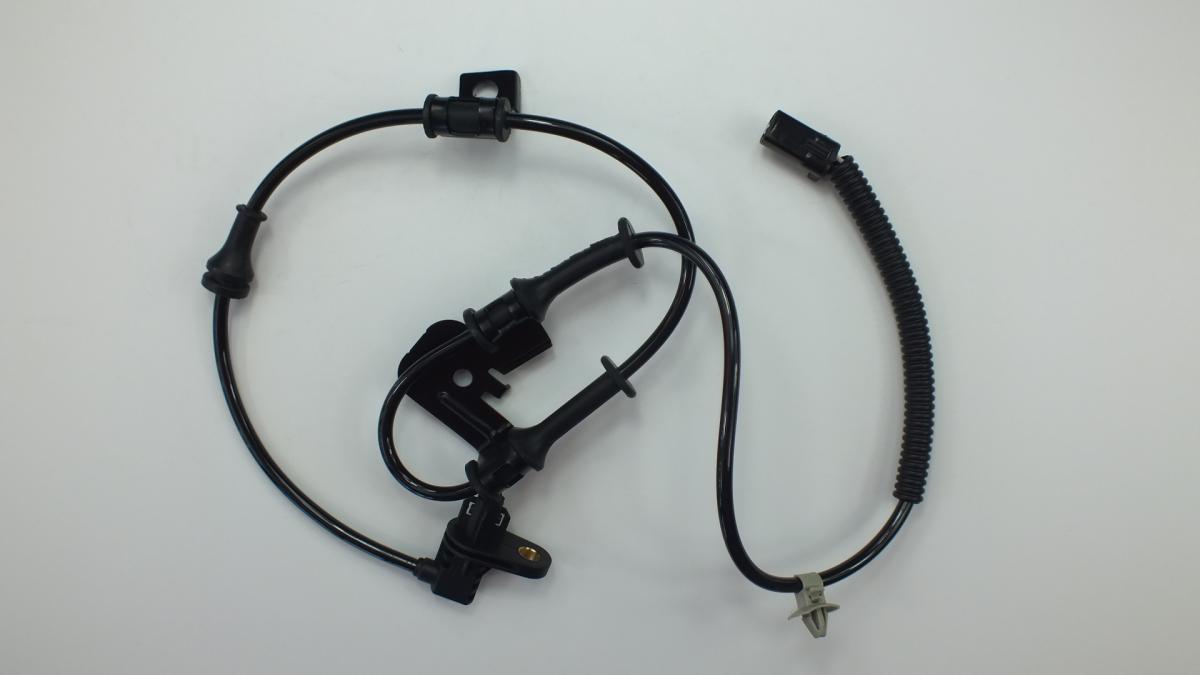
Hyundai/Kia 956701R000 ABS wheel speed sensor - front left, Accent 2012-2017. View full product page
1. Product Specifications
| OEM Part Number | 956701R000 (also written 95670-1R000) |
| Manufacturer | Hyundai / Kia |
| Part Type | ABS Wheel Speed Sensor (Anti-Lock Braking System) |
| Sensor Type | Active Hall-effect, digital square wave output |
| Position | Front Left (Driver Side) |
| Mounting Location | Steering knuckle / spindle |
| Connector Type | 2-pin blade type, male connector |
| Includes Wiring Harness | Yes - complete with connector and wiring to vehicle harness junction |
| Net Weight | 0.1 kg |
| HS Code | 8543.70 |
| Quality Grade | OEM Equivalent |
| Warranty | 1 year |
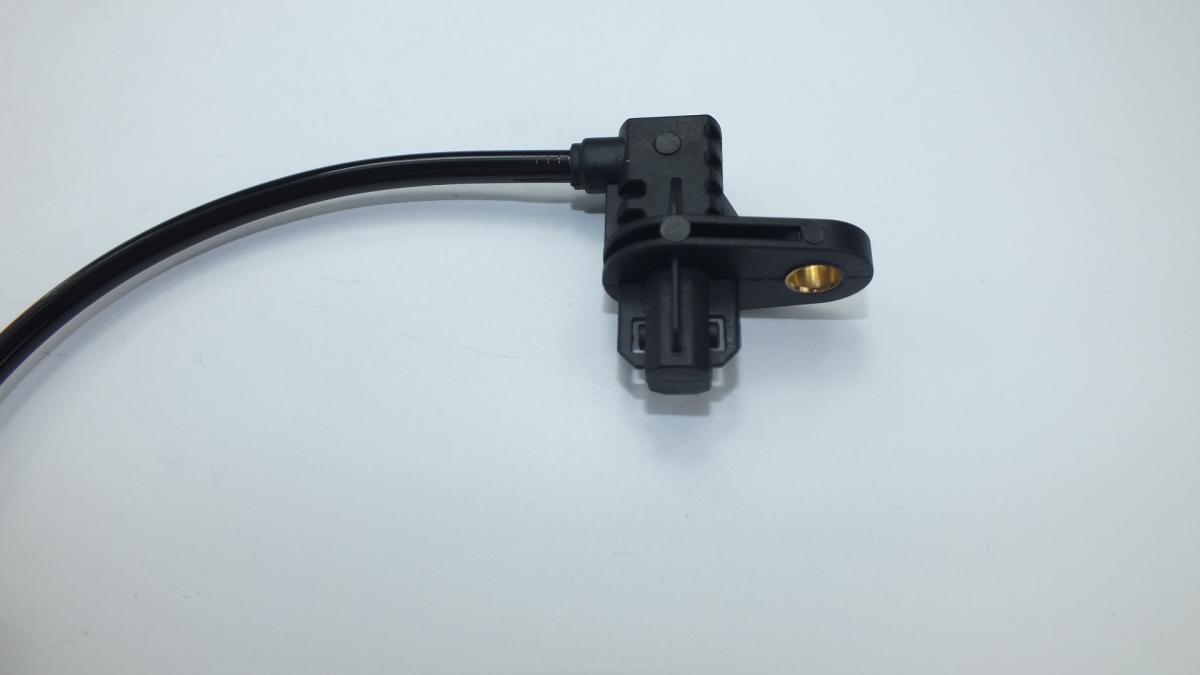
Close-up of the 2-pin connector and wiring harness - includes complete cable for direct plug-and-play replacement.
2. Exact Vehicle Fitment
| Make | Model | Generation | Engine | Years | Position |
|---|---|---|---|---|---|
| Hyundai | Accent | RB (4th gen) | 1.6L L4 G4FC | 2012-2017 | Front Left |
| Hyundai | Accent | RB (4th gen) | 1.6L L4 G4FG (GDI) | 2012-2017 | Front Left |
| Hyundai | Accent | RB (4th gen) | 1.4L L4 G4FA | 2011-2017 | Front Left |
Important fitment notes:
This sensor fits the 4th generation Hyundai Accent (RB platform) only. Do NOT order this part for 5th generation Accent (HC, 2018+) - that model uses a different sensor. The Kia Rio 2012-2017 shares the RB platform but may use a different part number for the ABS sensor depending on market - always verify by OEM number. For the rear sensors on the same vehicle, see 956801R100 (rear left) and 956811R100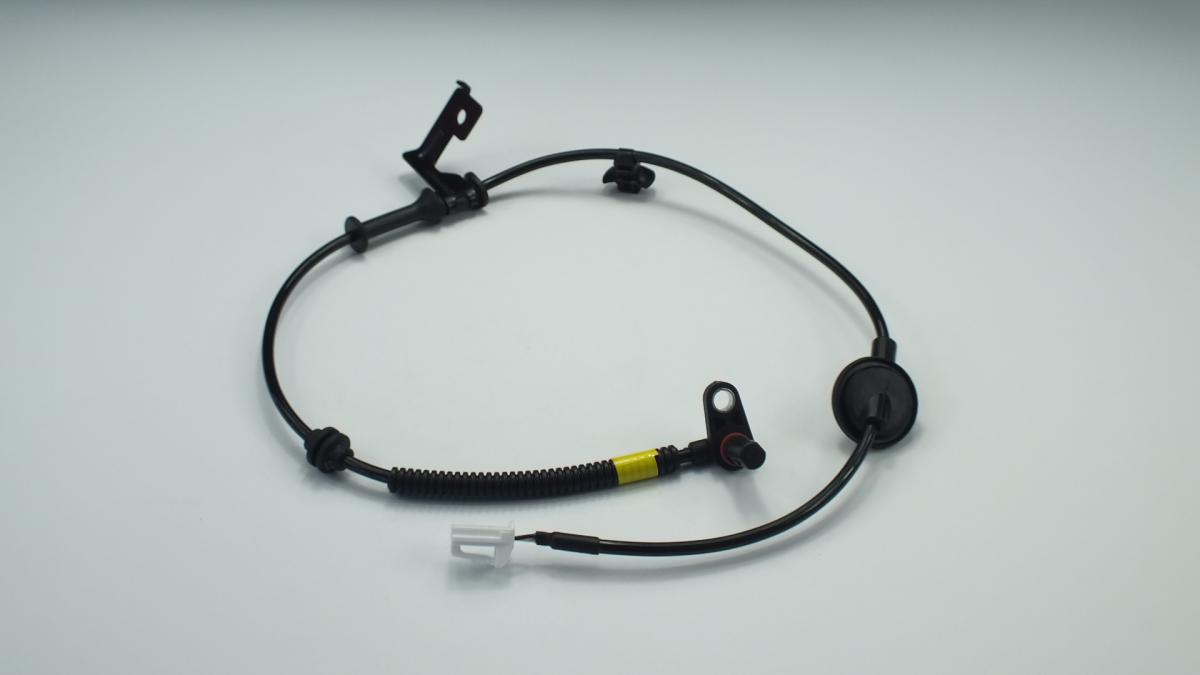
3. Cross-Reference Numbers
| Source | Number | Notes |
|---|---|---|
| Hyundai/Kia OEM | 956701R000Hyundai/Kia 956701R000 | Primary OEM number (compact format) |
| Hyundai/Kia OEM | 95670-1R000 | Hyphenated format (same part, different catalog notation) |
| Standard Motor Products | ALS2330 | North American aftermarket reference - front left |
| Dorman | 5S14065 | Dorman aftermarket catalog number |
| Partslink | HY31036 | Partslink interchange reference |
For distributors: listing this sensor under all cross-reference numbers (956701R000, 95670-1R000, ALS2330, 5S14065) in your catalog maximizes discoverability. Customers search by different numbers depending on their catalog system.
4. Left vs Right: 956701R000 vs 956711R000
This is the most common ordering mistake with ABS sensors. The Hyundai Accent uses different left and right front sensors - they are NOT interchangeable:
| Position | OEM Number | Aftermarket Ref | Cable Routing |
|---|---|---|---|
| Front LEFT (Driver) | 956701R000Front Left 956701R000 | ALS2330 | Routes along left knuckle, connects at left inner fender |
| Front RIGHT (Passenger) | 956711R000 | ALS2339 | Routes along right knuckle, connects at right inner fender |
| Rear LEFT | 956801R100 | ALS2653 | Rear drum/disc assembly, left side |
| Rear RIGHT | 956811R100Rear Right 956811R100 | ALS2654 | Rear drum/disc assembly, right side |
For distributors: stock both 956701R000 and 956711R000 together. Workshops frequently order both front sensors in pairs - this is an easy upsell opportunity. Amazon best-sellers in this category are 2-piece front left+right sets.
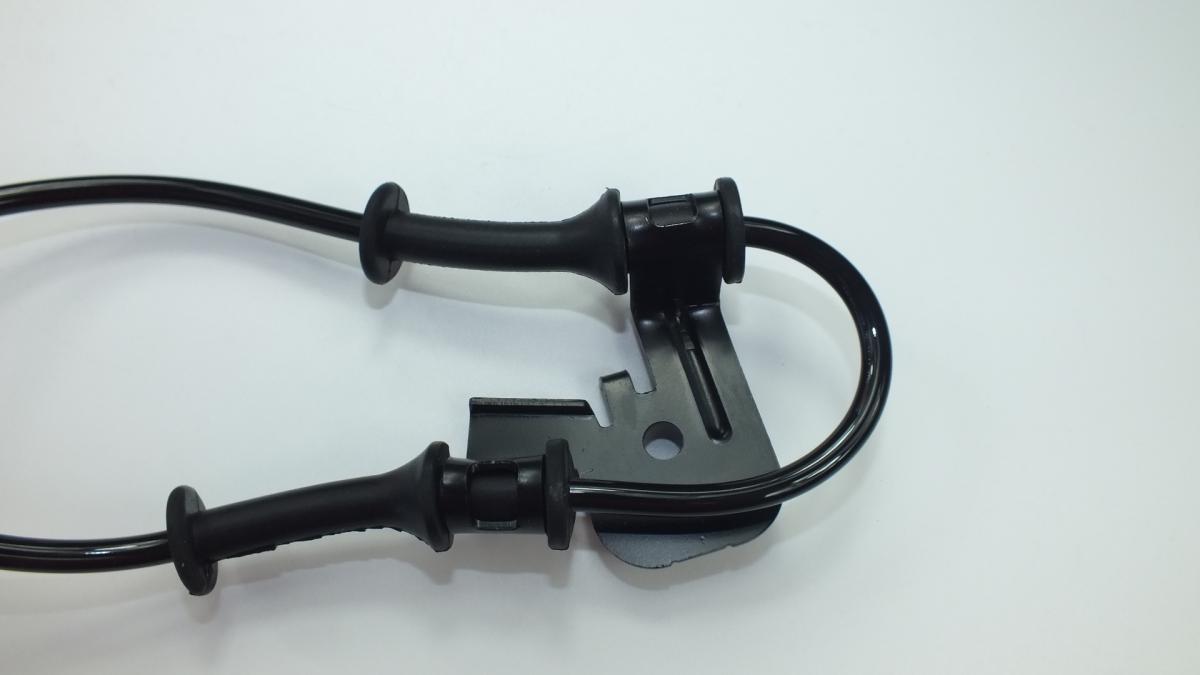
Mounting bracket and sensor body detail - note the specific geometry for front left positioning.
5. Failure Symptoms and DTC Codes
The Hyundai Accent ABS system uses wheel speed data from all four corners to control ABS, TCS, ESC, and (on automatic transmission models) shift timing. When the 956701R000 front left sensor fails:
ABS warning light illuminated. The ABS module loses speed data from the front left wheel and disables anti-lock braking. The brake system continues to function normally but without ABS intervention during hard braking.
TCS and ESC lights on simultaneously. Because traction control and stability control share the same wheel speed data, a single sensor failure triggers all three warning lights at once. This is a telltale sign of a wheel speed sensor fault rather than a brake system problem.
ABS pulsation at low speed on dry roads. An intermittent sensor producing erratic signals can cause the ABS module to falsely detect wheel lock-up during normal braking. The driver feels unexpected pedal pulsation at 5-15 km/h.
Speedometer error. Some Hyundai Accent models derive the speedometer signal from ABS sensor data. A failed sensor may cause erratic or zero speedometer readings.
Harsh automatic transmission shifts. The TCU uses wheel speed data for shift scheduling. Missing data from one wheel can cause the transmission to adopt a protective shift strategy with firmer, delayed shifts.
Diagnostic Trouble Codes
| Code | Description | Most Likely Cause |
|---|---|---|
| C0035 / C1200 | Front left wheel speed sensor circuit | Open or short in sensor wiring, failed sensor element, corroded connector |
| C0036 / C1201 | Front left wheel speed sensor performance | Erratic signal - damaged reluctor ring, excessive air gap, debris on sensor face |
| C0037 / C1202 | Front left wheel speed sensor signal missing | Complete signal loss - broken wire, disconnected sensor, destroyed reluctor ring |
| C0045 | Front left wheel speed sensor signal erratic | Intermittent fault - partially damaged harness, corroded connector, cracked reluctor ring |
Note: Hyundai uses both generic (C00xx) and manufacturer-specific (C12xx) code formats depending on the scan tool used. Both indicate the same faults. Always use a scanner with ABS module access - a basic OBD-II code reader may not retrieve ABS-specific codes.
6. Step-by-Step Diagnostic Procedure
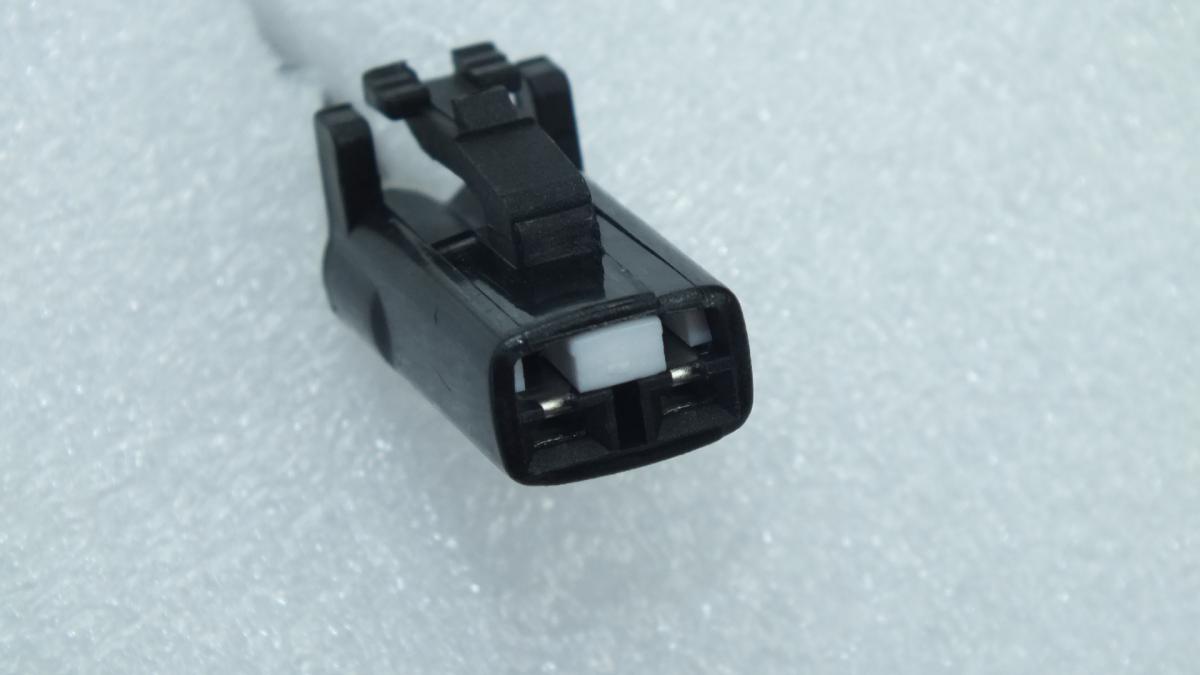
Close-up of the sensor sensing face - inspect for metallic debris contamination before condemning the sensor.
Step 1: Read codes. Connect a scan tool with ABS capability and read stored codes. Confirm the code points to front left (C0035/C1200 series). If front right codes are present, the fault is with 956711R000, not this part.
Step 2: Visual inspection. Raise the vehicle, remove the front left wheel. Inspect the sensor wiring harness for chafing where it passes near the CV joint, steering knuckle, and inner fender. Check the connector for corrosion - green or white deposits on the pins.
Step 3: Check sensor resistance. Disconnect the sensor connector. This is an active Hall-effect sensor, so resistance measurement is not the primary diagnostic (unlike passive sensors). However, checking for open circuit (infinite resistance) between signal pins confirms a broken wire or destroyed sensor element.
Step 4: Inspect the reluctor ring. Rotate the wheel hub and visually inspect the magnetic encoder ring (integrated into the wheel bearing seal on the Accent). Look for damage, delamination, or heavy contamination with metallic debris. A damaged encoder ring produces erratic signals even with a new sensor.
Step 5: Compare live data. With the scan tool monitoring all four wheel speed signals, slowly rotate the front left wheel by hand (or on a lift). The front left reading should increase smoothly. Compare with the front right - similar rotation speed should produce similar readings. A sensor that reads zero, erratic, or significantly lower than the opposite side is confirmed faulty.
Step 6: Replace. If the sensor is confirmed faulty and the reluctor ring is intact, replace with the 956701R000 and follow the installation procedure below.
7. Installation Guide with Torque Specs
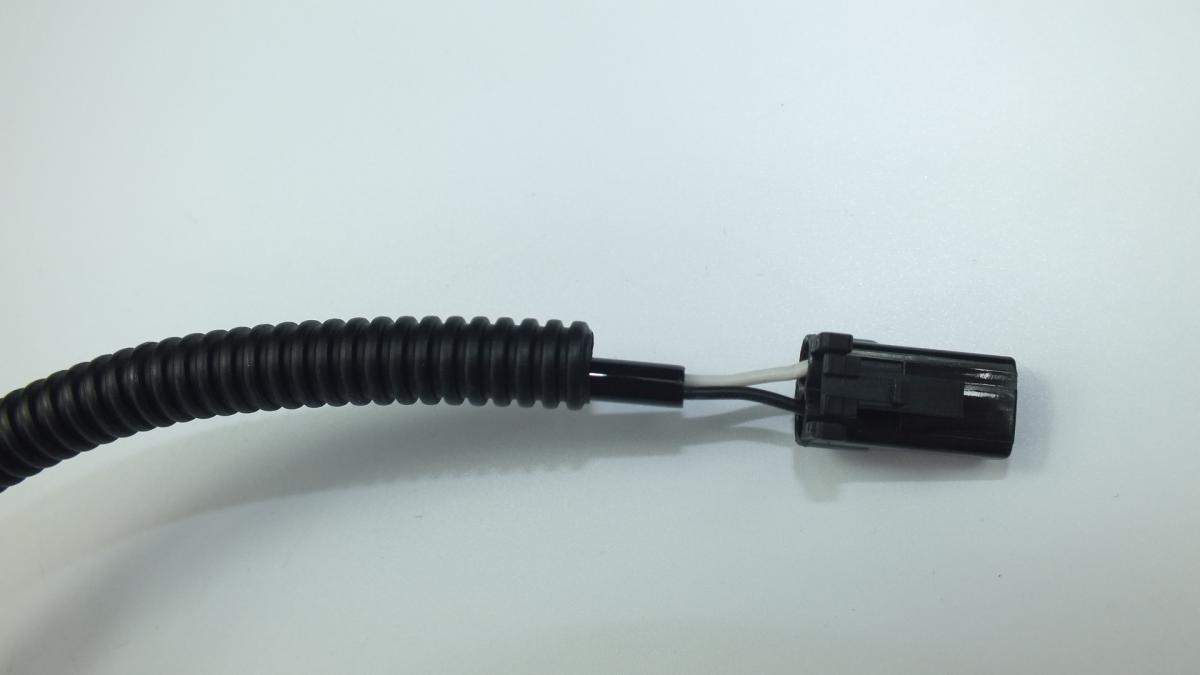
Complete sensor assembly with wiring harness - direct plug-and-play, no splicing required.
Tools needed: 10mm socket, ratchet, torque wrench, wire brush, electrical contact cleaner, dielectric grease, OBD-II scanner with ABS access.
Time required: 30-45 minutes.
1. Safety first. Raise the front left of the vehicle on a jack stand. Remove the front left wheel. Engage the parking brake.
2. Disconnect the sensor connector. Follow the wiring harness from the knuckle area upward to where it connects to the vehicle harness (typically at the inner fender or subframe). Release the locking tab and disconnect. If corroded, apply electrical contact cleaner first - forcing a brittle connector will break it.
3. Release harness clips. Unclip the sensor wiring from the mounting clips along the knuckle and suspension. Note the exact routing - the new sensor must follow the same path to avoid contact with the CV joint or brake caliper during steering and suspension movement.
4. Remove the sensor retaining bolt. The sensor is secured to the steering knuckle with a single 10mm bolt. Remove it. If the sensor is seized in the bore, do NOT pry with a screwdriver (this damages the bore). Apply penetrating oil and tap gently with a plastic mallet, or use a sensor extraction tool.
5. Remove the old sensor. Pull the sensor straight out of the bore. Clean the bore with a wire brush to remove rust and debris. The bore must be clean and dry for the new sensor to seat fully.
6. Install the new 956701R000. Slide the new sensor into the bore until it seats fully against the shoulder. It should slide in smoothly - if it does not, clean the bore again. Do not force it.
7. Torque the retaining bolt. Install the retaining bolt and torque to 8-12 Nm (6-9 ft-lb). Do not overtorque - the sensor body is plastic and the knuckle thread is aluminum.
8. Route and clip the harness. Follow the original routing exactly. Secure with all original clips. Verify the cable has clearance from the CV boot, brake caliper, and steering components through full lock-to-lock steering movement and full suspension travel.
9. Apply dielectric grease and connect. Apply a thin coat of dielectric grease to the connector pins before reconnecting. This prevents future corrosion - the number one cause of premature ABS sensor failure in road-salt environments.
10. Clear codes and test. Reinstall the wheel, lower the vehicle. Use the scan tool to clear all ABS, TCS, and ESC codes. Start the engine and drive above 30 km/h for 2-3 minutes. The ABS module will automatically validate all four sensor signals. Verify no warning lights return. Check live data to confirm the front left sensor produces a clean, consistent signal.
8. Frequently Replaced Together
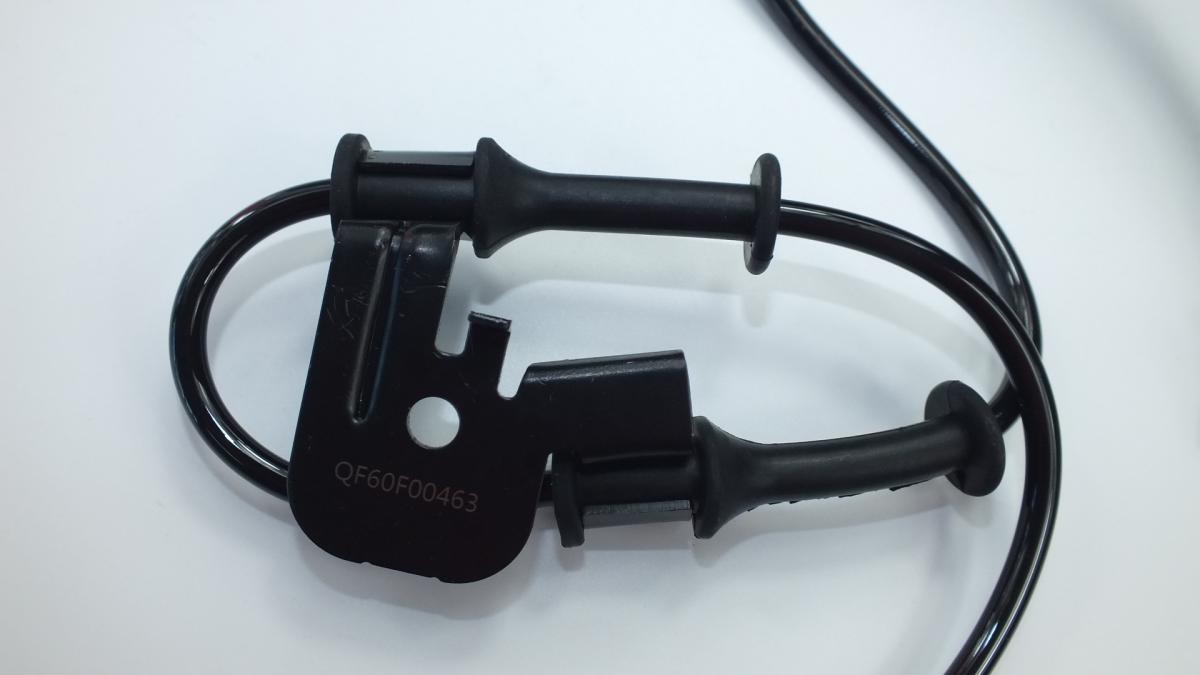
Complete sensor assembly showing full wiring harness length and connector - ready for direct installation.
| Part | OEM Number | Reason |
|---|---|---|
| Front RIGHT ABS Sensor | 956711R000 | Same age and mileage as the left sensor - likely approaching failure. Sell as a pair for complete front ABS restoration. |
| Front Left Wheel Bearing | 517201R000 | The magnetic encoder ring is integrated into the bearing seal. A worn bearing with a damaged encoder causes ABS faults even with a new sensor. |
| Rear Left ABS Sensor | 956801R100 | On high-mileage vehicles with front sensor failure, rear sensors are also aging. Complete 4-sensor replacement ensures all ABS data is reliable. |
| Rear Right ABS Sensor | 956811R100Rear Right 956811R100 | Same rationale as rear left - complete set replacement for full system reliability. |
9. Pricing Comparison: OEM vs Aftermarket vs Wholesale
At $3.16 wholesale vs $15-$35 aftermarket retail, distributors stocking the 956701R000 through ok.parts achieve margins of 75-90% at typical aftermarket selling prices. For workshops buying at wholesale and charging end-customer retail, the margin is even higher.
Against OEM genuine pricing of $248-$367, the value proposition for end customers is clear: identical fit and function at a fraction of the price. The OEM-equivalent unit is manufactured to the same specifications - sensor type, connector pinout, cable length, and mounting geometry are all matched to the original.
| Wholesale Price (USD) | $3.16 per unit |
| Wholesale Price (CNY) | 21.48 CNY per unit |
| Minimum Order Quantity | 20 pieces |
| Production Lead Time | 25-55 days |
| Shipping Weight | 0.1 kg per unit |
| Shipping Options | DDP worldwide, FOB, CIF |
| Quality Control | 3-stage QC: pre-production, in-process, pre-shipment |
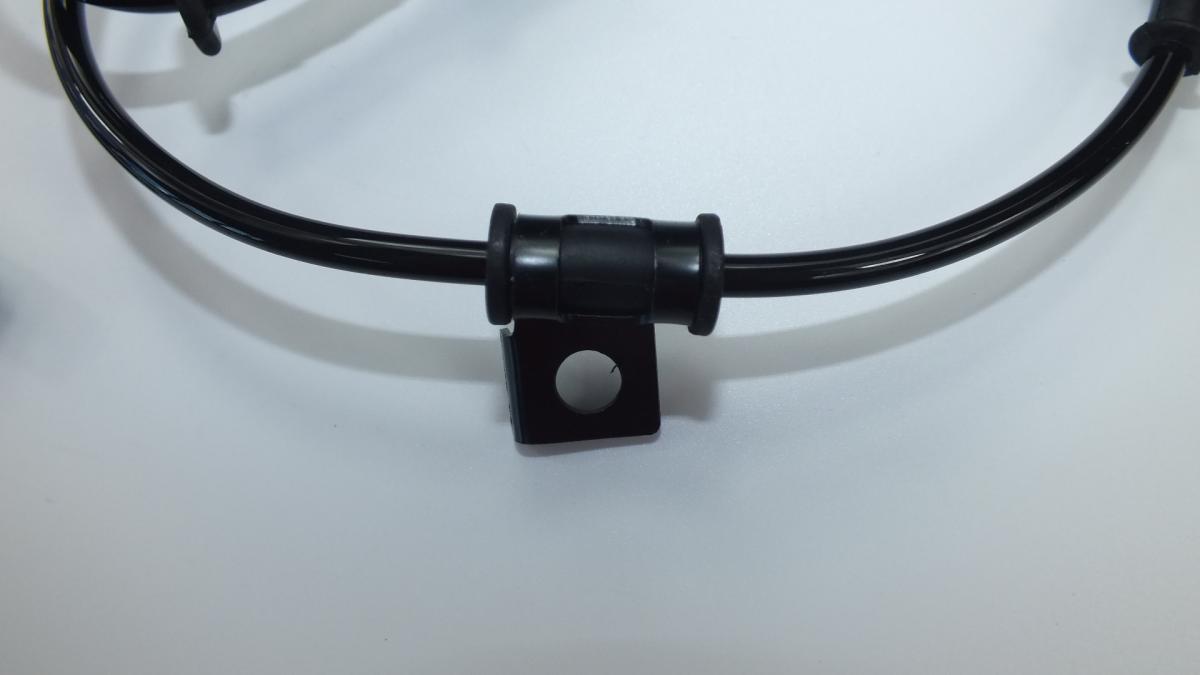
Connector pin detail - verify pin alignment and apply dielectric grease before connecting.
10. Frequently Asked Questions
What vehicles does the 956701R000 ABS sensor fit?
The 956701R000 fits the Hyundai Accent (RB, 4th generation) 2012-2017 with 1.4L or 1.6L engines, front left (driver side) position only. It does NOT fit the 2018+ Accent (5th generation) - that model uses a different sensor.
What is the difference between 956701R000 and 956711R000?
956701R000 is the front LEFT (driver side). 956711R000 is the front RIGHT (passenger side). They are mirror-image parts with different cable routing and connector positions - they are not interchangeable. Always match the sensor side to the diagnostic code.
What diagnostic codes point to this sensor?
C0035/C1200 (front left sensor circuit), C0036/C1201 (front left sensor performance), C0037/C1202 (front left signal missing), C0045 (front left signal erratic). These codes are specific to the front left wheel. If the code references front right, you need 956711R000 instead.
Does this sensor require calibration after installation?
No. Clear stored ABS/TCS/ESC codes with a scan tool after installation and drive above 30 km/h for 2-3 minutes. The ABS module self-validates automatically. No ECU coding, adaptation, or calibration procedure is required.
Why is the OEM price $248-$367 but wholesale is only $3.16?
The OEM genuine price includes Hyundai brand licensing, dealer markup, US/EU distribution costs, and warranty overhead. The ok.parts wholesale price is direct factory cost from a Chinese OEM-equivalent manufacturer. The physical sensor is built to the same specifications - sensor type, connector, cable length, and mounting geometry all match the original.
Should I replace both front sensors at the same time?
Not required, but recommended on vehicles above 100,000 km where one sensor has failed from age. The other side has identical mileage and is likely approaching failure. Replacing both (956701R000 left + 956711R000 right) prevents a return visit and is a common upsell for workshops.
Can a bad wheel bearing cause this sensor to fail?
Yes. On the Hyundai Accent, the magnetic encoder ring (reluctor ring) is integrated into the wheel bearing inner seal. A worn bearing with a damaged or delaminated encoder ring produces erratic ABS signals. Always inspect bearing play and encoder ring condition when diagnosing ABS sensor faults. If the bearing is worn, replace it along with the sensor - bearing part number 517201R000.
Related Guides
- ABS Wheel Speed Sensors: Complete Technical and Wholesale Guide
- Oxygen Sensors (Lambda Sensors): Complete Technical and Wholesale Guide
- Ignition Coils: Complete Technical and Wholesale Guide
- How to Source OEM-Quality Auto Parts from China
- Wholesale Auto Parts Supplier from China
- Auto Parts Quality Control in China