Throttle Bodies: Complete Technical and Wholesale Sourcing Guide
A comprehensive guide to throttle body technology, electronic vs mechanical systems, failure diagnostics, adaptation procedures, OEM cross-references by vehicle brand, and how to source wholesale from China through verified factories.
The throttle body is the gatekeeper of every internal combustion engine - it controls the volume of air entering the intake manifold, directly determining engine power output, idle speed, and fuel efficiency. In modern vehicles, the throttle body is an electronically controlled precision assembly (drive-by-wire) that integrates with traction control, cruise control, stability control, and transmission shift logic. When it fails or degrades, the effects are immediate and dramatic: rough idle, loss of power, limp mode, or complete engine shutdown.
For auto parts distributors, throttle bodies represent one of the highest-value individual components in the aftermarket - with wholesale prices of $20-$65 and retail prices of $80-$300, the margin per unit is exceptional. For mechanics, understanding the differences between mechanical and electronic systems, proper adaptation procedures after replacement, and correct OEM cross-referencing is essential for successful repairs.
This guide covers the full picture. The complete ok.parts throttle body catalog contains over 1,800 SKUs searchable by OEM number, vehicle application, or manufacturer.
- How Throttle Bodies Work
- Types of Throttle Bodies: Mechanical vs Electronic
- Failure Symptoms and Diagnostic Trouble Codes
- Common Failure Causes
- OEM Cross-Reference Guide by Vehicle Brand
- Why Throttle Bodies Are a Premium Wholesale Opportunity
- Sourcing Throttle Bodies Wholesale from China
- Throttle Body Adaptation and Relearn Procedures
- Installation Best Practices
- Frequently Asked Questions
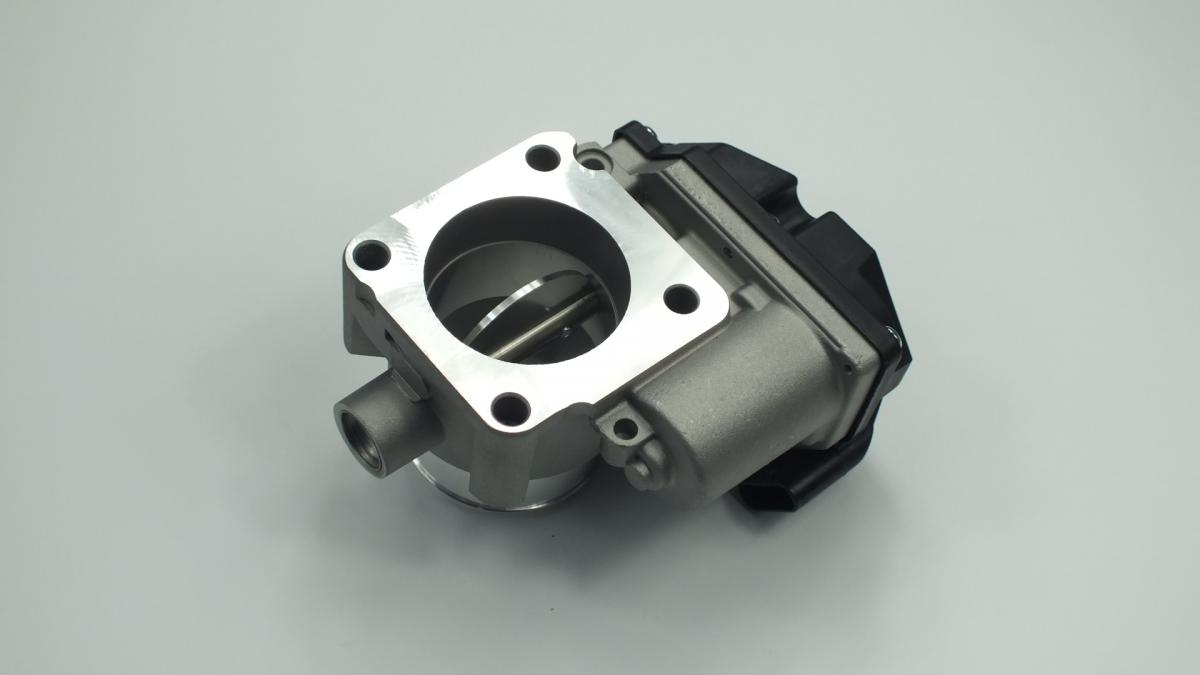
Electronic throttle body (drive-by-wire) with integrated motor and position sensors - the standard design on modern vehicles. View in catalog
1. How Throttle Bodies Work
A throttle body is a housing containing a circular butterfly valve (also called a throttle plate) mounted on a rotating shaft. The valve sits in the air intake path between the air filter and the intake manifold. When the driver presses the accelerator pedal, the butterfly valve opens, allowing more air into the engine. The ECU simultaneously increases fuel injection to maintain the correct air-fuel ratio, resulting in more power.
At idle, the butterfly valve is nearly closed - only a small amount of air passes through a bypass channel or a tiny gap around the valve edge. The idle air volume is precisely controlled to maintain a stable idle speed regardless of engine load from the air conditioning compressor, power steering pump, alternator, and other accessories.
In modern electronic throttle bodies, the butterfly valve position is controlled by an electric motor (typically a DC motor with reduction gears) that receives commands from the ECU. The ECU determines the desired valve opening based on accelerator pedal position, engine speed, engine load, vehicle speed, traction control state, and cruise control commands. Two redundant throttle position sensors (TPS) mounted on the throttle shaft continuously report the actual valve position back to the ECU for closed-loop control.
This electronic control allows the ECU to override the driver's throttle input when necessary - reducing power during wheel spin (traction control), limiting acceleration during stability control intervention, or smoothly controlling speed during cruise control operation. This integration is why modern throttle bodies are far more complex than the simple cable-operated valves of older vehicles.
2. Types of Throttle Bodies: Mechanical vs Electronic
Understanding the difference between throttle body types is critical for correct part sourcing and installation. The two types are fundamentally different in design, function, and replacement procedure.
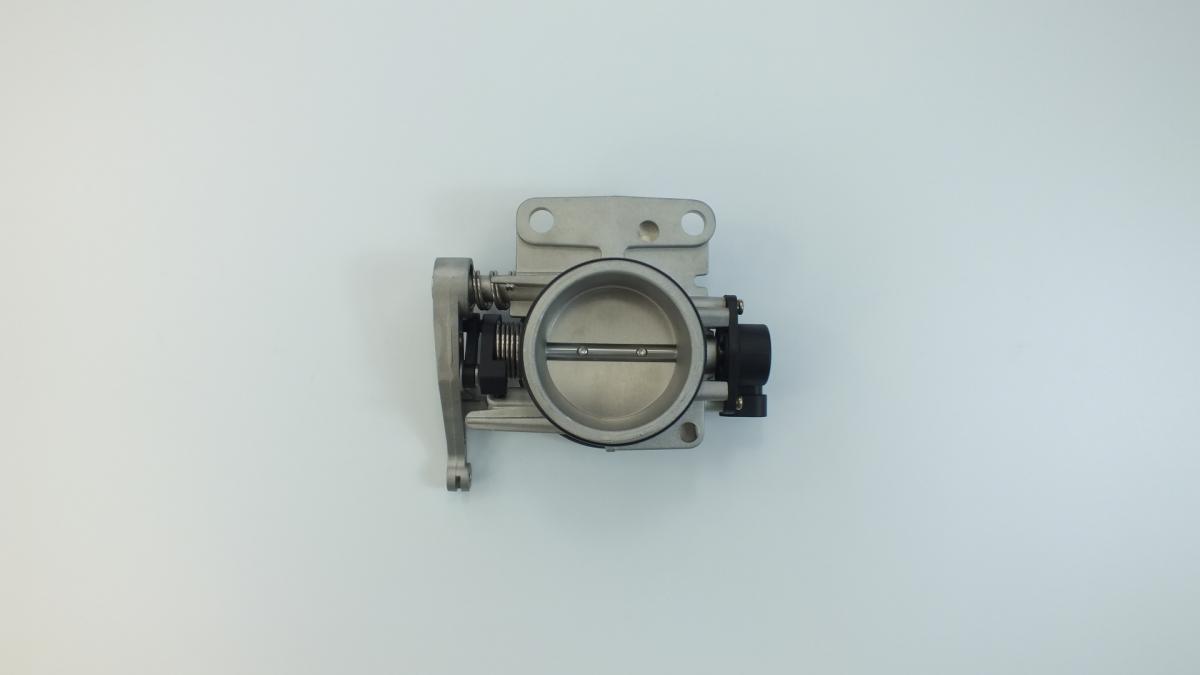
Mechanical (Cable-Operated) Throttle Bodies
Mechanical throttle bodies use a steel cable connected directly from the accelerator pedal to the throttle shaft. Pressing the pedal pulls the cable, which rotates the shaft and opens the butterfly valve. A return spring closes the valve when the pedal is released.
These units are simple and reliable but offer no integration with electronic safety systems. They typically include an idle air control valve (IACV) - a separate electronically controlled bypass that regulates idle speed. The throttle position sensor (TPS) is a separate component mounted on the shaft.
Mechanical throttle bodies are found on most vehicles manufactured before 2002-2005, and on some economy vehicles and motorcycles still in production. They are still a significant aftermarket category, particularly in markets with older vehicle fleets.
Electronic (Drive-by-Wire) Throttle Bodies
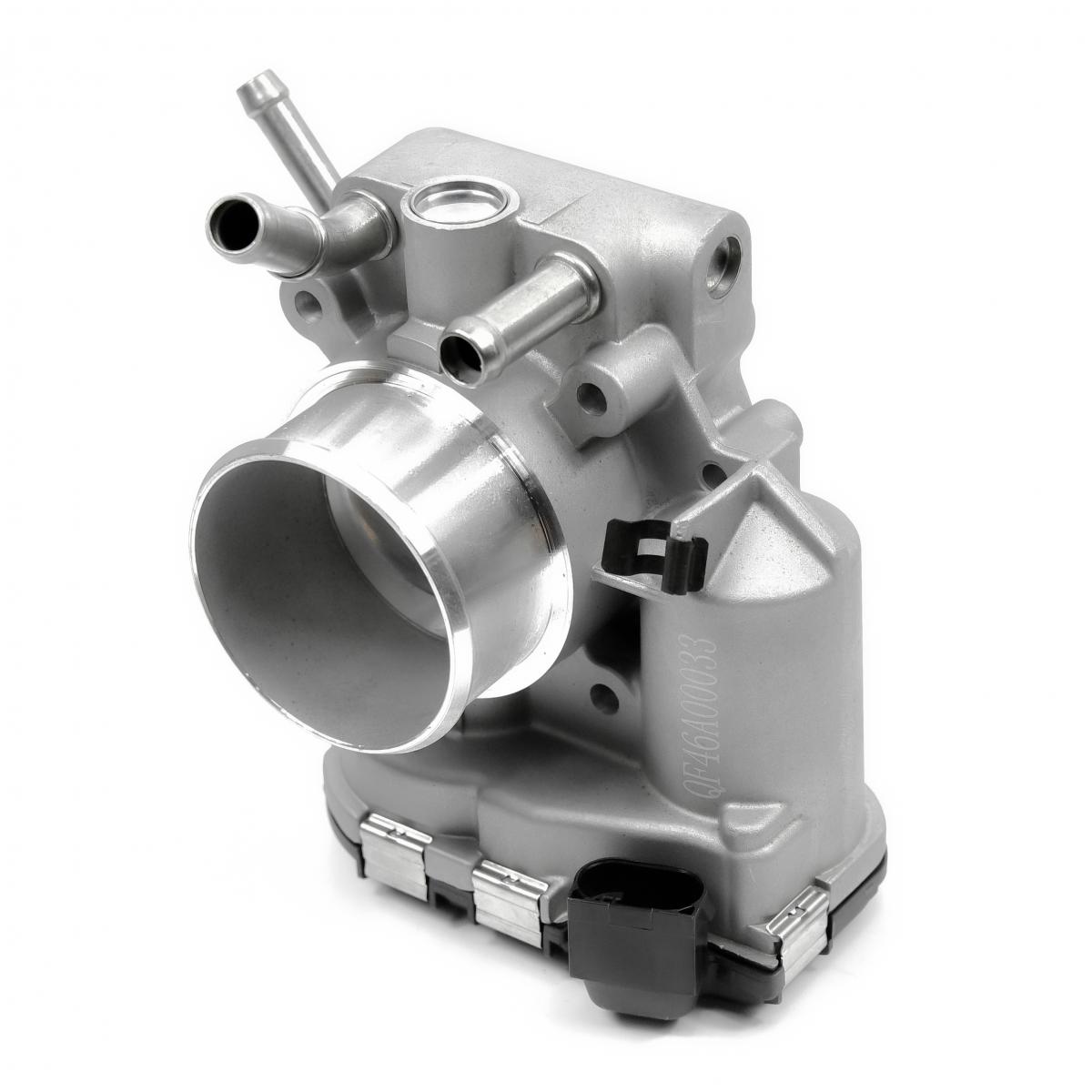
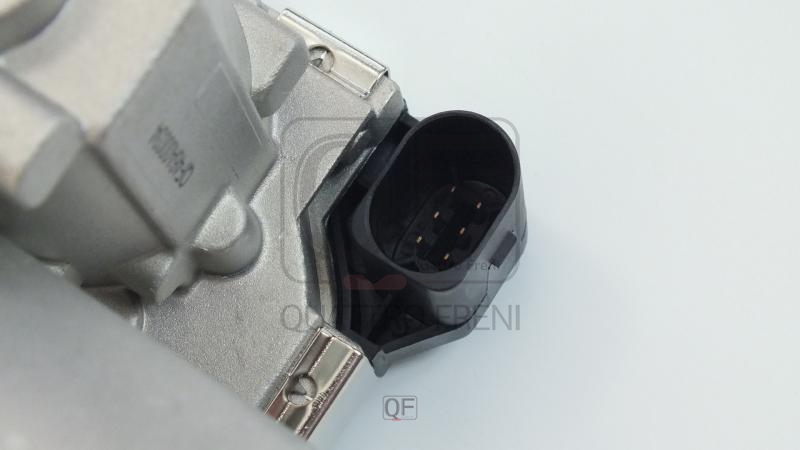
Electronic throttle body showing the multi-pin connector for motor control and TPS signals. View in catalog
Electronic throttle bodies replace the cable with an electric motor and integrated sensors. The accelerator pedal has its own position sensor (APP sensor) that sends the driver's input to the ECU. The ECU then commands the throttle body motor to open the valve to the appropriate angle.
Key components integrated into an electronic throttle body: a DC motor with reduction gears for valve actuation, dual redundant throttle position sensors (TPS1 and TPS2) for safety - the ECU cross-checks both readings continuously, a return spring that closes the valve to a default "limp home" position (typically 5-7% open) if power is lost, and a multi-pin electrical connector carrying motor power, TPS signals, and ground.
The redundant sensor design is a safety requirement. If the ECU detects a discrepancy between TPS1 and TPS2, it limits engine power and sets a diagnostic code. If the discrepancy is large, it forces the engine into limp mode or shuts it down entirely. This is why correct sensor calibration and adaptation after replacement is critical.
Individual Throttle Bodies (ITBs)
Individual throttle bodies provide one throttle valve per cylinder, mounted directly on each intake runner. They are used on high-performance engines and motorcycles for maximum airflow response. ITBs are a niche but profitable aftermarket segment - typically sold as complete sets with linkage.
3. Failure Symptoms and Diagnostic Trouble Codes
Throttle body failures range from gradual degradation (dirty bore, worn TPS) to sudden failure (motor failure, electrical fault). Recognizing the pattern helps determine whether cleaning or replacement is needed.
Common Failure Symptoms
Rough or unstable idle. The most common symptom. Carbon buildup on the butterfly valve and bore restricts airflow at idle, causing the ECU to constantly hunt for the correct idle speed. The tachometer fluctuates and the engine may shake.
Engine stalling. A severely contaminated or stuck throttle body may not allow enough air at idle to keep the engine running. Stalling is most common during deceleration (foot off gas) or when coming to a stop.
Reduced or no throttle response. On electronic systems, a failed throttle motor or TPS sensor causes partial or complete loss of throttle response. The vehicle may enter limp mode (limited to ~1500-2000 RPM) or refuse to accelerate beyond idle speed.
Check engine light with throttle codes. Electronic throttle faults generate specific DTCs that identify the failing component. This is the most direct diagnostic pathway.
"Limp mode" or reduced power warning. The ECU detects a throttle system fault and intentionally limits engine power to protect the drivetrain. Vehicle speed is typically limited to 30-50 km/h. The dashboard displays a warning message or engine light.
Surging or erratic acceleration. A throttle body with intermittent TPS signals or a sticky motor can cause the engine to surge or hesitate unpredictably. The driver presses the pedal steadily but the engine response is inconsistent.
Common Diagnostic Trouble Codes
| DTC Code | Description | Typical Cause |
|---|---|---|
| P0120 | Throttle position sensor A circuit | TPS1 signal out of range - sensor failure or wiring fault |
| P0121-P0124 | TPS A range/performance, low, high | TPS1 reading does not match expected value - worn sensor, carbon buildup preventing full closure |
| P0220-P0224 | Throttle position sensor B circuit/range | TPS2 (redundant sensor) fault - same causes as above |
| P2101 | Throttle actuator control motor circuit range/performance | Motor cannot move valve to commanded position - seized valve, failed motor, stripped gears |
| P2135 | Throttle position sensor 1-2 correlation | TPS1 and TPS2 readings disagree - one or both sensors failing. Critical safety code - forces limp mode |
| P0505-P0507 | Idle control system malfunction / RPM too low / too high | Idle air control fault - carbon buildup, failed IACV, or throttle body not closing fully |
| P2111/P2112 | Throttle actuator control system stuck open/closed | Valve physically stuck due to carbon or mechanical failure |
Critical note on P2135: This code indicates a safety-critical sensor disagreement. The ECU will force limp mode immediately. On many vehicles this code requires throttle body replacement rather than just sensor replacement, because TPS1 and TPS2 are integrated into the unit and not serviceable separately.
4. Common Failure Causes
Carbon buildup. The most common issue by far. Over time, oil vapors from the PCV (Positive Crankcase Ventilation) system and exhaust gases from the EGR (Exhaust Gas Recirculation) system deposit carbon on the butterfly valve and bore walls. This buildup restricts airflow at idle and can prevent the valve from closing completely. Regular cleaning can prevent this - replacement is only needed when cleaning fails to restore proper operation.
TPS sensor wear. The throttle position sensors are potentiometers or Hall-effect sensors that detect the angle of the butterfly valve. Potentiometer-type sensors develop dead spots or erratic readings as their resistive tracks wear from millions of cycles. Hall-effect sensors are more durable but can still fail from heat or electrical damage.
Motor failure. The DC motor in electronic throttle bodies operates in a harsh environment - extreme heat, vibration, and frequent direction changes. Over time, motor brushes wear, internal windings degrade, and the reduction gear train develops play. A worn motor cannot hold the valve at the commanded position accurately.
Coolant passage leaks. Many throttle bodies include an integrated coolant passage that circulates engine coolant through the housing to prevent icing in cold weather. Over time, the gaskets or internal passages can leak, introducing coolant into the air intake. This is common on older VAG and Ford throttle bodies.
Electrical connector corrosion. The throttle body connector is exposed to engine bay heat and humidity. Corroded pins cause intermittent signal dropouts that trigger TPS correlation codes and limp mode events.
Physical damage from intake system work. Throttle bodies are sometimes damaged during intake manifold removal, air filter replacement, or turbo intercooler hose replacement. A dropped tool or excessive force on the butterfly valve can bend the shaft or damage the bore surface.
5. OEM Cross-Reference Guide by Vehicle Brand
Throttle bodies are highly vehicle-specific - each engine family has unique bore diameter, connector pinout, mounting bolt pattern, and calibration. Below are examples of common OEM numbers by brand - all searchable in the ok.parts throttle body catalog.
European Vehicles
| Brand | Example OEM Numbers | Common Applications |
|---|---|---|
| VAG (VW/Audi/Skoda/Seat) | 03C133062AVAG 03C133062A, 04E133062E, 06A133062BF | Golf, Passat, Tiguan, A3, A4, Octavia, Leon |
| BMW / Mini | 13547556118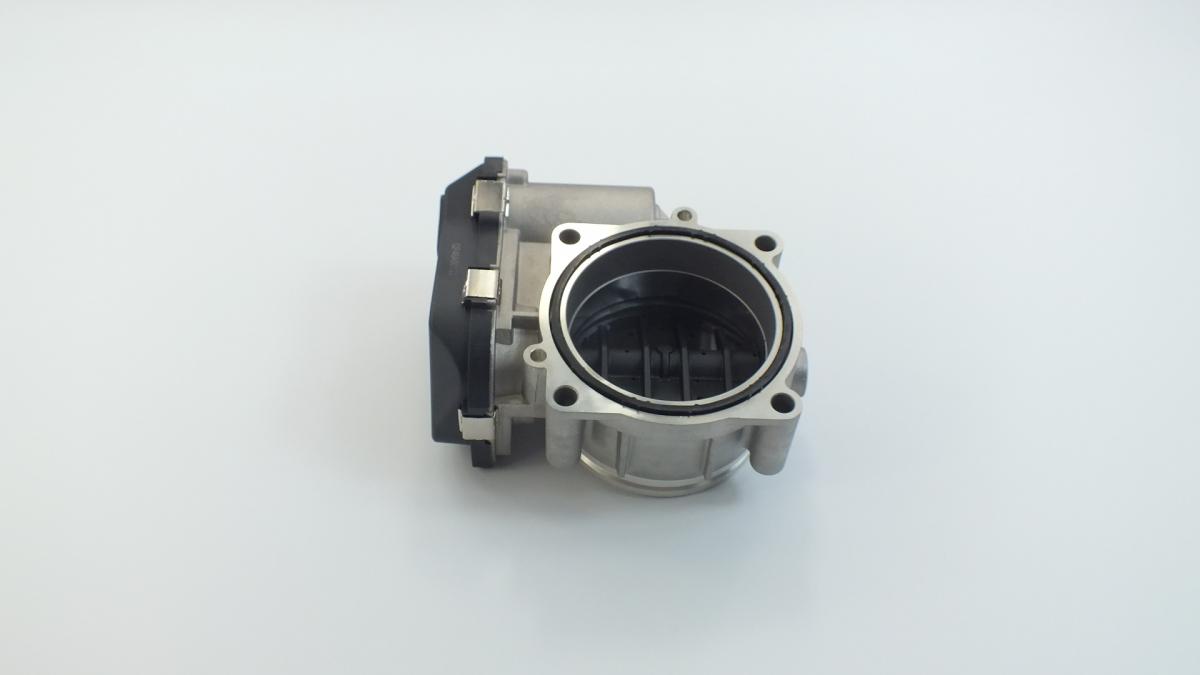 BMW 13547556118, 13548513553, 13541439224 BMW 13547556118, 13548513553, 13541439224 | 3 Series, 5 Series, X3, X5, Mini Cooper |
| Mercedes-Benz | A1110980109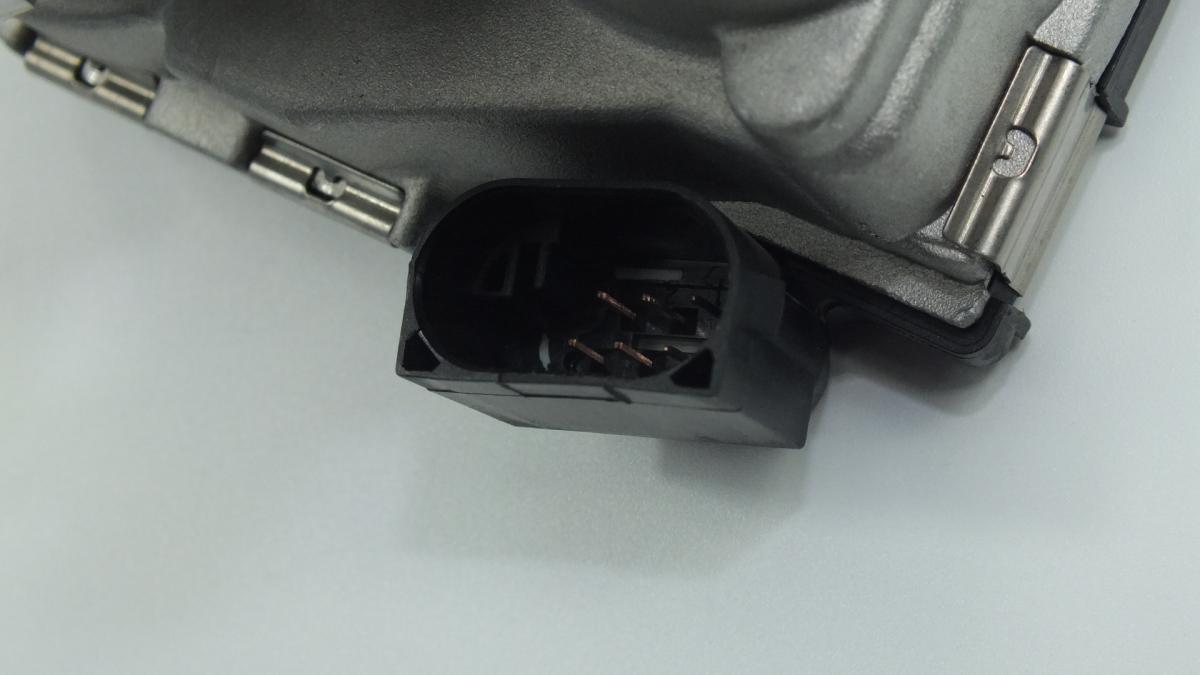 Mercedes A1110980109, A6510900470, A2661410525 Mercedes A1110980109, A6510900470, A2661410525 | C-Class, E-Class, ML/GLE, Sprinter |
| Renault | 7700102870Renault 7700102870, 8200171134, 8200568712 | Clio, Megane, Scenic, Duster, Kangoo |
| Peugeot/Citroen | 9673534480, V762596280, 1635Q8 | 308, 3008, C4, C5, Berlingo, Partner |
Japanese and Korean Vehicles
| Brand | Example OEM Numbers | Common Applications |
|---|---|---|
| Toyota/Lexus | 2203028070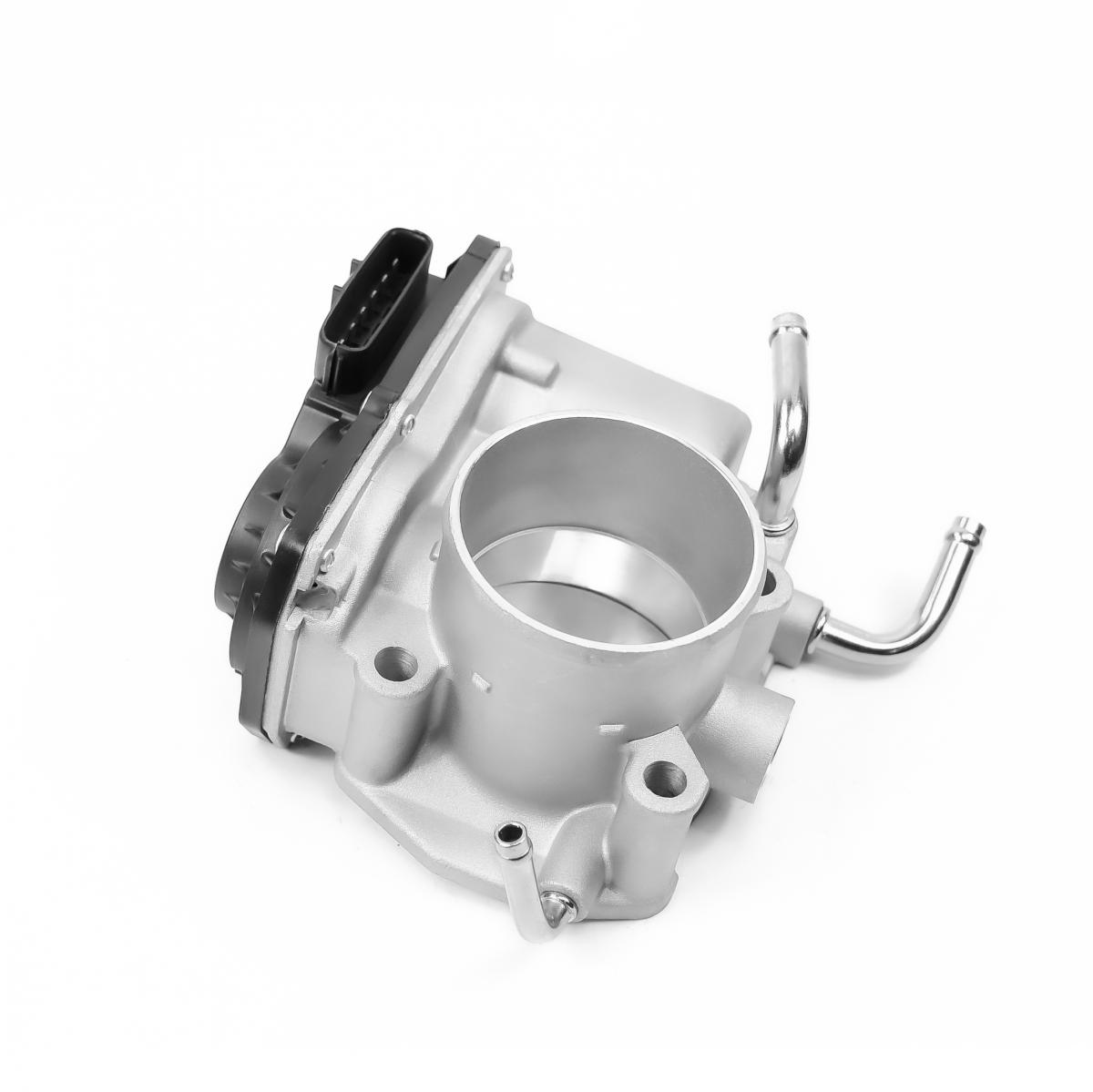 Toyota 2203028070, 2203021030 Toyota 2203028070, 2203021030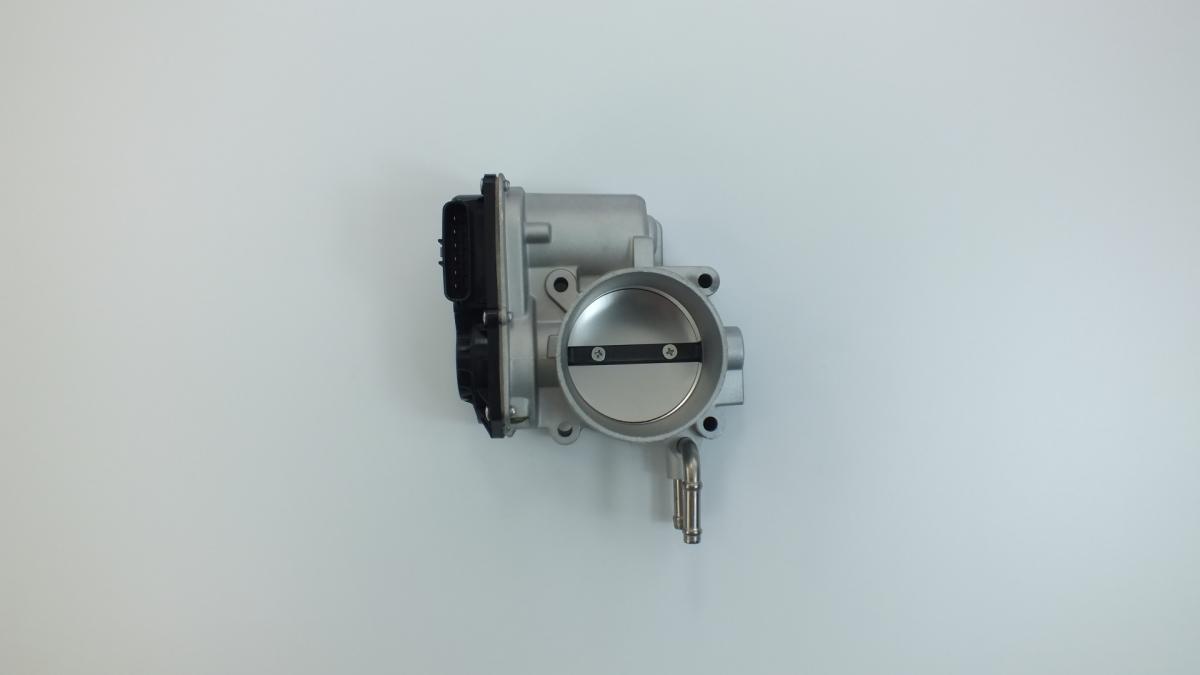 Toyota 2203021030, 2203075020 Toyota 2203021030, 2203075020 | Camry, Corolla, RAV4, Highlander, Land Cruiser |
| Honda | 1640059B003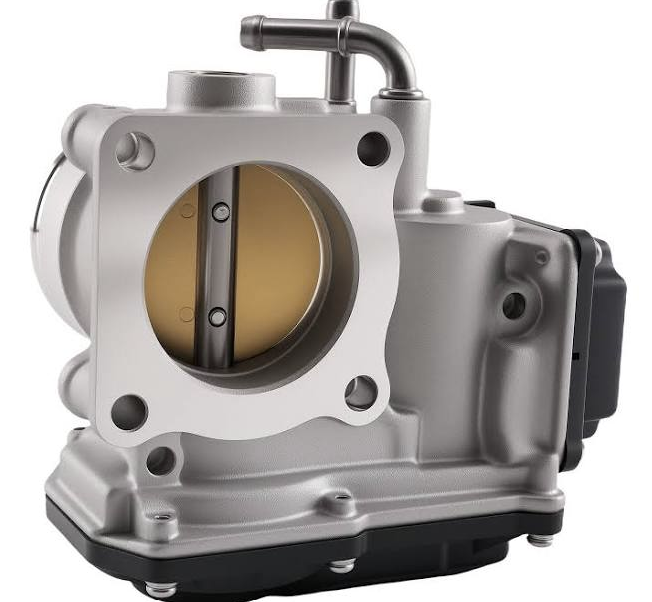 Honda 1640059B003, 16400RNBA01, 16400RAAA62 Honda 1640059B003, 16400RNBA01, 16400RAAA62 | Civic, Accord, CR-V, HR-V, Jazz/Fit |
| Nissan | 16119AU003, 161198J103, SERA57601 | Qashqai, X-Trail, Navara, Pathfinder, Note |
| Hyundai/Kia | 351002A900Hyundai/Kia 351002A900, 351002B150Hyundai/Kia 351002B150, 351002B300 | Tucson, Sportage, Creta, Rio, Cerato, Accent |
| Mazda | L3R413640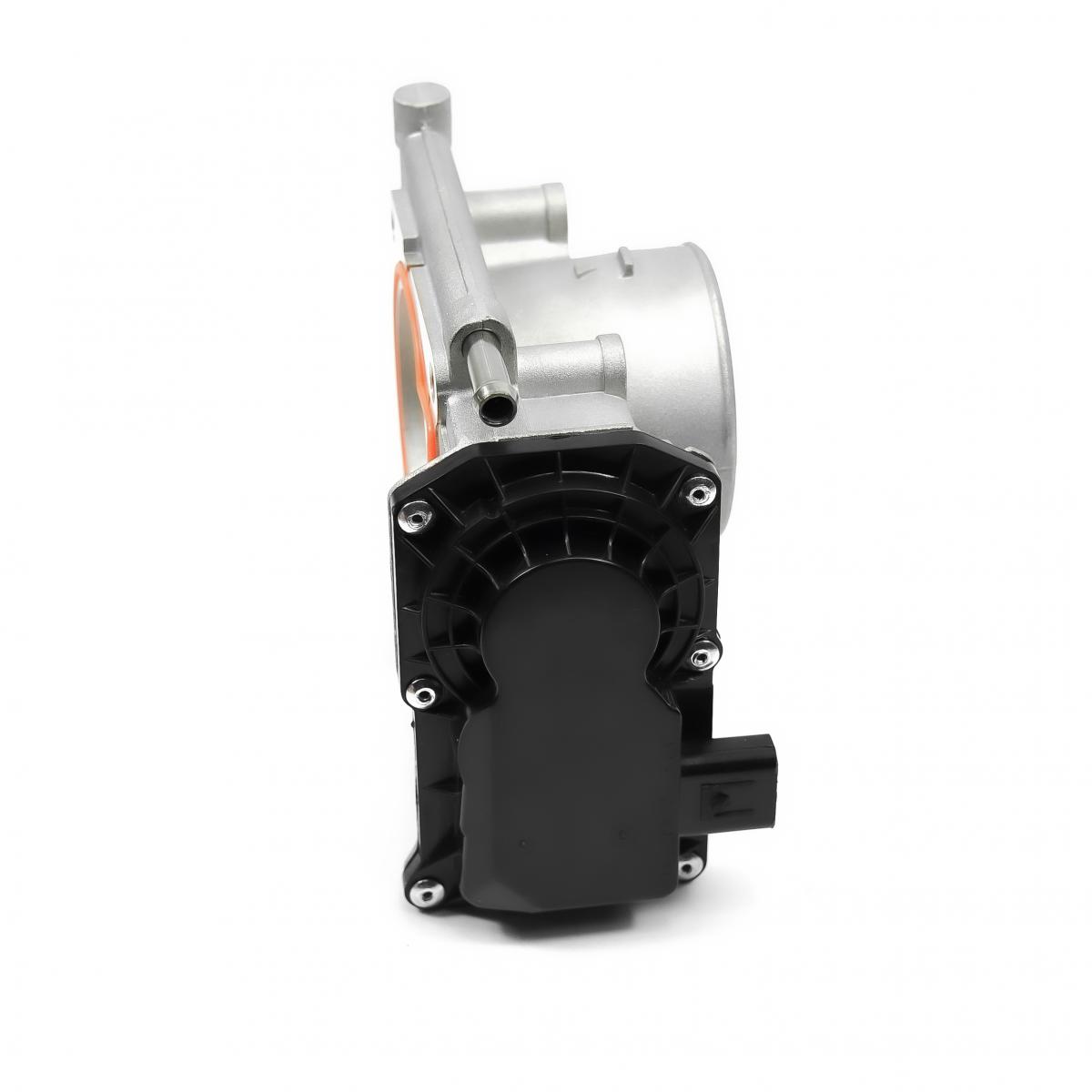 Mazda L3R413640, LF0113640A, ZJ3813640 Mazda L3R413640, LF0113640A, ZJ3813640 | CX-5, Mazda 3, Mazda 6 |
American and Chinese Vehicles
| Brand | Example OEM Numbers | Common Applications |
|---|---|---|
| General Motors | 12616994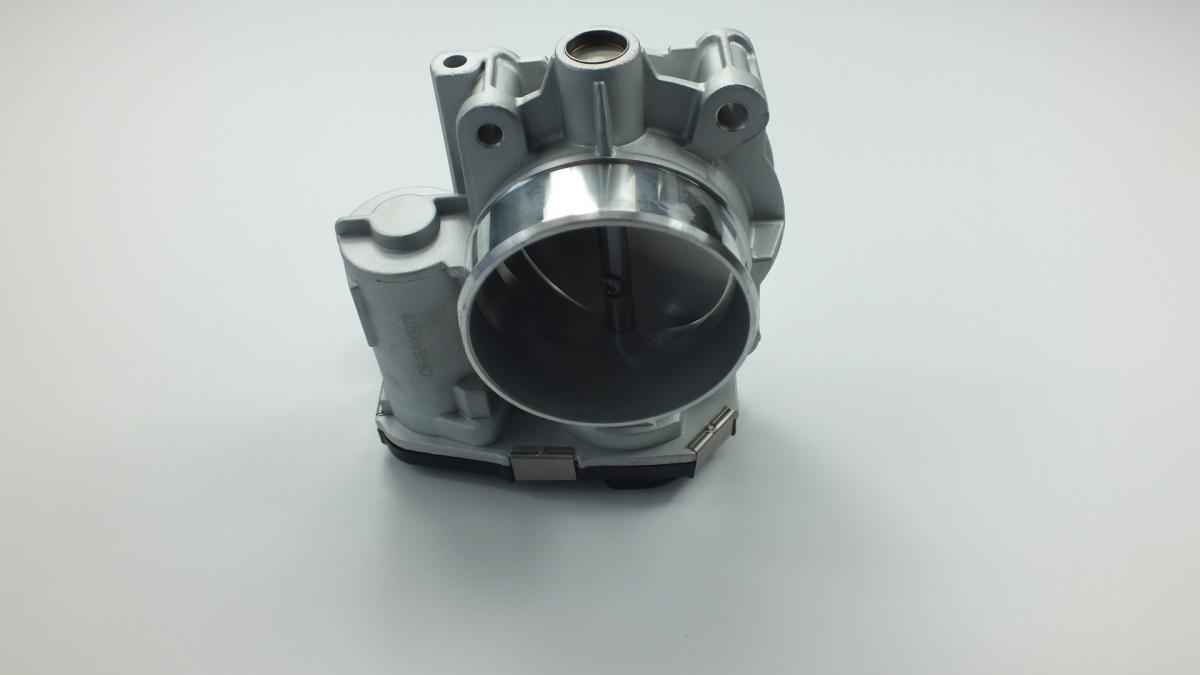 GM 12616994, 12670834, 12580760 GM 12616994, 12670834, 12580760 | Silverado, Equinox, Malibu, Cruze, Tahoe |
| Ford | 7S7G9F991BA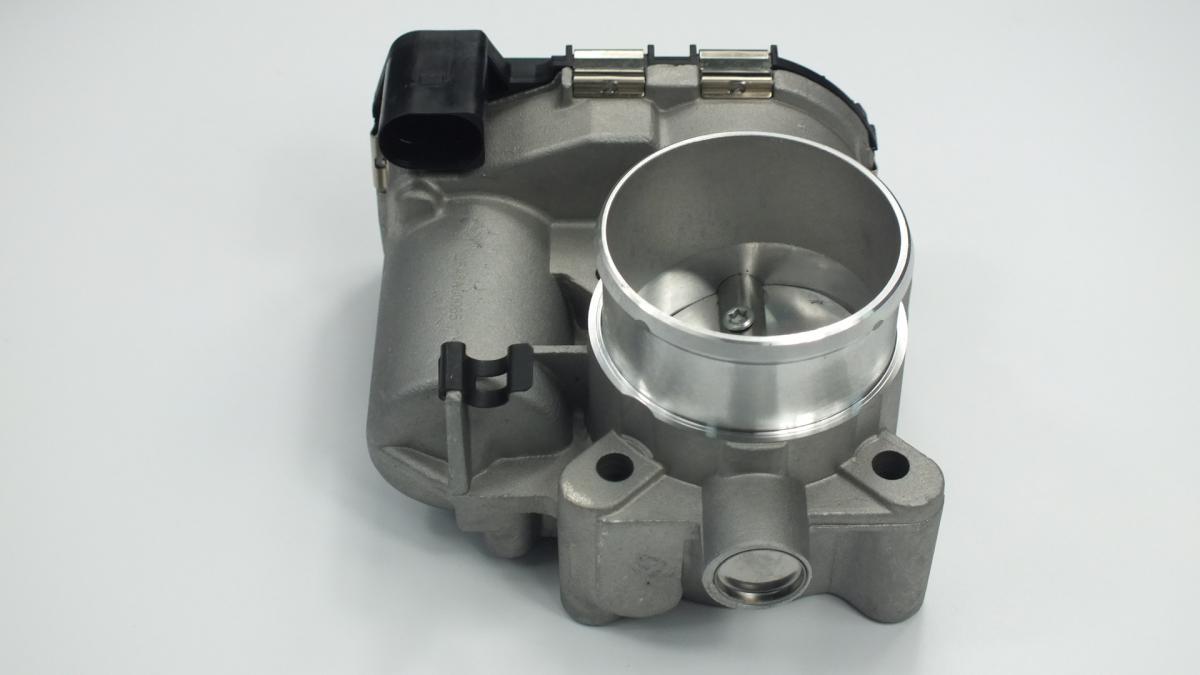 Ford 7S7G9F991BA, CM5G9F991BA, DS7Z9E926A Ford 7S7G9F991BA, CM5G9F991BA, DS7Z9E926A | Focus, Mondeo, Escape, F-150, Transit |
| Great Wall | 1132100ED01, 1108100P64, 1132100K84 | Haval H6, H2, H9, Wingle, Poer |
| Geely | 1136000108, 1016050462, 1016007921 | Coolray, Atlas, Emgrand, Monjaro |
This is a small sample. The complete throttle body catalog on ok.parts contains over 1,800 SKUs covering all major vehicle brands.
6. Why Throttle Bodies Are a Premium Wholesale Opportunity
Highest unit value in the sensor/electronics category. At $20-$65 wholesale and $80-$300 retail, throttle bodies have the highest per-unit margin of any engine management component. A single sale generates more revenue than selling 10 ignition coils or 20 oxygen sensors.
Growing electronic complexity. As the global fleet transitions from mechanical to electronic throttle bodies, the replacement market is expanding. Electronic units fail more often than mechanical ones (more components to fail), cost more to replace, and cannot be repaired - only replaced as a complete assembly.
One per vehicle, always needed. Every gasoline and diesel vehicle has exactly one throttle body. There is no "not applicable" scenario. When it fails, the vehicle is undriveable - this is an urgent, non-optional repair.
Cleaning drives replacement awareness. Throttle body cleaning is one of the most commonly recommended maintenance services. Every cleaning appointment is an opportunity to identify a unit that needs replacement - worn TPS, failing motor, or a bore too damaged to clean effectively.
Throttle body showing the aluminum bore and butterfly valve - precision machining is critical for proper air seal.
7. Sourcing Throttle Bodies Wholesale from China
China's primary manufacturing clusters for throttle bodies are in Ruian (Zhejiang), Guangzhou (Guangdong), and Chongqing. These regions have specialized factories producing both mechanical and electronic throttle body assemblies for the global aftermarket.
Critical Quality Checks
Bore diameter and surface finish. The bore must match OEM specifications to within 0.05mm. The surface finish must be smooth enough for the butterfly valve to seal completely at idle, but not so smooth that it prevents carbon adhesion (which paradoxically helps the initial seal on new units).
TPS signal verification. Both throttle position sensors must output a smooth, linear signal across the full range of valve travel. Use an oscilloscope or scan tool to verify no dead spots, dropouts, or non-linearity. This is the single most important quality check for electronic throttle bodies.
Motor torque and response time. The actuator motor must move the valve from closed to wide-open within the OEM-specified time (typically 100-200ms). Insufficient motor torque causes sluggish throttle response and may trigger P2101 codes.
Connector and mounting compatibility. Verify the connector pinout matches the OEM wiring exactly. Confirm mounting bolt pattern and gasket surface alignment. A throttle body that is 1mm off on bolt spacing will cause a vacuum leak.
Default spring position. Electronic throttle bodies have a return spring that holds the valve at a "limp home" position (5-7% open) when power is removed. Verify the spring returns the valve to the correct default angle - too closed and the engine stalls in limp mode, too open and idle speed is uncontrollably high.
ok.parts applies its 3-stage quality control process to all throttle body orders - including TPS signal sweep testing, motor response verification, and dimensional checking on sampled units.
8. Throttle Body Adaptation and Relearn Procedures
This section is critical for distributors to communicate to their workshop customers. Unlike most other parts, electronic throttle bodies almost always require an adaptation (relearn) procedure after replacement. Failing to perform this procedure is the number one cause of "new part doesn't work" complaints and warranty returns.
Why Adaptation Is Needed
The ECU learns the exact closed and open positions of the throttle valve over time, compensating for manufacturing tolerances and wear. When a new throttle body is installed, its closed position is slightly different from the old one. If the ECU still uses the old learned values, it may think the valve is slightly open when it is actually closed (causing high idle) or slightly closed when it should be open (causing hesitation).
Common Adaptation Methods by Manufacturer
| Manufacturer | Adaptation Method |
|---|---|
| VAG (VW/Audi/Skoda/Seat) | Requires VCDS/ODIS scan tool. Basic Settings > Throttle Body Adaptation (Group 060). Some models accept key-on adaptation: ignition on (engine off) for 10 seconds, then start engine and let idle for 2 minutes. |
| Toyota/Lexus | Idle relearn: disconnect battery for 30 minutes, reconnect, turn ignition on for 5 seconds without starting, start engine, let idle in Park/Neutral for 10 minutes with all accessories off. |
| BMW / Mini | ISTA/INPA required for most models. Adaptation function resets throttle and idle values. Some models accept ignition-on adaptation similar to Toyota method. |
| Hyundai/Kia | GDS/KDS scan tool preferred. Manual method: turn ignition ON for 10 seconds, turn OFF for 10 seconds, repeat 3 times, then start and idle for 10 minutes. |
| Ford | FORScan or IDS scan tool. Manual method: disconnect battery for 15 minutes, reconnect, turn ignition ON (engine off) for 60 seconds, start engine and let idle until cooling fan cycles on and off. |
| General Motors | Tech2/GDS2 scan tool for full adaptation. Manual method: turn ignition ON for 5 seconds, start engine, let idle in Park for 5 minutes, then drive normally for 10 minutes. |
Important: Always provide adaptation instructions to the workshop customer when selling a throttle body. Including a printed instruction sheet with the part dramatically reduces warranty claims and builds customer trust.
9. Installation Best Practices
Throttle body unit ready for installation - always use a new gasket and verify connector fit before mounting.
Always use a new gasket or O-ring. The gasket between the throttle body and the intake manifold is a common source of vacuum leaks. Never reuse the old gasket - even if it looks undamaged, it has taken a compression set that will not seal properly with the new unit.
Do not touch the butterfly valve with your fingers. Oil from skin transfers to the valve surface and attracts carbon buildup. Handle the throttle body by the housing only.
Verify connector fit before mounting. Plug in the electrical connector before bolting the throttle body in place. Confirm the connector clicks securely and the pins align. Discovering a connector mismatch after the unit is bolted and the intake hose is reattached wastes significant time.
Torque mounting bolts evenly and to specification. Uneven torque warps the throttle body flange and creates a vacuum leak. Typical torque is 8-12 Nm depending on bolt size.
Perform adaptation before returning the vehicle. This is non-negotiable for electronic throttle bodies. Without adaptation, the idle will be unstable and the check engine light may return. See the adaptation table above for manufacturer-specific procedures.
Clear all DTCs after installation. Even after adaptation, old throttle-related codes may remain stored. Clear all codes and verify no new codes appear after a test drive.
10. Frequently Asked Questions
What is a throttle body and what does it do?
A throttle body is a valve assembly that controls the volume of air entering the engine. It sits between the air filter and the intake manifold. In modern vehicles, it is electronically controlled by the ECU (drive-by-wire), enabling integration with traction control, cruise control, and stability control systems.
What is the difference between mechanical and electronic throttle bodies?
Mechanical throttle bodies use a physical cable from the pedal. Electronic (drive-by-wire) systems use a pedal position sensor and a motor inside the throttle body, with the ECU controlling valve position. Electronic systems are standard on virtually all vehicles from 2005 onward and are not interchangeable with mechanical types.
Does a new throttle body need programming or adaptation?
Almost always yes. Electronic throttle bodies require a relearn procedure after replacement so the ECU learns the new unit's closed and open position values. Methods vary by manufacturer - some accept a simple key-on idle relearn, others require a scan tool. Always perform adaptation before returning the vehicle to the customer.
How much do wholesale throttle bodies from China cost?
Wholesale pricing from verified Chinese factories ranges from $20-$65 per unit depending on type and complexity. Retail aftermarket pricing runs $80-$300. The ok.parts catalog shows transparent wholesale pricing for all 1,800+ throttle body SKUs.
Can a dirty throttle body be cleaned instead of replaced?
Carbon buildup can often be cleaned with throttle body cleaner spray - this is a valid maintenance service. However, if the TPS sensors have failed (erratic signal, dead spots), the motor is worn (slow response, P2101), the bore is physically damaged, or P2135 (sensor correlation) is present, replacement is the only fix.
What causes throttle body failure?
The most common cause is carbon buildup from PCV and EGR system vapors. Other causes include TPS sensor wear, motor brush degradation, coolant passage leaks (on units with integrated coolant channels), connector corrosion, and physical damage during intake system maintenance.
How long does a throttle body last?
Electronic throttle bodies typically last 150,000-250,000 km, though this varies significantly by vehicle and driving conditions. Vehicles with direct injection engines and EGR systems tend to experience faster carbon buildup and earlier throttle body degradation. Regular cleaning can extend lifespan considerably.
Related Guides
- Ignition Coils: Complete Technical and Wholesale Guide
- Oxygen Sensors (Lambda Sensors): Complete Technical and Wholesale Guide
- ABS Wheel Speed Sensors: Complete Technical and Wholesale Guide
- How to Source OEM-Quality Auto Parts from China
- Wholesale Auto Parts Supplier from China
- Private Label Auto Parts Manufacturer
- Auto Parts Quality Control in China