Counterfeit Auto Parts: How to Spot Fakes Before You Pay
A counterfeit part looks like the brand you ordered and performs like something else entirely. This guide explains how fakes enter the supply chain, how to recognize them before you pay, and what to do if a shipment turns out to be wrong.
According to the latest OECD and EUIPO study of customs seizures, global trade in counterfeit goods was worth about USD 467 billion in 2021 - roughly 2.3% of world imports. Automotive parts are named among the product groups where fakes are not just a commercial problem but a safety one.
For an importer or a parts store, the risk is concrete. A pallet of fake spark plugs or brake pads means refunds, lost customers, possible seizure at customs and, in the worst case, liability for an accident. The good news is that most counterfeits can be caught with a disciplined routine and a few minutes of checking.
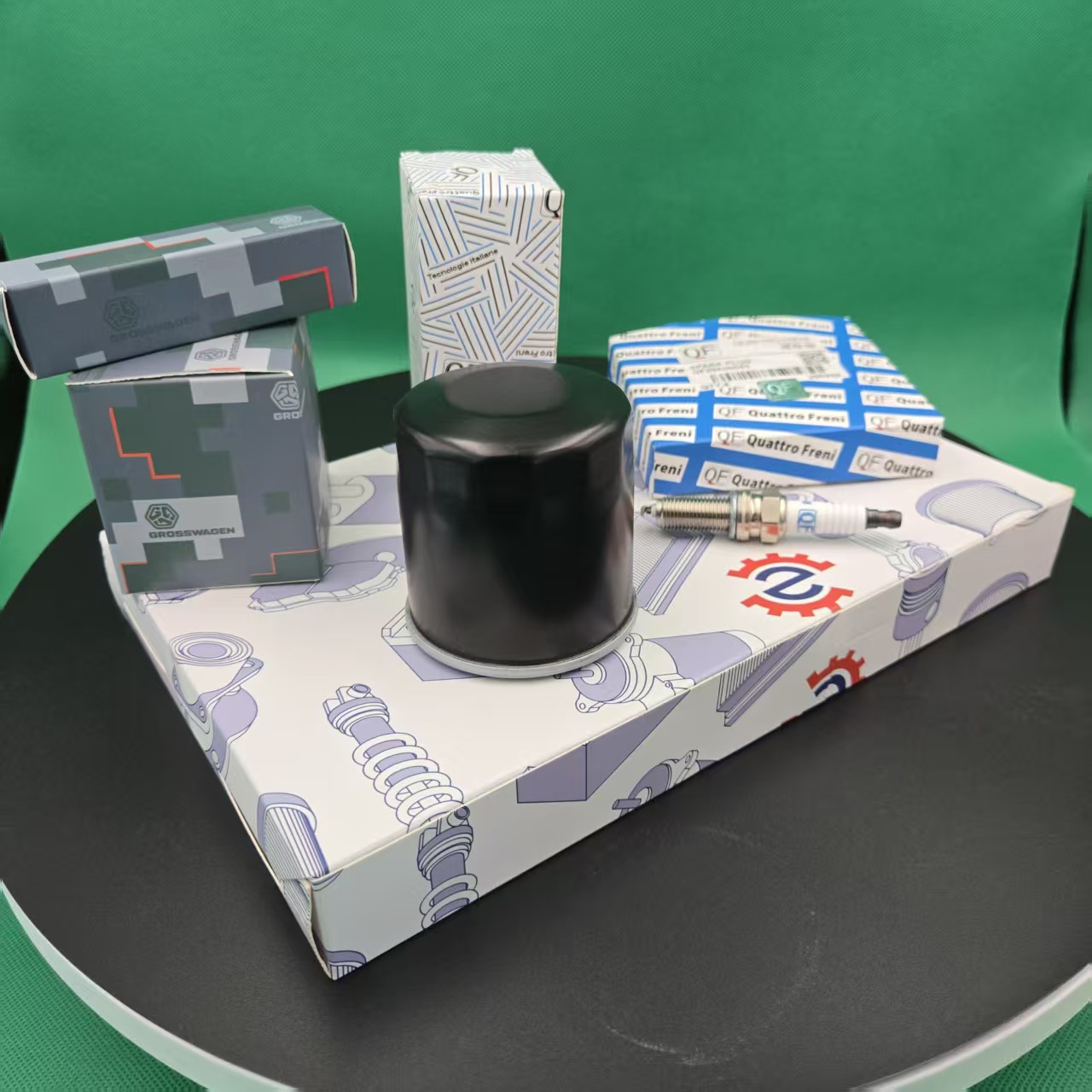
A legitimate box identifies itself: brand, part number, barcode and approval marks, all consistent with each other. Pictured: QUATTROFRENI, the ok.parts private label brand.
1. What Counts as a Counterfeit - and What Does Not
The word "fake" is used loosely in the trade, and that causes confusion. Four different things get called by the same name.
| Type | What it is | Legal? |
|---|---|---|
| Counterfeit | A part or box that carries a brand name, logo or part number it has no right to use, made to pass as that brand's product. | No. It infringes the trademark and is subject to seizure. |
| Aftermarket equivalent | A part made by an independent manufacturer under its own brand, designed to replace the original. | Yes. This is the normal replacement market. |
| Parallel import | A genuine part sold outside the brand's authorized channel for that country. | Depends on the country. The part itself is real. |
| Refurbished sold as new | A used or rebuilt unit cleaned up and sold as a new part. | No, if it is not declared. |
The line that matters is the brand. A brake pad in a plain box, or in the box of an honest aftermarket brand, is not a counterfeit no matter how cheap it is. The same pad in a box printed with the logo of a premium brand is. The difference between genuine, OEM and aftermarket parts is covered in OEM vs OES vs Aftermarket vs Genuine Parts.
2. Which Parts Are Faked Most
Counterfeiters follow the same logic as any business: high volume, strong brand, easy to copy the appearance, hard to test the performance at the counter.
Spark plugs are the classic case - small, branded, sold in huge numbers, and impossible to evaluate by eye once the box is convincing. Filters follow for the same reason. Brake pads and bearings are frequent targets because a recognized brand commands a large premium. Engine oil, belts, sensors and bulbs are all regularly seized.
The most dangerous category is airbags and their components: a counterfeit airbag may not deploy at all, or may deploy with fragments. These should only ever be bought through the vehicle manufacturer's own channel.
3. Seven Warning Signs
1. A price that is too good. Genuine branded parts have a floor price set by the manufacturer's distribution chain. An offer 40 or 50 percent below every authorized distributor is not a bargain; it is a different product.
2. Packaging that is almost right. Compare the box with a known genuine one. Look at the exact shade of the brand color, the sharpness of the logo, the font, the spacing, the quality of the cardboard and the glue lines. Spelling mistakes and blurred printing are giveaways, but good fakes get the artwork right and fail on material quality.
3. Labels and codes that do not hold up. Every box in a genuine shipment has consistent labels with batch or serial data. Check that the barcode scans to the correct product, that the part number on the label matches the part number on the part, and that serial numbers are not identical across boxes.
4. Missing security features. Many brands add holograms, security labels, scratch codes or QR codes. If a brand uses them and your box has none - or has one that does not verify - treat the shipment as suspect.
5. The part itself looks wrong. Weigh it against a genuine sample. Look at the markings: genuine parts are usually laser-etched or cleanly stamped, fakes are often printed or roughly engraved. Check casting quality, plating, threads, connector shape and the fit of seals.
6. A seller who avoids questions. A legitimate supplier can say where the goods come from, provide company documents and issue a proper invoice naming the brand. Vague answers about origin, pressure to pay quickly and refusal to send photos of the actual stock are all warning signs.
7. Paperwork that does not match. The commercial invoice, packing list and labels should tell the same story. Goods described as "auto parts, no brand" on the documents and carrying a premium logo on the box are a problem waiting for a customs inspection.
4. Verification Tools the Brands Provide
Several major manufacturers give buyers a direct way to check a product. Use them - they exist because the problem is real.
| Brand | Tool | How it works |
|---|---|---|
| Schaeffler (INA, LuK, FAG) | OriginCheck app | Scan the code on the packaging label with a phone; the app checks it against Schaeffler's records. |
| SKF | SKF Authenticate app | Photograph the product and packaging and submit them to SKF for verification. |
| MANN-FILTER | Security code on the box | A unique code on the packaging can be checked online with the manufacturer. |
| Brembo | Brembo Check | A card with a code inside the box is verified on the manufacturer's website. |
| Motorservice (Kolbenschmidt, Pierburg) | Security label | Packaging carries several security features that can be checked visually and online. |
Security features change over time, and counterfeiters copy old ones. Always use the instructions on the brand's own website rather than a description from a seller, and when in doubt write to the brand's brand-protection team - they generally answer quickly, because they want to know.
5. What to Check, Product by Product
| Product | Compare with a genuine sample |
|---|---|
| Spark plugs | Sharpness and position of the printing on the insulator, the shape and finish of the center electrode, the quality of the terminal crimp and the sealing washer, and the weight. |
| Brake pads | Approval marking on the backing plate (ECE R90 number where required), edge code on the friction material, quality of shims and wear indicators, and whether the box label matches the pad. |
| Bearings | Laser marking on the ring, packaging and inner wrap, grease color and quantity, smoothness of rotation, and the verification code on the label. |
| Filters | Number and evenness of pleats, quality of the end caps and seals, presence of the bypass or anti-drain valve where the genuine filter has one, and print quality on the housing. |
| Sensors | Connector shape and pin count, cable length, marking style, and - most telling - whether the part number format matches the brand's real format. |
| Engine oil | Cap seal, label alignment, batch code printed on the container, and the container molding itself. |
The common thread is comparison. You cannot judge a part in isolation; you need a reference that you know is genuine. Keep one genuine sample of each fast-moving branded product you buy, in its original box, and photograph new deliveries against it.
Part numbers deserve a special mention. Counterfeiters often get the format wrong - too many digits, a missing prefix, letters in the wrong place. If you know how a brand's numbers are built, an impossible number stands out immediately. See How to Find and Read an OEM Part Number.
6. What to Do If You Receive Counterfeits
Stop selling the batch. Selling goods you know or suspect to be counterfeit exposes you to liability in most countries, whatever you paid for them.
Document everything. Photograph the boxes, labels, parts and shipping marks. Keep the invoice, packing list and all correspondence. Record batch and serial numbers.
Notify the supplier in writing and state exactly what you found. A supplier who was deceived further up the chain will want to resolve it; one who was not will reveal that by the response.
Contact the brand. Brand-protection teams can confirm whether the goods are genuine, and their written confirmation is the strongest evidence you can have in a dispute.
Check your payment protection. Whether you can recover the money depends on the payment method and the contract. This is the moment when a clear purchase agreement and a traceable supplier prove their value.
7. A Safe Buying Routine
Know the authorized channel. Most premium brands publish a list of authorized distributors. If the price you are offered is far below theirs, ask why.
Ask for photos of the actual stock before paying: the outer carton, the product box label, and the part with its markings visible. Five minutes with those photos and a brand's verification tool answers most questions.
Order a sample first and compare it with your genuine reference. For larger orders, arrange a pre-shipment inspection that includes authenticity checks; the process is described in our quality control guide.
Buy from suppliers with a track record. A supplier who has been delivering for years has more to lose than one who appeared last month. On ok.parts every offer shows the supplier's E-to-A rank, which is built from real purchase history, alongside the manufacturer of the part being offered. How to check who you are really dealing with is covered in Factory or Trading Company? How to Verify a Chinese Auto Parts Supplier.
Consider whether you need the brand at all. If your customers buy on price, an honest aftermarket or private label product with a clear specification is a safer business than a "branded" part at a suspicious discount.
Compare Suppliers by OEM Number
8. Frequently Asked Questions
How can I tell if a car part is fake?
Compare it with a known genuine sample: packaging print quality, label data, security features, weight, markings and finish. Check that the price is consistent with authorized distributors, and use the brand's own verification tool where one exists.
Are aftermarket parts counterfeit?
No. An aftermarket part sold under its manufacturer's own brand is a legal replacement product. A counterfeit is a part or package that falsely carries another company's brand, logo or part number.
Which car parts are most often counterfeited?
Fast-moving branded items: spark plugs, oil and air filters, brake pads, bearings, belts, engine oil, sensors and bulbs. Airbags and airbag components are less common but the most dangerous.
What happens if customs finds counterfeit parts in my shipment?
In most countries customs can detain and destroy the goods, and the importer loses the shipment and may have to pay storage and destruction costs. Not knowing the goods were counterfeit usually does not prevent the seizure.
How do I verify a bearing or filter from a major brand?
Several manufacturers provide tools: Schaeffler's OriginCheck app for INA, LuK and FAG products, the SKF Authenticate app, and security codes on MANN-FILTER and Brembo packaging. Follow the instructions on the brand's official website.
Is a very low price always a sign of a fake?
Not always, but a price far below every authorized distributor needs an explanation. Genuine overstock and parallel imports exist; so do counterfeits. Ask for the source and for photos of the labels, and verify before paying.
Related Guides
- OEM vs OES vs Aftermarket vs Genuine Parts: What Is the Difference
- How to Find and Read an OEM Part Number: Formats by Car Brand
- Factory or Trading Company? How to Verify a Chinese Auto Parts Supplier
- Auto Parts Quality Control in China: The Complete Inspection Guide
- Brake Pads: Friction Types, ECE R90, Euro 7 and Wholesale Sourcing Guide
- Wheel Bearings and Hub Units: Complete Technical and Wholesale Sourcing Guide