How to Find and Read an OEM Part Number: Formats by Car Brand
The OEM part number is the only identifier that guarantees a part will fit. This guide shows where to find it, how to get it from a VIN, and how to read the number formats used by the major car brands.
Every component on a vehicle has a number assigned by the vehicle manufacturer. A model name, a production year and an engine size narrow the choice down; the number removes the choice altogether. Workshops that order by description lose time on returns. Importers who order by description lose money on containers of parts that almost fit.
The format rules in this guide come from an analysis of more than 19,000 OEM numbers in the ok.parts database, covering over 20 vehicle brands. Each example number links to live supplier offers, so you can see how a correctly written number behaves in a real search.
- What an OEM Part Number Is - and What It Is Not
- Where to Find the Number
- How to Get the Number from a VIN
- OEM Number Formats by Brand
- How to Write and Search a Number Correctly
- Superseded Numbers and Cross-References
- Mistakes That Cost Money
- Searching by OEM Number on ok.parts
- Frequently Asked Questions
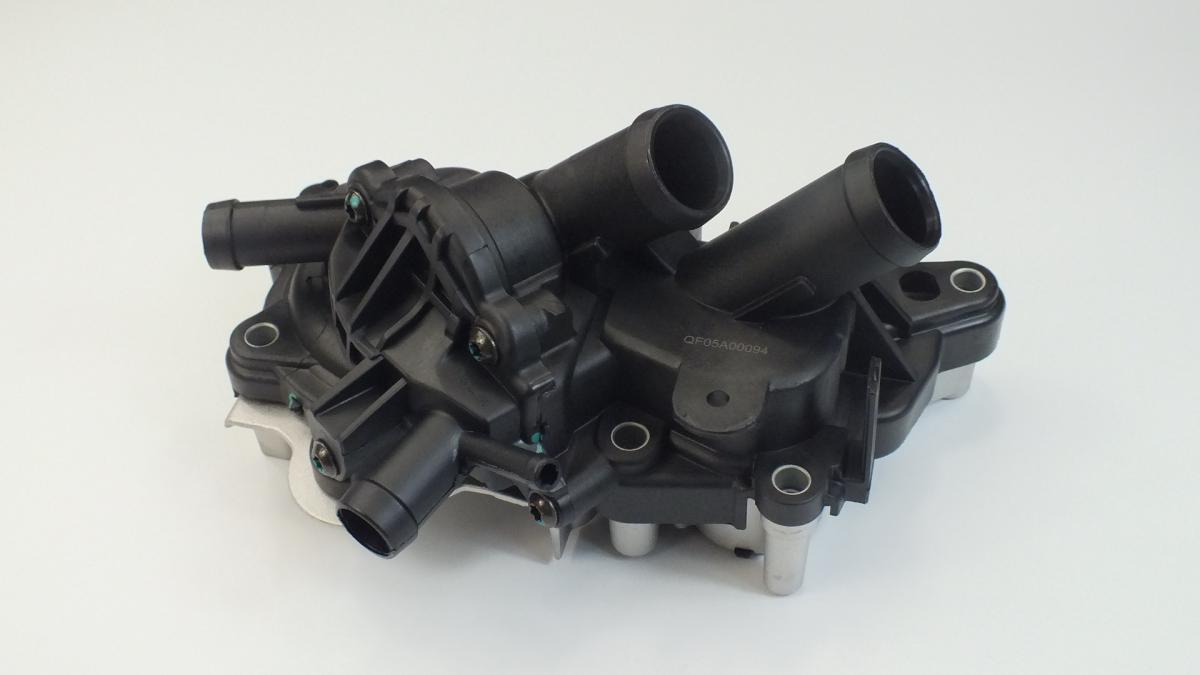
VAG water pump 04E121600P. Read it as 04E 121 600 P: design family, part group, part number, revision. View offers
1. What an OEM Part Number Is - and What It Is Not
An OEM number (also called an OE number, original number or genuine part number) is the reference the vehicle manufacturer assigns to a part in its own parts catalog. It is the number a dealer uses to order the part, and the number every serious aftermarket catalog cross-references to.
The difficulty is that a part usually carries several numbers, and only one of them is the OEM number.
| Number on the part | Who assigns it | Example | Can you order by it? |
|---|---|---|---|
| OEM number | Vehicle manufacturer | 04E121600P | Yes - this is the one to use. |
| Supplier number | Component maker such as Bosch, Denso or Hella | F01R00A003 (Bosch) | Yes, as a cross-reference. It often leads to the same part under a different brand. |
| Aftermarket brand number | Independent aftermarket brand | The brand's own article number | Only inside that brand's catalog. |
| Casting or mold number | Foundry or toolmaker | Raised digits cast into metal or plastic | No. Several different finished parts can share one casting. |
| Date and batch codes | Production plant | Short codes, dials or dot matrices | No. They identify when the part was made, not what it is. |
A quick way to tell them apart: an OEM number follows the brand's format (see the table in section 4) and is usually printed next to the vehicle manufacturer's logo. A casting number is part of the metal or plastic itself. A supplier number sits next to the supplier's logo.
2. Where to Find the Number
On the part. This is the most reliable source, because it identifies what is actually fitted to the car. Electronic parts - sensors, coils, control units - carry a printed label or laser-etched number on the housing. Plastic parts have the number molded in or on a sticker. Metal chassis parts have it stamped, etched or on a paper label that may be gone after years on the road. Clean the part, use a strong light, and photograph the number rather than copying it by hand.
On the packaging. A genuine part comes in a box or bag with a label showing the OEM number and a barcode. If the customer kept the box from a previous repair, check that the previous part was genuine - a number from an aftermarket box is that brand's own number, not the OEM number.
In the paperwork. Dealer invoices and service records list the OEM numbers of the parts that were replaced.
In the electronic parts catalog. Every manufacturer maintains an electronic parts catalog (EPC) with exploded diagrams for each model. Dealers, and many independent catalog services, can open the exact diagram for a specific car from its VIN and read the number from it. This is the standard method when the old part is missing, damaged or unreadable.
3. How to Get the Number from a VIN
The VIN (Vehicle Identification Number) is a 17-character code that identifies one specific car. It does not contain part numbers, but it is the key that makes a parts catalog show the right ones.
| Position | Section | What it tells you |
|---|---|---|
| 1-3 | World Manufacturer Identifier | Who built the car and where. W = Germany, J = Japan, K = Korea, L = China, 1, 4 and 5 = United States. |
| 4-8 | Vehicle description | Model line, body style, engine and restraint systems. The coding is different for every manufacturer. |
| 9 | Check digit | A calculated digit used to validate the VIN in North America; other markets use this position differently. |
| 10 | Model year | One letter or digit for the model year. |
| 11 | Assembly plant | The factory where the car was built. |
| 12-17 | Serial number | The production sequence number of the individual car. |
The VIN is printed at the base of the windshield, on a label in the driver's door opening and in the registration documents. With it, the process is short:
Step 1. Give the VIN to a dealer parts desk or enter it into a catalog service for that brand.
Step 2. Open the diagram for the system you need - brakes, front suspension, cooling.
Step 3. Find the part on the diagram and read its OEM number. Note any production-date or option remarks next to it.
Step 4. Search that number to compare suppliers.
Using the VIN matters most where one model has many variants: left- and right-hand drive, different brake sizes on the same engine, mid-year changes. In those cases the model name and year are simply not enough.
For a position-by-position explanation of the code, including the model year table and the check digit formula, see How to Read a VIN: A Position-by-Position Decoding Guide.
4. OEM Number Formats by Brand
Each manufacturer has its own numbering logic. Once you recognize the format you can tell at a glance which brand a number belongs to, spot typing errors, and often work out what kind of part it is.
| Brand | Format | Example | How to read it |
|---|---|---|---|
| BMW / MINI | 11 digits | 12138616153 | Printed as 12 13 8 616 153. The first two digits are the main group: 11 engine, 12 engine electrics, 13 fuel preparation, 17 cooling, 31 front axle, 34 brakes, 51 body trim, 61 electrics, 63 lighting, 64 heating and air conditioning. |
| Mercedes-Benz | A + 10 digits | A2118600647 | Printed as A 211 860 06 47. The first three digits are the model or engine series the part was first designed for (211 = E-Class W211). The same number written without the A is the same part. |
| VW / Audi / Skoda / Seat | 9 to 11 characters | 04E121600P, 8D0407258AM | Printed as 04E 121 600 P. First three characters: the model or engine the part was designed for (8D0 = Audi A4 B5, 1K0 = Golf Mk5). Middle three digits: main group and subgroup (1 engine, 4 front axle, 9 electrics). Final letters: revision. |
| Toyota / Lexus | 10 characters, 5 + 5 | 04465-33471, 90919-02240 | The first five characters say what the part is (04465 = front brake pad kit, 90919 = ignition coil). The last five identify the specific design. |
| Hyundai / Kia | 10 characters, 5 + 5 | 27301-2B010, 95670-1R000 | Same logic as Toyota: 27301 = ignition coil, 95670 = wheel speed sensor. The second half is the model and version code. |
| Nissan / Infiniti | 10 characters, 5 + 5 | 22448-95F0A | First five digits are the part type (22448 = ignition coil); the rest is the model code. |
| Honda / Acura | 11 characters, 5 + 3 + 3 | 30520-PVF-A01 | 30520 = ignition coil, PVF = model or engine code, A01 = version. |
| Ford | 7 digits, or prefix + base + suffix | 1743276, 7S7G-9F991-BA | The 7-digit number is the short sales number used in Europe. In the long engineering number, the middle block says what the part is (9F991 = throttle body), the prefix says when and for which vehicle line it was designed, and the suffix is the revision. |
| GM (Chevrolet, Opel, Buick, Cadillac) | 8 digits | 55564395, 12611424 | Sequential numbers with no built-in meaning. Search the complete number. |
| Renault / Dacia | 10 characters | 8200765882, 224333529R | Older numbers are 10 digits starting with 77 or 82. Newer numbers end with the letter R. |
| Peugeot / Citroen | 6 characters or 10 digits | 4545A9, 9674680380 | Older parts use four digits plus two characters. Newer parts use 10 digits, typically ending in 80. |
| Mitsubishi | 8 characters | MR342848, 1450A132 | Either two letters (MR, MD, MN, MB) plus six digits, or four digits, a letter and three digits. |
| Mazda | 9 or 10 characters, 4 + 2 + 3 | ZJ38-13-640 | First block: model or engine code. Middle block: part group (13 = fuel and intake). Last block: the part. |
| Subaru | 10 characters | 84965AG010 | Five digits for the part type, two letters and three digits for the model and version. |
| Volvo | 7 or 8 digits | 30773738 | Sequential numbers; most current parts start with 30, 31 or 32. |
| Land Rover | LR + 6 digits | LR001370 | Current parts start with LR. Older parts use three letters plus six digits. |
Chinese manufacturers follow a different logic based on a national numbering standard, with a group code inside the number. We cover Chery, Geely, Great Wall, JAC, Changan and Li Auto separately in Parts for Chinese Car Brands: OEM Number Formats and Sourcing Guide.
5. How to Write and Search a Number Correctly
Manufacturers print numbers with spaces, dashes and dots to make them readable. Databases store them without. The rule for searching is simple: remove every space, dash, dot and slash, and use capital letters.
| As printed | Search as | Brand |
|---|---|---|
| 12 13 8 616 153 | 12138616153 | BMW |
| A 211 860 06 47 | A2118600647 | Mercedes-Benz |
| 04E 121 600 P | 04E121600P | VAG |
| 04465-33471 | 0446533471 | Toyota |
| 27301-2B010 | 273012B010 | Hyundai / Kia |
| 30520-PVF-A01 | 30520PVFA01 | Honda |
| 7S7G-9F991-BA | 7S7G9F991BA | Ford |
| ZJ38-13-640 | ZJ3813640 | Mazda |
Three more habits prevent most search failures. Keep leading zeros - a Toyota number that starts with 04465 is not the same as 4465. Check letter O against digit 0 and letter I against digit 1 when you read from a worn label. And for Mercedes-Benz, try the number both with and without the leading A if the first search returns nothing.
The ok.parts search accepts either form - a number typed with dashes is normalized automatically - but a clean number is still the safest thing to send to a supplier.
6. Superseded Numbers and Cross-References
Supersession. Manufacturers revise parts. When a design changes, the old number is replaced by a new one, and the catalog shows the new number as the replacement. The old part and the new part are normally interchangeable in one direction: the new one replaces the old one. If your old part carries a number that returns few offers, ask a dealer whether it has been superseded and search the new number as well.
Shared numbers inside a group. Brands that belong to one group share parts and often share numbers. A VAG number fits Volkswagen, Audi, Skoda and Seat applications alike. Toyota and Lexus use one system, as do Hyundai and Kia, BMW and MINI, Peugeot and Citroen. Alliances work the same way: the wheel speed sensor 479005846R is listed on ok.parts under both Renault and Nissan, because both brands use it.
Aftermarket cross-references. One OEM number usually corresponds to many aftermarket numbers - one per brand that makes an equivalent. Searching by the OEM number is the way to see them side by side. On ok.parts the BMW ignition coil 12137594937 returns offers for the genuine BMW part as well as equivalents from other manufacturers, all under the same OEM reference. The difference between those tiers is explained in OEM vs OES vs aftermarket vs genuine parts.
7. Mistakes That Cost Money
Reading the casting number. The large raised digits on a cast housing are the easiest to read and the most often wrong. They identify the raw casting, and one casting can be machined into several different finished parts.
Copying part of the number. Revision letters at the end and prefix letters at the start are part of the number. A VAG part ending in A and the same number ending in B may differ in a connector or a mounting point.
Trusting a previous repair. If the part being replaced is itself an aftermarket part, the number on it belongs to that aftermarket brand. Go back to the VIN.
Ordering by model and year. Mid-year changes, market versions and option packages mean that two cars sold under the same name in the same year can use different parts.
Ignoring left and right. Paired parts have different numbers, usually one digit apart. The ABS sensors 95670-1R000 and 95671-1R000 for the Hyundai Accent are a typical example: front left and front right. Our 956701R000 guide shows how the pair is identified.
8. Searching by OEM Number on ok.parts
ok.parts has no catalog to browse. The whole platform is organized around the part number: you enter an OEM number and see every supplier offer for that exact number, from factories, distributors and trading companies in more than 80 countries.
Each offer shows the unit price, MOQ, stock and lead time, together with the supplier's type, country and trust rank from E to A. The rank reflects real order history, so you can compare not only prices but how proven each supplier is. Searching and viewing offers is free. Revealing a supplier's contacts costs from $5 to $25 depending on rank, and new accounts receive a $20 welcome credit.
9. Frequently Asked Questions
What does OEM mean in car parts?
OEM stands for Original Equipment Manufacturer. In parts catalogs, the OEM number is the reference the vehicle manufacturer assigns to a part. It is the number used to order the genuine part and the number aftermarket brands cross-reference to.
Is the OEM number the same as the part number?
A part can carry several numbers: the vehicle manufacturer's OEM number, the component supplier's own number, casting numbers and date codes. Only the OEM number identifies the part in the vehicle manufacturer's catalog, so that is the one to use when ordering.
Can I find a part number from the VIN?
Yes, indirectly. The VIN does not contain part numbers, but a dealer or an electronic parts catalog uses it to show the exact parts diagram for that car, including the OEM number of every component.
Where is the OEM number located on a part?
On electronic parts it is printed or laser-etched on the housing, usually next to the vehicle manufacturer's logo. On plastic parts it is molded in or on a sticker. On metal parts it is stamped, etched or on a paper label. It is also printed on the packaging label of a genuine part.
Do I need to type the spaces and dashes?
No. Remove spaces, dashes and dots and use capital letters. For example, 04465-33471 is searched as 0446533471. The ok.parts search normalizes both forms, but the clean form is the safest to send to suppliers.
What should I do if the number has been superseded?
Search both the old and the new number. The newer number is the current replacement, and suppliers may list stock under either one.
Can two car brands use the same OEM number?
Yes. Brands within one group share parts and numbers - Volkswagen and Audi, Toyota and Lexus, Hyundai and Kia, BMW and MINI, Renault and Nissan. One number can therefore fit vehicles sold under different badges.
Related Guides
- Parts for Chinese Car Brands: OEM Number Formats and Sourcing Guide
- OEM vs OES vs Aftermarket vs Genuine Parts: What Is the Difference
- How to Read a VIN: A Position-by-Position Decoding Guide
- Counterfeit Auto Parts: How to Spot Fakes Before You Pay
- Ignition Coils: Complete Technical and Wholesale Sourcing Guide
- Auto Parts Quality Control in China: The Complete Inspection Guide