OEM vs OES vs Aftermarket vs Genuine Parts: What Is the Difference
Genuine, OEM, OES and aftermarket describe who made a part and whose name is on the box - not automatically how good the part is. This guide explains the four tiers, what they mean for price and quality, and how to choose between them.
Vehicle manufacturers build surprisingly little of a car themselves. Most components - brakes, sensors, clutches, bearings, lamps, filters - are designed and produced by specialist suppliers such as Bosch, Denso, ZF, Continental, Valeo and Aisin. The same component can then reach the market through several channels, with different labels and very different prices.
For a workshop, the question is what to fit. For an importer or a parts store, it is what to stock. In both cases the vocabulary is used loosely in the trade, and many listings call almost anything "OEM". Knowing the definitions - and the evidence to ask for - is what protects your margin and your reputation.
- The Four Tiers: Genuine, OEM, OES and Aftermarket
- Who Really Makes Car Parts
- How Quality Actually Differs
- Certifications and Marks That Actually Mean Something
- Do Non-Genuine Parts Affect the Vehicle Warranty?
- How to Choose the Right Tier for Each Part
- For Importers and Parts Stores: Stocking and Verifying
- Comparing Tiers on ok.parts
- Frequently Asked Questions
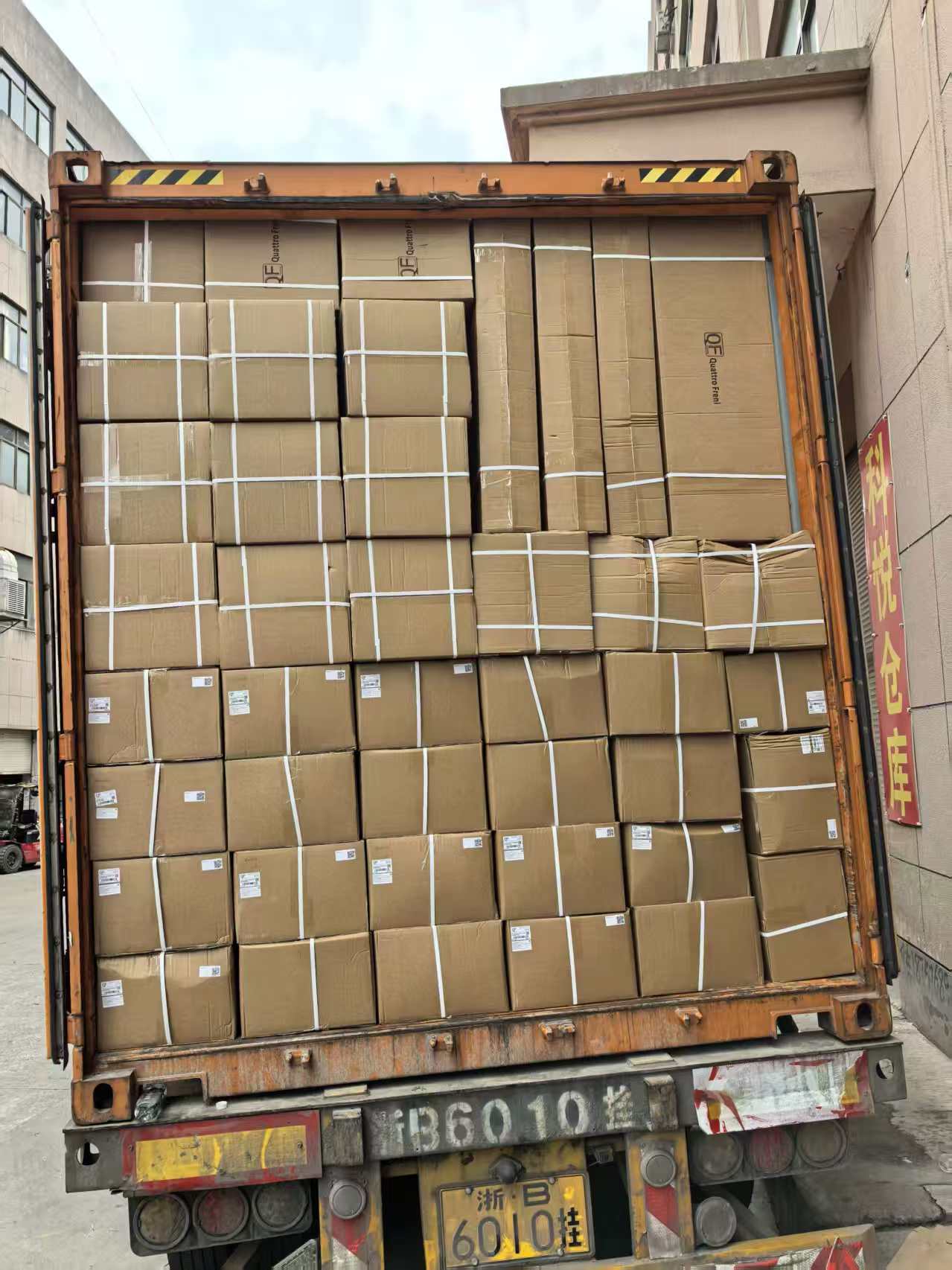
Aftermarket parts in brand packaging - QUATTROFRENI, the private label brand operated by ok.parts.
1. The Four Tiers: Genuine, OEM, OES and Aftermarket
Genuine parts (also called original or OE parts) are what a dealer sells. The box carries the vehicle manufacturer's logo and part number. The part inside may have been made by the vehicle manufacturer, but far more often it was made by a supplier and packed for the brand.
OEM parts come from the Original Equipment Manufacturer - the supplier that produces the part for the assembly line. When that supplier sells the same part under its own name, it is an OEM part. It is typically identical to the genuine part; sometimes the vehicle manufacturer's logo is simply absent or removed from the housing.
OES parts come from an Original Equipment Supplier: a company that supplies vehicle manufacturers and builds to original equipment standards, but not necessarily the company that supplied this exact part for this exact car. A brand can be the OEM for one model's water pump and an OES-level alternative for another's.
Aftermarket parts are produced by independent manufacturers for the replacement market. They are designed to fit and function like the original, without being part of the original supply chain. This tier is the widest: it includes premium brands that test to original specifications, mid-range brands, economy lines and private labels.
| Tier | Who makes it | Brand on the box | Typical price level |
|---|---|---|---|
| Genuine | Vehicle manufacturer or its supplier | Vehicle manufacturer | Highest - the reference price |
| OEM | The assembly-line supplier | Supplier | Noticeably below genuine for the same part |
| OES | A supplier to vehicle manufacturers | Supplier | Similar to OEM |
| Aftermarket - premium | Independent specialist | Its own brand | Below OEM |
| Aftermarket - economy | Independent factory | Its own or a private label | Lowest |
A few other labels appear alongside these tiers. Remanufactured parts are used units rebuilt to specification - common for alternators, starters, brake calipers, steering racks and turbochargers. Used parts are dismantled from vehicles. Private label parts are aftermarket parts sold under a distributor's own brand; our private label guide explains how those programs work. Counterfeit parts imitate genuine packaging and are illegal - they are not a tier, they are fraud.
2. Who Really Makes Car Parts
The clearest way to understand the tiers is to look at who is behind the brands. A handful of global suppliers produce a large share of the original equipment fitted to cars worldwide, and most of them also sell to the replacement market under their own names.
| Supplier | Known for | Replacement-market brands |
|---|---|---|
| Bosch | Fuel injection, engine management, sensors, braking electronics | Bosch |
| Denso | Thermal systems, ignition, sensors | Denso |
| ZF | Transmissions, steering, chassis and braking | Sachs, Lemforder, TRW |
| Continental / Aumovio | Electronics, brake systems, instrumentation | ATE, VDO |
| Schaeffler | Bearings, clutches, timing drive components | INA, LuK, FAG |
| Valeo | Clutches, lighting, thermal and wiper systems | Valeo |
| Aisin | Transmissions, water pumps, drivetrain | Aisin |
| Mahle | Pistons, filters, thermal management | Mahle, Knecht, Behr |
| Mann+Hummel | Filtration | Mann-Filter, WIX, Filtron |
| NGK (Niterra) | Spark plugs and oxygen sensors | NGK, NTK |
| Brembo | Brake discs, calipers and pads | Brembo |
| KYB | Shock absorbers | KYB |
This is why the same component can be bought in more than one box. An oxygen sensor made by Denso for a Toyota can be sold in a Toyota box as a genuine part, or in a Denso box as an OEM part. The part is the same; the channel and the price are not.
It also explains why brand alone does not settle the tier. Each of these companies makes original equipment for some vehicles and aftermarket-only parts for others. A Bosch part is OEM where Bosch supplied the assembly line, and a well-engineered aftermarket part where it did not.
3. How Quality Actually Differs
Quality is not determined by the label. It is determined by the material specification, the manufacturing tolerances, the testing regime and the consistency from one batch to the next.
Genuine and OEM parts are validated against the vehicle manufacturer's specification before production starts and audited afterwards. That process is the real value behind the price.
Aftermarket parts cover the full range. Premium aftermarket brands test against the original and sometimes improve on known weak points. Economy products reach their price by simplifying: thinner coatings, lower-grade rubber compounds, cheaper sensing elements, looser tolerances. The part fits and works on day one; the difference appears in service life.
Where the differences show most clearly:
Sensors and electronics. Engine and ABS control units expect a specific signal. A sensor that is slightly off can trigger fault codes even though it is not defective. See our guides on ABS wheel speed sensors and oxygen sensors.
Rubber and bonded parts. Bushings, engine mounts and boots depend on the rubber compound. A cheaper compound hardens and cracks sooner.
Friction materials. Brake pads differ in noise, dust, fade resistance and disc wear - which is why brake parts have their own approval regulation.
Bearings. Steel quality, heat treatment and sealing decide whether a wheel bearing lasts 30,000 or 150,000 km.
4. Certifications and Marks That Actually Mean Something
Packaging is full of logos. Only some of them are evidence of quality, and each one covers something specific.
| Mark or standard | Applies to | What it tells you |
|---|---|---|
| ECE R90 | Replacement brake pads, linings, discs and drums | The part has been type-approved under the UNECE regulation and performs within a defined tolerance of the original. The approval number is printed on the part and the box. |
| E-mark (other ECE regulations) | Lamps, glass, mirrors, tires and other regulated parts | The part meets the UNECE regulation for its category and may be sold in countries that apply it. |
| DOT / FMVSS | Lighting, brake hoses, glass and tires in the United States | The manufacturer certifies compliance with the US federal safety standard. |
| CAPA | Aftermarket collision parts in North America | Independent certification that a body panel, lamp or bumper matches the original for fit, material and finish. |
| IATF 16949 | The factory, not the part | The plant runs the automotive quality management system required of original equipment suppliers. |
| ISO 9001 | The factory, not the part | A general quality management system is in place. Useful as a minimum, but not specific to automotive. |
The distinction in the last two rows is important. A factory certificate says how a plant is managed; it does not say that a particular product equals the original. A product approval such as ECE R90 does. When a supplier claims "OE quality", ask which of these they can document - and ask for the certificate or approval number, not just the logo.
5. Do Non-Genuine Parts Affect the Vehicle Warranty?
This is one of the most common concerns, and the general answer in the major markets is: not by themselves.
In the European Union, competition rules for the motor vehicle sector are designed to keep the repair market open. As a general principle, a vehicle manufacturer cannot make the warranty conditional on servicing at an authorized dealer or on the use of genuine parts for normal maintenance and repair, provided the work is done correctly and the parts are of matching quality.
In the United States, the Magnuson-Moss Warranty Act works in a similar direction: a warranty cannot be made conditional on the use of a particular brand of part unless that part is supplied free of charge, and a claim can be refused only if the non-original part caused the damage.
Rules differ in other markets, and individual warranty terms differ too, so check the local position before giving advice to a customer. Keep invoices that show which parts were fitted - they are the evidence if a claim is ever questioned.
6. How to Choose the Right Tier for Each Part
No single tier is right for everything. The sensible approach is to match the tier to the consequences of failure and to the age and value of the vehicle.
| Part category | Sensible choice | Why |
|---|---|---|
| Brake pads, discs and hoses | Genuine, OEM, or aftermarket with ECE R90 approval | Safety-critical. The approval is objective proof of performance. |
| Steering and suspension joints | OEM, OES or premium aftermarket | Safety-critical, and material quality decides service life. |
| Sensors and electronics | Genuine or OEM first | Control units are sensitive to signal characteristics; a cheap sensor can cost more in diagnosis time than it saves. |
| Ignition coils and spark plugs | OEM-supplier brands | The companies that make the originals sell the same technology under their own names. See our ignition coil guide. |
| Filters, belts, wiper blades | Premium aftermarket | High-volume service parts with many proven brands. |
| Body panels, bumpers, lamps | Genuine or certified aftermarket | Fit and finish are the risk; look for CAPA or the relevant E-mark. |
| Engine internals and timing parts | Genuine or OEM | The cost of failure is far higher than the saving on the part. |
| Older vehicles, out of warranty | Quality aftermarket | The economics change as the vehicle ages; reliability still matters, the logo matters less. |
For a workshop, a simple rule works well: offer the customer two tiers with a clear explanation, and never go below the level you would be comfortable guaranteeing.
7. For Importers and Parts Stores: Stocking and Verifying
Stock by OEM number, not by brand. The OEM number is the link between all tiers. A healthy range usually carries two or three quality levels for each fast-moving number - a genuine or OEM option and one or two aftermarket alternatives - so that the counter can answer every budget. If you are not sure how to read or normalize the numbers, start with how to find and read an OEM part number.
Verify the claim, not the word. When a supplier describes a part as OEM or OE quality, ask for evidence: which vehicle manufacturers the brand supplies, the R90 or E-mark approval number where one applies, the factory's IATF 16949 certificate, and photos of the actual part and packaging with markings visible.
Test before you scale. Order samples, compare them with a genuine part on dimensions, weight, connectors and markings, and run a small batch through real installations before committing to volume. Our quality control guide describes the inspection process in detail.
Watch for counterfeits. Warning signs are a price far below every other genuine offer, misprinted logos or fonts, missing security labels, and packaging that differs from a known genuine sample. A real genuine part has a traceable source. The full checklist is in Counterfeit Auto Parts: How to Spot Fakes Before You Pay.
On ok.parts you can see the tiers side by side, because offers are grouped by OEM number. A search for the Toyota ignition coil 90919-02240 returns offers for the Toyota part together with alternatives from other manufacturers under the same reference. The BMW coil 12137594937 lists the BMW part alongside Hitachi - an original equipment ignition supplier - and independent brands.
8. Comparing Tiers on ok.parts
ok.parts is an open marketplace organized around the part number. Enter an OEM number and you see every offer for it, from factories, distributors, trading companies and stores in more than 80 countries.
Three things on each results page help you judge what you are being offered. The manufacturer filter separates the vehicle manufacturer's part from supplier and aftermarket brands. The supplier type shows whether you are dealing with a factory, a trading company or a retailer. And the E-to-A rank shows how much real order history stands behind the supplier - the higher ranks can only be earned through actual purchases.
Searching and comparing offers is free. Revealing a supplier's contacts costs from $5 to $25 depending on rank, and a new account starts with a $20 welcome credit.
9. Frequently Asked Questions
Is OEM the same as genuine?
Not exactly. A genuine part is sold by the vehicle manufacturer in its own packaging. An OEM part is made by the same supplier that produces the genuine part, but sold under the supplier's own brand. The part is typically identical; the box, the channel and the price differ.
What is the difference between OEM and OES?
An OEM part comes from the company that supplied that specific part to the assembly line. An OES part comes from a company that is an original equipment supplier to vehicle manufacturers and builds to the same standards, but may not have supplied that exact part for that exact car. In everyday use the two terms are often mixed.
Are aftermarket parts lower quality than OEM?
Some are and some are not. Aftermarket is the widest tier: it includes premium brands that test to original specifications as well as economy products built to a price. Judge the brand, the certifications and the supplier rather than the word aftermarket.
Will aftermarket parts void my car warranty?
In the European Union and the United States, using non-genuine parts does not by itself void a vehicle warranty, provided the parts are of matching quality and fitted correctly. A claim can be refused if the part caused the damage. Rules vary in other markets, so check locally.
How can I tell if a part is genuine?
Check the packaging label for the vehicle manufacturer's logo, the correct OEM number and a barcode or security label, compare it with a known genuine sample, and buy from a supplier with a traceable source. A price far below all other genuine offers is a warning sign.
What does OE quality or OE-equivalent mean?
It is a claim, not a tier. It means the seller states that the part matches the original specification. Ask what supports the claim: an ECE R90 or E-mark approval, a CAPA certificate, an IATF 16949 certified factory, or a list of vehicle manufacturers the brand supplies.
What is a private label part?
It is an aftermarket part sold under a distributor's or retailer's own brand. The distributor chooses the factory, the specification and the packaging. Quality depends on those choices and on the quality control applied to each batch.
Related Guides
- How to Find and Read an OEM Part Number: Formats by Car Brand
- Parts for Chinese Car Brands: OEM Number Formats and Sourcing Guide
- Counterfeit Auto Parts: How to Spot Fakes Before You Pay
- Brake Pads: Friction Types, ECE R90, Euro 7 and Wholesale Sourcing Guide
- Private Label Auto Parts Manufacturer in China
- Auto Parts Quality Control in China: The Complete Inspection Guide