HID Xenon Ballasts: Complete Technical and Wholesale Sourcing Guide
The definitive technical and commercial guide to HID xenon ballasts (headlight control units) - covering D1/D2/D3/D4 lamp compatibility, all major manufacturer cross-references (Bosch AL, Hella, Denso, Mitsubishi), failure diagnostics, coding procedures, OEM numbers by vehicle brand, and wholesale sourcing from China.
The HID xenon ballast - also known as the headlight control unit, HID igniter, or AFS module - is the high-voltage electronic device that powers xenon discharge lamps in millions of vehicles built between 2000 and today. When it fails, the affected headlight goes dark, the dashboard warning illuminates, and the vehicle becomes legally non-compliant for night driving. Replacement at the dealer costs $400-$800 for the unit alone, plus 1-2 hours of labor for diagnosis and coding. Through the aftermarket, the same OEM-equivalent ballast costs a fraction of that price - which is exactly why this category is one of the most profitable in the global auto parts aftermarket.
For distributors, HID ballasts combine high unit value ($7-$25 wholesale, $40-$120 retail), strong recurring demand (every premium vehicle from 2000-2018 has 2 of them, and they fail with age), low warranty risk (electronic component, either works or does not), and minimal returns headache. For mechanics and automotive electricians, this guide provides the complete diagnostic framework needed to identify, source, install, and code replacement ballasts across all major vehicle platforms.
The complete ok.parts HID ballast catalog contains over 700 SKUs covering all major vehicle manufacturers - searchable by OEM number, vehicle application, or compatible lamp type.
- How HID Xenon Ballasts Work
- Lamp Types: D1S, D2S, D3S, D4S Compatibility Matrix
- Major Ballast Manufacturers: Bosch AL, Hella, Denso, Mitsubishi
- Bestseller Showcase: Honda 33119SWA003
- Failure Symptoms and Diagnostic Procedure
- OEM Cross-Reference Guide by Vehicle Brand
- Coding and Initialization After Replacement
- Pricing Comparison: OEM vs Aftermarket vs Wholesale
- Why HID Ballasts Are a Premium Wholesale Category
- Sourcing HID Ballasts Wholesale from China
- Installation Best Practices
- Frequently Asked Questions
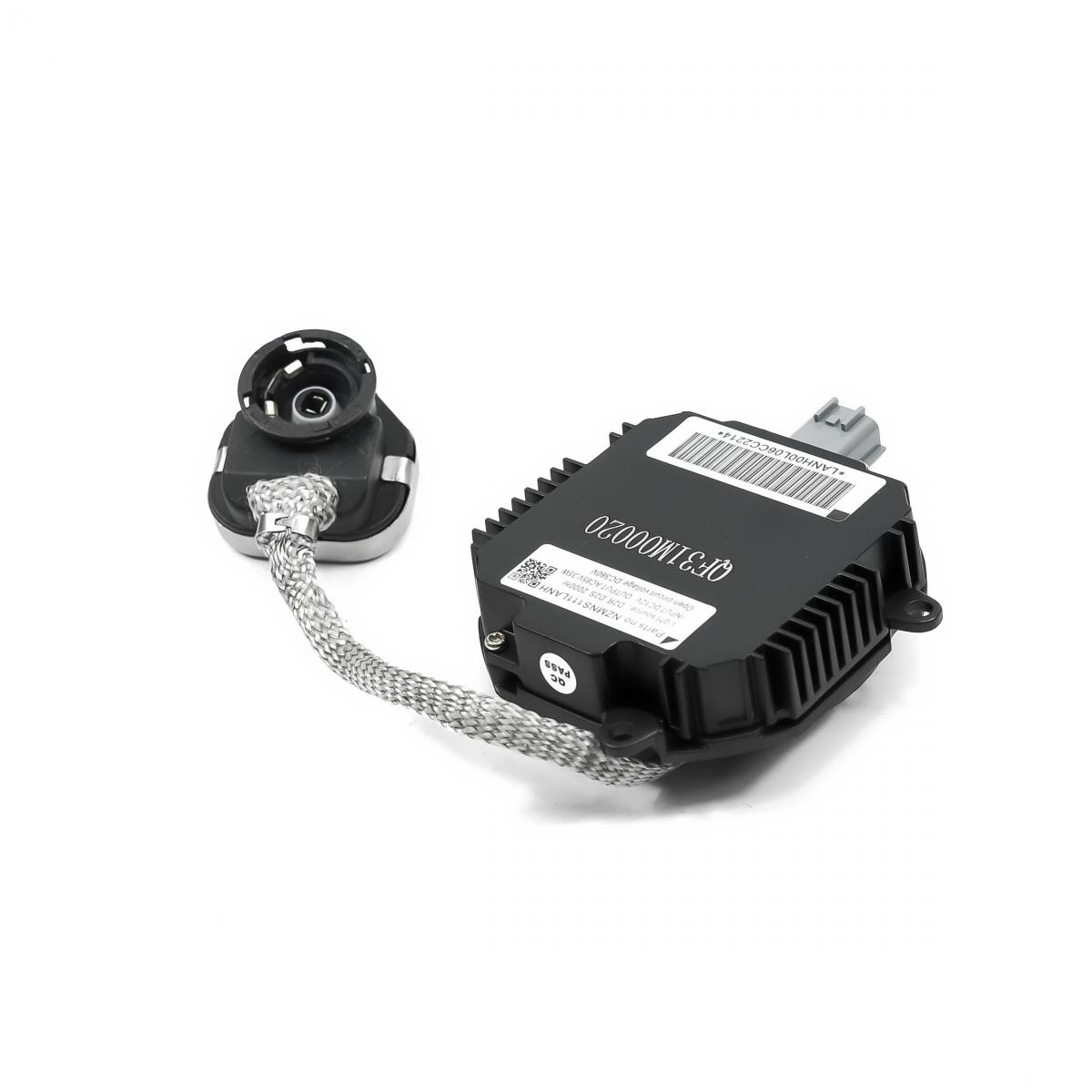
HID Xenon Ballast (headlight control unit) - the high-voltage electronic device that ignites and regulates xenon HID lamps. View full catalog
1. How HID Xenon Ballasts Work
A xenon HID (High-Intensity Discharge) lamp produces light through an electric arc between two electrodes inside a sealed quartz capsule filled with xenon gas and metal halides. Unlike a tungsten halogen bulb that simply heats a filament with 12V, an HID lamp requires two distinct phases of electrical input: a high-voltage ignition pulse to strike the arc, and a regulated AC current to sustain it.
The ballast manages both phases. At startup, it generates an ignition pulse of approximately 20,000-30,000 volts (some platforms use up to 23,000V) to ionize the gas and establish the arc. Once the arc is lit, the ballast immediately transitions to "warm-up" mode, delivering up to 75W of current at decreasing voltage to bring the lamp to full brightness within 3-5 seconds. Finally, the ballast settles into "steady-state" operation, regulating power to exactly 35W AC at 85V to maintain consistent light output for the life of the lamp.
This entire process is managed by dedicated electronics inside the ballast: a high-frequency switching converter that steps up the 12V supply, an ignition transformer (or integrated igniter on D1/D3 platforms), a current regulation circuit with feedback control, and on most modern ballasts, a CAN bus or LIN bus interface for diagnostic reporting to the vehicle ECU.
The complexity of this electronics is why HID ballasts cost so much more than a halogen bulb circuit. It is also why they fail - dozens of high-voltage components, all operating under significant electrical and thermal stress, every time the headlights are switched on.
2. Lamp Types: D1S, D2S, D3S, D4S Compatibility Matrix
The "D" series xenon lamps were introduced by Philips and Osram to standardize HID lighting across vehicle manufacturers. Each D-type has specific electrical characteristics that determine which ballast it requires. Mixing types is not possible - a D1S lamp cannot work on a D2S ballast and vice versa.
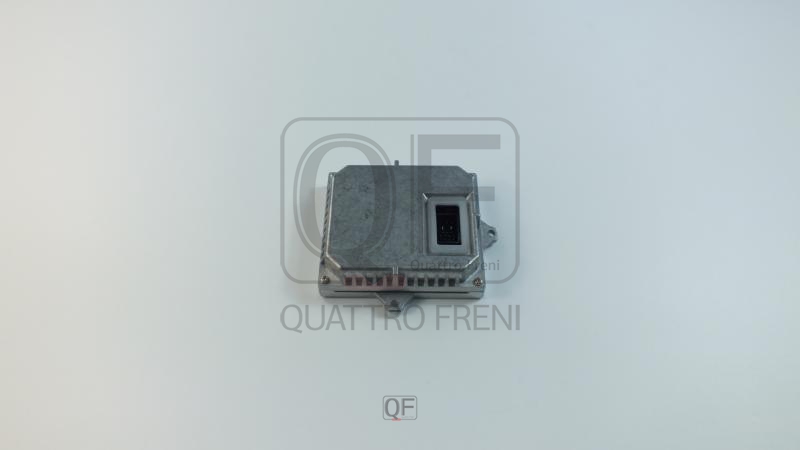
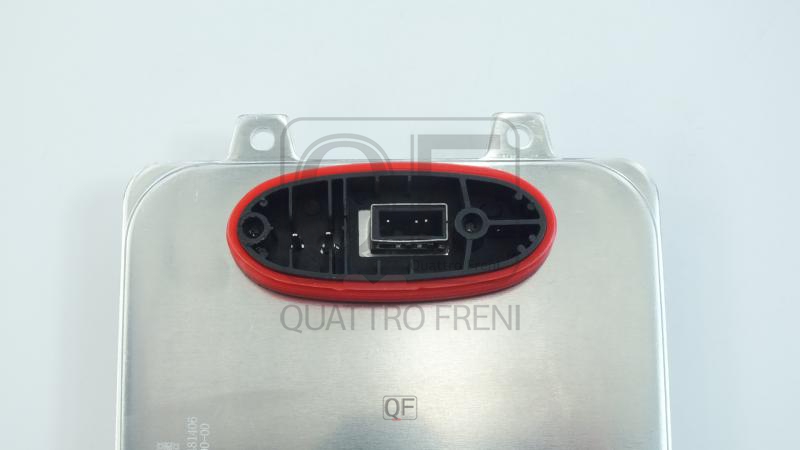
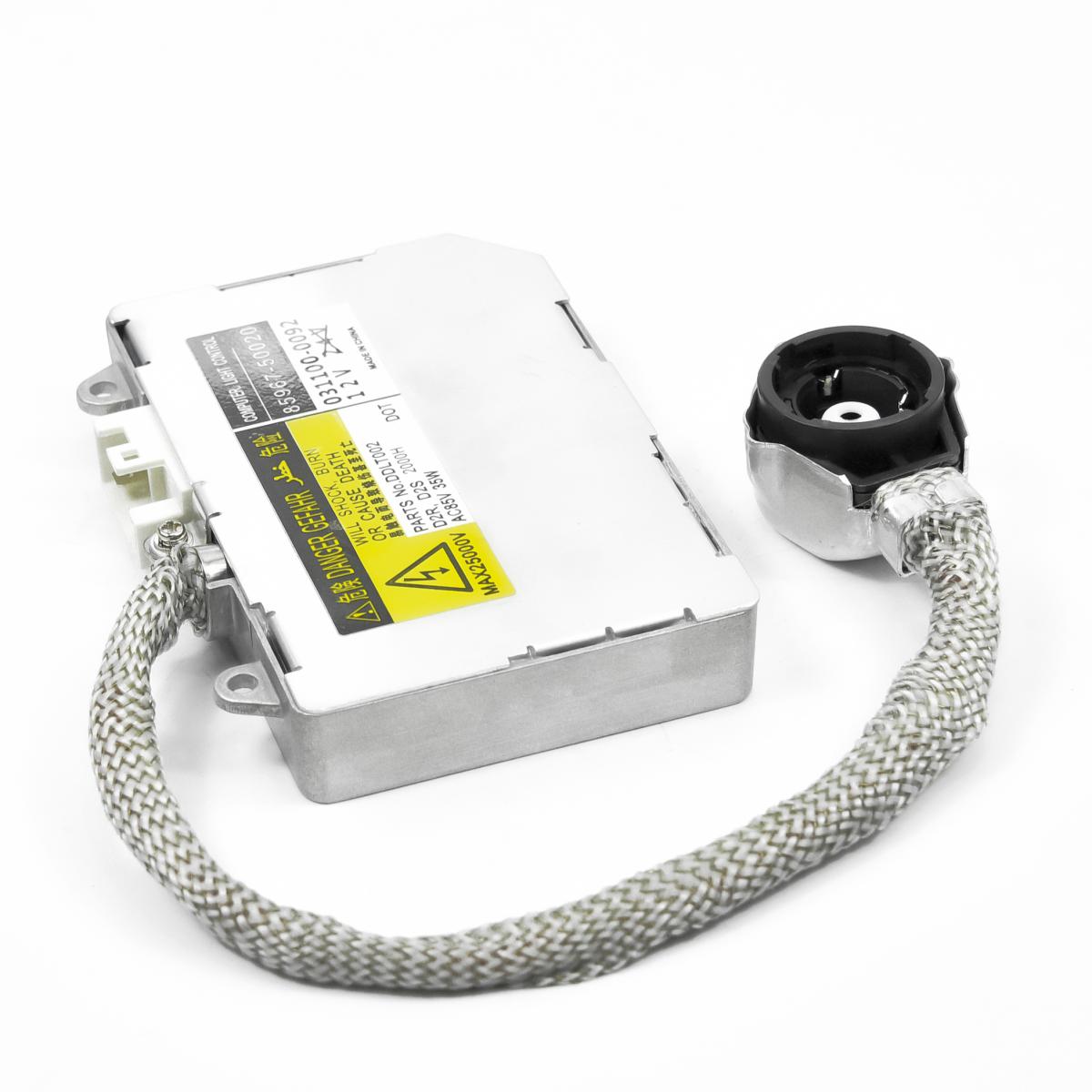
| Lamp Type | Wattage | Igniter | Mercury | Used On |
|---|---|---|---|---|
| D1S / D1R | 35W | Integrated | No | Audi A4 B7/B8, VW Touareg, Porsche, Volvo, Land Rover |
| D2S / D2R | 35W | External | Yes | BMW E46/E60, Mercedes W211/W219, Audi A6 C5 |
| D3S / D3R | 35W | Integrated | No | VW Golf 7, Audi A4 B9, Mercedes W205, BMW F30 (post-2013) |
| D4S / D4R | 35W | External | No | Lexus IS/RX, Toyota Camry/Avalon, Mazda CX-5, Honda Pilot |
| D5S | 25W | Integrated | No | Lower-power variant, limited use |
| D8S | 25W | Integrated | No | Newest standard, motorcycle and low-beam applications |
S vs R suffix: "S" stands for "Shielded" - the lamp has a metal shield around part of the arc and is designed for projector (lens-style) headlights. "R" stands for "Reflector" - the lamp is unshielded and designed for reflector-style headlights. They are not interchangeable.
3. Major Ballast Manufacturers: Bosch AL, Hella, Denso, Mitsubishi
Four manufacturers produce nearly all OEM HID ballasts globally. Knowing which one is in a specific vehicle helps with correct cross-reference selection.
| Manufacturer | Key Models | Typical OEM Customers | Identification |
|---|---|---|---|
| Bosch AL (Automotive Lighting) | 5DV007 / 5DV008 / 5DV009 | Mercedes-Benz, BMW (post-2008), VW/Audi, Volvo | "AL" or "Automotive Lighting" molded into housing |
| Hella | 5DV / 5DC / 5DD series | BMW (pre-2008), Audi, Porsche, Bentley | Yellow Hella logo, "Made in Germany" |
| Denso (Koito partner) | DDLT002 / DDLT003 / DDLT004 | Toyota, Lexus, Honda, Mazda, Subaru | "DENSO" or "KOITO" stamp, made in Japan |
| Mitsubishi Electric | W3T series | Nissan, Infiniti, Mitsubishi, some Hyundai/Kia | "Mitsubishi Electric" or "Melco" branding |
| Valeo | 044258 / 088768 | Peugeot, Citroen, Renault, some Mercedes | Valeo logo, French manufacturing codes |
Note for distributors: The OEM manufacturer stamp on the original ballast indicates which production family the part belongs to. When sourcing aftermarket replacements, matching the original production family (Bosch AL or Hella) generally provides better fit confidence than mixing platforms. The ok.parts catalog notes the original production family in product descriptions where confirmed.
4. Bestseller Showcase: Honda 33119SWA003
Honda 33119SWA003 HID Ballast
The single highest-volume HID ballast in the ok.parts catalog. Fits Honda Pilot, Acura MDX, RDX, TL, and TSX with factory xenon headlights. Direct plug-and-play replacement for the original Denso/Koito unit.
Why this SKU is the category bestseller: it covers a large installed base (Honda/Acura premium models 2003-2014), the original Denso unit retails for $400-$650 at dealers, the failure mode is gradual and predictable (eventually all of them fail), and Honda technicians consider it a "known failure point" - meaning when one customer's headlight goes out, the workshop often recommends pre-emptive replacement of the other side as well. Distributors stocking this SKU regularly see repeat orders.
5. Failure Symptoms and Diagnostic Procedure
HID ballast failures follow predictable patterns. Recognizing the symptoms helps distinguish ballast failure from lamp failure or wiring fault - critical for correct part selection.
Common Failure Symptoms
Headlight does not ignite at all. The most common failure mode - the lamp simply does not light when headlights are switched on. The other side works normally. The dashboard headlight warning indicator illuminates within 30-60 seconds.
Flickering or pulsing light. The lamp ignites but the output is unstable - pulsing, flickering, or completely cycling on and off every few seconds. This indicates the ballast cannot maintain regulated current. The arc is unstable and the ballast eventually shuts down for safety.
Color shift to pink or purple. Before complete failure, an HID lamp powered by a degrading ballast may shift color from the normal white-blue to pink, purple, or amber. The mercury content (in D2S lamps) is depleted, but the ballast continues to attempt to power it.
Intermittent operation. The headlight works some of the time and fails others. Cold weather operation, vibration, and time since last use can all affect when symptoms appear. Often the customer reports "it works in the morning but not at night" or vice versa.
One headlight dimmer than the other. A degrading ballast may still operate the lamp but at reduced output. Visual comparison side-by-side reveals the difference. The dim side typically fails completely within weeks of the first symptom.
Dashboard headlight failure warning. On vehicles with CAN bus headlight monitoring (most premium European cars from 2003 onward, most Japanese cars from 2008 onward), the ECU detects the ballast failure and displays a warning message. The specific warning text varies by manufacturer.
Diagnostic Decision Tree
6. OEM Cross-Reference Guide by Vehicle Brand
HID ballasts are highly vehicle-specific - each engine family and headlight type has a unique part number. Below are examples of common OEM numbers by brand, all searchable in the ok.parts HID ballast catalog.
European Vehicles
| Brand | Example OEM Numbers | Common Applications |
|---|---|---|
| VAG (VW/Audi/Skoda/Seat) | 7L6941329B, 7L6941329, 1K0941329 | VW Touareg, Golf, Passat, Audi A4 B7/B8, A6 C6 |
| BMW / Mini | 63117237647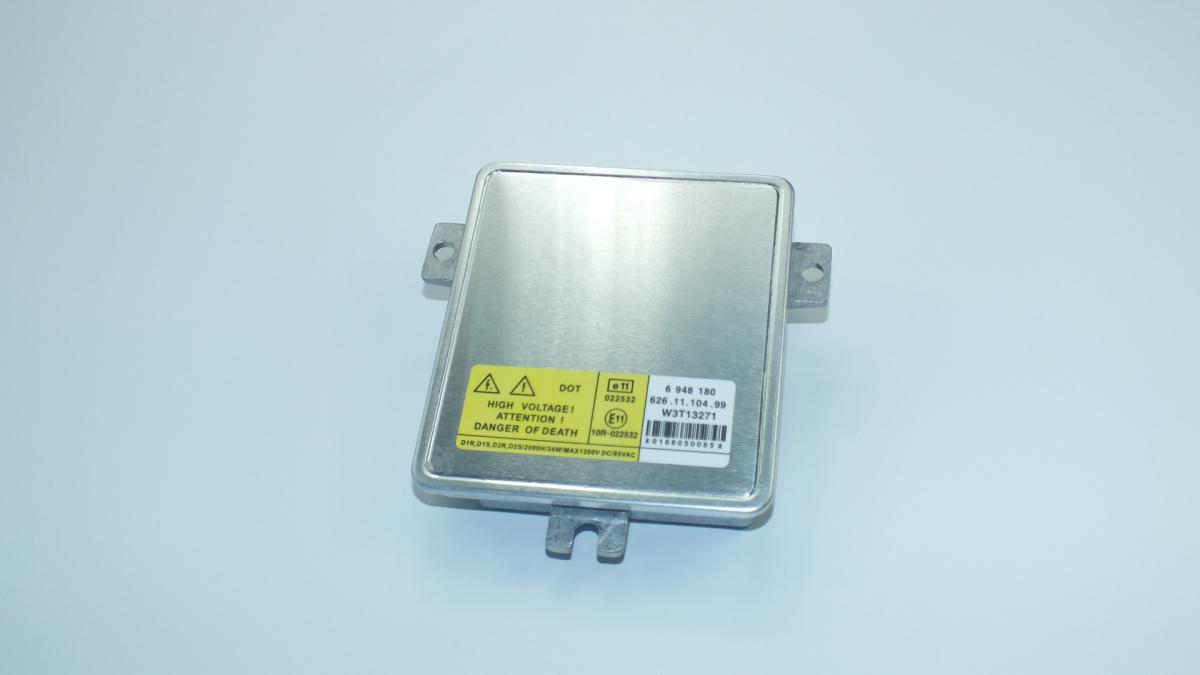 BMW 63117237647, 63126907488 BMW 63117237647, 63126907488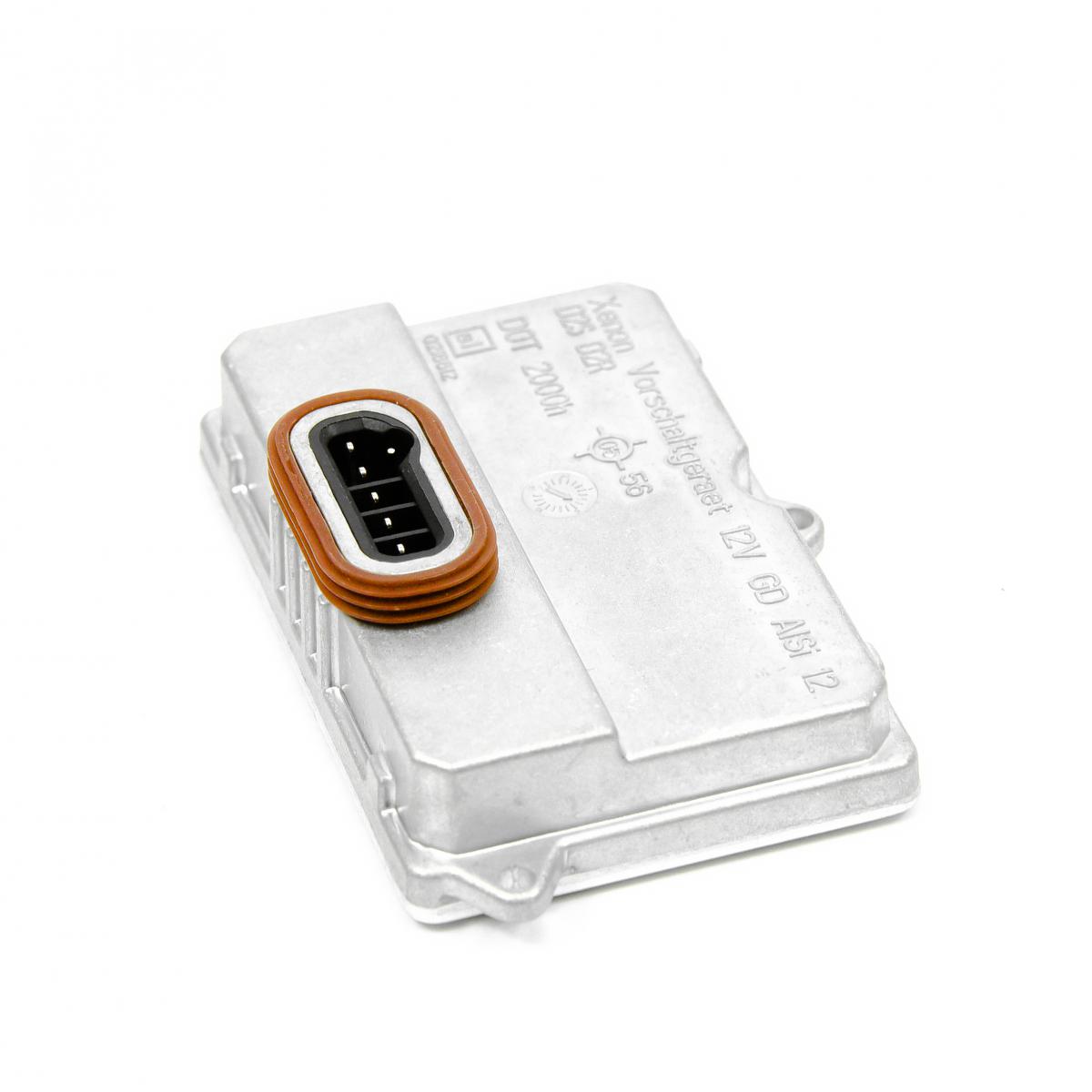 BMW 63126907488, 63117182520 BMW 63126907488, 63117182520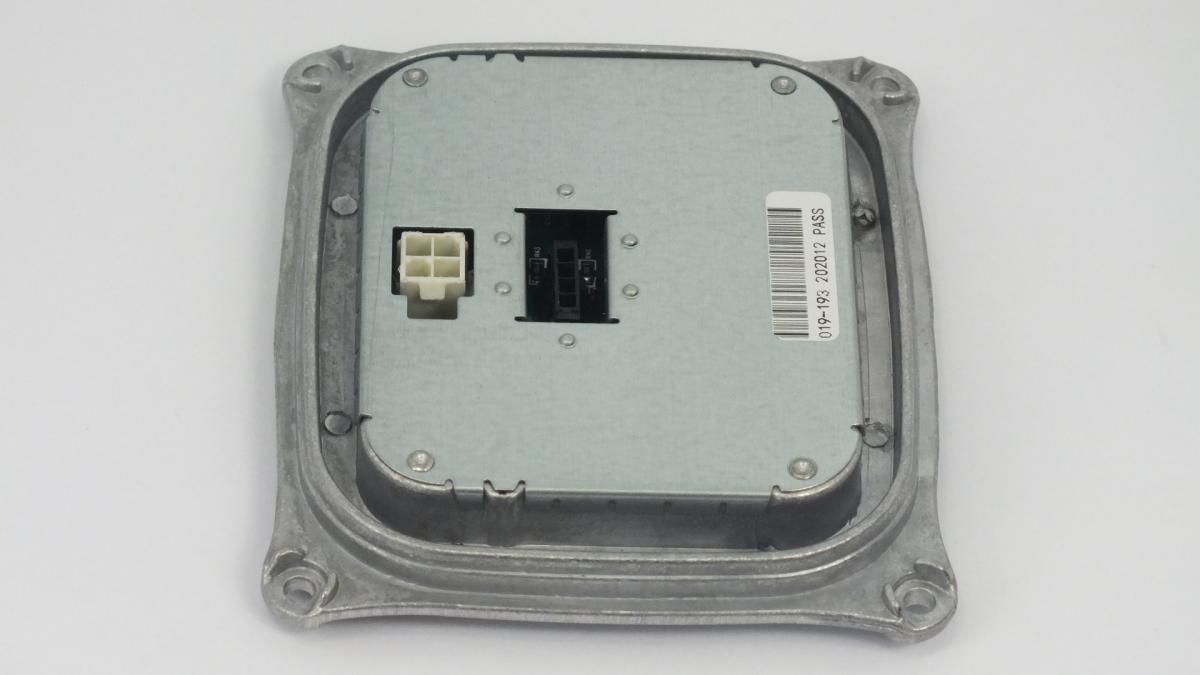 BMW 63117182520 BMW 63117182520 | E60 5-Series, E90 3-Series, X3, X5, F30, F10 |
| Mercedes-Benz | A2208207085Mercedes A2208207085, A2308202685, A2208208585 | S-Class W220, E-Class W211/W212, C-Class W203 |
| Porsche | 99763116101, 95563116100 | Cayenne, Panamera, 911 (997/991), Boxster |
| Volvo | 31254934, 30784923 | XC60, XC90, S60, S80, V70 |
| Land Rover / Jaguar | LR023533, C2D3933 | Range Rover, Discovery, Jaguar XF/XJ/XK |
Japanese and Korean Vehicles
| Brand | Example OEM Numbers | Common Applications |
|---|---|---|
| Toyota/Lexus | 8596730050Toyota/Lexus 8596730050, 8596748020, 8596750050 | Lexus IS, GS, RX, LS, Toyota Camry, Avalon |
| Honda/Acura | 33119SWA003Honda 33119SWA003 - Bestseller, 33119STX003, 33119SJK003 | Honda Pilot, Acura MDX, RDX, TL, TSX, ZDX |
| Nissan/Infiniti | 284745X00A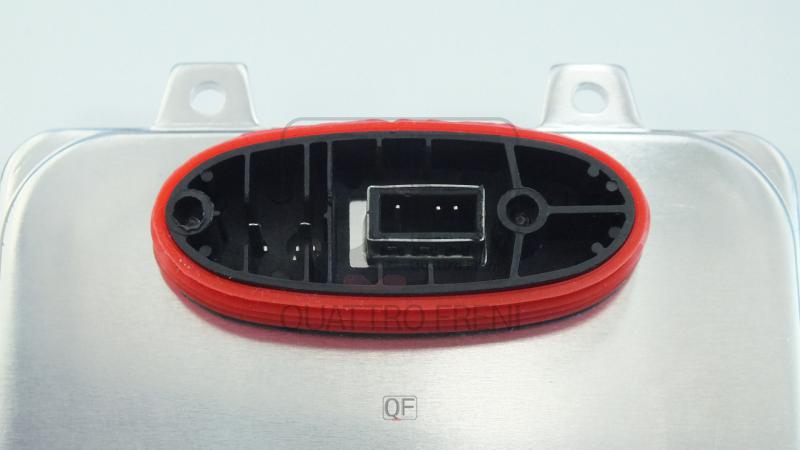 Nissan 284745X00A, 28474AR000, 28474C9970 Nissan 284745X00A, 28474AR000, 28474C9970 | Infiniti FX/EX, G35/G37, Nissan Murano, Maxima |
| Mazda | EG2151E10, L20651E10C | CX-5, CX-7, Mazda 6, Mazda 3 (factory HID models) |
| Hyundai/Kia | 921903L100Hyundai/Kia 921903L100, 921902T010, 921903W500 | Genesis, Equus, Sonata, K9/K900, Sportage |
| Subaru | 84965AG010, 84965FG010 | Legacy, Outback, Forester, Tribeca |
OEM Manufacturer Universal Cross-References
The same physical ballast often appears under multiple vehicle manufacturer part numbers. These universal cross-references are critical for distributors building broad inventory coverage:
| OEM Manufacturer | Production Number | Used By Vehicle Brands |
|---|---|---|
| Bosch AL | 5DV00900000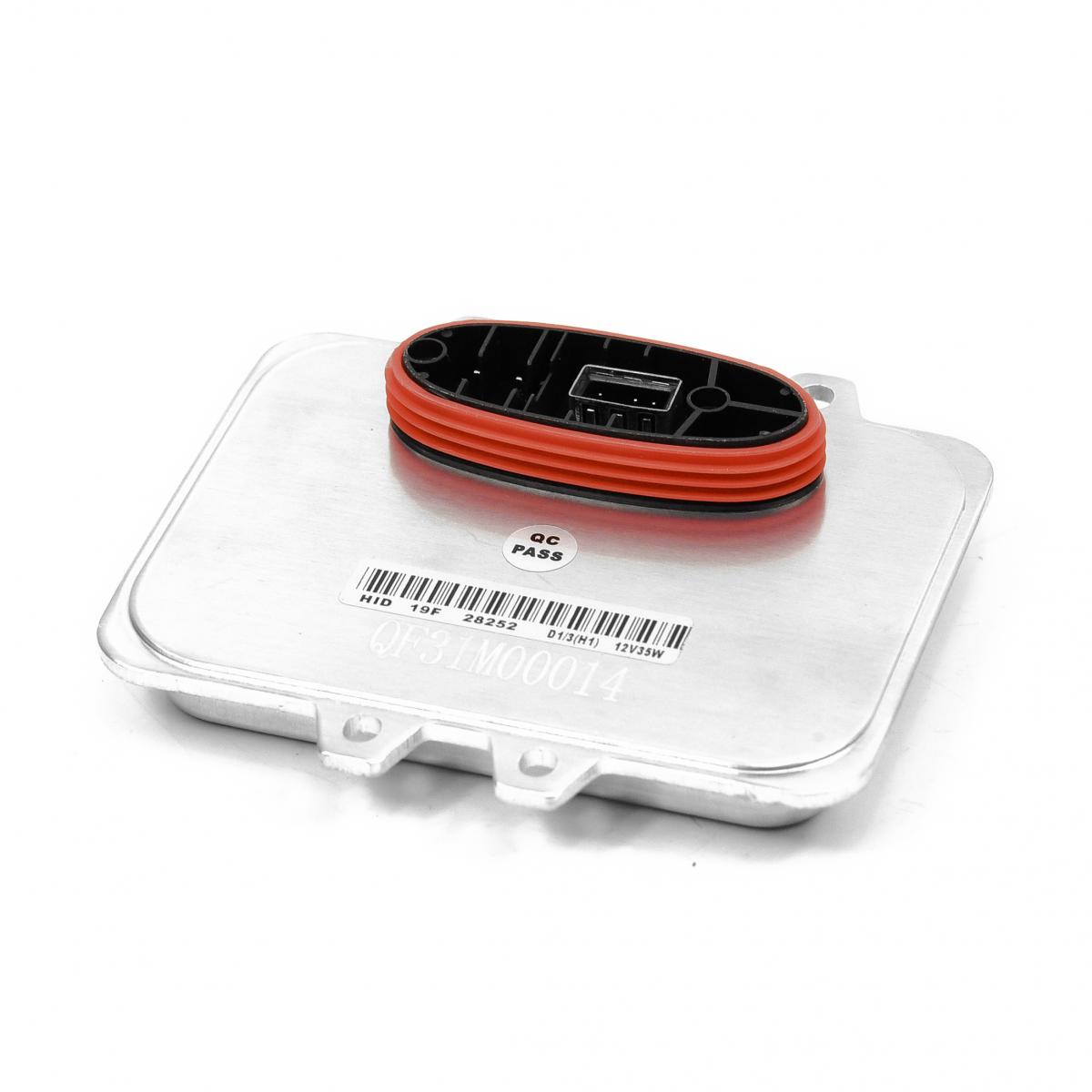 Bosch AL 5DV00900000 Bosch AL 5DV00900000 | Mercedes-Benz, BMW (post-2008), VW/Audi |
| Bosch AL | 5DV00800000 | VW/Audi (D2S platform), Mercedes (pre-2008) |
| Hella | 5DC009060 | BMW E60/E90, Mercedes W211 |
| Denso/Koito | DDLT002 | Toyota, Lexus, Honda, Acura (D4S platform) |
| Mitsubishi Electric | W3T11071 | Nissan, Infiniti, Mitsubishi |
The complete HID ballast catalog on ok.parts contains over 700 SKUs across all these manufacturers and applications.
7. Coding and Initialization After Replacement
Most HID ballast replacements work as direct plug-and-play without any coding. However, vehicles with adaptive headlight systems (AFS - Adaptive Front-lighting System) or advanced lighting features may require initialization after replacement.
| Vehicle | Coding Required? | Tool Required |
|---|---|---|
| Mercedes-Benz | Sometimes - depends on AFS equipment | XENTRY/DAS |
| BMW | Usually no - basic ballasts plug-and-play | ISTA (if needed) |
| VAG (Audi/VW) | Yes for adaptive headlights, no for static | ODIS/VCDS |
| Toyota/Lexus | No - direct plug-and-play | None |
| Honda/Acura | No - direct plug-and-play | None |
| Nissan/Infiniti | No - direct plug-and-play | None |
Diagnostic tip: After ballast replacement, always clear stored fault codes with a scan tool. The body control module may have stored old fault codes from the previous failure. Without clearing, the dashboard warning may persist even though the new ballast is functioning correctly.
8. Pricing Comparison: OEM vs Aftermarket vs Wholesale
The pricing structure for HID ballasts is one of the most lopsided in the entire auto parts aftermarket. A genuine Mercedes-Benz Bosch AL ballast retails at $550-$650 at the dealer. The identical-specification aftermarket unit, manufactured in the same factory cluster, sells wholesale through ok.parts for $15-$22. This creates exceptional margin opportunity at every level - wholesale to retailer, retailer to workshop, workshop to end customer - while still delivering a final price 60-80% below dealer MSRP.
9. Why HID Ballasts Are a Premium Wholesale Category
Exceptional margin per unit. At $7-$25 wholesale and $40-$120 retail, the margin opportunity is among the highest of any electronic component category. Even at conservative pricing, distributor margins of 60-80% are routine.
Inevitable replacement cycle. HID ballasts fail. Not "might fail" - they will fail, typically between 6-12 years of operation. With premium vehicles holding their value and remaining on the road for 15-20 years, the installed base of aging ballasts approaching end-of-life grows continuously.
Two per vehicle. Every HID-equipped vehicle has two ballasts (one per headlight). When one fails, workshops often recommend pre-emptive replacement of the second side - especially on high-mileage vehicles. This doubles the per-repair revenue.
Low warranty risk. Unlike ABS sensors or oxygen sensors where intermittent failures and complex diagnostics can lead to customer disputes, HID ballasts have a binary failure mode: works or does not work. Returns are rare.
Premium customer segment. HID headlights are factory equipment on premium vehicles - Mercedes, BMW, Audi, Lexus, Acura, Volvo, Land Rover. The vehicle owners are typically willing to pay for quality replacement parts rather than the cheapest option. This raises the price ceiling for retailers.
10. Sourcing HID Ballasts Wholesale from China
China's primary manufacturing clusters for HID ballasts are in Guangzhou (Guangdong) and Wenzhou (Zhejiang), with specialized factories producing units to OEM specifications for the global aftermarket. Many of these factories have direct technology transfer relationships with original OEM manufacturers - the production lines, components, and quality systems are based on the same engineering.
Critical Quality Checks for HID Ballasts
Ignition voltage output. The ballast must produce a clean ignition pulse of approximately 20,000-23,000V depending on lamp type. Insufficient ignition voltage causes failed startup, especially in cold weather. Verify with a high-voltage probe or oscilloscope.
Regulated current at steady state. After ignition, the ballast must maintain regulated 35W output (or 25W for D5S/D8S). Out-of-spec current causes lamp color shift, premature lamp failure, or ballast shutdown.
Connector pinout verification. HID ballast connectors are not universal - VAG, Bosch, Hella, and Denso each use different connector designs. The aftermarket unit must match the OEM connector exactly for direct plug-and-play installation.
CAN bus communication (where applicable). Premium vehicles with CAN bus headlight monitoring require the ballast to report status to the body control module. Aftermarket units must implement compatible CAN communication or the dashboard warning will persist.
Thermal protection circuit. A quality ballast includes thermal protection that shuts down the unit if it overheats. This prevents catastrophic failure (smoke, fire). Verify the protection circuit operates at the correct threshold.
Mechanical durability. Ballasts are mounted in the engine bay or headlight assembly - subject to vibration, temperature cycling, and moisture exposure. Verify housing seal integrity (IP67 minimum) and connector retention.
ok.parts applies its 3-stage quality control process to all HID ballast orders, including electrical output verification and connector fit testing on sampled units.
11. Installation Best Practices
HID ballast unit ready for installation - inspect connector and mounting points before fitting.
1. Disconnect the battery. HID ballasts produce dangerous high voltages - over 20,000V at ignition. Always disconnect the battery negative terminal before working on the ballast or wiring. Wait 5 minutes for stored charge to dissipate.
2. Access the ballast location. Ballasts are typically mounted: behind the headlight assembly (most common), inside a sealed compartment behind the wheel well (BMW, some Audi), or at the bottom of the headlight unit (Honda, Lexus). Vehicle-specific service information indicates exact location.
3. Disconnect electrical connectors carefully. The high-voltage output connector to the bulb has a locking mechanism - release it gently. Old connectors become brittle with heat exposure and can break if forced. Replace the connector if cracked.
4. Note mounting orientation. Many ballasts are sensitive to mounting orientation - the heat dissipation surface must face downward or outward. Photograph the original installation before removal.
5. Install the new ballast. Mount in the same orientation as the original. Torque mounting bolts to specification (typically 5-8 Nm). Avoid over-torquing - the housing is plastic.
6. Connect electrical connectors. Apply a small amount of dielectric grease to connector pins before connection to prevent corrosion. Verify the connector clicks fully into place. Loose connections cause intermittent failures that are difficult to diagnose.
7. Reconnect battery and test. Reconnect battery negative terminal. Start the vehicle and switch on headlights. The new ballast should ignite the lamp within 2-3 seconds. Verify the light reaches full brightness within 30 seconds and remains stable.
8. Clear codes and code if needed. Connect a scan tool, clear all body control module fault codes. For vehicles requiring ballast coding (see Section 7), perform the manufacturer-specific procedure.
9. Headlight alignment check. While the headlight system is being serviced, this is a good opportunity to verify headlight aim. Misaligned HID headlights are a frequent failure point on roadworthiness inspections.
12. Frequently Asked Questions
What is an HID xenon ballast?
An HID xenon ballast is an electronic device that converts the vehicle's 12V supply into the high-voltage AC pulse needed to ignite and power a xenon HID gas discharge lamp. It generates approximately 20,000V at startup to strike the arc, then regulates current at 35W to maintain steady light output.
What is the difference between D1S, D2S, D3S, and D4S lamps?
D1S has an integrated igniter and is mercury-free. D2S has a separate external igniter and contains mercury (older). D3S is the mercury-free version of D1S. D4S is the mercury-free version of D2S. The corresponding ballasts are not interchangeable - each lamp type requires its specific ballast platform.
How much do wholesale HID ballasts from China cost?
Wholesale pricing from verified Chinese factories ranges from $7-$25 per unit depending on type and OEM application. Genuine OEM ballasts retail for $200-$600, aftermarket equivalents retail at $40-$120, creating exceptional margin for distributors.
How long does an HID ballast last?
Typical lifespan is 6-12 years (60,000-150,000 km), with premature failures usually caused by moisture intrusion, vibration damage, or electrical issues in the vehicle. Bosch AL and Hella OEM units tend to last longer than budget OEM platforms.
Does a new HID ballast need coding after installation?
Most replacements are direct plug-and-play with no coding required. However, some Mercedes-Benz, BMW, and Audi models with adaptive headlight systems (AFS) require initialization via XENTRY, ISTA, or ODIS scan tools after replacement.
Can I replace just the ballast or do I need to replace the bulb too?
The ballast and bulb are separate components. If only the ballast has failed (confirmed by bulb swap test), replace only the ballast. However, if the vehicle is over 6 years old and the bulb has not been replaced, it is good practice to replace both - the bulb will likely fail within 1-2 years anyway and the labor cost is identical.
Why is my headlight purple/pink before it failed?
Color shift to pink, purple, or amber indicates the HID lamp is at end of life - the metal halide content has been depleted by years of ignition cycles. The ballast is usually still functional. Replace the bulb first; if the new bulb fails to ignite, then replace the ballast.
Are aftermarket Chinese HID ballasts as good as OEM Bosch or Hella?
OEM-equivalent aftermarket ballasts from verified factories match the original specifications for output voltage, current regulation, and connector compatibility. They are direct plug-and-play replacements. 3-stage quality control ensures consistency. Quality difference vs OEM is typically not detectable in normal operation.
Related Guides
- ABS Wheel Speed Sensors: Complete Technical and Wholesale Guide
- Oxygen Sensors (Lambda Sensors): Complete Technical and Wholesale Guide
- Ignition Coils: Complete Technical and Wholesale Guide
- Throttle Bodies: Complete Technical and Wholesale Guide
- How to Source OEM-Quality Auto Parts from China
- Wholesale Auto Parts Supplier from China
- Private Label Auto Parts Manufacturer
- Auto Parts Quality Control in China: The Complete Inspection Guide